
Glass Facades
Low-E Coated Glass for Curtain Walls: Energy Savings & Thermal Performance
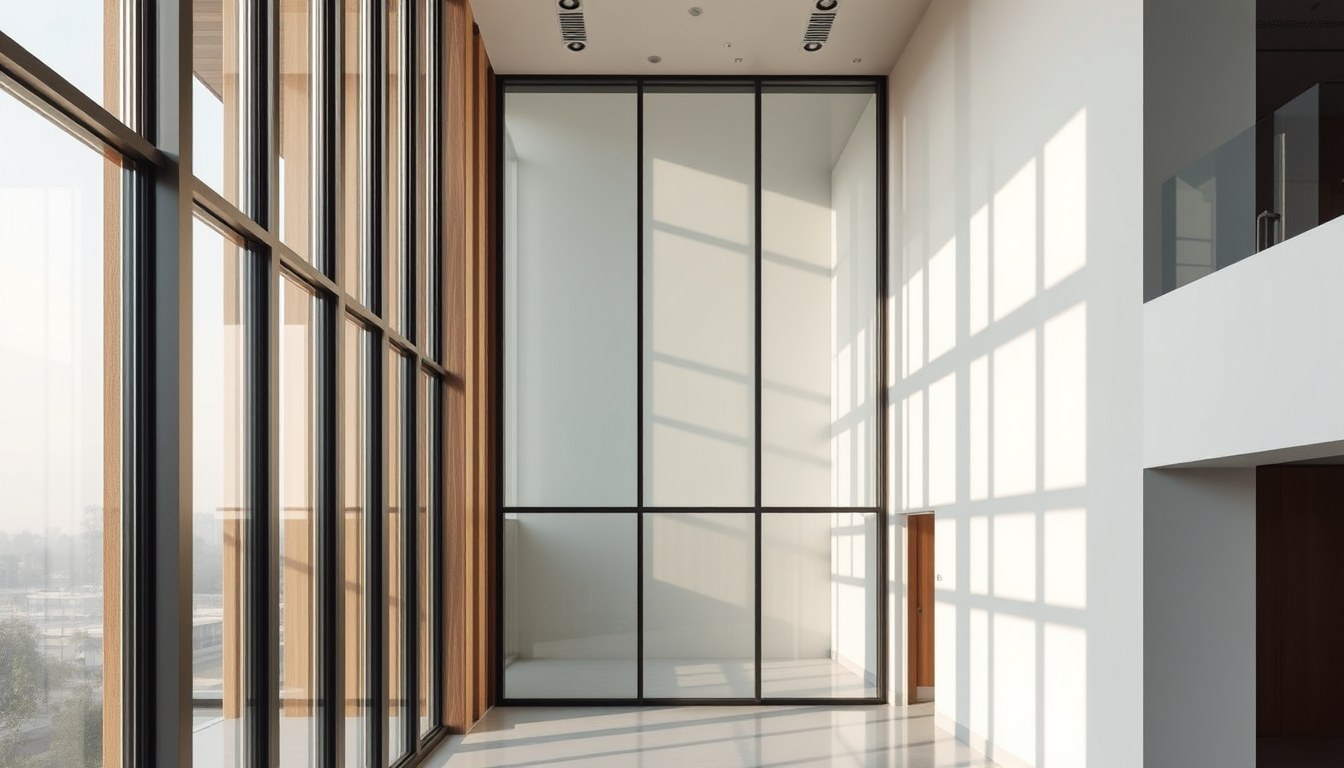
Low-emissivity (low-E) coated glass has become the gold standard for modern curtain wall systems, offering substantial reductions in heating and cooling loads while maintaining natural light transmission. In India's diverse climate zones—from tropical coastal regions to hot-dry interiors—low-E glass delivers measurable energy savings and improved occupant comfort. This comprehensive guide explores how these specialized coatings work, their thermal performance benefits, and their cost-effectiveness for commercial and institutional projects.
Understanding Low-Emissivity Glass Coatings
Low-emissivity glass features a microscopically thin coating of metallic oxides (typically silver, tin oxide, or titanium oxide) applied to one or more surfaces of the glass pane. This coating is nearly invisible to the naked eye but dramatically alters how the glass interacts with thermal radiation. The coating allows visible light to pass through while reflecting infrared (heat) radiation back into the building during winter and outward during summer.
There are two primary types of low-E coatings: pyrolytic (hard coat) and sputtered (soft coat). Pyrolytic coatings are applied during the glass manufacturing process at high temperatures, making them extremely durable and suitable for exposed surfaces. Sputtered coatings are applied in a vacuum chamber after manufacturing and offer superior thermal performance but require protection within an insulated glazing unit. For curtain wall applications in India, sputtered soft-coat low-E glass is typically preferred due to its superior performance in high-heat environments.
Thermal Performance and Energy Efficiency Gains
Heat Gain Reduction in Tropical Climates
India's tropical and subtropical regions experience intense solar radiation year-round. Standard clear glass allows approximately 76% of solar energy to enter a building, significantly increasing cooling loads. Low-E coated glass reduces solar heat gain coefficient (SHGC) to 0.25–0.35, depending on the specific coating formulation, reflecting 60–70% of incident solar radiation. For a typical office building in Mumbai or Bangalore, this translates to a 20–30% reduction in cooling energy consumption during peak summer months.
The performance improvement becomes even more pronounced in buildings with large curtain wall areas. A 10,000 m² façade with conventional glazing might require a 500 kW cooling capacity, while the same façade with low-E glass could operate efficiently with 350–400 kW, reducing both capital equipment costs and operational energy expenses.
Winter Heat Retention in Cooler Regions
In India's cooler regions—the Himalayas, hill stations, and northern plains during winter—low-E coatings retain interior heat by reflecting long-wave infrared radiation back indoors. The U-value (thermal transmittance) of a low-E double-glazed unit typically ranges from 1.4–1.8 W/m²K, compared to 2.8–3.2 W/m²K for standard double glazing. This 40–50% improvement in insulation value reduces heating energy loss and maintains more stable interior temperatures.
Cost-Benefit Analysis for Indian Commercial Projects
Initial Capital Investment
Low-E coated glass costs approximately 30–50% more than standard clear glass. For a 10,000 m² curtain wall project, the material cost differential might be ₹50–80 lakhs. However, this upfront investment must be evaluated against long-term operational savings and regulatory compliance benefits, particularly as India's Energy Conservation Building Code (ECBC) increasingly mandates higher-performance glazing for large buildings.
Operational Savings and Payback Period
A typical commercial building in India can achieve annual energy savings of 15–25% through low-E glass installation, depending on climate zone, building orientation, and HVAC system efficiency. For a 50,000 m² office tower with annual electricity costs of ₹5 crores, a 20% reduction translates to ₹1 crore in annual savings. At this savings rate, the low-E glass investment pays for itself within 5–7 years, with benefits continuing for the 20–30 year lifespan of the glazing system.
Additional financial benefits include:
- Reduced peak demand charges (often 30–40% of total electricity cost for commercial buildings)
- Lower HVAC equipment sizing and installation costs
- Potential tax incentives and green building certifications (LEED, IGBC)
- Improved asset value and marketability for premium commercial real estate
Climate Suitability Across Indian Regions
Hot-Dry Climate (Delhi, Jaipur, Lucknow)
In hot-dry regions, low-E glass with low SHGC (0.25–0.30) is ideal. The primary benefit is summer cooling load reduction. Buildings in these zones typically see 25–30% energy savings. The coating's ability to reduce solar heat gain directly addresses the region's most significant cooling challenge: intense daytime solar radiation with minimal cloud cover.
Tropical Climate (Mumbai, Bangalore, Hyderabad, Chennai)
Tropical regions benefit from low-E coatings year-round due to consistent high temperatures and humidity. While winter heating is minimal, the consistent cooling demand throughout the year makes low-E glass highly cost-effective. High humidity also makes low-E double-glazed units valuable for reducing condensation and maintaining interior comfort—a critical factor in monsoon-prone coastal cities.
Temperate Climate (Pune, Shimla, Ooty)
Hill stations and temperate zones experience seasonal temperature variations. Here, low-E coatings provide dual benefits: summer cooling and winter heating retention. The balanced seasonal demand makes the investment particularly attractive, with payback periods often under 5 years due to year-round efficiency gains.
Integration with Modern Curtain Wall Systems
Low-E glass integrates seamlessly with contemporary curtain wall technologies. When combined with high-performance framing systems (aluminum with thermal breaks), low-E glazing achieves superior overall façade U-values. Many leading architectural firms in India, such as ConstructDesigning and Site Practice, now specify low-E glass as standard for commercial projects exceeding 5,000 m² of façade area.
Low-E coatings also enhance façade aesthetics by reducing glare and providing subtle reflective properties that create a refined appearance. The coating doesn't significantly alter the glass color—it maintains clarity while offering a slight neutral or warm tone depending on the formulation. This aesthetic quality, combined with performance benefits, makes low-E glass attractive for premium commercial and institutional buildings.
For interior design applications where curtain walls create internal divisions, Linear Design and similar firms leverage low-E glass to create comfortable, naturally lit office spaces while minimizing heat transfer between zones—particularly valuable in open-plan layouts where thermal control is challenging.
Regulatory Compliance and Green Building Standards
India's Energy Conservation Building Code (ECBC 2017) specifies minimum glazing performance based on building type and climate zone. For commercial buildings in hot climates, the code mandates a maximum U-value of 2.0 W/m²K and SHGC of 0.40 for south-facing glazing. Low-E glass easily exceeds these minimums, positioning projects for IGBC Green Building certification and LEED compliance.
The Indian Green Building Council's IGBC Green Homes and Commercial Spaces ratings award points for high-performance glazing, and many developers pursue these certifications to command premium rents and attract tenants. Low-E glass is often the most cost-effective way to achieve the glazing-related points required for certification.
Maintenance and Long-Term Performance
Low-E coatings are extremely durable when properly protected within an insulated glazing unit. The coating itself is inert and does not degrade under normal exposure. However, the coating is only effective when enclosed; it should never be used on the exterior surface of a single-pane system or exposed to weather.
Maintenance requirements for low-E glass are identical to standard glazing: periodic cleaning with mild soap and water. The coating does not require special cleaning products or techniques. In India's dusty environments, regular cleaning (quarterly or semi-annually depending on location) helps maintain optimal light transmission and aesthetic appearance.
Frequently Asked Questions
Does low-E glass reduce natural light transmission?
No. High-quality low-E coatings transmit 75–80% of visible light while reflecting infrared radiation. The slight reduction in light transmission (compared to standard clear glass at 88%) is imperceptible to occupants and is more than offset by improved comfort and reduced glare. In fact, many occupants prefer the subtle filtering effect of low-E glass, which reduces harsh direct sunlight and eye strain.
Is low-E glass suitable for all building orientations?
Low-E glass is most cost-effective on south and west-facing façades where solar heat gain is highest. North-facing façades in India receive minimal solar radiation and benefit less from low-E coatings. For buildings with complex geometries or mixed orientations, a hybrid approach—low-E glass on high-gain exposures, standard glass on low-gain exposures—optimizes cost-effectiveness.
What is the difference between soft-coat and hard-coat low-E glass?
Soft-coat (sputtered) low-E glass offers superior thermal performance (lower U-values) but must be protected within an insulated glazing unit. Hard-coat (pyrolytic) low-E glass is more durable and can be exposed but offers slightly lower performance. For curtain walls, soft-coat is standard because the coating is protected within the sealed unit and performance is the primary driver.
Can low-E glass be retrofitted to existing curtain walls?
Retrofitting existing curtain walls with low-E glass is possible but labor-intensive and costly—often 70–80% of new installation costs. It's most practical for buildings undergoing major renovations. For existing buildings seeking energy savings, external shading systems or interior window treatments are often more cost-effective than glazing replacement.
How does low-E glass perform in monsoon-prone regions like Mumbai?
Low-E glass excels in monsoon climates. The double-glazed units with low-E coatings provide superior condensation resistance compared to single-pane or standard double-glazing, maintaining clear views and interior comfort during humid monsoon months. The reduced heat gain also lowers cooling loads when air-conditioning operates during monsoon season, offsetting the slight reduction in solar gains.
Partner with Industry Leaders for Your Next Project
Implementing low-E glass in curtain wall systems requires expertise in thermal performance, building codes, and façade design. Leading architectural and design firms across India—including Matz Design, STUDIO 2000, and DK Architecture Design—regularly specify low-E glass for high-performance commercial and institutional projects. Explore the glassy.in directory to connect with glass suppliers, fabricators, and architects specializing in energy-efficient façade solutions tailored to Indian climates and regulatory requirements.