
Interior Design
Mirrored Glass Partitions for Small Spaces: Design Ideas & Illusion Techniques
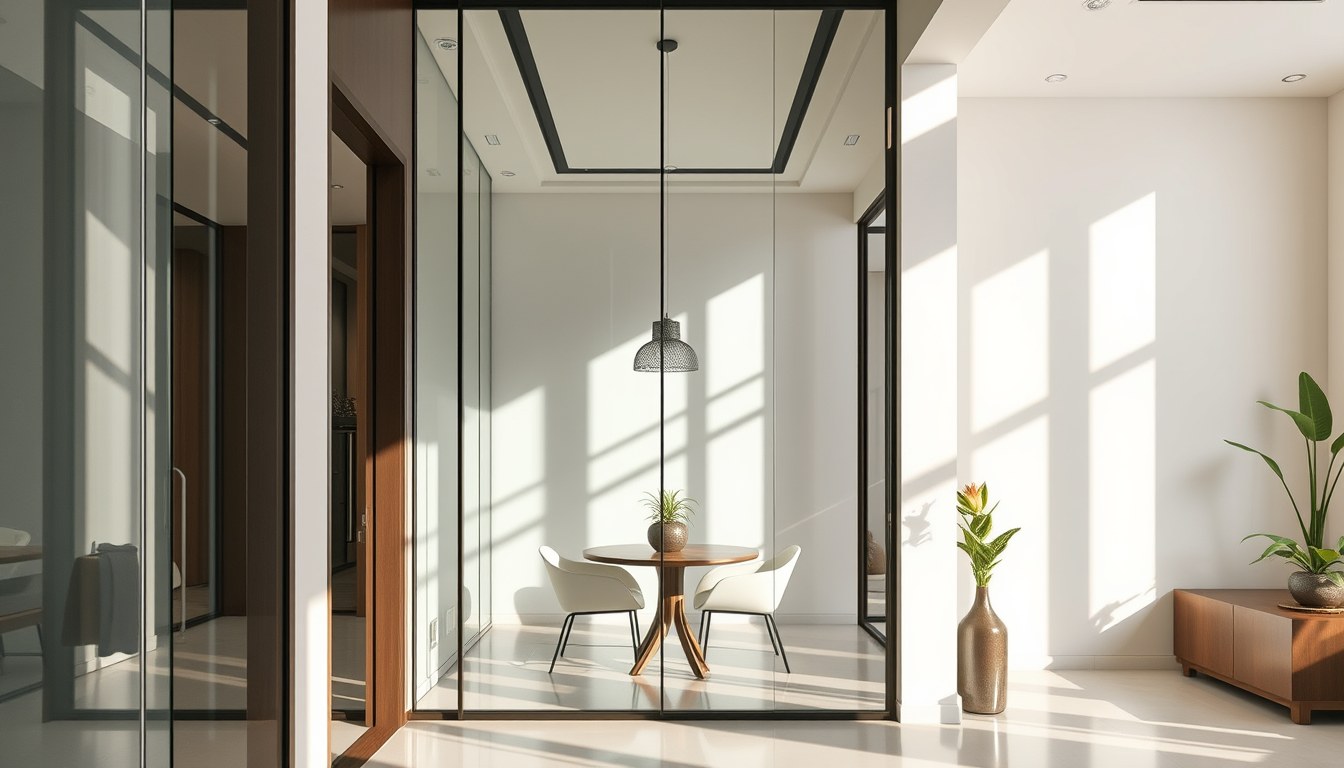
Small apartments and offices in Indian cities often feel cramped and dim, but mirrored glass partitions offer an elegant solution that works wonders on both light and perceived space. By strategically placing mirrored surfaces, you can bounce natural light around your room, create depth illusions, and divide areas without blocking sightlines. This guide reveals practical design strategies and installation tips to help you maximize every square foot of your compact space.
Why Mirrored Glass Partitions Work for Small Spaces
Mirrored glass partitions function on a simple principle: they reflect light and visual space, making rooms feel larger and brighter than they actually are. Unlike solid walls that absorb light and create visual dead ends, mirrored surfaces multiply the effect of natural and artificial lighting throughout your space. This is especially valuable in Indian apartments where multiple rooms may share a single window or where interior rooms lack direct sunlight.
Beyond light amplification, mirrored partitions serve a dual purpose as functional dividers. They allow you to separate a bedroom from a living area, create a home office nook, or define a dining space without the heaviness of traditional walls. The transparency of glass combined with reflective properties maintains visual flow while establishing clear zones—a critical balance in homes where every square meter counts.
Design Ideas for Mirrored Glass Partitions in Indian Homes
The most successful mirrored partition designs match your existing décor while maximizing their space-enhancing benefits. Here are proven approaches that work well in typical Indian apartment layouts:
Full-Height Mirrored Partitions
Floor-to-ceiling mirrored glass partitions create maximum visual expansion and are ideal for separating a bedroom from an open-plan living area. This approach works especially well in 1 BHK or 2 BHK flats where the living room doubles as a workspace. The full-height design ensures that even the ceiling appears to extend further, adding perceived height to rooms with standard 9-10 foot ceilings.
Partial or Half-Height Mirrored Panels
If full-height mirrors feel overwhelming, consider partial mirrored panels that sit 4-5 feet high. These work beautifully as desk dividers, kitchen separators, or bedroom partitions while maintaining sightlines above. Half-height designs are also easier to install in rental apartments where permanent modifications aren't permitted, and they cost significantly less than full-height systems.
Mirrored Frames with Glass Inserts
Combine mirrored sections with clear or frosted glass panels for a balanced aesthetic. This hybrid approach reduces the "mirror maze" feeling that can occur with too much reflective surface while still capturing the light-amplifying benefits. Popular in modern Indian homes, these designs often feature wooden or metal frames that add warmth and visual interest.
Corner and Angled Mirrored Partitions
Position mirrored partitions at angles or in corners to create multiple reflection points. An angled mirrored partition in a living room corner can reflect light from one wall to another, effectively brightening the entire space. This technique is particularly useful in north-facing apartments where natural light is limited.
Light Amplification Techniques with Mirrored Partitions
Strategic placement of mirrored surfaces can double or triple the perceived brightness of a room. The key is understanding how light travels and positioning mirrors to redirect it where it's needed most.
Positioning Opposite Windows
Place your mirrored partition opposite a window to reflect incoming natural light deep into the room. Morning or afternoon sunlight will bounce off the mirror and illuminate areas that would otherwise remain dim. In apartments where windows are limited, this single positioning choice can transform the entire space. This technique is especially effective in Mumbai and Bangalore homes where monsoons and urban density can reduce natural light.
Reflecting Artificial Light Sources
Position mirrored partitions near ceiling lights, wall sconces, or decorative lamps to multiply the effect of artificial lighting. A mirrored partition behind a light fixture creates the illusion of additional light sources. This allows you to use lower-wattage bulbs while maintaining bright, welcoming spaces—a practical solution for reducing electricity costs in Indian homes.
Creating Light Pathways
Use multiple mirrored surfaces to create a pathway for light through your space. For example, a mirrored partition in an entryway can reflect light from the main room into a narrow corridor or bedroom. Layering reflective surfaces strategically ensures that every corner of your compact space benefits from available light.
Space Illusion Strategies and Visual Tricks
Beyond brightness, mirrored partitions create powerful visual illusions that make spaces feel significantly larger. These psychological effects are grounded in how our brains perceive depth and dimension.
The Depth Illusion
A mirrored surface appears to extend the space behind it, creating the illusion of an additional room. If your bedroom is 10 feet deep, a mirrored partition can make it feel 20 feet deep. This effect is most pronounced when the mirror reflects an uncluttered, well-lit area. Keep the space immediately behind your mirrored partition organized and bright to maximize this illusion.
Doubling Visual Elements
Mirrors reflect furnishings, plants, and décor, effectively doubling your interior design elements without additional cost. A single potted plant reflected in a mirrored partition appears as two plants, adding visual richness to sparse spaces. This technique is particularly valuable in compact Indian flats where budget constraints often limit furnishing options.
Ceiling Height Perception
Tall, narrow mirrored partitions draw the eye upward, making ceilings appear higher. This is especially useful in older Indian buildings where standard 8.5-foot ceilings can feel oppressive. Vertical mirrored panels create an upward visual flow that counteracts this constraint.
Practical Installation and Material Considerations
Choosing the right mirrored glass and installation method ensures your partition is both beautiful and durable. Here's what you need to know before purchasing:
Glass Types and Quality
High-quality silver-coated mirrors (typically 5-6mm thick) offer superior reflection compared to cheaper alternatives. Look for mirrors with backing that resists moisture and corrosion, especially important in Indian climates where humidity can degrade reflective coatings. Expect to pay ₹800-1,500 per square foot for quality mirrored glass in major Indian cities.
Frame Materials
Aluminum frames are lightweight, affordable, and corrosion-resistant—ideal for Indian homes. Wooden frames add warmth but require regular maintenance in humid climates. Steel frames are durable but heavier and more challenging to install without professional help.
Installation Options
- Fixed partitions: Mounted permanently to floor and ceiling, these provide maximum stability and are best for owned apartments.
- Sliding partitions: Track-based systems allow flexible space division and are ideal for studio apartments or rental homes.
- Freestanding partitions: Frame-mounted panels that don't require drilling or permanent installation, perfect for renters.
Safety and Maintenance
Ensure your mirrored partition includes safety features like tempered glass edges and secure framing to prevent accidents. Regular cleaning with a soft cloth and glass cleaner keeps mirrors reflective and streak-free. In humid Indian climates, ensure adequate ventilation around mirrored surfaces to prevent moisture damage.
Real-World Applications in Indian Apartments
Mirrored partitions solve specific challenges common in Indian homes. A 1 BHK flat can use a mirrored partition to separate sleeping and living zones while maintaining visual continuity. A studio apartment benefits from a half-height mirrored panel that creates a bedroom nook without blocking light to the living area. Home offices in shared spaces can use frosted mirrored partitions to establish professional boundaries while keeping the space feeling open.
In shared apartments, mirrored partitions reduce the claustrophobic feeling of close quarters by multiplying perceived space. A couple living in a 500 sq ft flat can feel like they have 700+ sq ft of visual space through strategic mirrored partition placement. This psychological benefit often translates to improved living comfort and reduced stress.
Frequently Asked Questions
Are mirrored glass partitions safe in earthquake-prone areas like India?
Yes, when properly installed with tempered glass and secure framing. Tempered glass is four to five times stronger than regular glass and shatters into small, blunt pieces rather than sharp shards if broken. Ensure your partition is professionally installed with adequate bracing, and always use a qualified installer familiar with local building codes in earthquake-sensitive zones like parts of Delhi, Himachal Pradesh, and the northeast.
Can mirrored partitions be used in kitchens and bathrooms?
Mirrored partitions work well in kitchens for creating visual space and reflecting light, but bathroom use requires special consideration. High humidity can damage standard mirror backing, so use moisture-resistant, high-quality mirrored glass specifically rated for wet areas. Ensure proper ventilation to prevent mold and corrosion. Consult a professional before installing mirrored partitions in bathrooms.
How much does a mirrored glass partition cost in India?
Costs vary by size, glass quality, and frame material. A basic half-height mirrored partition for a 6-foot opening typically costs ₹15,000-30,000, while a full-height partition with aluminum framing runs ₹35,000-70,000. Premium options with wooden frames or custom designs cost ₹80,000-150,000+. Freestanding partitions are cheaper (₹8,000-20,000) but less stable than fixed installations.
Do mirrored partitions work in north-facing apartments with limited natural light?
Absolutely. Mirrored partitions amplify whatever light is available, even in north-facing rooms. Combine them with bright artificial lighting, light-colored walls, and strategic placement opposite windows or light sources. While not a substitute for natural light, mirrored partitions significantly improve brightness perception and create a more spacious feel in naturally dim apartments.
Can renters install mirrored glass partitions without damaging walls?
Yes. Freestanding mirrored partitions require no permanent installation and are perfect for renters. Alternatively, use track-based sliding systems that mount to ceilings (damage is minimal and easily repaired) rather than walls. Avoid permanent installations that require drilling into walls, and always check your rental agreement before making modifications.
Ready to transform your small space with mirrored glass partitions? Explore trusted glass suppliers, manufacturers, and installation professionals in your city through the glassy.in directory. Connect with verified vendors who specialize in mirrored partitions and interior glass solutions for Indian homes and offices.