
Interior Design
Mirrored Glass Partitions for Fitness Studios: Design Trends and Installation in Mumbai
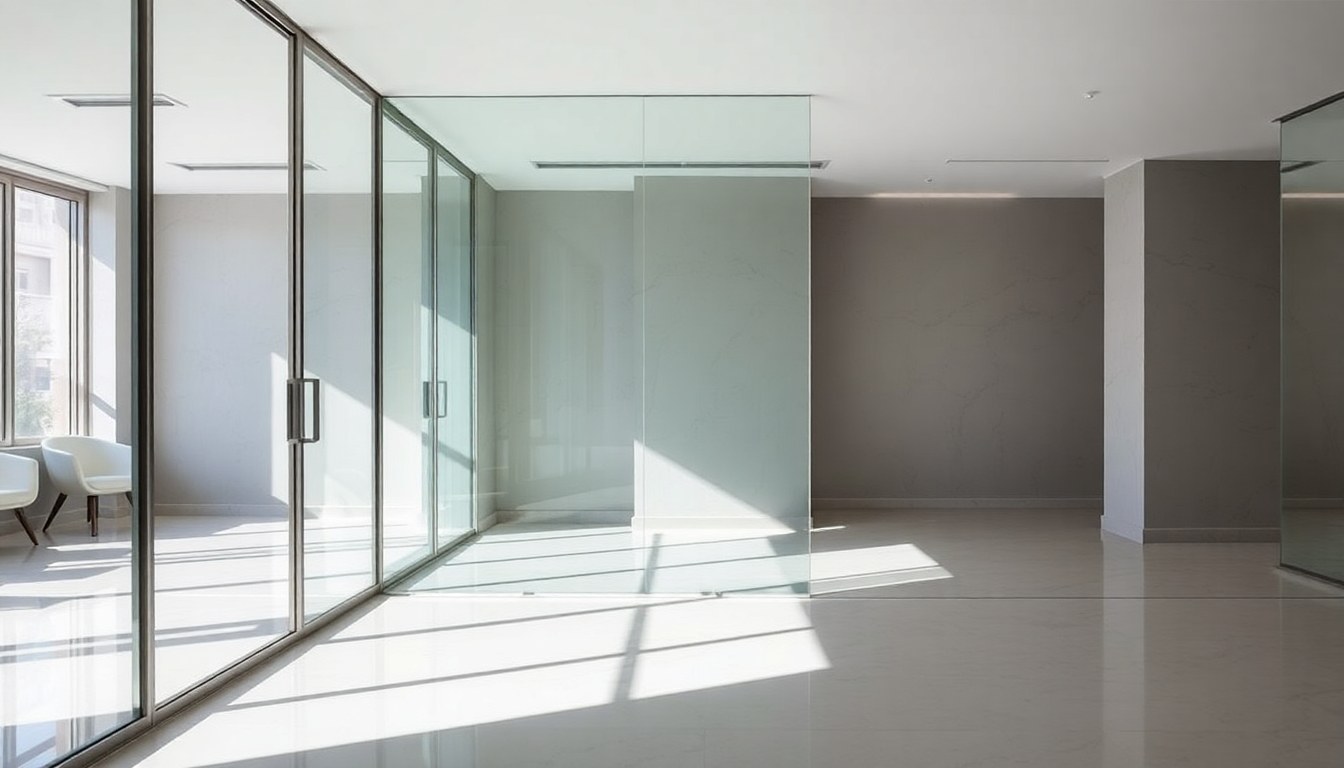
Mirrored glass partitions have become essential to modern fitness studio design, allowing gyms and yoga centers to maximize space while maintaining visibility and creating an open, professional atmosphere. In Mumbai's competitive fitness market, strategic use of mirrored partitions can divide a studio into multiple functional zones without sacrificing the sense of spaciousness that attracts members. This guide covers design trends, safety standards, acoustic considerations, and installation costs specific to Mumbai fitness businesses.
Why Mirrored Glass Partitions Matter for Fitness Studios
Fitness studios in Mumbai face unique space constraints, particularly in high-rise commercial buildings where square footage comes at a premium. Mirrored glass partitions solve this challenge by creating separate zones for yoga, Pilates, strength training, and group classes while maintaining visual continuity. Unlike solid walls, mirrors reflect light and create an illusion of expanded space—a psychological benefit that improves member experience and justifies premium membership fees.
Beyond aesthetics, mirrored partitions serve a functional purpose: they allow instructors and members to monitor form during workouts, reducing injury risk and improving class quality. In yoga studios, mirrors help practitioners maintain proper alignment. In CrossFit boxes and strength training areas, they're invaluable for form correction. The combination of functionality and visual appeal makes mirrored glass partitions a smart investment for fitness businesses looking to differentiate themselves in Mumbai's crowded wellness market.
Design Trends for Fitness Studios in Mumbai
Frameless and Minimalist Aesthetics
The trend toward frameless mirrored glass partitions continues to dominate high-end fitness studios across Mumbai. Frameless designs create a seamless, contemporary look that appeals to premium gym members. These partitions use specialized hardware and edge treatments to eliminate visible frames, resulting in a clean, modern appearance that photographs well for social media marketing.
Minimalist design also reduces visual clutter in already-busy fitness spaces. When combined with neutral wall colors and strategic lighting, frameless mirrored partitions create a sophisticated environment that feels more like an upscale wellness retreat than a traditional gym.
Partial and Accent Mirroring
Not all fitness studios opt for floor-to-ceiling mirrors. Many Mumbai studios now use partial mirroring—typically 60 to 80 percent of partition height—paired with frosted or clear glass above. This trend offers several advantages: it reduces costs, improves acoustic performance, and creates visual interest through mixed materials.
Accent mirroring, where only certain partitions or sections feature mirrors, is another emerging trend. This approach allows studios to create distinct visual zones while maintaining some transparency and openness. For example, a yoga studio might use mirrored partitions only in the strength-training area while keeping the main studio open with clear glass.
Integration with Smart Glass Technology
Premium fitness facilities in Mumbai are beginning to explore smart glass (switchable glass) that transitions from transparent to opaque at the flip of a switch. While currently expensive, this technology offers flexibility for studios that need to adjust privacy levels or create temporary separate spaces. As costs decline, expect wider adoption among high-end fitness centers.
Safety Standards and Compliance for Mumbai Installations
Indian Standards for Glass Partitions
All mirrored glass partitions in India must comply with IS 2553:2009 (Indian Standard for Mirrors and Mirrored Glass Sheets). This standard specifies minimum thickness, reflectivity, and durability requirements. For fitness studios, a minimum thickness of 5mm tempered mirror is standard; 6mm is preferred for high-traffic areas or large unsupported spans.
Additionally, partitions must meet IS 13551 (Safety code for safety glazing materials in buildings), which mandates that all glass in fitness studios be safety-rated. This means using tempered or laminated glass that fragments into small, non-sharp pieces if broken—critical in high-impact environments where equipment or people might strike the glass.
Building Bylaws and Permissions
Mumbai's Municipal Corporation (BMC) building bylaws require that any interior partition installation be documented and approved if it affects structural load or fire safety. Most mirrored glass partitions, being non-load-bearing, require minimal approval, but it's essential to:
- Obtain written approval from your building's structural engineer or architect
- Ensure the installation doesn't obstruct fire escape routes or emergency exits
- Verify that electrical wiring and fire safety systems aren't compromised
- Keep installation documentation for future audits or renovations
Impact Resistance and Durability
Fitness environments demand high-impact-resistant glass. Tempered glass is non-negotiable for any partition that might experience contact from dumbbells, medicine balls, or people during high-intensity training. Laminated safety glass offers additional protection by holding together if broken, making it ideal for ground-level partitions or areas with heavy equipment.
Acoustic Performance and Sound Isolation
A common misconception is that mirrored glass provides acoustic isolation. In reality, standard mirror glass is acoustically transparent—sound passes through easily. For fitness studios where multiple classes run simultaneously, acoustic performance is critical to prevent noise bleed between zones.
Achieving Sound Isolation
To improve acoustic performance, consider these options:
- Laminated glass with acoustic interlayers: Specialized laminated glass with viscoelastic interlayers absorbs sound energy, reducing transmission by 30-40%. This is the most effective solution for mirrored partitions.
- Partial glass with solid panels: Combining mirrored glass with solid panels (painted MDF or acoustic board) above reduces sound transmission while maintaining visibility where it matters most.
- Sealed frames and weatherstripping: Gaps around frame edges are major sound leaks. Proper sealing can improve acoustic performance by 10-15%.
- Complementary acoustic treatments: Combine glass partitions with acoustic ceiling tiles, wall panels, or flooring to create a comprehensive sound management strategy.
For yoga studios and Pilates centers, standard mirrored glass is often sufficient since these classes generate less noise. For CrossFit boxes, HIIT studios, or dance fitness spaces, acoustic laminated glass is a worthwhile investment that enhances the member experience and reduces complaints from adjacent tenants.
Installation Process and Timeline in Mumbai
Pre-Installation Planning
Proper planning determines installation success. Before ordering materials, work with a qualified glass contractor to:
- Conduct precise measurements of the space (account for floor unevenness, which is common in older Mumbai buildings)
- Assess load-bearing capacity of walls and floors
- Identify utilities (electrical, plumbing, HVAC) that might conflict with installation
- Determine optimal partition placement for workflow and visibility
- Select appropriate glass thickness, type (tempered, laminated, or hybrid), and edge treatments
Installation Timeline
A typical mirrored glass partition installation in Mumbai takes 1-3 weeks depending on complexity:
- Week 1: Site preparation, wall reinforcement (if needed), frame installation
- Week 2: Glass cutting, delivery, and mounting; hardware installation
- Week 3: Final adjustments, sealing, cleaning, and safety inspections
During installation, your studio will be partially or fully closed. Schedule installation during low-membership periods or plan for temporary class relocations. Reputable contractors will provide detailed timelines upfront and minimize disruption.
Cost Breakdown for Mumbai Fitness Studios
Mirrored glass partition costs vary widely based on glass type, size, and installation complexity. Here's a realistic breakdown for Mumbai:
- Standard tempered mirrored glass (5mm): ₹400–₹600 per square meter
- Laminated acoustic glass: ₹800–₹1,200 per square meter
- Frameless hardware and fittings: ₹2,000–₹5,000 per partition
- Installation labor: ₹150–₹300 per square meter
- Edge polishing and finishing: ₹50–₹100 per linear meter
For a typical 100 sq. meter studio with one partition (20 sq. meters of glass), expect total costs between ₹15,000–₹35,000 for standard tempered glass, or ₹25,000–₹50,000 for acoustic laminated glass. Prices are higher in central Mumbai (Bandra, Lower Parel) and lower in suburban areas.
Cost-Saving Tips
To optimize your budget without compromising quality:
- Use partial mirroring (60-70% height) instead of full-height mirrors
- Combine mirrored glass with frosted or clear glass to reduce mirror area
- Choose standard sizes to avoid custom cutting charges
- Get multiple quotes from established contractors; prices vary significantly
- Schedule installation during off-peak seasons (May-June, September-October) for potential discounts
Choosing the Right Contractor in Mumbai
Installation quality directly impacts durability and safety. When selecting a contractor, verify:
- ISI certification: Ensure they work with ISI-certified glass and materials
- Track record: Request references from other fitness facilities they've worked with
- Insurance and warranty: Confirm they carry liability insurance and provide minimum 5-year warranties
- Compliance knowledge: They should be familiar with BMC bylaws and fire safety codes
- Maintenance support: Ask about post-installation maintenance, cleaning recommendations, and repair services
Avoid contractors offering suspiciously low prices; this often indicates use of non-compliant materials or poor craftsmanship that creates safety risks and costly future repairs.
Maintenance and Long-Term Care
Mirrored glass partitions require regular maintenance to preserve appearance and functionality. Clean mirrors weekly with a microfiber cloth and glass cleaner to prevent dust buildup and water spots. Avoid abrasive cleaners that damage the reflective coating.
Inspect seals and weatherstripping annually; replace if cracked or deteriorated. Check for any signs of mirror degradation (dark spots, cloudiness), which indicate moisture penetration—a serious issue requiring professional repair. Most quality installations last 15-20 years with proper care.
Frequently Asked Questions
Are mirrored glass partitions safe for fitness studios?
Yes, when installed correctly using tempered or laminated safety glass that meets IS 13551 standards. Tempered glass is designed to fragment into small, non-sharp pieces if broken, minimizing injury risk. Laminated glass holds together even if cracked. Always ensure your contractor uses ISI-certified materials and follows proper installation protocols.
Can mirrored glass partitions reduce noise between fitness classes?
Standard mirror glass provides minimal sound isolation. To achieve meaningful acoustic performance, specify laminated glass with acoustic interlayers, which can reduce sound transmission by 30-40%. Combine this with sealed frames and complementary acoustic treatments for best results.
How long does mirrored glass partition installation take?
Typical installation takes 1-3 weeks depending on partition size and complexity. Most installations involve site preparation (3-5 days), frame setup (3-5 days), glass mounting (3-5 days), and finishing (2-3 days). Plan for potential gym closure or class relocation during this period.
What's the average cost for mirrored glass partitions in Mumbai fitness studios?
Costs range from ₹400–₹600 per square meter for standard tempered glass to ₹800–₹1,200 per square meter for acoustic laminated glass, plus installation labor (₹150–₹300/sq. meter) and hardware. A typical 20 sq. meter partition costs ₹15,000–₹50,000 depending on glass type and location within Mumbai.
What maintenance do mirrored glass partitions require?
Clean mirrors weekly with microfiber cloth and glass cleaner. Inspect seals annually and replace if damaged. Avoid abrasive cleaners that damage the reflective coating. Quality installations last 15-20 years with proper care. Professional maintenance services are available through most installation contractors.
Ready to upgrade your fitness studio with professional mirrored glass partitions? Explore verified glass suppliers, contractors, and design specialists in Mumbai through the Glassy.in directory. Connect with experienced professionals who understand fitness studio requirements, safety standards, and local building codes—ensuring your installation is both beautiful and compliant.