
Glass Guides
Low-E Glass Coating Explained: Reduce AC Costs in Delhi & North India
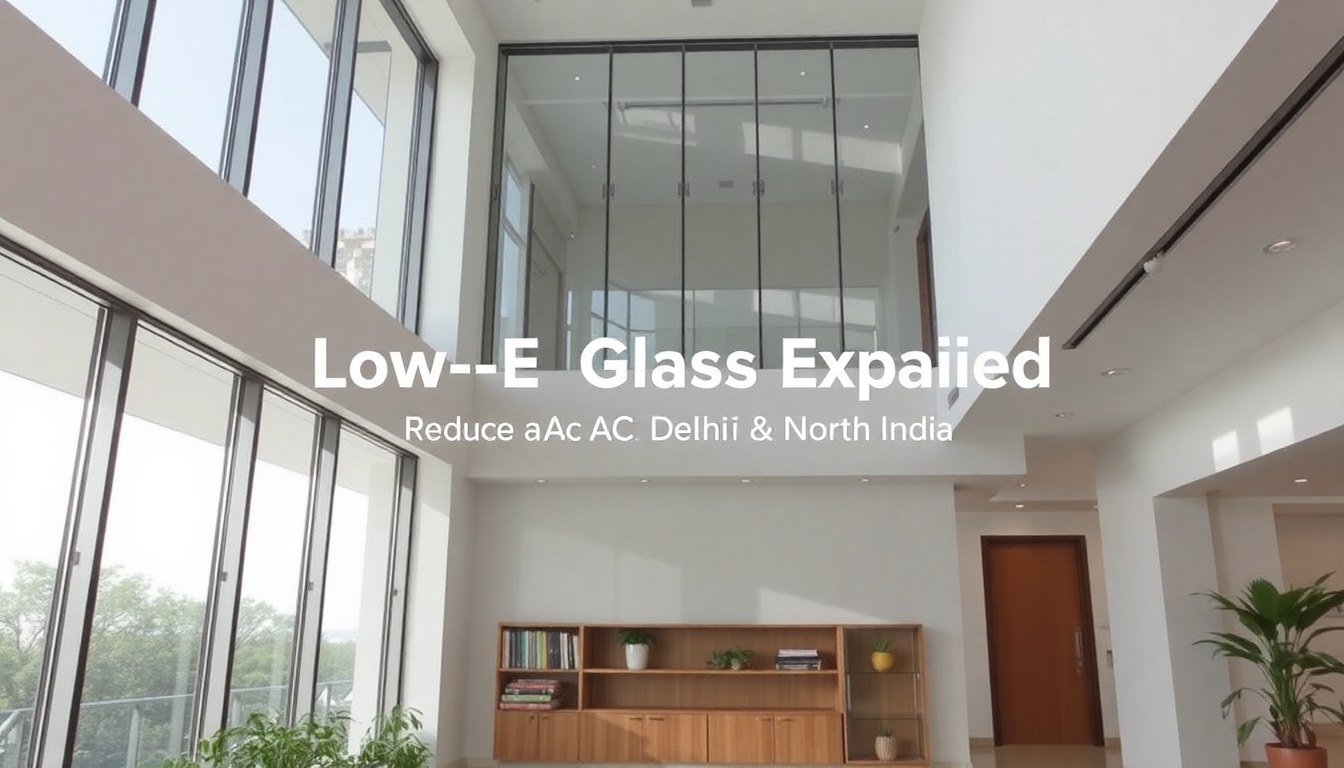
If you're battling soaring electricity bills in Delhi or North India during summer, low-emissivity (low-E) glass coatings offer a science-backed solution that can cut your AC costs by 20–30% without sacrificing natural light. This invisible metallic layer on window glass reflects heat back outside while allowing visible light to enter, making it one of the smartest long-term investments for residential and commercial buildings in hot climates.
What Is Low-E Glass Coating?
Low-emissivity glass features a microscopically thin, transparent coating of metallic oxides—typically silver, tin oxide, or zinc oxide—applied to one or more surfaces of the glass pane. This coating works by selectively transmitting light wavelengths while blocking infrared (heat) radiation. Think of it as a one-way mirror for thermal energy: visible light passes through freely, but radiant heat bounces back outside.
The coating is so thin (usually 100–500 nanometers) that it's invisible to the naked eye, yet it dramatically alters how glass interacts with solar radiation. This technology has been refined over three decades and is now standard in energy-efficient buildings worldwide. In India's harsh summer climate, low-E glass is particularly valuable because it prevents heat from penetrating your home or office without blocking daylight.
How Low-E Coatings Are Applied
There are two main methods: offline coating (applied in a factory before the glass is installed) and online coating (applied during the glass manufacturing process). Offline coating is more common in India and involves a vacuum deposition process where metallic oxides are vaporized and bonded to the glass surface. The result is a durable, permanent layer that won't peel or degrade under normal conditions.
The Science: How Low-E Glass Blocks Heat
Solar radiation reaching Earth consists of ultraviolet (UV) light, visible light, and infrared (IR) radiation. Standard clear glass transmits nearly all wavelengths, allowing heat to build up inside your space. Low-E coatings selectively reflect IR radiation—the primary source of heat gain—while allowing 50–80% of visible light through, depending on the coating type.
The metallic layer acts as a thermal mirror. When infrared photons strike the coating, they are reflected back rather than absorbed or transmitted. This is why low-E glass feels cooler to the touch on a sunny day compared to ordinary glass. In summer, this reduces the heat load on your air conditioning system, meaning your AC doesn't have to work as hard to maintain a comfortable temperature.
Solar Heat Gain Coefficient (SHGC) and U-Value
Two key metrics define low-E glass performance:
- Solar Heat Gain Coefficient (SHGC): Measures the fraction of solar radiation admitted through the glass. Lower SHGC (0.20–0.40) means more heat is blocked. For North India's hot summers, SHGC of 0.30–0.35 is ideal.
- U-Value: Measures heat transmission through the glass assembly. Lower U-values (0.20–0.30 W/m²K) indicate better insulation. This matters year-round, preventing indoor heat from escaping in winter.
When specifying low-E glass for your Delhi or Bangalore home, ask your supplier for these values. A professional installer will recommend the right balance for your climate and orientation (east-facing windows need different coatings than north-facing ones).
Energy Savings and ROI in Hot Climates
The financial case for low-E glass is compelling. Studies in Indian climates show that buildings with low-E glazing reduce cooling energy consumption by 20–30% compared to standard glass. For a typical Delhi apartment running AC for 8–10 hours daily during summer months, this translates to savings of ₹2,000–₹4,000 per month on electricity bills.
Initial cost is higher: low-E coated glass costs 40–60% more than standard clear glass. A typical residential window upgrade (say, 100 sq. meters of glass) might cost ₹1,50,000–₹2,50,000 extra. However, the payback period is typically 3–5 years, after which you enjoy pure savings. Over a 20-year window lifespan, the total savings can exceed ₹5,00,000, making low-E glass a sound investment for long-term property owners.
Additional Benefits Beyond AC Savings
- UV Protection: Low-E coatings block 99% of harmful UV rays, protecting furniture, carpets, and artwork from fading.
- Winter Warmth: In North India's cold winters, the coating retains indoor heat, reducing heating costs.
- Comfort: Eliminates hot spots near windows and reduces glare, improving indoor comfort year-round.
- Property Value: Energy-efficient homes command a 3–5% price premium in the resale market.
Types of Low-E Coatings for Different Climates
Low-E coatings are not one-size-fits-all. Manufacturers produce different variants optimized for heating-dominated, cooling-dominated, or mixed climates.
Hard-Coat (Pyrolytic) Low-E
Applied during the glass manufacturing process at high temperatures, hard-coat low-E is extremely durable and can withstand insulating glass unit (IGU) assembly. It has a higher solar heat gain coefficient (SHGC 0.40–0.55), making it better for climates needing some passive solar gain. In North India, hard-coat is less common because summer cooling is the priority.
Soft-Coat (Sputtered) Low-E
Applied offline using vacuum deposition, soft-coat has a lower SHGC (0.20–0.35) and superior thermal insulation (lower U-value). It's ideal for hot climates and must be sealed between glass panes in an IGU to protect the coating. Most low-E glass installed in Delhi and North India is soft-coat because it maximizes summer cooling efficiency.
Triple-Silver and Multi-Layer Coatings
Premium soft-coat systems use multiple silver layers separated by dielectric materials, achieving SHGC as low as 0.20 and U-values below 0.15 W/m²K. These are the best performers but also the most expensive. They're recommended for large commercial buildings and luxury residential projects where energy savings and occupant comfort justify the cost.
Best Low-E Glass Brands Available in India
Several reputable manufacturers supply low-E coated glass in India. When upgrading windows, work with certified dealers and installers who understand local climate requirements.
- Saint-Gobain India (SGB): Guardian and Diamant brands; widely available, good warranty, SHGC options from 0.20–0.50.
- Pilkington (NSG Group): Pilkington Optitherm and K-Glass; established reputation, strong technical support.
- Asahi Glass (AGC): Ecolite and Ecogreen ranges; premium performance, used in high-end residential projects.
- Borosil Glass Works: Indian manufacturer with competitive pricing; Borosil Low-E series suitable for North India.
- Reflectiv/Glasstech: Regional suppliers offering custom SHGC values for specific applications.
When sourcing low-E glass, verify that the supplier provides technical datasheets with SHGC and U-value specifications, and ensure the installation contractor is trained in handling coated glass (soft-coat requires careful handling to avoid damage to the coating).
Installation and Maintenance Tips
Low-E glass must be installed correctly to perform as intended. Soft-coat low-E should always be positioned as the inner surface of an insulating glass unit (IGU) to protect the coating from moisture and degradation. Poor installation—such as placing soft-coat on the exterior surface—will void the warranty and reduce performance.
Maintenance is straightforward. Clean low-E glass with standard glass cleaner and soft cloths, just as you would ordinary glass. The coating does not require special care. Avoid abrasive cleaners or rough materials that might scratch the surface. Regular cleaning every 2–3 months keeps the glass clear and ensures maximum light transmission.
If you're planning a commercial or large residential project, consult with architects experienced in glazing design. Firms like Site Practice and Groove Designs often specify high-performance glazing systems including low-E options. Interior designers such as SIRA Interiors can also advise on aesthetic and thermal considerations.
Frequently Asked Questions
Will low-E glass make my home too dark?
No. Low-E coatings are designed to transmit 50–80% of visible light depending on the product. You'll notice no significant darkening indoors. The glass remains crystal clear; the coating is invisible. Some premium soft-coat products transmit up to 80% of visible light while blocking 70% of solar heat.
Can I apply low-E coating to existing windows?
Factory-applied coatings cannot be retrofitted to existing glass. However, you can replace old windows with new low-E coated units. Aftermarket low-E films are available but are far less effective than factory coatings and are not recommended for serious energy savings. A full window replacement is the proper solution.
Is low-E glass worth it in North India?
Absolutely. With summer temperatures regularly exceeding 40°C in Delhi and surrounding regions, low-E glass delivers measurable AC savings of 20–30%. The 3–5 year payback period is attractive, especially for homeowners planning to stay in their property long-term. For rental properties or short-term investments, the ROI may be less compelling.
What's the difference between low-E glass and tinted glass?
Tinted glass (colored glass) absorbs solar radiation, causing the glass itself to heat up and re-radiate heat indoors. Low-E glass reflects infrared radiation, preventing heat buildup. Low-E is far superior for cooling efficiency. Some products combine tinting with low-E coating for additional glare reduction.
How long does low-E coating last?
Factory-applied low-E coatings are permanent and will last the lifetime of the glass (20–30+ years) when installed correctly. The coating is bonded to the glass at a molecular level and does not degrade under normal use. Soft-coat low-E inside an IGU is protected from the environment and will maintain performance indefinitely.
Conclusion: Smart Cooling for India's Climate
Low-emissivity glass coatings represent mature, proven technology that delivers real energy savings in India's hot climates. By reflecting infrared heat while admitting visible light, low-E glass reduces your AC load and electricity bills by 20–30%, with a payback period of 3–5 years. For homeowners and developers in Delhi, Noida, Bangalore, and other hot regions, upgrading to low-E glazing is one of the most effective ways to improve thermal comfort and reduce operating costs.
Ready to explore low-E glass options for your home or project? Visit glassy.in, India's largest glass-business directory, to connect with certified glass suppliers, installers, and architects in your area. Browse verified dealers, compare products, and get expert guidance on selecting the right low-E coating for your climate and budget.