
Glass Facades
Glass Facade Thermal Breaks: Preventing Heat Transfer in High-Rise Buildings
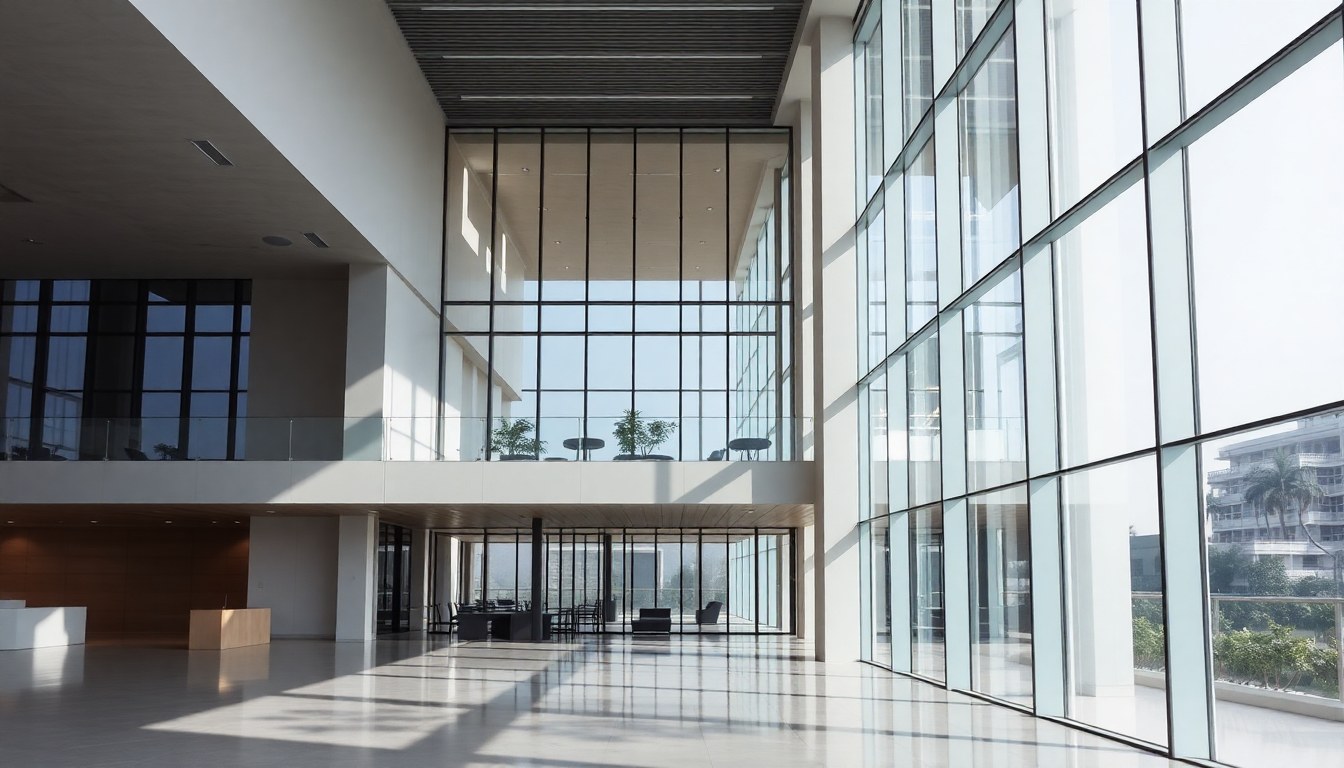
As India's urban skyline fills with glass-clad high-rises, architects and building engineers face a critical challenge: controlling heat transfer through exterior facades in scorching summer temperatures. Thermal breaks in curtain wall systems are specialized insulating components that interrupt the conductive pathway of heat through aluminum frames, dramatically reducing energy loss and improving occupant comfort. Understanding their material science, performance standards, and application in Indian climates is essential for anyone designing or specifying modern glass facades.
What Are Thermal Breaks and Why They Matter
A thermal break is a low-conductivity material—typically polyamide resin or fiberglass-reinforced polymer—inserted between the inner and outer aluminum profiles of a curtain wall system. Aluminum, while structurally excellent, is an outstanding heat conductor with a thermal conductivity of approximately 160 W/m·K. Without interruption, this creates a direct thermal bridge that allows exterior heat to penetrate deep into the building envelope, forcing air conditioning systems to work harder and driving up energy consumption.
In India's climate zones, where outdoor temperatures regularly exceed 40°C in cities like Delhi, Mumbai, and Bangalore, thermal breaks become not just an efficiency feature but a necessity. They reduce the U-value (overall heat transfer coefficient) of the curtain wall system, meaning less heat flows through per unit area per degree of temperature difference. A well-designed thermal break can reduce facade U-values from around 5.5 W/m²·K (aluminum-only frame) to 2.5–3.0 W/m²·K or better, translating directly into lower cooling loads and reduced operational costs.
Material Science of Thermal Break Components
Polyamide Resin Thermal Breaks
Polyamide (nylon) resin is the most widely used thermal break material in global curtain wall systems. Its low thermal conductivity—typically 0.25 W/m·K—combined with adequate mechanical strength makes it ideal for structural applications. Polyamide thermal breaks are injection-molded or extruded to precise dimensions and bonded or mechanically fastened between aluminum extrusions. They maintain their insulating properties across a wide temperature range, from sub-zero winters in Himalayan regions to extreme summer heat in the Deccan plateau.
The material's tensile strength (typically 60–80 MPa) allows it to carry shear loads and resist thermal stress without creeping or deforming. This is critical in tall buildings where wind loads and thermal expansion create significant mechanical stresses. Quality polyamide thermal breaks also resist moisture absorption better than older phenolic materials, reducing dimensional changes in humid coastal cities like Mumbai or Kochi.
Fiberglass-Reinforced Composites
Newer thermal break systems use fiberglass-reinforced polyamide or polyurethane composites. Glass fibers increase stiffness and reduce thermal expansion coefficients, improving dimensional stability. These materials offer thermal conductivity values as low as 0.15–0.20 W/m·K while maintaining superior strength. For high-rise buildings in seismic zones or areas prone to strong monsoon winds, these advanced composites provide enhanced safety margins and longer service life.
Structural Design and Aluminum Alternatives
Traditional Aluminum-Polyamide Hybrid Systems
The standard approach combines aluminum extrusions (outer and inner frames) with polyamide thermal break strips. The aluminum provides structural capacity and weather resistance; the polyamide interrupts heat flow. Typical configurations use 20–40 mm wide thermal break sections, with the exact width determined by structural analysis and thermal modeling. Architects working with firms like BIM Modeller Consulting Services can perform detailed thermal simulations to optimize break dimensions for specific project requirements and climate zones.
These systems are proven, cost-effective, and widely available from manufacturers across India. They integrate seamlessly with glazing gaskets, drainage systems, and insulation layers. Installation is straightforward, requiring standard aluminum fabrication equipment and processes familiar to local fabricators.
Structural Insulated Panel (SIP) Alternatives
Some advanced projects employ structural insulated aluminum panels with foam or aerogel cores as complete facade units. While more expensive, these systems achieve U-values below 1.5 W/m²·K and reduce thermal bridging at mullion intersections. However, they require specialized manufacturing and are less common in India's market. Traditional aluminum curtain walls with thermal breaks remain the standard for most high-rise projects due to their balance of performance, cost, and constructability.
Performance Testing and Indian Climate Standards
Thermal Testing Methods
Thermal break performance is measured through standardized laboratory tests. The most relevant standards in India include IS 6533 (Code of Practice for use of Aluminium in Buildings) and NFRC (National Fenestration Rating Council) protocols. These tests measure the linear thermal transmittance (ψ-value) of the thermal break junction, expressed in W/m·K. A well-designed thermal break typically achieves ψ-values of 0.05–0.10 W/m·K, meaning minimal heat flows along the aluminum-break interface.
Hot-box testing simulates exterior and interior temperature differences while measuring actual heat flow. For Indian applications, tests should replicate extreme conditions: 50°C exterior (or higher in direct solar gain) with 22°C interior air conditioning. This 28°C differential is more severe than many international standards assume, making localized testing valuable for Indian projects.
Durability and Aging Resistance
Thermal breaks must withstand decades of thermal cycling. In India's monsoon climate, humidity fluctuations are extreme. Quality polyamide thermal breaks are tested for moisture absorption (typically limited to 0.5–1.0% by weight) and dimensional stability after exposure to 85°C and 85% relative humidity for extended periods. UV resistance is equally important, particularly in high-altitude locations where solar radiation is intense. Additives and stabilizers in the resin formulation protect against degradation, ensuring the thermal break maintains its insulating properties throughout the building's 50+ year service life.
Practical Application in Indian High-Rise Projects
Design Considerations for Tropical and Subtropical Climates
Indian architects must account for several unique factors when specifying thermal breaks. First, solar heat gain through glazing far exceeds conductive heat transfer in most climates, so facade design should prioritize external shading, low-emissivity (low-E) coatings, and reflective glass. Thermal breaks complement these strategies by reducing conduction through the frame itself. Second, high humidity and salt spray in coastal regions demand corrosion-resistant aluminum alloys (typically 6063-T5 or 6061-T6) paired with durable thermal break materials. Third, rapid day-night temperature swings in desert regions create large thermal stresses; oversized thermal breaks and careful structural analysis prevent cracking and delamination.
Experienced fabricators like City Glass Palace and Aluminium Fabrication and Baby Associates understand these regional variations and can specify appropriate thermal break systems for local conditions. Consulting with specialists during early design phases prevents costly retrofits and performance failures later.
Cost-Benefit Analysis
Thermal breaks add 8–15% to curtain wall material costs, depending on system complexity and break width. For a 10,000 m² facade, this might represent ₹15–25 lakhs in additional material cost. However, annual cooling energy savings in a typical high-rise office building can reach 10–20%, translating to ₹50–100 lakhs in operational savings over 10 years. The payback period is typically 3–5 years, after which thermal breaks deliver pure financial benefit. In India's context of rising electricity costs and increasing air conditioning loads, this ROI is compelling for building owners and developers.
Installation and Quality Control
Proper installation is as critical as material selection. Thermal breaks must be securely bonded or mechanically fastened to both inner and outer aluminum extrusions, with no gaps or voids that would create air pockets and reduce effectiveness. Quality control during fabrication includes visual inspection, dimensional verification, and pull-testing of bonded joints. On-site installation requires trained crews familiar with thermal break systems; improper handling or assembly can compromise performance.
Building information modeling (BIM) and detailed fabrication drawings ensure accuracy. Firms like feza Institute and design consultants can prepare comprehensive specifications and 3D models that guide fabricators and installers through complex curtain wall assemblies, reducing rework and delays.
Frequently Asked Questions
What is the difference between a thermal break and thermal insulation?
A thermal break is a localized component inserted into the structural frame to interrupt heat conduction along the metal path. Thermal insulation, by contrast, refers to bulk materials (like foam or fiberglass) that slow heat transfer through air gaps or material density. In curtain walls, thermal breaks are frame-integrated components, while insulation typically appears in cavity fills or behind backup systems. Both are necessary for optimal performance.
Can thermal breaks be retrofitted into existing curtain walls?
Retrofitting thermal breaks into existing aluminum curtain walls is generally not practical. The frame would need to be disassembled, thermal break components inserted, and the system reassembled—a labor-intensive and costly process that often damages seals and gaskets. New facade systems or strategic replacement of worst-performing sections are more feasible. For new construction, thermal breaks should be specified from the outset.
How do thermal breaks perform in high-wind or seismic zones?
Properly designed thermal breaks do not compromise structural integrity. The polyamide or composite material is selected and dimensioned to carry shear and tensile loads from wind and seismic forces. Structural engineers perform finite-element analysis to confirm that thermal break sections do not fail under design loads. In fact, the slight flexibility of polyamide can help dissipate vibration energy, potentially improving seismic performance compared to rigid all-aluminum frames.
What maintenance do thermal breaks require?
Thermal breaks require no active maintenance. They are internal to the frame assembly and do not come into contact with weather or occupants. Routine curtain wall maintenance—cleaning glass, checking seals, inspecting drainage—applies to the overall system but not specifically to thermal breaks. If properly installed and protected from UV during fabrication and storage, thermal breaks will perform for the building's entire lifespan.
Are there any thermal break materials better suited to India's climate?
Standard polyamide thermal breaks perform excellently in India's tropical, subtropical, and temperate zones. However, in extremely humid coastal areas (like Kochi or Kolkata), fiberglass-reinforced composites with lower moisture absorption may offer marginally better long-term stability. In high-altitude regions with intense UV (like Shimla or Manali), UV-stabilized polyamide with protective coatings is recommended. For most Indian cities, conventional polyamide thermal breaks from reputable manufacturers meet all performance requirements at competitive cost.
Conclusion
Thermal breaks are a proven, cost-effective solution for reducing heat transfer through glass curtain walls in India's demanding climate. By interrupting the conductive pathway of aluminum frames with low-conductivity materials like polyamide or fiberglass-reinforced composites, thermal breaks dramatically improve facade thermal performance, reduce cooling energy consumption, and enhance occupant comfort. Whether you're designing a new high-rise in Mumbai, Bangalore, or Delhi, or specifying facade upgrades for existing buildings, thermal breaks should be a core component of your curtain wall strategy.
Ready to explore thermal break solutions and connect with experienced fabricators and designers? Browse the glassy.in directory to find certified glass and aluminum specialists in your region. From BIM modeling and architectural consultation to fabrication and installation, our network of professionals can guide your project from concept through completion. Visit glassy.in today to discover the right partners for your facade project.