
Interior Design
Colored Tinted Glass for Office Cabins: Psychological Impact & Design Trends 2026
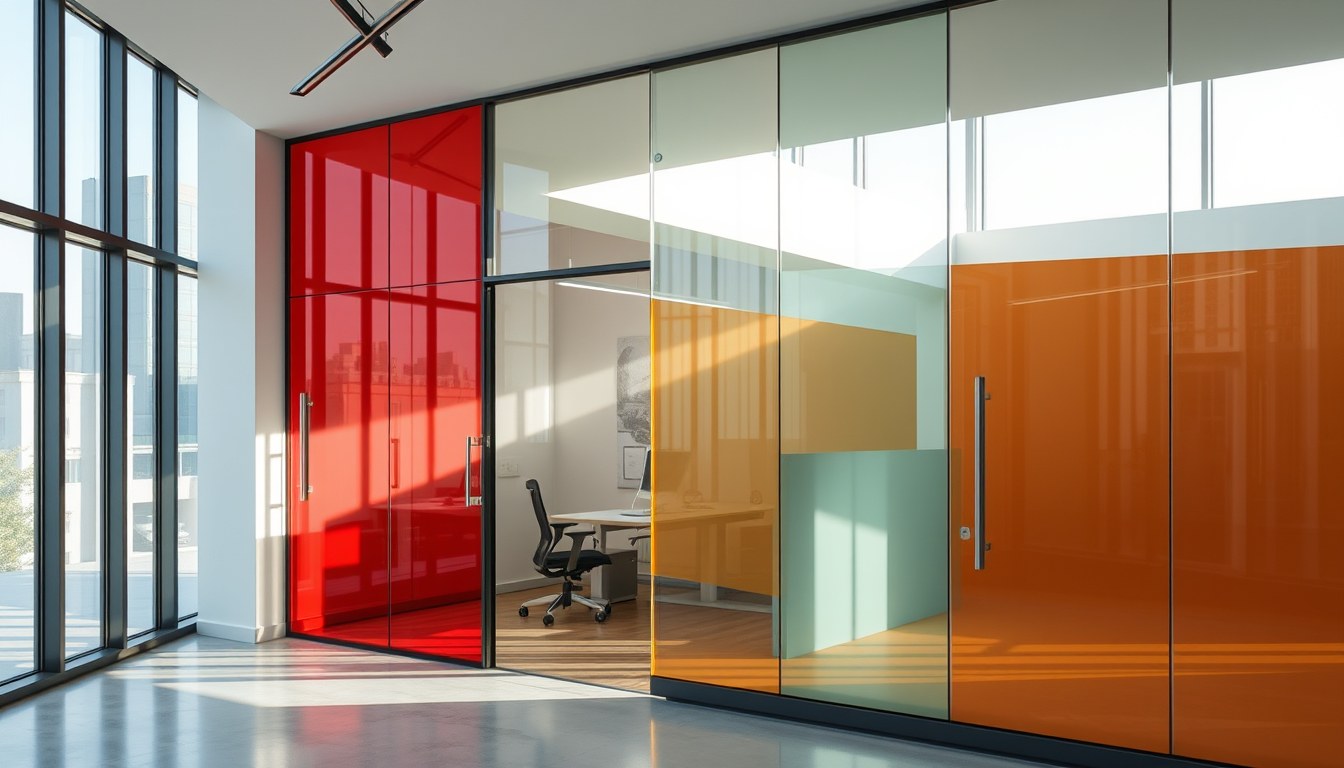
The modern office cabin has evolved far beyond sterile glass walls and fluorescent lighting. Colored tinted glass partitions are revolutionizing workplace design by merging aesthetics with psychology, directly influencing employee productivity, mood, and creative output. As organizations prioritize employee wellness and contemporary design language, understanding the psychological impact of colored glass and staying ahead of 2026 design trends has become essential for architects, interior designers, and facility managers across India.
The Psychology of Color in Office Spaces
Color psychology is not merely decorative—it's a science-backed approach to shaping workplace behavior and emotional well-being. Different hues trigger distinct psychological responses that influence focus, creativity, collaboration, and stress levels. When applied through tinted glass partitions, colors create immersive environments that subtly guide employee performance without overwhelming the senses.
Research in environmental psychology demonstrates that color exposure affects cortisol levels (stress hormone), dopamine production (motivation), and serotonin release (mood regulation). In office cabins, where employees spend 6-8 hours daily, the cumulative effect of color exposure is significant. Tinted glass allows organizations to harness these benefits while maintaining transparency and openness—core principles of modern workplace design.
Blue Tinted Glass: Focus and Calm
Blue is the gold standard for concentration-heavy work environments. It reduces anxiety, lowers heart rate, and promotes clear thinking. Blue-tinted glass cabins are ideal for accounting departments, software development teams, and research units where deep focus is paramount. The color creates a serene backdrop that minimizes distractions while maintaining visual connectivity with the broader office ecosystem.
Green Tinted Glass: Balance and Renewal
Green symbolizes growth, balance, and nature—psychological anchors that reduce mental fatigue. Biophilic design principles favor green-tinted glass for open-plan offices and collaborative zones. Employees working in green-filtered environments report lower stress and higher job satisfaction. This makes green particularly effective for HR departments, management offices, and wellness zones.
Warm Amber & Orange Tints: Energy and Creativity
Warm tones stimulate creativity, encourage collaboration, and elevate energy levels. Amber and orange-tinted glass works exceptionally well in creative departments, brainstorming rooms, and innovation labs. These hues promote spontaneity and risk-taking—essential ingredients for problem-solving and ideation sessions. However, prolonged exposure can increase agitation, so these tints are best reserved for collaborative spaces rather than individual cabins.
Productivity Gains: Evidence and Real-World Impact
Organizations implementing colored tinted glass partitions have documented measurable improvements in workplace metrics. A study by the British Research Establishment found that optimized color environments increase productivity by up to 15%. In Indian IT and corporate sectors, companies like TCS, Infosys, and Wipro have incorporated color-filtered glass in their modern office redesigns, reporting improved employee retention and reduced absenteeism.
The productivity boost stems from multiple factors: reduced eye strain from filtered light, psychological comfort from color association, and enhanced spatial perception. Tinted glass also controls glare and UV exposure, protecting both employee health and equipment longevity. For organizations managing multiple teams with varying work demands, colored glass zoning allows simultaneous optimization of different functional areas.
- Reduced eye fatigue: Tinted glass filters harsh fluorescent and natural light, minimizing strain during screen-intensive work
- Improved mood regulation: Color exposure triggers neurotransmitter release, naturally elevating mood and motivation
- Enhanced focus duration: Psychological cues from color reduce distraction and extend concentration spans
- Lower stress markers: Calming colors reduce cortisol levels, improving decision-making quality
- Better team dynamics: Warm-toned collaborative spaces encourage open communication and idea-sharing
Design Trends for Office Cabins in 2026
The office design landscape is shifting toward personalization, sustainability, and biophilic integration. Colored tinted glass stands at the intersection of these trends, offering flexibility, eco-consciousness, and human-centered design. Here's what's defining 2026 office aesthetics.
Gradient and Ombré Glass Effects
Static single-color tints are giving way to gradient effects where color intensity varies across the glass surface. This creates visual depth, reduces monotony, and allows subtle transitions between zones. An ombré effect from light blue to transparent, for instance, maintains privacy at eye level while preserving openness overhead. This trend aligns with the growing demand for flexible, adaptable workspaces that serve multiple functions throughout the day.
Sustainable and Low-Emission Tints
Eco-conscious organizations are prioritizing low-VOC (volatile organic compound) tints and recycled glass materials. Sustainable colored glass reduces environmental impact while maintaining aesthetic appeal. Manufacturers are developing tints using natural pigments and energy-efficient coatings that reduce cooling loads—a critical consideration in India's warm climate. This trend reflects the broader corporate shift toward ESG (Environmental, Social, Governance) compliance.
Switchable and Smart Glass Integration
Electrochromic and thermochromic glass technologies are maturing, allowing color and opacity to shift based on time, temperature, or user preference. While premium, smart glass offers unparalleled flexibility: a cabin can shift from transparent (collaborative mode) to opaque blue (focus mode) with a button press. As costs decline, this technology will become more accessible to mid-market Indian enterprises by 2026.
Warm Neutrals and Soft Earth Tones
The trend toward "biophilic minimalism" favors soft, warm neutrals—dusty rose, warm gray, soft taupe, and pale terracotta. These tints provide psychological comfort without the intensity of primary colors. They're particularly popular in executive suites and client-facing spaces where professionalism and approachability must coexist.
Practical Implementation: From Selection to Installation
Transitioning to colored tinted glass requires thoughtful planning across aesthetic, functional, and budgetary dimensions. Partnering with experienced architects and interior designers ensures optimal outcomes. Firms like Void + Edifice Architectural Design Studio specialize in integrating glass solutions into cohesive design narratives, while tada design collective brings contemporary sensibilities to workspace transformation.
Step 1: Departmental Assessment
Audit your organization's departmental functions. Map high-focus areas (accounting, development), collaborative zones (marketing, HR), and client-facing spaces (reception, boardrooms). Each zone has distinct color psychology needs. Avoid applying a single color uniformly; instead, create a color strategy that supports varied work modalities.
Step 2: Light and Glare Analysis
Evaluate natural light exposure and existing artificial lighting. South-facing cabins in India receive intense heat; cooler tints (blue, green) help offset this while reducing cooling costs. North-facing spaces may benefit from warmer tints to counteract dimness. Professional lighting audits inform tint selection and thickness.
Step 3: Material and Supplier Selection
Source from reputable glass dealers and manufacturers. Trusted suppliers like GLASS CONSORTIUM and SABRI GLASS HOUSE offer quality assurance, customization, and after-sales support. Verify certifications for safety, UV protection, and durability. Request samples and observe them under your office's actual lighting conditions before committing to large-scale installation.
Step 4: Integration with Interior Design
Colored glass should complement, not dominate, your overall design language. Interior designers like those at cube interiors excel at harmonizing glass with flooring, furniture, and accent colors. Consider how tinted glass interacts with wall colors, artwork, and landscaping visible through the glass.
Step 5: Phased Rollout and Feedback
Implement colored glass in pilot zones first. Gather employee feedback on mood, productivity, and comfort. This data-driven approach reduces risk and allows refinements before company-wide deployment. Many organizations report that employees become advocates for expanded colored glass installation once they experience the benefits firsthand.
Cost Considerations and ROI
Colored tinted glass costs ₹500 to ₹2,500 per square foot depending on tint type, thickness, and customization. While higher than clear glass, the investment yields measurable returns through productivity gains, reduced healthcare costs (lower stress-related absenteeism), and improved talent retention. A cabin of 150 square feet costs approximately ₹75,000 to ₹3,75,000 for glass partitions alone. For a 50-cabin office, phased implementation over 2-3 years distributes costs while allowing optimization.
Calculate ROI by factoring in productivity improvements (conservative estimate: 5-10% efficiency gain), reduced absenteeism (average: 2-3 days annually per employee in high-stress roles), and employee retention (replacing a mid-level employee costs 50-200% of annual salary). In most scenarios, the payback period ranges from 18-36 months.
Frequently Asked Questions
Does colored tinted glass reduce natural light significantly?
Modern tinted glass allows 40-90% light transmission depending on tint density and color. Lighter tints (pale blue, soft green) maintain excellent light levels while still providing psychological benefits. Darker tints reduce light more substantially but are typically reserved for spaces requiring privacy or glare reduction. Consult with your glass supplier about transmission specifications for your chosen color and thickness.
Can colored tinted glass be combined with frosted or privacy glass?
Absolutely. Many organizations combine tinted glass with frosted bands or patterns to balance transparency with privacy. For instance, a cabin might feature transparent blue-tinted glass from 4 feet upward (maintaining visual connection) and frosted blue-tinted glass below (providing privacy). This hybrid approach maximizes both psychological benefits and functional privacy.
Is colored tinted glass suitable for all office environments?
While highly versatile, colored glass works best in modern, contemporary office settings. Traditional or heritage-style offices may find certain tints aesthetically incongruent. Additionally, specialized environments (clean rooms, sterile labs) may have regulatory constraints on glass tinting. Consult with your architect or interior designer to ensure alignment with your organizational brand and functional requirements.
How durable is colored tinted glass, and what maintenance does it require?
Quality tinted glass is extremely durable, with a lifespan of 20-30+ years. Maintenance is minimal—regular cleaning with non-abrasive glass cleaner maintains clarity and color vibrancy. UV-protective tints resist fading over decades. Unlike paint or wallpaper, tinted glass doesn't require repainting and maintains consistent appearance indefinitely.
What's the difference between tinted glass and colored glass films?
Tinted glass has color integrated into the glass material itself during manufacturing, offering superior durability and uniform color. Colored films are applied post-manufacture and can bubble, peel, or fade over time. While films are cheaper initially (₹100-300 per sq ft), tinted glass provides better long-term value. For permanent office installations, tinted glass is the recommended choice.
Transform Your Office Cabin Today
Colored tinted glass represents a convergence of science, design, and employee wellness. By strategically implementing color-filtered partitions aligned with departmental functions and 2026 design trends, your organization can boost productivity, enhance mood, and create visually stunning workspaces that attract and retain top talent. Ready to explore colored glass solutions for your office? Browse curated glass suppliers, architects, and interior designers specializing in office cabin design on glassy.in—India's largest glass-business directory. Connect with verified professionals who understand the psychology of color and the technical nuances of glass installation. Your next great office design is just a search away.