
Glass Partitions
Toughened Glass Partition vs Laminated Glass Partition: Safety and Cost Comparison
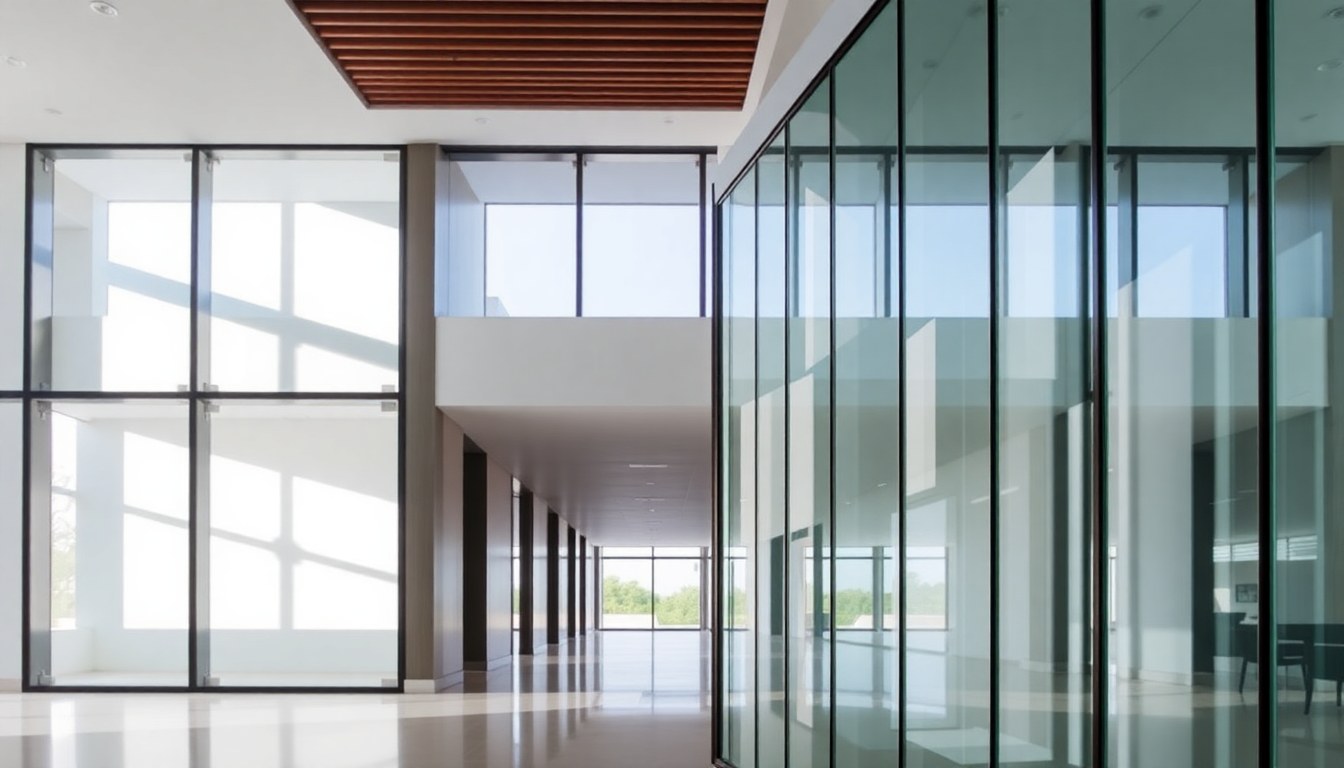
When planning office or home glass partitions, the choice between toughened and laminated glass significantly impacts safety, acoustics, budget, and regulatory compliance. While 10mm toughened glass costs ₹280-350 per square foot and offers excellent impact resistance, 6.38mm laminated glass ranges from ₹420-550 per square foot but provides superior post-breakage safety and sound insulation. This comprehensive comparison will help you understand which glass type suits your specific partition requirements.
Understanding Toughened and Laminated Glass Construction
Toughened glass, also called tempered glass, undergoes a thermal treatment process where the glass is heated to approximately 620°C and then rapidly cooled. This process creates surface compression and internal tension, making the glass four to five times stronger than ordinary annealed glass. When it breaks, toughened glass shatters into small, relatively harmless granular chunks rather than dangerous sharp shards.
Laminated glass consists of two or more glass panes bonded together with an interlayer, typically polyvinyl butyral (PVB). The standard 6.38mm laminated glass used in partitions comprises two 3mm glass sheets with a 0.38mm PVB interlayer. When broken, the glass fragments adhere to the interlayer, maintaining the partition's integrity and preventing glass from falling.
Both glass types meet Indian safety standards, but their performance characteristics differ significantly in real-world applications. The construction method fundamentally determines how each glass type behaves under stress, impact, and daily use conditions.
Safety Performance and Impact Resistance
Breakage Patterns and Post-Impact Safety
Toughened glass excels in resisting impact and thermal stress. A 10mm toughened glass partition can withstand considerable force before breaking, making it suitable for high-traffic areas. However, once the breaking point is reached, the entire panel shatters completely into small cubes. While these fragments are less likely to cause severe cuts, the partition loses all structural integrity instantly, creating a complete opening.
Laminated glass offers a different safety advantage. Though it may crack under similar impact forces, the PVB interlayer holds the broken pieces together, maintaining a barrier even after damage. This "fail-safe" characteristic is particularly valuable in environments where maintaining security or preventing falls is critical, such as mezzanine partitions or exterior-facing office dividers.
Edge and Corner Vulnerability
The edges of toughened glass represent its weakest points. Any chip or damage to the edge can cause spontaneous breakage hours or even days later due to the internal stress pattern. Professional edge polishing and proper installation are essential. Laminated glass, by contrast, tolerates minor edge damage better because the interlayer provides additional structural support.
For partition applications, both glass types require quality aluminum or stainless steel channels with rubber gaskets to protect edges from direct impact. However, laminated glass provides an extra margin of safety if edge protection fails or degrades over time.
Acoustic Insulation and Sound Control
Laminated glass significantly outperforms toughened glass in sound reduction, making it the preferred choice for conference rooms, private cabins, and residential partitions where noise control matters. The PVB interlayer acts as a damping layer that absorbs sound vibrations, particularly in the frequency range of human speech (500-2000 Hz).
A 6.38mm laminated glass partition typically provides a Sound Transmission Class (STC) rating of 34-36, while a 10mm toughened glass partition offers an STC rating of approximately 30-32. This difference translates to noticeably better speech privacy and reduced noise transmission in real-world conditions.
For environments requiring superior acoustic performance, such as recording studios or executive meeting rooms, acoustic-grade laminated glass with specialized PVI interlayers can achieve STC ratings above 40. Toughened glass cannot match this performance regardless of thickness, as it lacks the vibration-damping interlayer.
Cost Analysis and Budget Considerations
Material and Installation Costs
The price difference between toughened and laminated glass partitions is substantial. As of 2024, 10mm toughened glass costs ₹280-350 per square foot in major Indian cities like Mumbai, Delhi, Bangalore, and Hyderabad. The same area in 6.38mm laminated glass ranges from ₹420-550 per square foot, representing a 50-60% premium.
Installation costs remain relatively similar for both types, typically adding ₹80-120 per square foot depending on partition complexity, hardware quality, and location. However, laminated glass requires slightly more careful handling during installation due to its layered construction, which may increase labor time marginally.
Long-Term Value and Replacement Costs
While laminated glass costs more initially, it may offer better long-term value in specific applications. The reduced risk of complete failure means lower emergency replacement costs and less business disruption. In high-security environments or areas with falling hazards, the additional safety features can reduce liability insurance premiums.
Toughened glass partitions prove more economical for standard office cubicles, retail displays, and residential applications where acoustic insulation is not critical. The lower upfront cost allows businesses to allocate budget to other interior elements while still meeting basic safety requirements.
Building Code Requirements and Regulatory Compliance
The National Building Code of India (NBC) specifies safety glazing requirements for partitions based on location and application. Both toughened and laminated glass qualify as safety glazing, but certain situations mandate laminated glass specifically.
Partitions within 800mm of floor level, overhead glazing, sloped glazing exceeding 15 degrees from vertical, and any partition adjacent to stairs or ramps typically require laminated glass under most municipal building codes. Fire-rated partitions may require special laminated glass with wire reinforcement or intumescent interlayers.
Commercial projects seeking LEED or IGBC green building certification may find laminated glass advantageous due to its superior acoustic properties and enhanced safety features. Always consult with a certified architect or structural engineer to ensure compliance with local building regulations before finalizing your partition specification.
Maintenance and Durability Considerations
Both toughened and laminated glass partitions require minimal maintenance. Regular cleaning with standard glass cleaners maintains clarity and appearance. However, laminated glass edges require inspection for delamination, particularly in humid environments or areas with significant temperature fluctuations.
Toughened glass maintains its properties indefinitely under normal conditions but remains vulnerable to spontaneous breakage from nickel sulfide inclusions, though this occurs in less than 0.1% of installations. Heat-soaked toughened glass, which undergoes additional processing to reduce this risk, costs approximately 15-20% more but provides additional peace of mind for critical applications.
Laminated glass may experience slight yellowing of the PVB interlayer after 15-20 years of direct sunlight exposure, though this rarely affects interior partitions. UV-resistant PVB interlayers, available at a modest premium, eliminate this concern for partitions near windows or skylights.
Making the Right Choice for Your Partition Project
Choose 10mm toughened glass partitions when your priorities include cost-effectiveness, standard safety compliance, and applications where complete breakage does not pose significant security or safety risks. This option works well for interior office cubicles, retail changing rooms, shower enclosures, and residential room dividers where acoustic insulation is not critical.
Select 6.38mm laminated glass partitions when you require superior acoustic insulation, post-breakage safety, enhanced security, or must comply with building codes for elevated or hazardous locations. The higher investment pays dividends in conference rooms, executive cabins, healthcare facilities, educational institutions, and any partition where maintaining a barrier after impact is essential.
For projects with specific requirements, consider hybrid solutions such as laminated toughened glass, which combines the impact resistance of tempering with the post-breakage safety of lamination. While this premium option costs ₹550-700 per square foot, it provides maximum safety for high-risk applications like balustrades or full-height partitions in public spaces.
Frequently Asked Questions
Which is safer for office partitions: toughened or laminated glass?
Both are safe, but they offer different safety advantages. Toughened glass resists impact better and breaks into small harmless pieces, while laminated glass holds together when broken, preventing falls and maintaining security. For standard office interiors, toughened glass suffices; for partitions near stairs, elevated areas, or where post-breakage integrity matters, laminated glass is safer and often required by building codes.
Can I use 6mm toughened glass instead of 6.38mm laminated glass to save money?
While 6mm toughened glass costs less (₹220-280/sq ft), it provides significantly less acoustic insulation and may not meet building code requirements for certain partition locations. Additionally, 6mm thickness offers less rigidity for floor-to-ceiling partitions compared to 10mm toughened or 6.38mm laminated options. Always verify code compliance before substituting specifications.
How much better is laminated glass for soundproofing in office cabins?
Laminated glass typically reduces sound transmission by 4-6 decibels more than equivalent-thickness toughened glass, which translates to approximately 30-40% less perceived noise. For private cabins, meeting rooms, or manager offices where confidential conversations occur, this difference significantly improves speech privacy and reduces distractions from surrounding office noise.
Will laminated glass turn yellow or cloudy over time?
Standard PVB interlayers may develop slight yellowing after 15-20 years of direct UV exposure, though this rarely affects interior partitions. Modern UV-resistant PVB interlayers, available at minimal additional cost, prevent discoloration entirely. Cloudiness does not occur with quality laminated glass when properly manufactured and installed in climate-controlled environments.
Which glass type requires less maintenance for commercial partitions?
Both toughened and laminated glass require similar minimal maintenance—regular cleaning and periodic hardware inspection. Laminated glass edges should be checked annually for delamination in humid environments, while toughened glass edges need protection from chips. Overall maintenance costs and effort are comparable, making this a minor factor in the selection decision.
Ready to source quality toughened or laminated glass partitions for your project? Browse verified glass suppliers, fabricators, and installation professionals across India on glassy.in, your comprehensive glass business directory. Compare quotes, check certifications, and connect with experienced partition specialists in your city today.