
Glass Partitions
Office Cabin Glass Partition Soundproofing: Which Thickness Works Best?
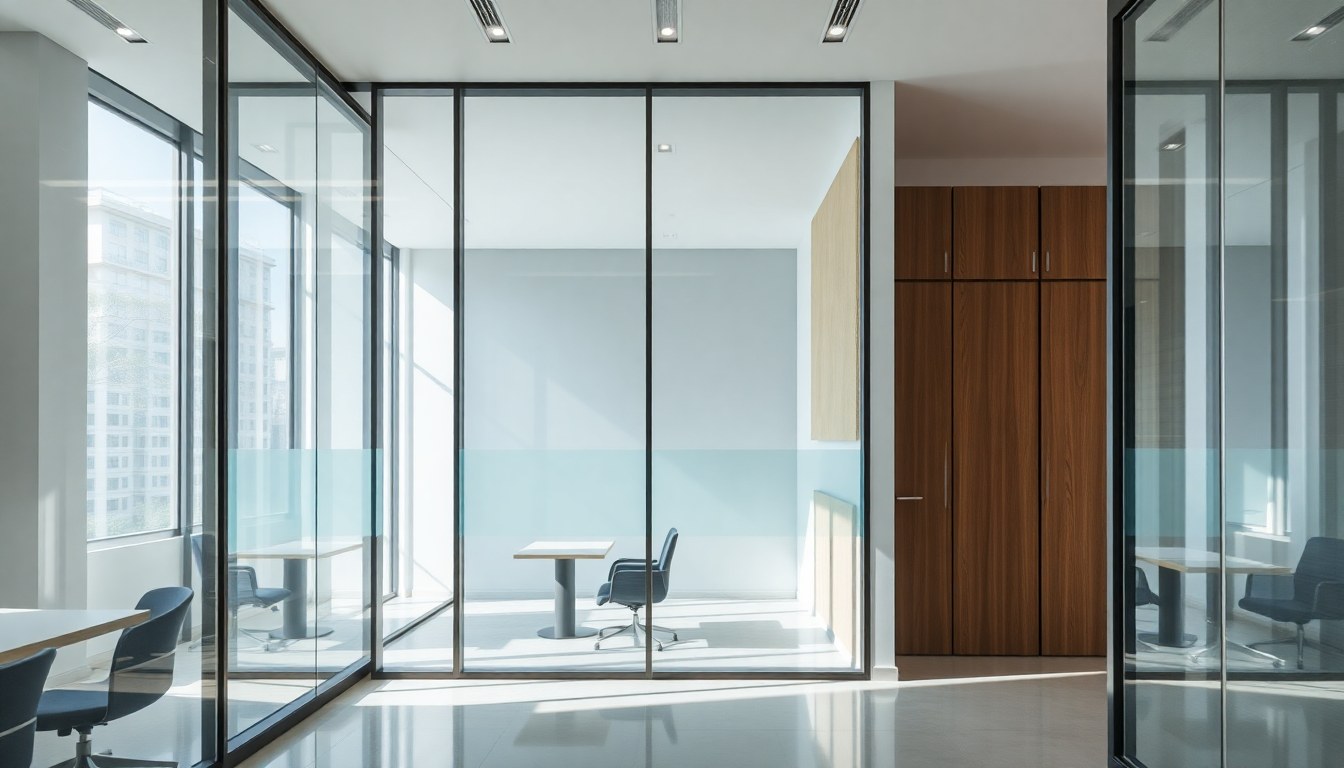
Open office layouts have become the norm, but they bring a persistent challenge: noise. Glass partitions offer a sleek, modern solution that maintains visual openness while creating acoustic separation. The key to effective soundproofing lies in understanding glass thickness, material composition, and sound reduction coefficients—and choosing the right combination for your workspace can reduce noise by 30 to 50 decibels, depending on your specifications.
Understanding Sound Reduction and Decibel Ratings
Sound transmission is measured in decibels (dB), and the effectiveness of glass partitions is expressed through a metric called Sound Reduction Index (SRI) or Noise Reduction Coefficient (NRC). A single-pane glass partition typically offers 30–35 dB of sound reduction, while laminated and insulated glass units can achieve 40–50 dB or higher. To put this in perspective, a normal office conversation registers around 60 dB; with proper soundproofing, you can reduce this to barely audible levels in adjacent cabins.
The relationship between thickness and sound reduction is not linear. Simply doubling the glass thickness does not double the noise reduction. Instead, sound attenuation follows the "mass law," where every doubling of mass yields approximately 6 dB additional reduction. This is why layered systems—such as laminated glass or insulated glass units (IGUs)—outperform single thick panes at similar overall weights.
Single-Pane Glass: When It Falls Short
Standard single-pane glass, even at 12mm thickness, provides only modest soundproofing suitable for casual visual separation. It works adequately in low-noise environments like design studios or quiet office spaces, but fails in call centers, meeting rooms, or open-plan layouts where speech privacy is critical.
The main limitation of single-pane glass is resonance. Glass naturally vibrates at certain frequencies, amplifying mid-range sounds (500–2000 Hz) where human speech concentrates. This is why even thick single panes feel inadequate in practice, despite their mass. For this reason, most modern office partitions move away from single-pane solutions entirely.
Laminated Glass: The Affordable Soundproofing Solution
How Laminated Glass Works
Laminated glass consists of two or more glass panes bonded with a polyvinyl butyral (PVB) interlayer. This interlayer is the acoustic hero—it dampens vibrations and absorbs sound energy, preventing the glass from resonating freely. A 6mm + 6mm laminated partition (total 12mm) delivers 30–35 dB reduction, while 8mm + 8mm achieves 35–40 dB.
For Indian offices, laminated glass partitions at 10mm to 12mm total thickness represent the sweet spot between cost and performance. They reduce typical office chatter to a whisper in adjacent cabins and are widely available through established suppliers like New Ganesh Glass & Aluminum and Unique Profile and Mirror World, both offering competitive pricing and installation expertise.
Laminated Glass Thickness Recommendations
- 6mm + 6mm laminated (12mm total): Entry-level soundproofing; suitable for casual office separation and general noise reduction.
- 8mm + 8mm laminated (16mm total): Mid-range performance; ideal for most open offices and small meeting rooms; reduces speech intelligibility significantly.
- 10mm + 10mm laminated (20mm total): Premium option; achieves 40+ dB reduction; recommended for call centers and high-traffic areas.
Laminated partitions are also safer than tempered glass—if damaged, the interlayer holds fragments together, preventing sharp edges and injuries. This makes them particularly suitable for high-traffic office environments.
Insulated Glass Units (IGUs): Maximum Soundproofing
Insulated Glass Units (IGUs), also called double-glazed or sealed units, consist of two glass panes separated by an air gap (typically 6–12mm) sealed with a desiccant. This air gap is crucial for sound attenuation. The gap acts as a decoupling layer, breaking the direct path of sound vibration between the two panes. An IGU with 6mm + 6mm glass and a 12mm air gap achieves 35–40 dB reduction, while premium configurations with laminated panes and wider gaps exceed 50 dB.
For call centers and executive cabins where confidentiality is paramount, IGUs represent the gold standard. A configuration of 8mm laminated + 12mm air gap + 8mm laminated delivers outstanding 45–50 dB reduction, making conversations in adjacent spaces virtually unintelligible. However, IGUs are heavier, more expensive, and require professional installation and structural reinforcement.
IGU Thickness Specifications for Office Use
- 6mm + 6mm air gap + 6mm (18mm total): Good soundproofing; suitable for general office partitions; moderate cost.
- 8mm + 12mm air gap + 8mm (28mm total): Excellent soundproofing; ideal for call centers and sensitive areas; requires structural support.
- Laminated variants (10mm + 12mm air gap + 10mm): Premium performance; 50+ dB reduction; maximum privacy and safety.
The air gap width matters more than you might expect. A 12mm gap outperforms a 6mm gap by approximately 3–5 dB. However, gaps wider than 12mm offer diminishing returns and increase overall partition thickness and cost.
Practical Recommendations for Indian Office Environments
For Open-Plan Offices and Casual Workspaces
A 10mm to 12mm laminated glass partition is the most cost-effective choice. Expect to pay ₹1,200–₹1,800 per square foot installed, depending on your location and supplier. This thickness reduces normal office noise by 30–35 dB, allowing focused work without complete isolation. Suppliers like Adithya Glass offer reliable laminated solutions across Indian metros and tier-2 cities.
For Call Centers and Confidential Spaces
Call centers and executive areas demand 40+ dB reduction. An IGU with 8mm laminated + 12mm air gap + 8mm laminated, or a triple-laminated partition (8mm + 8mm + 8mm with PVB interlayers), is essential. Budget ₹2,500–₹4,000 per square foot. The investment is justified by improved call quality, reduced cross-talk interference, and enhanced privacy for sensitive discussions.
For Meeting Rooms and Collaboration Spaces
A middle-ground solution—16mm laminated (8mm + 8mm) or a basic IGU (6mm + 6mm + 6mm)—works well. This provides 35–40 dB reduction, preventing internal meeting discussions from disturbing the broader office while maintaining visual transparency. Cost ranges from ₹1,500–₹2,500 per square foot.
Installation and Structural Considerations
Thicker and heavier glass partitions require robust framing and structural support. Laminated glass at 16–20mm is manageable with standard aluminum frames, but IGUs and triple-laminated systems need reinforced frames and may require floor-to-ceiling installation to prevent sag and acoustic leakage. Acoustic performance is only as good as the installation—gaps, poor sealing, and inadequate framing can reduce effectiveness by 5–10 dB.
Professional installers understand how to minimize flanking paths (sound traveling around the partition via doors, HVAC vents, and gaps). When commissioning a partition, always specify acoustic caulking and proper frame-to-wall sealing. Interior design firms like DezynTrend and Yash Home Decor have expertise in integrating acoustic glass partitions into cohesive office designs.
Cost-Benefit Analysis: Thickness vs. Budget
For most Indian offices, the cost-benefit sweet spot lies between 12mm and 20mm laminated glass. Going beyond 20mm or into premium IGU territory adds significant cost with diminishing acoustic returns unless your noise environment is exceptionally challenging (e.g., adjacent to highways or industrial areas).
A practical approach: start with a 12mm laminated partition and add acoustic panels or absorptive materials on walls and ceilings if further noise reduction is needed. This hybrid strategy often delivers better results than over-specifying glass thickness alone, while keeping costs reasonable.
Frequently Asked Questions
What thickness of glass partition do I need to reduce office noise by 50 decibels?
To achieve 50 dB sound reduction, you need a premium configuration: either a triple-laminated partition (8mm + 8mm + 8mm with PVB interlayers) or an IGU with laminated panes (8mm laminated + 12mm air gap + 8mm laminated). Single-pane glass, regardless of thickness, cannot achieve this level. The combination of mass, damping, and decoupling is essential.
Is 10mm laminated glass sufficient for a call center?
10mm laminated glass provides approximately 32–35 dB reduction, which is marginal for call centers where speech confidentiality is critical and background noise is high. For call centers, 16mm laminated (8mm + 8mm) or an IGU system delivering 40+ dB is strongly recommended. The extra cost is justified by improved call quality and reduced cross-talk interference.
How does laminated glass compare to IGU for soundproofing?
Laminated glass uses a damping interlayer to absorb sound, while IGUs use an air gap for decoupling. At similar overall thickness, IGUs typically outperform laminated glass by 3–5 dB. However, laminated glass is cheaper, lighter, and safer. For most offices, 16–20mm laminated glass is sufficient; IGUs are reserved for premium applications like executive suites and call centers.
Will a thicker frame reduce sound transmission through the partition?
The frame material and design matter less than the glass itself for sound reduction. Aluminum frames are standard and adequate. What matters more is proper sealing—gaps and poor caulking can reduce acoustic performance by 5–10 dB. Ensure your installer uses acoustic sealant and minimizes air leaks around the frame perimeter.
Can I use tempered glass instead of laminated for soundproofing?
Tempered glass offers no acoustic advantage over annealed glass; both have similar sound transmission properties. The benefit of tempered glass is safety—it breaks into small, less dangerous pieces. For soundproofing, always choose laminated glass, which includes the damping interlayer. You can combine tempered and laminated properties in some configurations, but the lamination is what provides acoustic benefit.
Conclusion: Choose the Right Thickness for Your Needs
The ideal glass partition thickness depends on your noise environment, budget, and privacy requirements. For most Indian offices, 12–16mm laminated glass offers the best balance of performance and cost. Call centers and confidential spaces warrant 40+ dB reduction, achieved through 20mm laminated or IGU systems. Always prioritize professional installation and proper sealing to realize the acoustic benefits of your chosen thickness.
Ready to upgrade your office acoustics? Explore certified glass suppliers and interior design specialists on glassy.in, India's comprehensive glass business directory. Find local experts in your city who specialize in office partitions, soundproofing solutions, and professional installation. Get quotes, compare options, and transform your workspace into a quiet, productive environment.