
Smart Glass
Smart Glass Partitions for Office Cabins: Privacy on Demand Technology Explained
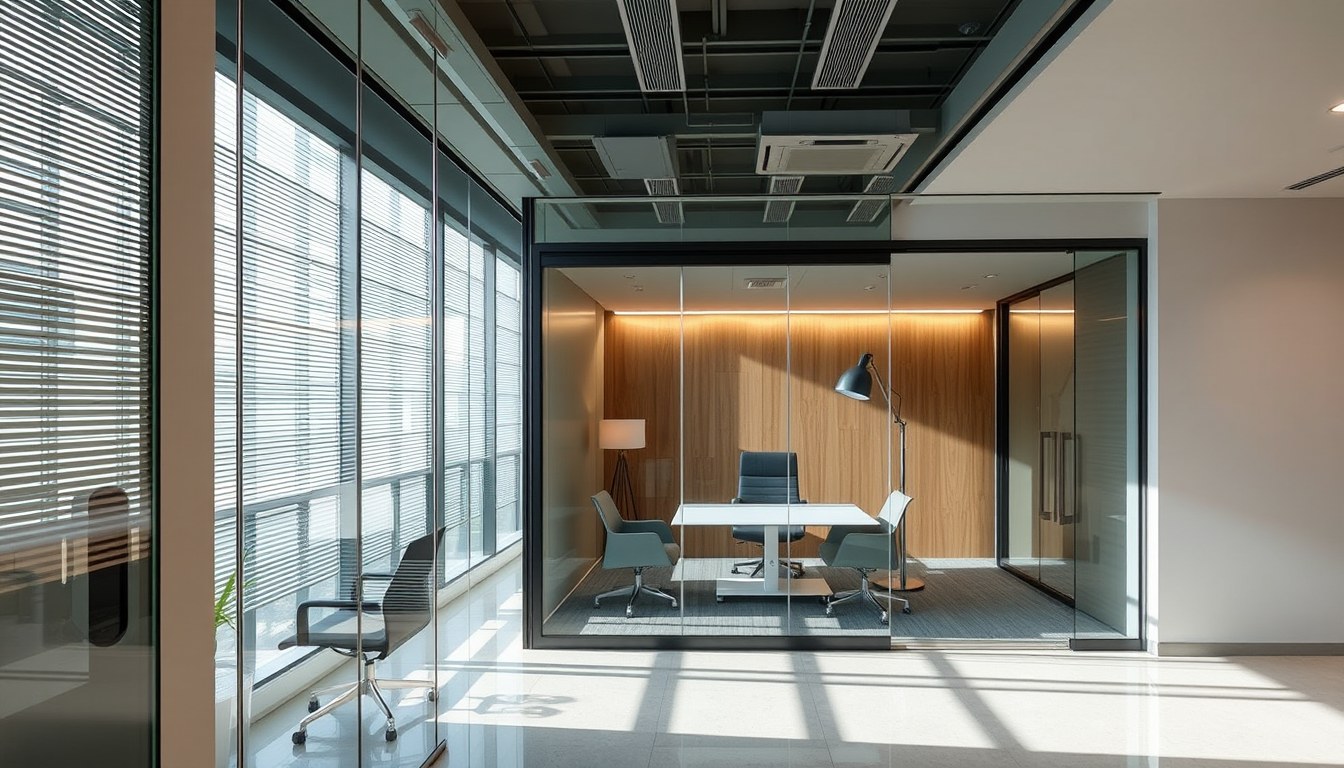
Modern office design demands flexibility—the ability to shift from open collaboration to private focus in seconds. Smart glass partitions deliver exactly that, using electrochromic technology to switch from transparent to opaque with a single tap. If you're planning an office renovation or new build in India, understanding how this technology works, what it costs, and how to install it properly will help you make an informed investment in workplace productivity and employee comfort.
What Are Smart Glass Partitions and How Do They Work?
Smart glass partitions, also called switchable glass or electrochromic glass, are partition systems that change opacity electronically. Unlike traditional frosted or tinted glass, smart glass remains crystal clear in its default state, then darkens when an electrical current is applied. This transformation happens in milliseconds, giving occupants instant control over their visual privacy without closing blinds or drawing curtains.
The core mechanism relies on electrochromic materials—typically metal oxide compounds—embedded within or applied to the glass surface. When voltage is applied, ions move within these materials, absorbing light and darkening the glass. Remove the voltage, and the glass returns to transparency. This reversible process can repeat thousands of times without degradation, making smart glass a durable long-term solution for office environments.
Types of Smart Glass Technology
- Electrochromic Glass: Uses metal oxide layers that change color when charged. Most common for office partitions due to reliability and cost-effectiveness.
- Polymer Dispersed Liquid Crystal (PDLC): Contains liquid crystals suspended in polymer. Switches from opaque to clear instantly but consumes more power continuously.
- Suspended Particle Display (SPD): Uses suspended particles that align when charged. Offers variable tinting levels and smooth transitions.
For office cabin partitions in India, electrochromic glass remains the most practical choice due to its lower power consumption, durability, and proven performance in commercial settings.
Key Benefits for Office Cabins and Workspaces
Smart glass partitions solve multiple challenges that plague traditional office designs. Employees in open-plan offices struggle with constant visual distractions and noise, while private cabins with frosted glass feel claustrophobic and isolate team members. Smart partitions bridge this gap by maintaining visual transparency for collaboration while enabling instant privacy when focus work is needed.
Beyond privacy, smart glass reduces reliance on artificial lighting by allowing natural light penetration even when the glass is tinted. This improves employee well-being, reduces energy costs, and creates a more modern, professional aesthetic. The technology also eliminates the need for blinds, curtains, or mechanical shades, reducing maintenance requirements and improving hygiene in shared office spaces.
Specific Advantages for Indian Offices
- Climate Control: Tinted smart glass reduces solar heat gain, lowering air-conditioning costs in India's hot climate.
- Space Efficiency: No need for blind mechanisms or drawer space for shade hardware.
- Sound Dampening: When combined with laminated glass, smart partitions provide acoustic benefits alongside visual privacy.
- Modern Image: Demonstrates forward-thinking company culture to clients and employees.
Cost and Pricing for Indian Markets
Smart glass partition costs in India vary based on glass quality, partition size, control systems, and installation complexity. As of 2024, electrochromic smart glass typically ranges from ₹8,000 to ₹15,000 per square meter for the glass itself, with complete installed partition systems (including framing, wiring, and controls) running ₹12,000 to ₹20,000 per square meter depending on specifications and location.
A standard 3m × 2.5m office cabin partition might cost between ₹90,000 and ₹1,50,000 installed. While this represents a significant upfront investment compared to traditional frosted glass (₹2,000–₹5,000 per square meter), the long-term benefits—reduced energy consumption, improved employee satisfaction, and flexibility for office reconfigurations—often justify the premium within 5–7 years.
Cost Variables to Consider
- Glass Quality: Premium electrochromic coatings with better clarity and faster switching times cost more.
- Control System: Basic manual switches cost less than integrated smart home systems or motion sensors.
- Installation Complexity: Structural modifications, electrical upgrades, and complex framing increase labor costs.
- Warranty and Support: Reputable suppliers offer 5–10 year warranties, affecting overall cost.
- Regional Variation: Metropolitan areas like Delhi, Mumbai, and Bangalore have higher installation costs due to labor expenses.
Power Requirements and Electrical Specifications
Smart glass partitions require electrical power to function, though the actual consumption is modest. Most electrochromic systems operate on standard 230V single-phase AC power in India, with individual partition panels drawing 50–200 watts during the switching process. Once the glass reaches full opacity or transparency, power consumption drops to near zero for electrochromic systems, as they hold their state passively.
A typical office cabin with a 3m × 2.5m smart glass partition requires a dedicated 16A circuit, easily accommodated within standard office electrical infrastructure. Unlike PDLC systems, which consume power continuously when tinted, electrochromic glass is significantly more energy-efficient, making it ideal for cost-conscious organizations.
Electrical Installation Considerations
- Smart glass partitions should have dedicated electrical circuits to avoid interference with other office equipment.
- A central control panel or app-based system can manage multiple partitions across an office floor.
- Battery backup systems are available for emergency scenarios, though rarely necessary in office environments.
- Professional electricians should handle installation to ensure safety compliance with Indian electrical standards (IS 1885).
Installation Process and Professional Requirements
Installing smart glass partitions requires coordination between structural engineers, electricians, and glass specialists. The process begins with site assessment to determine partition placement, load-bearing capacity, and electrical routing. Unlike simple glass installation, smart glass partitions demand precision in framing alignment and electrical integration to ensure reliable operation.
The installation timeline typically spans 2–4 weeks for a full office floor, depending on the number of partitions and structural modifications needed. Professional installation is non-negotiable; improper framing or electrical connections can damage the electrochromic coating or create safety hazards. When selecting contractors, verify their experience with smart glass systems and request references from previous office installations.
Working with Local Glass Specialists
India has growing expertise in smart glass installation, particularly in major business hubs. Established glass dealers and interior designers like LINEAR ARCHITECTS and specialized interior firms like Viswam Interiors increasingly offer smart glass solutions alongside traditional glazing services. Consulting with local professionals ensures compliance with building codes, optimal performance in local climate conditions, and reliable after-sales support.
Maintenance, Durability, and Long-Term Performance
Smart glass partitions require minimal maintenance compared to traditional window treatments. The electrochromic coating is sealed within the glass, protecting it from dust, moisture, and physical damage. Routine cleaning involves standard glass cleaner and soft cloths—the same approach used for regular windows. The electrical components are housed in weatherproof frames, requiring no special care.
Quality electrochromic glass maintains consistent performance for 15–20 years with proper installation and electrical management. The coating does not degrade with switching cycles; laboratory tests confirm that electrochromic materials can cycle 500,000+ times without significant performance loss. This durability makes smart glass a sound long-term investment for growing companies planning to occupy office spaces for extended periods.
Common Maintenance Tasks
- Clean glass surfaces monthly with non-abrasive cleaners to maintain clarity.
- Inspect electrical connections annually for corrosion or loose contacts.
- Test control systems quarterly to ensure responsive switching.
- Check framing seals and gaskets every 2–3 years to prevent moisture intrusion.
Smart Glass Partitions vs. Traditional Alternatives
Traditional office partitions—frosted glass, wooden panels, or fabric-covered walls—serve a purpose but lack flexibility. Frosted glass provides permanent privacy but eliminates natural light and creates visual barriers that inhibit collaboration. Mechanical blinds and curtains require manual operation, accumulate dust, and need frequent replacement. Smart glass eliminates these trade-offs by delivering privacy on demand without sacrificing transparency or natural light.
The comparison becomes clearer when considering total cost of ownership. While smart glass costs more upfront, traditional solutions require ongoing maintenance, replacement, and energy expenses. A 10-year cost analysis accounting for electricity savings, reduced HVAC load, and zero blind maintenance often favors smart glass for organizations with stable office footprints.
Choosing the Right Smart Glass Partition System for Your Office
Selecting a smart glass partition system requires evaluating your office's specific needs. Consider the frequency of privacy requirements—if your office alternates between collaborative and focused work, smart glass delivers maximum value. Assess your electrical infrastructure to ensure adequate power supply. Calculate your climate control savings, particularly important in India's warm climate where solar heat gain significantly increases cooling costs.
Request samples and demonstrations from suppliers before committing to a full installation. This allows you to experience the switching speed, optical clarity, and control interface firsthand. Discuss warranty terms, technical support availability, and upgrade options with potential vendors to ensure long-term satisfaction.
Frequently Asked Questions
How long does smart glass take to switch from transparent to opaque?
Most electrochromic smart glass systems switch within 1–3 minutes, depending on the glass thickness and power applied. This gradual transition is actually a benefit, as it avoids sudden light changes that could startle occupants. Newer premium systems achieve full opacity in under 1 minute.
Can smart glass partitions be used in existing office buildings, or only in new construction?
Smart glass partitions can be retrofitted into existing offices, though installation complexity depends on structural layout and electrical infrastructure. Existing buildings may require electrical upgrades or structural reinforcement, adding to installation costs. Consult with a structural engineer and glass specialist to assess feasibility for your specific office space.
What happens to smart glass partitions during power outages?
Electrochromic smart glass remains in its last state during power loss—if it was transparent, it stays transparent; if opaque, it stays opaque. This passive holding capability is a significant advantage over PDLC systems, which become opaque when power is lost. Battery backup systems are available but rarely necessary for office applications.
Is smart glass soundproof?
Smart glass alone provides minimal sound dampening, as it's a thin electrically-conductive coating on standard glass. However, combining smart glass with laminated glass or thicker panes significantly improves acoustic performance. For offices requiring both visual privacy and sound isolation, specify laminated smart glass or pair smart partitions with acoustic seals and frames.
How much electricity does a smart glass partition consume monthly?
A typical 3m × 2.5m electrochromic smart glass partition consumes approximately ₹200–₹400 per month in electricity costs, assuming 4–6 switching cycles daily. This is far lower than the cooling energy saved by reducing solar heat gain, making smart glass cost-neutral or beneficial for total energy consumption in most Indian office climates.
Transform Your Office with Smart Glass Technology
Smart glass partitions represent the future of flexible, modern office design. By combining electrochromic technology with intelligent control systems, they deliver privacy on demand without sacrificing natural light, collaboration, or aesthetic appeal. Whether you're planning a new office build or upgrading an existing space, smart glass partitions justify their investment through improved employee satisfaction, energy savings, and operational flexibility.
Ready to explore smart glass solutions for your office? Browse verified glass dealers, interior designers, and architects on glassy.in, India's largest glass-business directory. Connect with local specialists who understand smart glass installation, can assess your office's specific requirements, and deliver reliable solutions tailored to your budget and timeline.