
Smart Glass
Smart Glass for Home Offices: Privacy & Focus Without Curtains
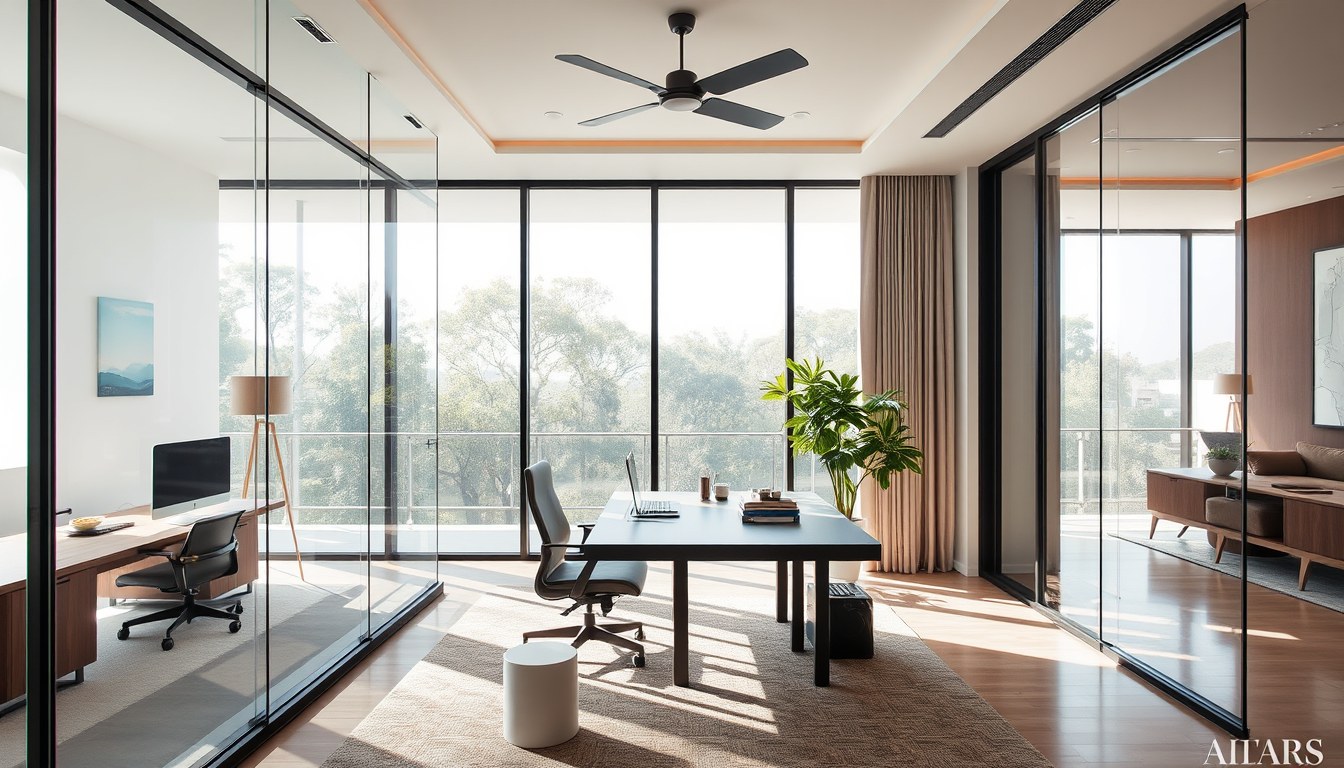
Working from home has become the norm for millions of Indian professionals, but privacy and focus remain persistent challenges. Smart glass—also called switchable glass or electrochromic glass—transforms from transparent to opaque at the flip of a switch, eliminating the need for curtains, blinds, or traditional partitions. For Bangalore tech professionals, entrepreneurs, and corporate employees setting up home offices, smart glass offers a modern, space-efficient solution that controls light, glare, and visibility while maintaining a sleek aesthetic.
What Is Smart Glass and How Does It Work?
Smart glass is a technology-driven material that changes its light transmission properties when electric current is applied. The most common type used in home office partitions is electrochromic glass, which contains a layer of electrochromic material sandwiched between panes. When voltage is applied, ions move through the material, darkening the glass; when voltage is removed, the glass returns to its transparent state.
The switching happens almost instantly—typically within seconds—and the glass can be controlled via wall switches, remote controls, or smartphone apps. This makes it ideal for home office partitions where you need quick privacy during video calls, client meetings, or focused work sessions. Unlike traditional curtains or blinds, smart glass doesn't collect dust, doesn't require manual adjustment, and doesn't take up valuable floor or wall space.
Types of Smart Glass for Home Offices
- Electrochromic Glass: Changes color when voltage is applied; most responsive and widely available in India.
- Polymer Dispersed Liquid Crystal (PDLC): Milky-white when off, clear when powered; often used for privacy without complete darkness.
- Thermochromic Glass: Responds to temperature changes; less common for home offices but useful in extreme climates.
- Photochromic Glass: Responds to UV light; typically used outdoors and less practical for indoor partitions.
Privacy Benefits for Home Office Setups
Privacy is the primary reason professionals choose smart glass for home office partitions. When you're on a video call with clients or senior management, switching the glass to opaque mode instantly shields your workspace from family members, roommates, or delivery personnel. This eliminates awkward interruptions and creates a professional environment for important meetings.
Beyond client-facing interactions, smart glass helps you maintain focus during deep work. Opaque glass blocks visual distractions from household activity, reducing cognitive load and improving concentration. For those living in shared spaces or multi-story homes, this psychological boundary—even if temporary—significantly boosts productivity.
Specific Use Cases for Bangalore Professionals
- Video Conferencing: Switch to opaque mode during client calls, investor pitches, or team meetings to ensure a clean, distraction-free background.
- Confidential Work: Protect sensitive documents, financial data, or proprietary information from casual view by household members.
- Focus Sessions: Use opaque mode during deep work periods to minimize visual interruptions and maintain concentration.
- Flexible Space Usage: Quickly transition a shared room between office and living space by controlling glass opacity.
Cost and Pricing for Indian Markets
Smart glass pricing in India varies significantly based on glass size, thickness, technology type, and installation complexity. As of 2024, expect to pay between ₹1,500 to ₹3,500 per square foot for electrochromic glass panels. A standard home office partition (roughly 100-150 square feet) would cost ₹1.5 to ₹5 lakh, including installation and electrical work.
PDLC smart glass is often more affordable than electrochromic glass, ranging from ₹1,000 to ₹2,500 per square foot, making it a budget-friendly option for smaller partitions. Installation costs typically add ₹20,000 to ₹50,000 depending on your location and the complexity of electrical integration.
Cost Breakdown for a Typical Home Office Setup
- Smart Glass Material: ₹1.5 to ₹5 lakh (100-150 sq. ft.)
- Installation & Framing: ₹20,000 to ₹50,000
- Electrical Integration: ₹15,000 to ₹30,000
- Control System (switches, remotes, apps): ₹5,000 to ₹20,000
- Total Estimated Cost: ₹1.6 to ₹5.5 lakh
While this represents a significant upfront investment, many professionals view it as a long-term asset that improves home resale value, reduces the need for frequent curtain replacements, and provides years of reliable service with minimal maintenance.
Installation Process and Timeline
Installing smart glass in a home office requires coordination between glass specialists, electricians, and sometimes structural engineers. The process typically takes 2–4 weeks from consultation to completion, depending on custom sizing and electrical infrastructure in your home.
Step-by-Step Installation Timeline
- Site Assessment (1–2 days): A professional assesses your space, measures dimensions, checks electrical access, and discusses control preferences.
- Custom Fabrication (7–10 days): Smart glass panels are manufactured to your specifications, including edge finishing and embedded electrodes.
- Electrical Preparation (2–3 days): Licensed electricians install dedicated circuits, wiring, and control panels to power the smart glass system.
- Glass Installation (1–2 days): Panels are carefully installed into frames, sealed, and tested for proper operation.
- Control System Setup (1 day): Switches, remotes, or app-based controls are configured and tested.
- Final Testing & Handover (1 day): All functionality is verified, and you receive training on operation and maintenance.
For Bangalore residents, several specialized glass suppliers and smart home integrators offer turnkey installation services. It's advisable to get quotes from at least 3–5 vendors and verify their experience with residential smart glass projects.
Maintenance and Long-Term Care
One of the major advantages of smart glass is its minimal maintenance requirement compared to traditional window treatments. The glass surface can be cleaned like any standard window using mild soap and water or glass cleaner. Avoid abrasive scrubbers or harsh chemicals, as these can damage the electrochromic coating.
The electrical components are sealed within the glass unit and rarely require attention. However, the control system—switches, remotes, or app interfaces—should be kept clean and dry. If you experience issues with switching (glass not responding, slow transitions), the problem is usually in the control circuit rather than the glass itself, which can often be resolved by a qualified technician.
Maintenance Checklist
- Monthly: Clean glass surface with soft cloth and mild glass cleaner.
- Quarterly: Test all control methods (switches, remotes, apps) to ensure responsive operation.
- Annually: Have a professional inspect electrical connections and control systems.
- As Needed: Replace batteries in wireless remotes; update app software if using smart home integration.
Most quality smart glass systems come with a 5–10 year warranty covering the glass and control mechanisms. The expected lifespan is 15–20 years with proper care, making it a durable investment for long-term home office use.
Alternatives to Smart Glass for Home Office Privacy
While smart glass is innovative, it's not the only solution for home office privacy. Understanding alternatives helps you make an informed decision based on budget and specific needs.
- Motorized Roller Blinds: Cost-effective (₹10,000–₹40,000), app-controllable, but require regular cleaning and occasional maintenance.
- Frosted Glass Partitions: Permanent privacy without switching; lower cost (₹50,000–₹2 lakh) but no light control flexibility.
- Acoustic Panels with Sliding Doors: Provide privacy and sound dampening; cost ranges from ₹80,000–₹3 lakh depending on materials.
- Traditional Curtains or Blinds: Most affordable option (₹5,000–₹20,000) but require manual operation and frequent cleaning.
Smart glass stands out for its combination of aesthetics, ease of use, and minimal maintenance—though at a premium price point. For budget-conscious professionals, motorized blinds offer similar convenience at a fraction of the cost.
Frequently Asked Questions
Does smart glass work in all lighting conditions?
Yes, smart glass provides privacy regardless of external lighting. In opaque mode, it blocks visibility from both inside and outside, making it effective during daylight, evening, and night. However, the degree of light transmission varies by product—some smart glass still allows diffused light through even in opaque mode, which can be beneficial for reducing eye strain during work.
Can smart glass be installed in existing home office spaces without major renovation?
In most cases, yes. If you're replacing an existing window or partition, smart glass can be retrofitted into the same frame with minimal structural changes. However, if you're adding a new partition, you may need to install framing and run electrical circuits, which involves some construction. Consult a professional to assess your specific space.
Is smart glass energy-efficient for home offices?
Smart glass can improve energy efficiency by controlling heat and light transmission, reducing the load on air conditioning and lighting systems. In Bangalore's warm climate, opaque smart glass can block solar heat during peak hours, potentially reducing cooling costs. However, the electrical power required to operate the glass itself is minimal—typically less than 5 watts per square meter per switching cycle.
What happens to smart glass if there's a power outage?
Most smart glass systems default to their transparent state during power loss, ensuring you're not suddenly trapped in darkness. Some premium systems include battery backup or manual override switches. Discuss power backup options with your installer if power reliability is a concern in your area.
Can smart glass be integrated with smart home systems like Alexa or Google Home?
Many modern smart glass systems offer app-based or voice-controlled operation through popular smart home platforms. This allows you to switch glass opacity using voice commands or smartphone apps alongside other smart home devices. Verify compatibility with your existing smart home setup when selecting a product.
Conclusion
Smart glass for home office partitions represents a forward-thinking investment in privacy, focus, and modern aesthetics. For Bangalore professionals juggling video calls, confidential work, and shared living spaces, switchable glass eliminates the friction of traditional window treatments while maintaining a sleek, professional appearance. At ₹1.6 to ₹5.5 lakh for a typical setup, the cost is significant but justified by durability, minimal maintenance, and long-term value.
Whether you're a startup founder, corporate employee, or freelancer, smart glass creates the professional boundary your home office deserves. Explore options from established glass suppliers in India, get multiple quotes, and plan for installation during a period when you can minimize office disruption.
Ready to upgrade your home office with smart glass? Visit the glassy.in directory to connect with certified smart glass suppliers, installation specialists, and glass manufacturers across India. Browse verified vendors, compare quotes, and find the perfect privacy solution for your workspace.