
Glass Partitions
Reeded & Fluted Glass for Office Cabins: Distortion Levels & Privacy Balance
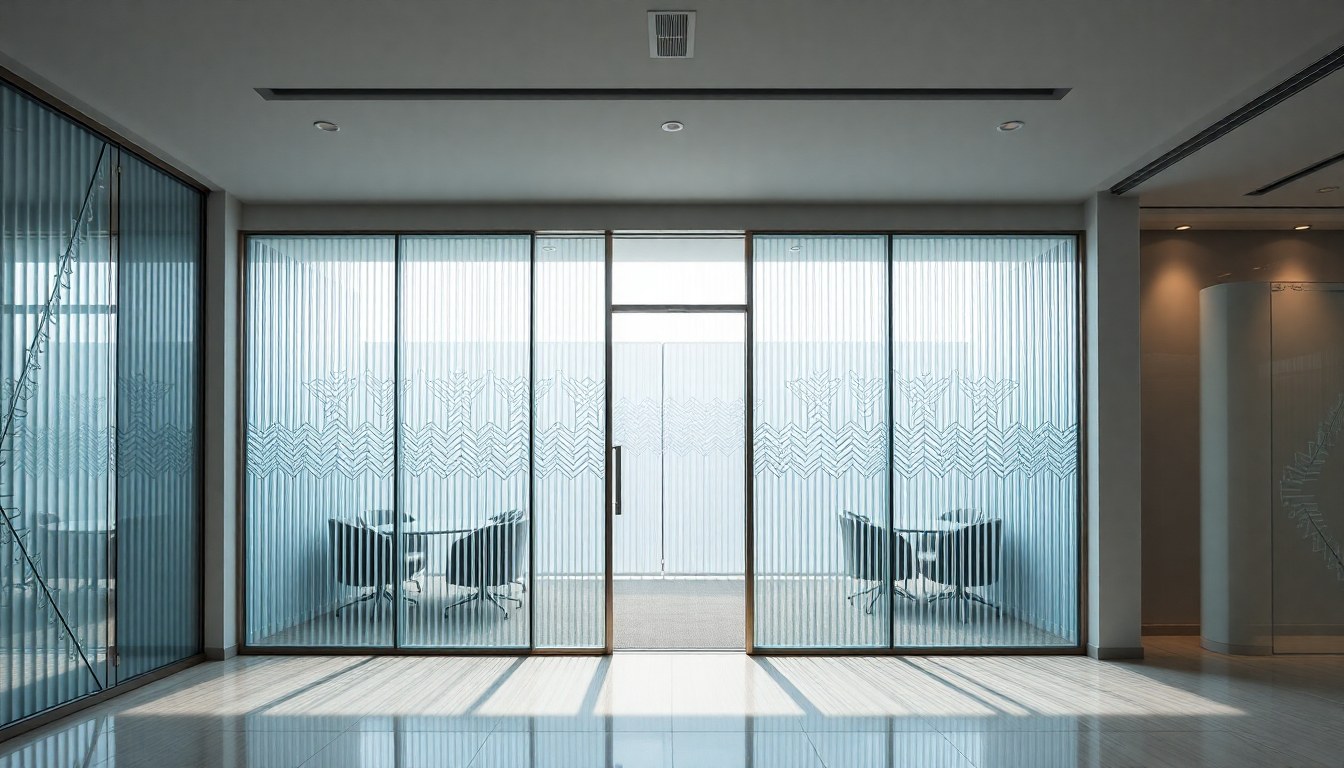
When designing modern office cabins in India, the choice between clear glass and textured alternatives shapes both aesthetics and functionality. Reeded and fluted glass have become popular middle-ground solutions, offering visual privacy while maintaining light transmission and a professional appearance. However, not all textured glass performs equally—distortion levels, cost, and the degree of privacy each provides vary considerably, and understanding these differences is crucial before specifying them for your workspace.
Understanding Reeded vs. Fluted Glass: Key Differences
Reeded and fluted glass are often used interchangeably in casual conversation, but they represent distinct textures with different optical properties. Reeded glass features parallel, rounded ridges running in one direction, typically creating a subtle, linear pattern. Fluted glass, by contrast, has deeper, more pronounced grooves—also directional—that produce a stronger visual distortion and more pronounced light-scattering effect.
Both textures are created during the manufacturing process by passing molten glass through embossed rollers. The depth and width of the pattern determine how much light is scattered and how much detail is obscured when viewed through the glass. A 4mm reeded panel will obscure less detail than a 6mm fluted panel of the same pattern width, making reeded glass suitable for applications where you want some visual connection while maintaining confidentiality.
Manufacturing and Availability in India
Most reeded and fluted glass sold in India is imported from manufacturers in Europe and Southeast Asia, though several Indian glass processors now offer domestic production. Established dealers like SR Glass Emporium in Hyderabad and SABRI Glass House stock multiple texture options from reputable suppliers. Lead times for custom orders typically range from 10–15 days, depending on thickness and pattern specifications.
Distortion Levels: What You Actually See Through the Glass
Distortion is the primary trade-off when choosing textured glass over clear glazing. The degree of distortion depends on three factors: pattern depth, pattern frequency (how closely spaced the ridges are), and viewing angle. A person standing directly in front of a reeded glass panel will see fuzzy silhouettes and color blocks; at an oblique angle, distortion increases further, making facial features and fine details almost completely unrecognizable.
Fluted glass distorts more aggressively than reeded glass. While reeded patterns typically allow you to distinguish whether someone is moving or standing still, fluted patterns obscure even gross motion details. This makes fluted glass the choice when maximum privacy is the priority, even if it means sacrificing the subtle visual connection that reeded glass provides.
Distortion Ratings by Texture Type
- Reeded Glass (fine ridges, ~2–3mm spacing): 40–50% distortion; you can see movement and general shapes, but not facial features or fine details.
- Standard Fluted Glass (deeper grooves, ~4–5mm spacing): 60–70% distortion; movement is visible but heavily obscured; colors and light/dark areas remain distinguishable.
- Heavy Fluted Glass (pronounced grooves, ~6–8mm spacing): 75–85% distortion; only light, shadow, and major movement are visible; minimal visual connection.
- Wavy or Ripple Glass: 50–65% distortion; irregular surface creates unpredictable light scatter; distortion varies by viewing angle and light source.
For office cabins where employees need to signal availability or hold brief conversations without opening the door, reeded glass strikes a balance. For executive cabins or confidential meeting rooms, fluted or heavy fluted glass is the standard choice.
Light Transmission: How Much Natural Light Gets Through
A common misconception is that textured glass significantly reduces light transmission. In reality, reeded and fluted glass transmit 85–92% of visible light, compared to 90% for standard clear glass. The difference is minimal and often imperceptible in real-world conditions, especially in naturally lit office spaces.
What changes is the quality of light transmission. Textured glass scatters light, softening shadows and reducing glare—a benefit in offices with bright southern or western exposures. However, in dim or north-facing cabins, the slight reduction in direct light transmission may require supplementary artificial lighting.
Light Transmission by Glass Type
- Clear Glass (4mm): 90% visible light transmission
- Reeded Glass (4mm): 88–90% visible light transmission
- Fluted Glass (4mm): 85–88% visible light transmission
- Heavy Fluted Glass (6mm): 82–85% visible light transmission
- Tinted or Reflective Textured Glass: 40–70% visible light transmission (depends on tint)
If your office cabin design includes skylights or large windows adjacent to the partition, the light loss from fluted glass will be negligible. However, in basement cabins or interior rooms without external light sources, prioritize reeded glass or consider adding supplementary LED panel lighting.
Privacy Ratings and Real-World Performance
Privacy performance depends not only on distortion but also on external lighting conditions and viewing distance. A person standing 30 cm away from a fluted glass panel will discern more detail than someone standing 2 meters away, even through the same glass. Backlighting (light behind the glass) dramatically reduces privacy by creating silhouettes; this is a critical consideration if your office cabin faces a window or bright wall.
According to feedback from Gurugram-based office designers, reeded glass works well for open-plan office zones where visual privacy is desired but not critical—such as between workstations or between a cabin and a common corridor. Fluted glass is preferred for executive cabins, HR departments, and meeting rooms where conversations must remain confidential.
Privacy Scenarios and Recommended Glass Type
- Open-plan workstation dividers: Reeded glass; allows light and subtle visual connection while reducing distractions.
- Manager's cabin (facing open office): Fluted glass; prevents colleagues from seeing into the cabin during confidential calls.
- Meeting rooms: Fluted or heavy fluted glass; ensures discussions remain private while maintaining a professional appearance.
- Executive corner office: Heavy fluted or frosted glass; maximum privacy combined with a premium aesthetic.
- Cabin with backlighting risk: Combine fluted glass with internal blinds or curtains; silhouettes can compromise privacy even with heavily textured glass.
Cost Comparison: Reeded, Fluted, and Alternatives
In India, pricing for textured glass varies by supplier, thickness, and order volume. As of 2024, approximate costs per square meter for 4mm tempered textured glass are:
- Reeded Glass: ₹800–₹1,200 per sq. m
- Standard Fluted Glass: ₹1,000–₹1,500 per sq. m
- Heavy Fluted Glass: ₹1,200–₹1,800 per sq. m
- Frosted Glass (acid-etched): ₹900–₹1,400 per sq. m
- Clear Tempered Glass: ₹600–₹900 per sq. m
- Tinted Textured Glass: ₹1,200–₹2,000 per sq. m (depending on tint)
Installation costs for partitions typically range from ₹150–₹400 per running meter, depending on frame material (aluminum, steel, or powder-coated steel) and the complexity of the installation. For a typical 2.5m × 2m cabin partition using fluted glass, total material and installation costs usually fall between ₹25,000–₹45,000.
Reeded glass offers better value for applications where privacy is secondary to aesthetics and light transmission. Cube Interiors and other design-focused dealers often recommend reeded glass for cost-conscious projects where subtle visual softening is sufficient. For maximum privacy on a budget, frosted glass (acid-etched clear glass) provides comparable privacy to fluted glass at a lower price point, though it offers less visual interest.
Expert Insights: What Gurugram Office Designers Recommend
Office design professionals in the National Capital Region consistently cite three factors when specifying textured glass: the cabin's function, its orientation relative to natural light, and the company's privacy culture. A tech startup with an open, collaborative ethos may choose reeded glass throughout, while a law firm or financial services company typically specifies heavy fluted glass for all cabins and meeting rooms.
One recurring recommendation from interior designers is to combine textured glass with adjustable blinds or roller shades. This hybrid approach allows occupants to modulate privacy on demand—transparent when collaboration is needed, opaque when confidentiality is critical. LINEAR ARCHITECTS and similar firms frequently specify motorized blinds integrated into aluminum frames, creating a flexible, professional solution.
Another insight: the direction of the reeding or fluting matters. Horizontal patterns create a sense of width and calm; vertical patterns add visual height and dynamism. Some designers specify mixed orientations across different zones to reinforce spatial hierarchy and wayfinding within the office.
Frequently Asked Questions
What's the difference between reeded and fluted glass in terms of privacy?
Reeded glass provides 40–50% distortion, allowing silhouettes and movement to be visible but obscuring facial features. Fluted glass provides 60–70% distortion, making movement visible but heavily obscured. For applications requiring true confidentiality, fluted glass is the stronger choice. Reeded glass works better in collaborative spaces where some visual connection is desirable.
Does textured glass reduce natural light significantly?
No. Reeded and fluted glass transmit 85–92% of visible light, compared to 90% for clear glass. The difference is minimal and often imperceptible. However, textured glass scatters light rather than transmitting it directly, which can reduce contrast and may require supplementary lighting in dim spaces.
Can I use reeded glass for an executive cabin where privacy is critical?
Reeded glass alone is not recommended for executive cabins or confidential meeting rooms because it allows enough visual detail for privacy concerns. Fluted or heavy fluted glass is the industry standard for such applications. If you prefer the aesthetic of reeded glass, combine it with integrated blinds or frosted film for added privacy when needed.
Which is more cost-effective: reeded, fluted, or frosted glass?
Reeded glass typically costs ₹800–₹1,200 per sq. m, while fluted glass ranges from ₹1,000–₹1,500 per sq. m. Frosted (acid-etched) glass costs ₹900–₹1,400 per sq. m and offers privacy comparable to fluted glass at a lower price point. For budget-conscious projects, frosted glass often provides the best value. For aesthetic variety, reeded glass is the most economical textured option.
How do I prevent silhouettes from compromising privacy with textured glass?
Silhouettes occur when light behind the glass is brighter than ambient light in front of it. To prevent this, avoid positioning textured glass partitions directly in front of windows or bright walls. If this is unavoidable, integrate internal blinds, frosted film, or curtains that can be drawn when privacy is critical. Designers also recommend using tinted textured glass (bronze or gray) in such situations, as tint reduces backlighting contrast.
Conclusion: Choosing the Right Textured Glass for Your Office
Reeded and fluted glass represent a pragmatic balance between the transparency of clear glass and the complete opacity of frosted or solid partitions. Reeded glass excels in collaborative, open-plan environments where light and subtle visual connection matter; fluted glass serves executive and confidential spaces where privacy is paramount. Light transmission differences are negligible, but distortion levels and cost vary meaningfully—so your choice should align with your cabin's function, orientation, and privacy requirements.
Whether you're designing a startup office in Bangalore, a corporate campus in Gurugram, or a professional practice in any Indian city, exploring options with experienced glass suppliers and interior designers will ensure you select the right texture, thickness, and frame system for your specific needs. Browse verified glass dealers and interior designers on glassy.in, India's largest glass-business directory, to connect with specialists in your region who can provide samples, cost estimates, and design recommendations for your office partition project.