
Glass Partitions
Fluted Glass Partitions: Texture & Privacy Without Frosting Cost
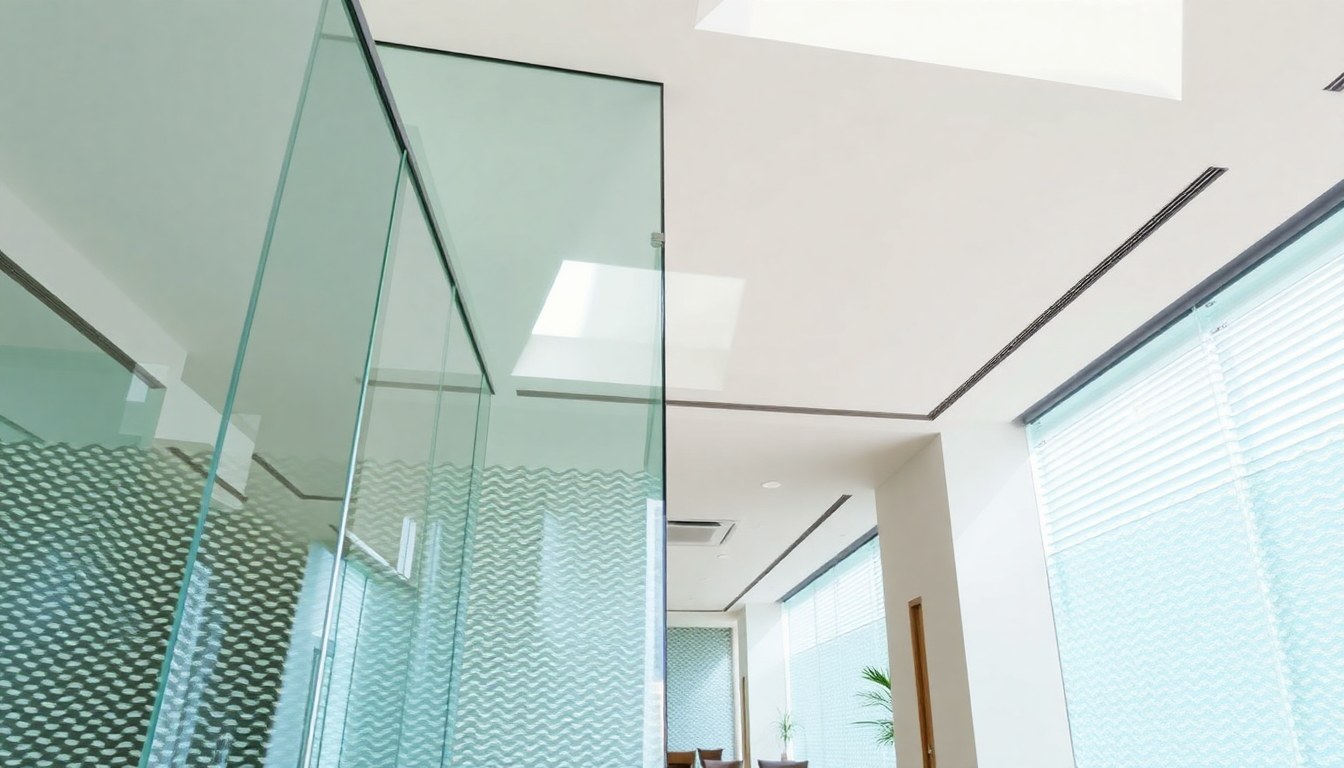
Fluted and reeded glass partitions deliver the privacy and aesthetic appeal you need without the premium price tag of frosted alternatives. These textured glass solutions distort vision while allowing light to flow freely, making them ideal for office cubicles, conference rooms, home offices, and residential spaces across India. Whether you're renovating a Mumbai corporate office or creating a private corner in your Bangalore home, fluted glass offers a practical, cost-effective middle ground between clear and frosted glass.
What Are Fluted and Reeded Glass Partitions?
Fluted glass features parallel vertical or horizontal grooves etched into the surface, while reeded glass has finer, more closely spaced ridges that create a similar visual effect. Both styles distort the view on the other side without completely blocking light transmission. The grooves refract light in multiple directions, creating a soft, diffused glow that obscures details while maintaining brightness in the space.
The terminology can vary across regions in India—some suppliers call them fluted, others use reeded, and some refer to them as textured or ribbed glass. All describe the same fundamental concept: a glass surface with regular, parallel indentations that provide partial obscuration. Unlike frosted glass, which has a uniform matte finish, fluted glass retains its smooth tactile surface while the optical distortion happens through the groove pattern itself.
How Fluted Glass Differs from Frosted Glass
Frosted glass undergoes a chemical or mechanical treatment to create a uniform, opaque appearance across the entire surface. This process is more labor-intensive and typically costs 20–40% more than fluted alternatives. Fluted glass, by contrast, achieves privacy through its physical groove structure, which is often created during the manufacturing process or through precision machining. The result is lower material costs and easier maintenance—frosted surfaces can accumulate dust and fingerprints more visibly, while fluted glass remains cleaner-looking between washes.
Privacy and Light Transmission Benefits
Fluted glass strikes an excellent balance between privacy and natural light. While clear glass offers zero privacy, and frosted glass blocks light almost entirely, fluted partitions allow approximately 60–75% of light to pass through while obscuring vision beyond arm's length. This makes them perfect for open-plan offices where teams need to collaborate without constant visual interruption.
The groove pattern distorts the view sufficiently that someone cannot easily identify faces, read documents, or observe detailed movements from the other side. However, you can still perceive motion and general activity, which is useful for safety and awareness in shared spaces. In residential settings, this means you can maintain privacy in home offices or bathrooms while keeping spaces bright and airy.
- Light transmission: 60–75% of natural light passes through, reducing dependence on artificial lighting
- Privacy level: Sufficient for most office and residential applications; prevents detailed visibility
- Thermal properties: Single-pane fluted glass offers minimal insulation; consider double-glazing for temperature control
- Sound reduction: Modest acoustic benefit; not a primary sound barrier unless combined with laminated or double-pane construction
Installation Methods for Fluted Glass Partitions
Fluted glass partitions can be installed using several methods, depending on your space, budget, and permanence requirements. The installation approach affects both the final cost and the flexibility of your partition system.
Framed Partition Systems
Aluminum or steel frames hold fluted glass panels in place, creating modular partition walls. This is the most common approach in Indian offices because frames can be assembled, disassembled, and reconfigured without permanent damage to walls or floors. Frames are typically mounted to the floor and ceiling using anchors, and panels slide or bolt into channels within the frame. Costs for framed systems range from ₹800 to ₹2,500 per square foot, depending on frame quality and glass thickness.
Frameless Partition Systems
Frameless fluted glass partitions use specialized hardware—top and bottom channels, hinges, and clamps—to hold panels without visible framing. This creates a sleek, modern appearance and is popular in premium office spaces in Delhi, Bangalore, and Hyderabad. Installation requires precise measurement and professional fitting, making labor costs higher. Frameless systems typically cost ₹1,500 to ₹3,500 per square foot but offer superior aesthetics and easier cleaning.
DIY and Semi-Permanent Options
For renters or those seeking temporary solutions, adhesive-backed fluted film can be applied directly to existing glass or acrylic panels. While less durable than solid glass, these films cost significantly less (₹300–₹800 per square foot) and can be removed without damage. However, they are prone to peeling and may not provide the same optical quality as genuine fluted glass.
Durability, Maintenance, and Longevity
Fluted glass partitions are highly durable when installed correctly. The grooved surface does not weaken the glass structurally; instead, the parallel indentations are shallow enough that they do not create stress points. Most fluted glass partitions last 15–25 years with minimal maintenance, rivaling or exceeding the lifespan of frosted alternatives.
Maintenance is straightforward: clean fluted glass with a soft cloth and standard glass cleaner, wiping in the direction of the grooves to avoid trapping liquid in the channels. Unlike frosted glass, which can show water spots and dust accumulation more noticeably, fluted glass remains relatively forgiving between cleanings. For high-traffic areas, consider tempered fluted glass, which is heat-treated to be four to five times stronger than standard glass and safer if breakage occurs.
- Tempered fluted glass: Recommended for safety-critical areas; costs 15–25% more but resists impact better
- Laminated fluted glass: Adds sound dampening and holds together if broken; ideal for ground-floor offices or noisy environments
- Cleaning frequency: Monthly cleaning for standard use; weekly for high-traffic or dusty environments
- Repair options: Individual panels can be replaced without replacing the entire partition system
Cost Comparison: Fluted vs. Frosted Glass Partitions
When budgeting for partition systems, fluted glass typically offers better value than frosted alternatives. Here's a realistic breakdown for a 100 square foot partition wall in an Indian office:
- Frosted glass (framed): ₹1,20,000–₹1,60,000 (₹1,200–₹1,600 per sq. ft.)
- Fluted glass (framed): ₹90,000–₹1,20,000 (₹900–₹1,200 per sq. ft.)
- Frosted glass (frameless): ₹1,80,000–₹2,40,000 (₹1,800–₹2,400 per sq. ft.)
- Fluted glass (frameless): ₹1,50,000–₹2,00,000 (₹1,500–₹2,000 per sq. ft.)
- Fluted film (temporary): ₹30,000–₹50,000 (₹300–₹500 per sq. ft.)
The cost savings with fluted glass come from simpler manufacturing and faster installation. Frosting requires additional chemical or mechanical processing, while fluted glass is often created during the standard glass production process. Labor costs are also lower because fluted glass installation does not require the same precision as some frosted applications.
Best Use Cases for Fluted Glass Partitions in India
Fluted glass partitions work exceptionally well in specific environments where their combination of privacy and light transmission is most valuable. Understanding where they shine helps you make the right choice for your space.
Corporate offices: Open-plan offices in Bangalore, Mumbai, and Pune benefit from fluted partitions that separate teams while maintaining visual connection to the overall workspace. Conference rooms with fluted glass allow managers to monitor activity without constant interruption.
Home offices: In Indian homes where space is at a premium, fluted glass partitions create dedicated work areas that don't make rooms feel cramped or dark. They're especially popular in Gurgaon and Noida, where home-office setups are increasingly common.
Retail and hospitality: Showrooms, restaurants, and hotels use fluted partitions to create distinct zones without blocking sightlines. This is particularly effective in high-end retail spaces across major Indian cities.
Healthcare and wellness: Clinics and therapy centers use fluted glass for consultation rooms where patient privacy is essential but natural light is important for comfort.
Frequently Asked Questions
Can fluted glass be customized in terms of groove direction and spacing?
Yes, most glass manufacturers offer customization options. Vertical grooves are standard and suit most partition applications, but horizontal or diagonal patterns are available. Groove spacing can also be adjusted—closer grooves provide more privacy but may reduce light transmission slightly. Customization typically adds 10–20% to the base cost and requires a longer lead time. Contact your local glass supplier in your city for samples and quotes on custom patterns.
Is fluted glass soundproof?
Standard single-pane fluted glass provides minimal sound insulation, comparable to clear glass. If acoustic performance is important, specify laminated fluted glass or double-glazed fluted partitions. Laminated glass, where two panes are bonded with an acoustic interlayer, can reduce noise by 30–50% depending on thickness. Double-glazed fluted systems with an air gap between panes offer even better sound reduction. These upgrades increase cost but are worthwhile for noisy environments.
How do I choose between framed and frameless fluted glass partitions?
Framed systems are more affordable, easier to install, and simpler to reconfigure or remove. They're ideal for temporary setups or cost-conscious projects. Frameless systems offer superior aesthetics, easier cleaning, and a more premium appearance—worth the investment if your office has a high-end design focus or if you plan to keep the partition for many years. Consider your budget, design priorities, and whether you might reconfigure the space in the future.
Can fluted glass be used in bathrooms or wet areas?
Yes, fluted glass is excellent for bathroom privacy screens and wet areas. The grooved surface doesn't retain water differently than smooth glass, but ensure proper drainage and ventilation to prevent moisture issues. Use tempered fluted glass for safety, and consider frameless hardware made from stainless steel to resist corrosion. Avoid frosted film alternatives in bathrooms, as they degrade faster in humid conditions.
What thickness of fluted glass should I specify for a partition wall?
For most office and residential partitions, 10 mm (3/8 inch) fluted glass is standard and offers a good balance of strength, light transmission, and cost. For larger panels (over 2 meters in height) or high-traffic areas, 12 mm glass is recommended. Tempered fluted glass is advisable for ground-floor installations or spaces with children. Your glass supplier will recommend thickness based on panel size and installation method.
Conclusion: Make the Smart Choice for Your Space
Fluted glass partitions deliver privacy, light, and visual interest at a lower cost than frosted alternatives. Whether you're designing an office in Delhi, a home workspace in Bangalore, or a retail space in Mumbai, fluted glass offers flexibility, durability, and aesthetic appeal. With proper installation and maintenance, these partitions will serve you reliably for decades while keeping your budget in check.
Ready to explore fluted glass partition options for your project? Browse verified glass suppliers, manufacturers, and installation specialists in your city on glassy.in, India's largest glass-business directory. Get quotes, compare products, and connect with trusted professionals who understand your local market and requirements.