
Glass Partitions
Frosted Glass for Office Partitions: Privacy Levels & Light Transmission Trade-offs
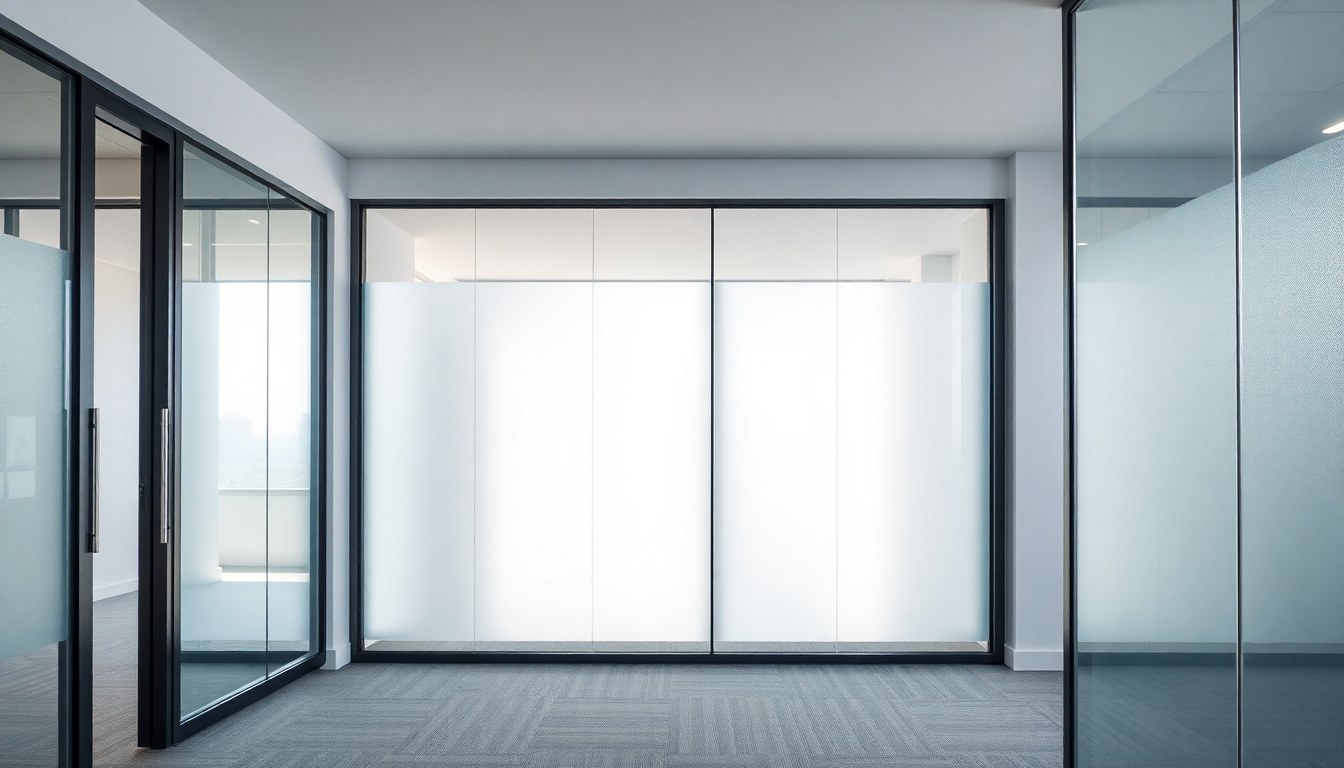
Modern offices face a constant tension: employees need privacy and focus, yet companies want the transparency and collaborative feel of open layouts. Frosted glass partitions solve this paradox by diffusing light while blocking direct sightlines, creating semi-private zones without sacrificing the brightness and visual openness that makes contemporary workspaces feel inviting. Understanding the different frosting methods and their impact on both privacy and natural light transmission will help you design office partitions that truly serve your team's needs.
Why Frosted Glass Matters in Modern Office Design
The shift away from closed cubicles toward open-plan offices has brought unexpected challenges. While increased transparency encourages communication, it often comes at the cost of employee focus and privacy. Frosted glass partitions emerged as a practical solution that preserves the psychological benefits of both approaches—employees can see movement and light around them, yet cannot be directly observed or distracted by nearby activity.
Beyond functionality, frosted glass carries aesthetic advantages. It creates a sophisticated, professional appearance that feels more contemporary than traditional drywall or solid panels. The frosted finish also hides fingerprints and dust better than clear glass, reducing maintenance demands in high-traffic office environments. When paired with thoughtful interior design, frosted partitions can enhance your office's visual cohesion while maintaining the brightness that boosts mood and productivity.
Understanding Frosting Methods and Their Characteristics
Not all frosted finishes are created equal. The method used to frost glass directly influences both the degree of privacy achieved and how much light passes through. Each technique offers distinct advantages depending on your office layout, budget, and specific privacy requirements.
Sandblasting: Maximum Texture and Privacy
Sandblasting uses compressed air to force fine sand particles against glass at high velocity, creating a deeply textured, opaque surface. This method produces one of the highest privacy levels available—people cannot see through the glass even when pressed against it, though light still diffuses through. The resulting texture is permanent and extremely durable, resisting scratches and maintaining its appearance for decades without special care.
The trade-off is light transmission. Sandblasted glass typically allows 50–70% of light through, depending on the intensity of the blasting. This means offices with limited natural light sources may feel slightly dimmer than desired. Sandblasting also cannot be easily reversed if you later want to restore clarity to the glass. For executive offices, meeting rooms, or sensitive work areas where privacy is paramount, sandblasting remains the gold standard.
Acid-Etching: Subtle Finish with Better Light Transmission
Acid-etching applies a chemical solution to glass, creating a smooth, frosted appearance without the pronounced texture of sandblasting. The process is more controlled, allowing for consistent, uniform finishes. Acid-etched glass transmits approximately 70–85% of light, making it an excellent choice for offices where natural illumination is a priority.
The visual effect is subtler than sandblasting—people can discern movement and general shapes through acid-etched glass, but cannot clearly identify individuals or read text. This makes it ideal for open-plan offices where you want to maintain visual flow and connection while still providing reasonable privacy. Acid-etched finishes are also more cost-effective than sandblasting and can be applied with greater precision, allowing for custom patterns or branding elements.
Vinyl Frosting Films: Flexible and Reversible
Self-adhesive vinyl frosting films offer maximum flexibility. These polyester-based films are applied directly to existing clear glass and can be removed or replaced without damaging the underlying pane. Vinyl films come in various opacity levels, from subtle 30% frost to complete 100% opaque coverage, allowing you to customize privacy levels precisely.
Light transmission through vinyl films typically ranges from 60–80%, depending on the opacity chosen. A significant advantage is reversibility—if your office layout changes or you want to rebrand, frosted vinyl can be removed and replaced within hours. Vinyl films are also the most budget-friendly option, making them popular for temporary installations, leased spaces, or offices testing different partition configurations before committing to permanent solutions. However, they require more maintenance than etched or sandblasted glass, as dust and moisture can accumulate at edges.
Privacy Levels: What Each Method Actually Delivers
Privacy in frosted glass isn't binary—it exists on a spectrum. Understanding what each frosting method actually conceals will help you match the solution to your specific needs.
- Silhouette Privacy: Sandblasted and heavily frosted vinyl films block facial recognition and prevent reading text, but movement and general body shapes remain visible. This level suits meeting rooms and management offices.
- Movement Privacy: Acid-etched glass and lightly frosted vinyl allow people to see that someone is present and moving, but not identify them. Ideal for open-plan zones where you want awareness without distraction.
- Ambient Privacy: All frosting methods preserve light transmission and a sense of connection, unlike opaque walls. Employees feel less isolated, which improves morale and collaboration across teams.
For sensitive work—legal consultations, HR discussions, or confidential client meetings—sandblasting or heavily opaque vinyl (80%+ frost) is essential. For general office partitioning between workstations or between office and common areas, acid-etching or medium-opacity vinyl (50–70%) provides sufficient privacy without feeling isolating.
Light Transmission Trade-offs and Office Lighting Strategy
The relationship between frosting and natural light is not straightforward. While frosted glass does reduce light transmission compared to clear glass, the diffusion effect actually distributes light more evenly across a space, potentially reducing harsh glare and creating more comfortable illumination.
Consider your office's existing light sources when selecting a frosting method. Offices with large south-facing windows or skylights can afford the light loss from sandblasting (50–70% transmission) without feeling dim. Spaces relying primarily on artificial lighting or north-facing windows should prioritize acid-etching or lighter vinyl films (75–85% transmission) to maximize natural light contribution.
A practical strategy: combine frosted partitions with supplementary task lighting at individual workstations. This approach ensures adequate illumination for focused work while maintaining the visual benefits of natural light diffusing through frosted glass. Pairing frosted partitions with light-colored interior surfaces and strategic placement of interior designers experienced in office layouts—such as DezynTrend or Viswam Interiors—can optimize the interplay between natural and artificial lighting.
Practical Installation and Maintenance Considerations
Installation method varies by frosting technique. Sandblasted and acid-etched glass must be frosted before installation, making it impossible to change your mind once the partition is in place. This requires precise planning and accurate measurements. Vinyl films, by contrast, are applied on-site after the clear glass is installed, allowing for adjustments and corrections during installation.
Maintenance differs significantly across methods. Sandblasted glass requires only standard glass cleaning—the frosted surface does not trap dust or moisture. Acid-etched glass is similarly low-maintenance. Vinyl films, however, can accumulate dust along seams and edges, requiring periodic cleaning and potential re-sealing over time. In humid environments, vinyl films may develop moisture pockets if not properly sealed.
Cost varies widely. Sandblasting typically costs ₹800–₹1,500 per square meter, acid-etching ranges from ₹600–₹1,200 per square meter, and vinyl films cost ₹300–₹800 per square meter. Prices depend on glass thickness, custom patterns, and local labor rates. For bulk installations, negotiating per-square-meter rates with established glass dealers and architects—such as LINEAR ARCHITECTS—can yield significant savings.
Choosing the Right Frosting Method for Your Office
Your choice should balance privacy needs, light transmission requirements, budget constraints, and permanence expectations.
Choose sandblasting if: Privacy is your top priority, the partition is permanent, and your office has adequate natural or artificial lighting. Executive offices, HR departments, and confidential meeting rooms benefit most from this approach.
Choose acid-etching if: You want a professional appearance with good light transmission and durability. This method suits open-plan offices, management zones, and spaces where you need to balance privacy with visual connection and natural lighting.
Choose vinyl frosting if: You're in a leased space, expect layout changes, have budget constraints, or want to test different privacy levels before committing. Temporary offices and creative spaces often benefit from vinyl's flexibility.
Consulting with experienced architects and interior designers familiar with your specific office context will help ensure the right choice. Professionals like cube interiors understand how frosting interacts with your office's natural light, layout, and workflow patterns.
Frequently Asked Questions
How much light does frosted glass actually block?
Frosted glass blocks 15–50% of light depending on the frosting method. Acid-etching and light vinyl films (30–50% opacity) transmit 70–85% of light. Sandblasting and heavy vinyl films (80–100% opacity) transmit 50–70%. Clear glass transmits approximately 90% of visible light, so frosting does reduce brightness but not dramatically. The diffusion effect often improves light distribution and reduces glare, making spaces feel more comfortable despite slightly lower total transmission.
Can frosted glass be cleaned like regular glass?
Sandblasted and acid-etched glass can be cleaned identically to clear glass using standard glass cleaners and squeegees. The frosted surface does not trap dirt more than smooth glass. Vinyl films should be cleaned gently with soft cloths and mild soap solutions, avoiding harsh chemicals or abrasive tools that might damage the adhesive. All frosting methods hide fingerprints better than clear glass, reducing visible marks between cleanings.
Is frosted glass more expensive than clear glass partitions?
Frosted glass partitions cost slightly more than clear glass due to the frosting process. Acid-etching and sandblasting add ₹200–₹600 per square meter to the base glass cost. Vinyl films are the most economical option, adding only ₹150–₹400 per square meter. Over the lifespan of an office—typically 10–15 years—the cost difference between methods is minimal relative to the productivity and privacy benefits gained.
Can frosted glass be used with glass doors in the same partition system?
Yes, absolutely. Many offices combine frosted glass panels with clear glass doors to maintain visual connection at entry points while preserving privacy within the enclosed space. This hybrid approach allows employees to see who is entering while maintaining privacy for those working inside. Ensure the door hardware and frame materials match the partition system for a cohesive appearance.
How long does frosted glass last before needing replacement?
Sandblasted and acid-etched glass last indefinitely—the frosting is part of the glass structure and will not fade or degrade. Vinyl films typically last 5–10 years depending on environmental conditions (humidity, UV exposure, temperature fluctuations). In stable office environments, vinyl films often exceed this timeframe. When replacement is needed, vinyl films can be removed and reapplied without damaging the underlying glass.
Next Steps: Finding the Right Frosted Glass Solution for Your Office
Frosted glass partitions offer a practical, aesthetically sophisticated way to balance privacy with the open-office ideals of transparency and natural light. Whether you prioritize maximum privacy through sandblasting, optimal light transmission with acid-etching, or flexible reversibility with vinyl films, the right choice depends on your specific workspace needs, budget, and long-term plans. Explore frosted glass options through SABRI GLASS HOUSE and other trusted glass dealers in the glassy.in directory to find suppliers and designers ready to transform your office environment. Visit glassy.in today to connect with glass businesses and interior designers specializing in office partitions in your region.