
Glass Partitions
Glass Partition Demountable Systems: Reusability and Relocation Cost for Gurugram Co-Working Spaces
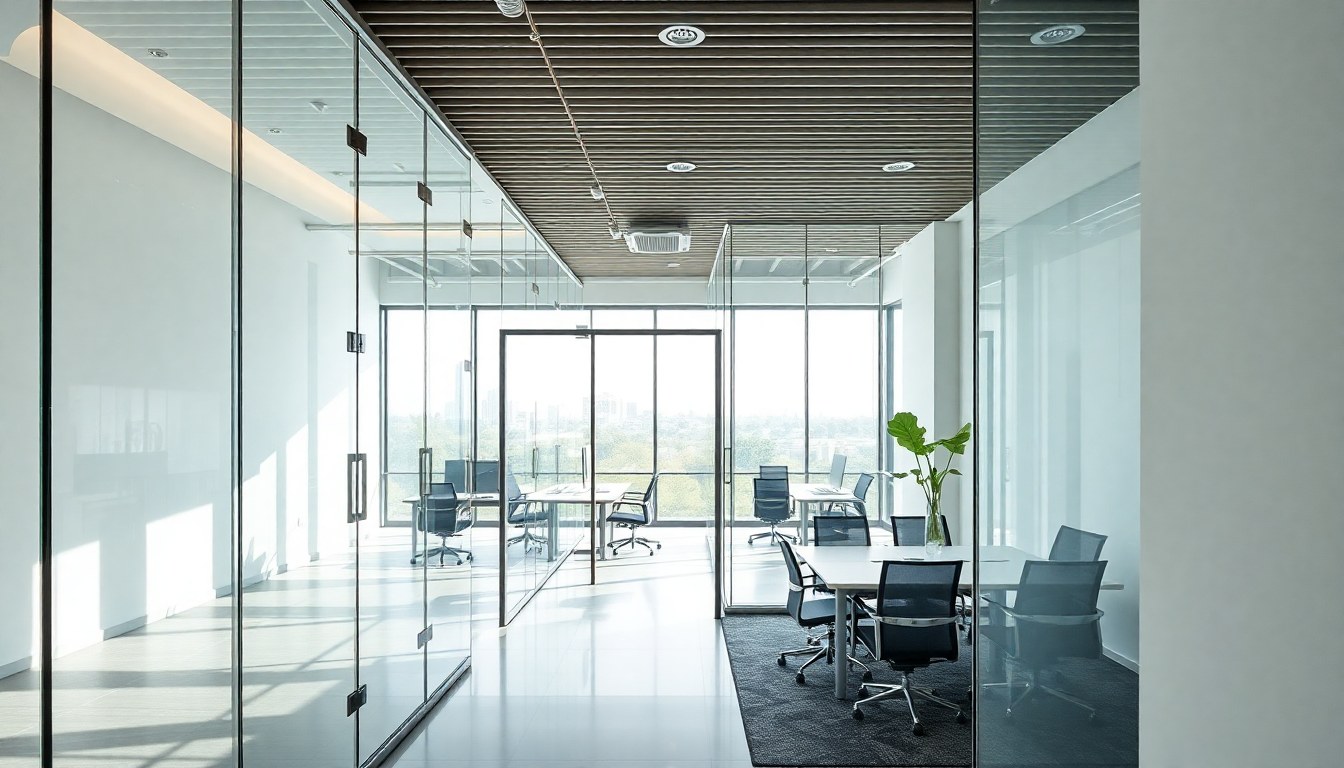
Gurugram's co-working industry is experiencing unprecedented growth, with spaces constantly evolving to meet changing tenant requirements. Demountable glass partition systems have emerged as the ideal solution for this dynamic environment, offering complete flexibility to reconfigure layouts without the waste and expense of traditional construction. Unlike permanent drywall installations, these systems can be relocated, reused, and reconfigured multiple times, delivering significant long-term cost savings while maintaining acoustic performance and aesthetic appeal.
Understanding Demountable Glass Partition Systems
Demountable glass partitions are modular wall systems designed for easy installation, relocation, and reuse without damaging the glass panels or structural components. These systems typically consist of aluminum or steel frames that hold tempered or laminated glass panels, with all connections made through mechanical fasteners rather than permanent adhesives or wet trades. The engineering focuses on creating secure, stable walls that can be disassembled and reassembled by trained technicians in a matter of hours rather than days.
The core advantage lies in the system's modularity. Each component—from floor channels to vertical posts, glazing beads to door frames—is designed to be removed and reinstalled without degradation. Modern demountable systems incorporate sophisticated gasket technology and pressure-fit mechanisms that maintain structural integrity and acoustic performance even after multiple relocations. For Gurugram co-working spaces where tenant mix and space requirements change quarterly, this flexibility translates directly to reduced downtime and capital expenditure.
Frame System Types and Components
Demountable glass partition systems are available in several frame configurations. Single-glazed frameless systems offer minimal visual obstruction with slim aluminum profiles holding 10-12mm tempered glass. Framed systems feature more substantial aluminum extrusions—typically 50-100mm in width—that can accommodate thicker glass, integrated blinds, or double-glazing for enhanced acoustics. The choice depends on acoustic requirements, aesthetic preferences, and budget constraints.
Key components include floor and ceiling tracks that distribute weight and provide alignment, vertical mullions that define panel widths, and specialized corner posts that enable 90-degree and T-junction configurations. Door frames integrate seamlessly with the partition system, accepting standard hardware for swing, sliding, or pivot doors. High-quality systems from manufacturers incorporate adjustable leveling feet and flexible head details to accommodate floor irregularities and ceiling height variations common in older Gurugram commercial buildings.
Relocation Procedures and Practical Considerations
Relocating demountable glass partitions requires systematic planning but is significantly faster than demolishing and rebuilding drywall. The process begins with documentation—photographing existing configurations and labeling all components. Technicians then remove glazing beads, carefully extract glass panels, and disassemble the frame system in reverse order of installation. Proper handling is critical; while the systems are designed for reuse, careless removal can damage gaskets, bend frames, or chip glass edges.
For a typical 100-square-meter co-working zone in Gurugram, professional teams can complete demounting in 1-2 days and reinstallation in 2-3 days, depending on layout complexity. This represents approximately 70-80% time savings compared to drywall demolition and reconstruction. The minimal dust and debris generation is particularly valuable in occupied buildings where business continuity is essential. Coordination with services like electrical and HVAC is simplified since partition relocation rarely requires extensive rework of building systems.
Storage and Component Management
Between relocations, proper storage protects the investment in demountable systems. Glass panels should be stored vertically in A-frame racks with protective spacers to prevent scratching. Aluminum profiles require clean, dry storage to prevent corrosion of gasket channels. Small components—gaskets, fasteners, glazing beads—must be organized and inventoried to ensure complete systems during reinstallation. Many Gurugram co-working operators maintain dedicated storage areas within their facilities or partner with installation contractors who offer storage services.
Component tracking becomes crucial for larger portfolios. Implementing a simple database that records panel dimensions, frame lengths, and hardware quantities enables efficient planning for reconfigurations. This systematic approach prevents the common problem of discovering missing components mid-installation, which can delay projects and necessitate expensive expedited orders. Professional space planners and firms like Furniture Zone often assist co-working operators in maintaining accurate inventories and planning efficient reconfigurations.
Acoustic Performance Retention Through Multiple Relocations
Acoustic privacy is non-negotiable in co-working environments where phone booths, meeting rooms, and private offices must contain sound effectively. Quality demountable glass partition systems achieve Sound Transmission Class (STC) ratings of 35-42 for single-glazed configurations and 42-48 for double-glazed systems. The critical question for reusable systems is whether these performance levels degrade with relocation.
Research and field testing demonstrate that properly maintained demountable systems retain acoustic performance through multiple relocations. The key factors are gasket condition and installation precision. Gaskets create the airtight seal essential for sound attenuation; worn or damaged gaskets must be replaced during relocation. Modern systems use durable EPDM or silicone gaskets rated for 10-15 years of service, easily outlasting typical co-working space reconfigurations. Installation precision—ensuring plumb vertical posts, level tracks, and proper compression of gaskets—is equally important and requires trained technicians rather than general contractors.
Testing and Verification
Co-working operators concerned about acoustic performance after relocation can implement simple verification procedures. Sound level meter testing before and after relocation provides objective data on performance retention. The test involves generating standardized noise (typically 85-90 decibels) in one room and measuring transmission to adjacent spaces. Variations of more than 3-5 decibels suggest installation issues requiring correction. This quality assurance step adds minimal cost but provides confidence that relocated partitions meet performance specifications.
Total Cost Analysis: Demountable Systems Versus Drywall
The initial installed cost of demountable glass partition systems in Gurugram typically ranges from ₹1,800 to ₹3,500 per square foot, depending on system quality, glass specifications, and acoustic requirements. This represents a 40-80% premium over standard drywall and glass construction, which costs ₹1,000 to ₹2,000 per square foot. However, total cost of ownership analysis over a typical 5-7 year co-working lease reveals a different picture.
Consider a 5,000-square-foot co-working space requiring two major reconfigurations during its lease term. Drywall demolition and reconstruction costs approximately ₹800-₹1,200 per square foot for each reconfiguration, including debris removal, new construction, painting, and business disruption. Two reconfigurations add ₹80-1.2 crore to total occupancy costs. Demountable system relocation costs only ₹300-₹500 per square foot, primarily labor for disassembly and reinstallation, adding just ₹30-50 lakh for two moves. The demountable system breaks even after the first major reconfiguration and delivers substantial savings thereafter.
Hidden Cost Factors
Beyond direct construction costs, demountable systems offer additional financial advantages. Relocation downtime is 60-70% shorter, reducing lost revenue from unusable space. Minimal construction debris eliminates expensive disposal fees—a significant consideration in Gurugram where waste management regulations have tightened. The systems' professional appearance and flexibility can command premium rental rates from quality-conscious tenants. Finally, at lease end, demountable systems retain resale value or can be relocated to new premises, while drywall represents a complete sunk cost.
Visualization specialists such as Infinity Visuals can help co-working operators model different layout scenarios and understand the long-term financial implications of demountable versus permanent partition strategies, ensuring informed investment decisions.
Sustainability and Environmental Considerations
Gurugram's commercial real estate sector increasingly prioritizes sustainability, with many co-working spaces pursuing LEED or GRIHA certification. Demountable glass partition systems contribute significantly to green building credentials through waste reduction and material reuse. Traditional drywall demolition generates approximately 15-20 kilograms of waste per square foot, most of which ends in landfills. A single 5,000-square-foot reconfiguration produces 75-100 tons of construction debris.
Demountable systems eliminate this waste stream entirely. Glass panels, aluminum frames, and hardware components can be reused 5-10 times or more with proper handling, dramatically reducing embodied carbon and resource consumption. The aluminum used in quality partition frames contains 70-90% recycled content and is infinitely recyclable at end of life. This circular economy approach aligns with corporate sustainability commitments and appeals to environmentally conscious tenants who increasingly factor workspace sustainability into location decisions.
Implementation Recommendations for Gurugram Co-Working Operators
Successful implementation of demountable glass partition systems requires careful planning from the initial design phase. Engage experienced partition system suppliers early to understand grid planning, structural requirements, and integration with building services. Design layouts on modular grids—typically 1200mm or 1500mm—that align with standard panel widths to minimize custom fabrication and maximize future flexibility. This planning discipline pays dividends during reconfigurations when standard components can be rearranged efficiently.
Invest in quality systems from reputable manufacturers with established supply chains in India. While premium systems cost more initially, their superior engineering, readily available replacement parts, and better acoustic performance justify the investment for professional co-working operations. Establish relationships with certified installation contractors who understand the specific requirements of demountable systems—installation quality directly impacts both immediate performance and long-term reusability.
Document everything meticulously. Maintain as-built drawings, component inventories, and installation specifications in accessible digital formats. This documentation proves invaluable during reconfigurations, enabling accurate planning and preventing costly errors. Finally, educate facility management teams on proper maintenance—regular gasket inspection, careful cleaning procedures, and prompt repair of minor damage extend system life and preserve performance.
Frequently Asked Questions
How many times can demountable glass partitions be relocated before performance degrades?
High-quality demountable glass partition systems can be relocated 5-10 times or more without significant performance degradation, provided they are handled properly during disassembly and reinstallation. The glass panels themselves are highly durable and can last indefinitely with careful handling. Aluminum frames maintain structural integrity through numerous relocations. The limiting factor is typically gasket condition—these should be inspected during each relocation and replaced if showing wear, which usually occurs after 4-6 moves or 10-15 years of service, whichever comes first.
What is the typical cost to relocate demountable partitions in Gurugram?
Relocation costs for demountable glass partition systems in Gurugram typically range from ₹300 to ₹500 per square foot, depending on layout complexity, accessibility, and distance between old and new locations. This cost includes professional disassembly, transportation, storage if needed, and reinstallation. For a typical 1,000-square-foot reconfiguration, expect to invest ₹3-5 lakh. This represents 60-70% savings compared to demolishing and rebuilding equivalent drywall partitions, which would cost ₹8-12 lakh for the same area.
Do demountable glass partitions meet fire safety requirements for commercial offices?
Yes, demountable glass partition systems can meet Indian fire safety standards when specified correctly. Systems using laminated glass with appropriate interlayers can achieve 30-60 minute fire ratings as required by National Building Code guidelines. The aluminum frames are non-combustible, and specialized fire-rated gaskets prevent flame and smoke passage. For Gurugram co-working spaces, ensure your partition supplier provides test certification from NABL-accredited laboratories demonstrating compliance with IS 3614 standards for fire resistance. Fire-rated demountable systems cost approximately 25-40% more than standard systems but are essential for egress corridors and separations between tenancies.
Can demountable partitions accommodate integrated blinds for privacy?
Many demountable glass partition systems offer integrated blind options for privacy control in meeting rooms and private offices. These systems use double-glazed configurations with blinds sealed between glass panels, protecting them from dust and damage while maintaining the clean aesthetic. Blinds can be manual or motorized, with motorized options increasingly popular in premium co-working spaces. The double-glazed cavity required for blinds also improves acoustic performance by 5-8 STC points. Integrated blind systems add ₹800-₹1,500 per square foot to partition costs but eliminate the need for separate window treatments and create a more professional appearance.
What maintenance do demountable glass partitions require between relocations?
Demountable glass partition systems require minimal maintenance between relocations. Clean glass panels monthly using standard glass cleaners and microfiber cloths, avoiding abrasive materials that could scratch surfaces. Inspect door hardware quarterly, lubricating hinges and adjusting closers as needed. Examine gaskets annually for compression set, cracking, or detachment—early detection of gasket issues prevents acoustic performance degradation. Check frame connections semi-annually to ensure fasteners remain tight, particularly in high-traffic areas where vibration may cause loosening. This simple maintenance program, requiring approximately 2-3 hours per quarter for a typical 5,000-square-foot installation, preserves system performance and maximizes relocation value.
Ready to implement flexible, sustainable partition solutions for your co-working space? Explore the comprehensive directory of glass partition suppliers, installation contractors, and design professionals at glassy.in—India's most trusted resource for glass business connections. Find verified vendors serving Gurugram and across India, compare solutions, and connect with experts who understand the unique requirements of dynamic co-working environments.