
Glass Partitions
Frameless Glass Corner Joints: Structural Silicone Design for Chennai Office Partitions
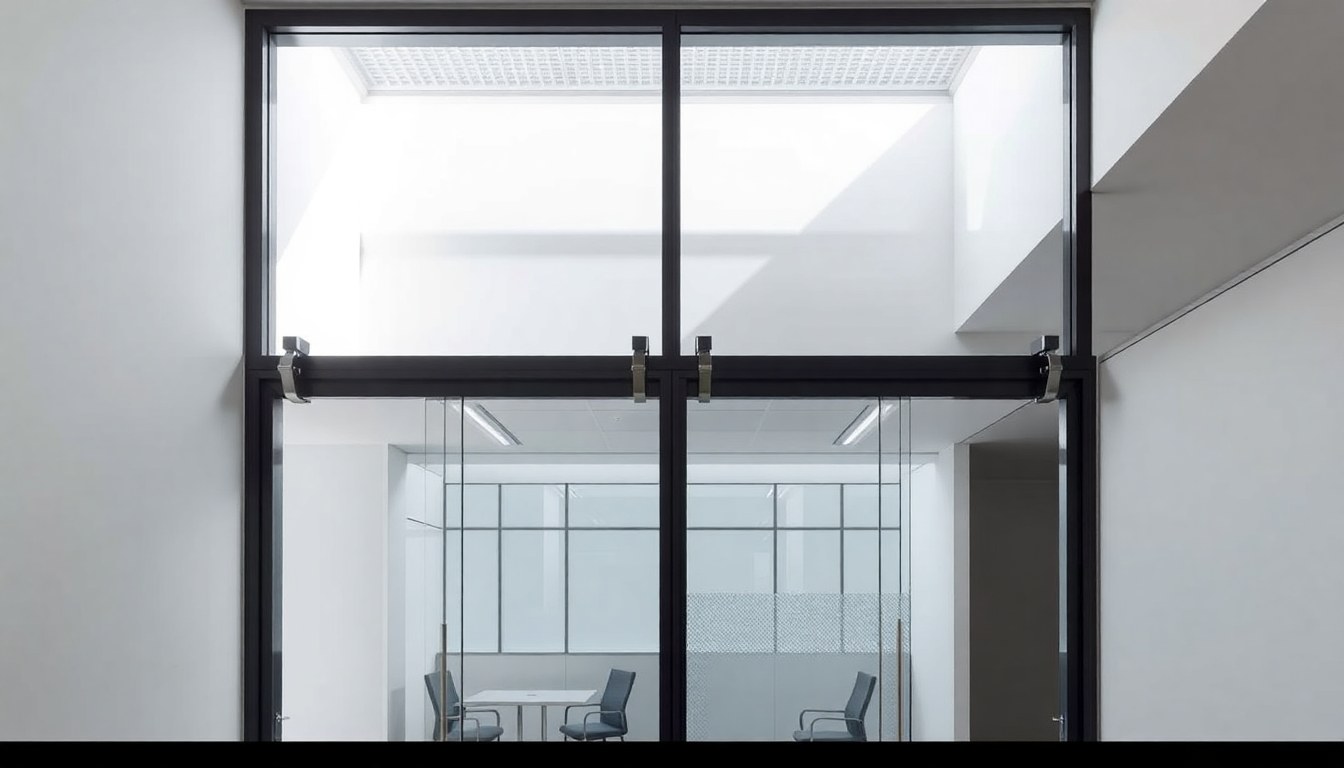
Frameless glass corner joints represent one of the most critical engineering challenges in modern office partition design, combining structural integrity with aesthetic minimalism. The seamless 90-degree and 135-degree connections that define contemporary Chennai workspaces rely entirely on structural silicone to transfer loads, accommodate thermal movement, and maintain weathertight seals in high-humidity coastal environments. This comprehensive guide breaks down the engineering principles, material specifications, and design calculations essential for creating durable frameless glass corner systems that perform reliably in Chennai's demanding climate.
Understanding Frameless Glass Corner Joint Configurations
Frameless glass corner joints eliminate traditional metal frames by using structural silicone as both adhesive and sealant. The two primary configurations—90-degree right-angle joints and 135-degree obtuse joints—each serve distinct architectural purposes in office layouts. Right-angle joints create clean perpendicular intersections for conference rooms and private offices, while 135-degree joints soften visual lines and improve traffic flow in open-plan environments.
The structural principle behind these joints involves transferring lateral loads through the silicone bond to adjacent glass panels, which then distribute forces to floor and ceiling mounting points. Unlike framed systems where metal profiles carry structural loads, frameless joints depend entirely on the adhesive's shear strength and elongation properties. This places extraordinary demands on material selection and joint geometry.
Chennai's coastal location introduces additional complexity through high relative humidity (70-85% year-round) and salt-laden air that can compromise silicone adhesion over time. Successful designs must account for these environmental factors from initial specification through installation detailing.
Structural Silicone Specifications for Corner Joints
Structural silicone sealants for frameless glass corners must meet specific performance criteria beyond standard architectural sealants. The material must achieve minimum tensile adhesion of 0.35 N/mm² to glass surfaces and maintain elasticity across temperature ranges from 15°C to 45°C—typical for air-conditioned Chennai offices with exterior-facing glass.
Material Properties and Selection Criteria
Two-component neutral-cure silicones offer superior performance for corner joints compared to acetoxy-cure alternatives. Neutral-cure formulations avoid the acetic acid byproducts that can corrode metal hardware and degrade over time in humid environments. Key specifications include:
- Shore A hardness between 25-35 for optimal balance of strength and flexibility
- Minimum elongation at break of 400% to accommodate differential thermal movement
- Tensile strength exceeding 1.2 N/mm² for structural load transfer
- UV resistance rating suitable for indirect sunlight exposure through glass
- Fungal resistance certification for high-humidity applications
The silicone joint width typically ranges from 6mm to 12mm depending on glass thickness and expected movement. A common rule establishes joint width at 50% of glass thickness, so 10mm glass requires a 5mm minimum joint—though 8-10mm provides better tolerance for installation variations and long-term movement.
Joint Depth and Bite Calculations
The "bite" dimension—how far silicone extends onto each glass surface—directly determines joint strength. For corner joints subject to both in-plane and out-of-plane loads, minimum bite should equal joint width to maintain proper width-to-depth ratio. A 10mm joint width requires 10mm bite on each glass panel, creating a 10mm × 10mm cross-section at the corner intersection.
Designers working with firms like Arch4Foundation - Architectural Design Consultancy often specify 12mm × 12mm joints for 12mm tempered glass partitions, providing additional safety margin for Chennai's seismic zone III classification and wind load requirements.
Engineering 90-Degree Corner Joint Design
Right-angle frameless corners create the clean geometric intersections that define modern office aesthetics. The structural challenge lies in transferring lateral loads from one glass plane to another while maintaining a weathertight seal and accommodating differential movement between panels.
The standard 90-degree joint uses a butt-joint configuration where glass edges meet at precisely 90 degrees with structural silicone filling the gap. Glass edges must be polished or seamed to prevent stress concentrations that could initiate cracks. The silicone joint creates a flexible connection that allows each panel to deflect independently under wind load or impact while maintaining overall system integrity.
Load Transfer Mechanics
When lateral pressure applies to one glass panel—such as wind load or accidental impact—the force transfers through the silicone joint in shear. The adhesive bond must resist this shearing force while allowing the glass to deflect. Design calculations typically limit shear stress in the silicone to 0.14 N/mm² under maximum design loads, providing a safety factor of approximately 2.5 against the material's ultimate shear strength.
For a typical 2.4m high partition with 12mm glass, maximum mid-span deflection under 1.5 kPa wind load might reach 15mm. The corner joint must accommodate this movement through elastic deformation of the silicone without bond failure or glass-to-glass contact.
135-Degree Obtuse Corner Joint Engineering
Obtuse-angle corners at 135 degrees create softer visual transitions and improve circulation in office layouts. These joints experience different stress patterns than right-angle configurations because the geometry naturally distributes lateral loads more evenly between panels.
The wider angle reduces stress concentration at the joint apex, allowing for slightly reduced silicone joint widths in some applications. However, the geometry complicates glass fabrication since each panel requires precise angle cuts rather than standard 90-degree edges. CNC waterjet cutting ensures the accuracy needed for consistent joint gaps.
Interior design specialists such as CG Interiors frequently incorporate 135-degree corners in open-plan office designs where the obtuse angle creates natural sightlines while maintaining acoustic separation between work zones.
Movement Accommodation in Obtuse Joints
Thermal expansion calculations become critical for 135-degree corners because the wider angle creates longer effective joint lengths. Glass has a coefficient of thermal expansion around 9 × 10⁻⁶ per °C. In Chennai offices where glass temperatures might vary 20°C between night and peak solar heating, a 3m panel length could expand 0.54mm.
The silicone joint must accommodate this movement plus construction tolerances and long-term creep. Design practice typically allocates ±25% movement capability, so a joint designed for 0.5mm thermal movement should maintain performance across ±0.625mm total displacement.
Chennai Climate Considerations and Humidity Management
Chennai's coastal tropical climate presents specific challenges for structural silicone joints that differ from applications in drier inland regions. Relative humidity consistently exceeds 70%, creating conditions where moisture can penetrate inadequately sealed joints and compromise adhesion over time.
Proper surface preparation becomes absolutely critical in humid environments. Glass surfaces must be cleaned with isopropyl alcohol and allowed to dry completely before silicone application—challenging when ambient humidity approaches saturation. Many installers use dehumidified air blowers to create local dry zones during joint assembly.
Mold and Fungal Growth Prevention
The organic compounds in some silicone formulations can support fungal growth in persistently damp conditions. Specify silicones with fungicide additives specifically rated for tropical climates. Regular inspection schedules should check for black mold growth at joint interfaces, particularly in areas with limited air circulation.
Projects developed with Prasanth Associates often incorporate HVAC design that maintains positive pressure in glass-enclosed spaces, reducing humidity infiltration and condensation risk at silicone joints.
Installation Best Practices and Quality Control
Successful frameless corner joints depend as much on installation quality as engineering design. The silicone application process requires controlled conditions, proper surface preparation, and precise joint geometry to achieve design performance.
Glass panels should be temporarily supported in final position using adjustable clamps or vacuum lifters while silicone cures. This prevents sagging or misalignment during the 24-48 hour cure period. Spacers or shims maintain consistent joint width—critical because variations create stress concentrations and aesthetic inconsistencies.
Curing Conditions and Timeframes
Structural silicones cure through moisture-initiated chemical cross-linking. In Chennai's high humidity, surface cure occurs within 15-30 minutes, but full structural cure requires 7-14 days depending on joint depth. The rule of thumb estimates 3mm cure depth per 24 hours at 23°C and 50% relative humidity—faster in Chennai's warmer, more humid conditions but with potential for incomplete cure in very thick joints.
Quality control should include adhesion testing on sample joints before full installation. Pull tests on small test assemblies verify that adhesive failure occurs in the silicone bulk rather than at glass interfaces, confirming proper surface preparation and material compatibility.
Maintenance and Long-Term Performance Monitoring
Frameless glass corner joints require periodic inspection to ensure continued structural performance and weathertight integrity. Annual inspections should check for silicone degradation, adhesion loss, or mechanical damage that could compromise joint function.
Common failure modes include cohesive splitting within the silicone bulk (typically from excessive movement), adhesive debonding from glass surfaces (usually indicating contamination during installation), and UV degradation in sun-exposed areas. Early detection allows targeted repairs before minor issues escalate to panel replacement.
Cleaning protocols should avoid harsh solvents that can soften or swell silicone. Mild detergent solutions and soft cloths maintain appearance without damaging joint integrity. Abrasive cleaners or high-pressure washing can compromise the silicone-glass bond and should be strictly avoided.
Frequently Asked Questions
What is the minimum glass thickness recommended for frameless corner joints in office partitions?
For structural stability in office partition applications, 10mm tempered glass represents the practical minimum thickness for frameless corner joints. However, 12mm glass is strongly recommended for partitions exceeding 2.4m height or in high-traffic areas where impact resistance is critical. The thicker glass provides better dimensional stability and reduces deflection that stresses corner joints under lateral loads.
How do you calculate the required silicone joint width for a frameless glass corner?
Joint width calculation begins with glass thickness—typically 50% of thickness as a baseline, so 12mm glass suggests a 6mm joint. Then add allowances for thermal movement (coefficient of expansion × temperature range × panel length), construction tolerances (typically ±2mm), and long-term creep (25% additional capacity). For Chennai applications, 8-12mm joints are standard for 10-12mm glass, providing adequate movement capacity and structural bond area.
Can frameless glass corner joints withstand Chennai's monsoon conditions?
Properly engineered frameless corner joints perform reliably through Chennai's monsoon season when designed with appropriate materials and installation quality. Neutral-cure structural silicones with fungicide additives resist moisture infiltration and biological growth. The key is ensuring complete surface preparation before installation and using silicones specifically rated for tropical high-humidity environments with sustained exposure to 80%+ relative humidity.
What is the typical lifespan of structural silicone in frameless glass corners?
High-quality neutral-cure structural silicones maintain performance for 20-25 years in Chennai's climate when properly installed and maintained. UV exposure, thermal cycling, and humidity affect longevity, but modern formulations resist these factors effectively. Regular inspection every 2-3 years allows early detection of degradation, and localized repairs can extend system life beyond the initial silicone service period without complete joint replacement.
Do 135-degree corner joints cost more than standard 90-degree configurations?
Yes, obtuse-angle corners typically add 15-25% to fabrication costs compared to right-angle joints due to specialized glass cutting requirements and more complex installation geometry. The angled cuts require CNC precision equipment, and installation takes longer to achieve proper alignment. However, the architectural benefits in terms of space flow and aesthetics often justify the additional investment in high-end office environments where design quality differentiates the workspace.
For expert guidance on frameless glass partition design and installation in Chennai, explore the comprehensive directory of glass specialists, architects, and interior designers at glassy.in. Connect with experienced professionals who understand the engineering requirements and climate considerations essential for successful frameless glass corner joint applications in your office project.