
Glass Partitions
Acoustic Glass Partitions for Open Offices: Sound Insulation Performance
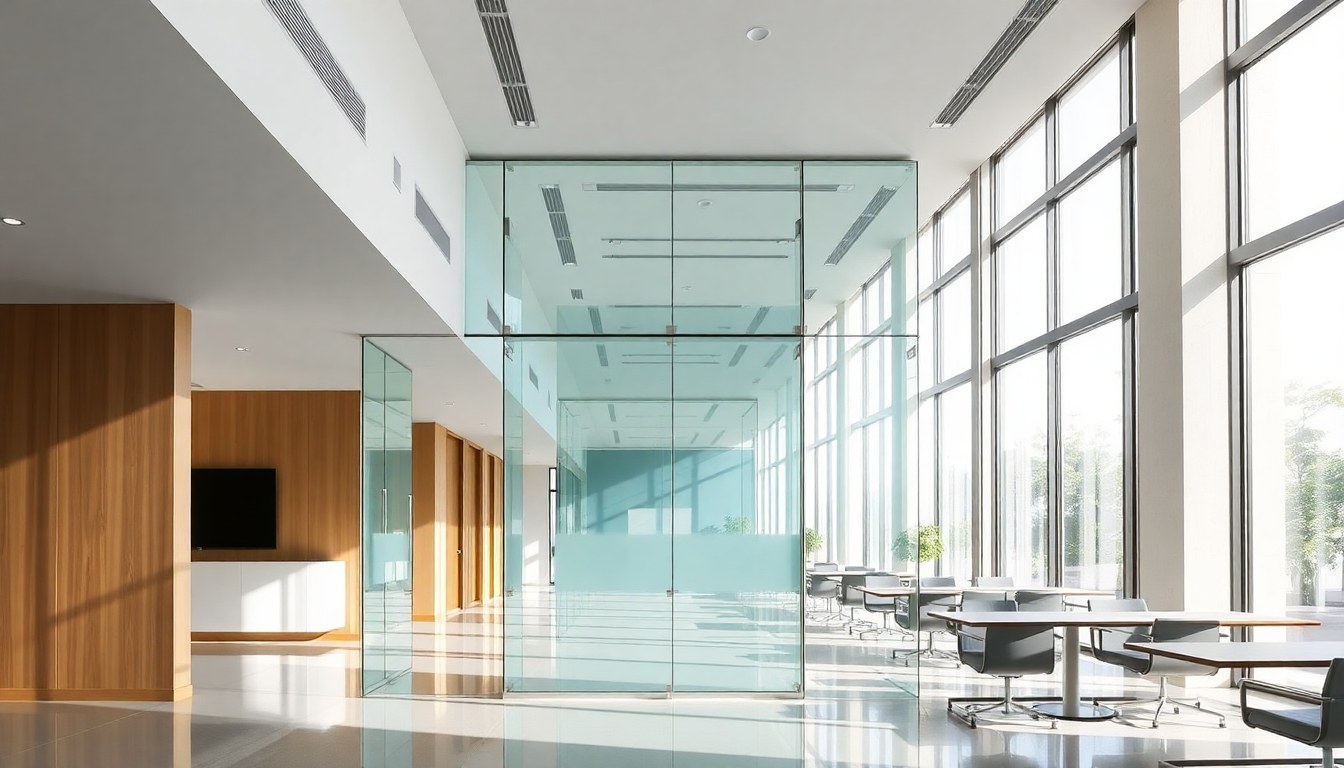
Open office layouts have become the norm in modern workplaces, but they bring a persistent challenge: noise. Acoustic glass partitions offer a sophisticated solution that maintains visual openness while significantly reducing sound transmission. These specially designed glass systems use lamination, air gaps, and acoustic interlayers to absorb and dampen noise, creating quieter zones without sacrificing the collaborative benefits of open-plan design.
Understanding Acoustic Glass Technology
Acoustic glass partitions are engineered to control sound in ways that standard tempered glass cannot. The key lies in their layered construction, which interrupts sound wave transmission across the partition. Unlike solid walls that simply block noise, acoustic glass absorbs sound energy and converts it into minimal vibration, reducing the intensity of noise that passes through.
The technology relies on three primary mechanisms: mass (the weight of the glass itself), damping (materials that reduce vibration), and decoupling (separating glass panes with air gaps or resilient materials). When these elements work together, they create a barrier that performs remarkably well across different frequency ranges—from low-frequency rumble of machinery to high-frequency conversations.
Laminated Glass vs. Standard Glass
Standard tempered glass offers minimal sound insulation, typically reducing noise by only 30-35 decibels. Laminated acoustic glass, by contrast, can achieve reductions of 40-50 decibels or higher, depending on the interlayer material and thickness. The interlayer—usually made from polyvinyl butyral (PVB), acoustic resin, or specialized polymers—acts as a damping layer that absorbs sound vibrations before they can transmit to the other side.
Thicker laminates and specialized acoustic interlayers provide superior performance. A 10mm laminated glass partition with standard PVB might reduce sound by 35-40 decibels, while a 12mm partition with acoustic-grade interlayer can achieve 45-50 decibels or more. This difference is substantial in real-world office environments, where reducing noise from 70 decibels (typical office chatter) to 55-60 decibels creates a noticeably quieter space.
Sound Insulation Performance Ratings Explained
Sound insulation performance is measured using the Sound Reduction Index (SRI) or Weighted Sound Reduction Index (Rw), expressed in decibels (dB). In India, acoustic performance is often referenced using international standards like ISO 717-1, which provides a single-number rating for sound insulation across a range of frequencies.
For office environments, here's what different performance levels mean:
- 30-35 dB: Minimal sound reduction; conversations are still clearly audible through the partition
- 35-40 dB: Moderate reduction; loud conversations are muffled, but speech is still intelligible
- 40-45 dB: Good performance; normal conversation is difficult to understand through the partition
- 45-50 dB: Excellent performance; only loud noises penetrate; normal speech is inaudible
- 50+ dB: Superior performance; even loud voices are significantly reduced
Most modern office environments benefit from partitions rated at 40-45 dB minimum. For high-noise areas—near printers, machinery, or busy corridors—50+ dB performance is recommended. The investment in higher-rated partitions pays dividends in employee productivity and satisfaction, as studies consistently show that reduced noise improves focus and reduces stress.
Design Options for Acoustic Glass Partitions
Acoustic glass partitions come in diverse configurations to suit different office layouts and aesthetic preferences. Understanding these options helps you select the right solution for your workspace.
Full-Height Partitions
Full-height partitions extend from floor to ceiling, providing maximum sound insulation. They're ideal for creating private offices, meeting rooms, or confidential work areas within open layouts. Full-height systems typically achieve the highest SRI ratings because they eliminate sound leakage over the top of the partition.
Partial-Height Partitions
Partial-height partitions (typically 1.5m to 2m tall) maintain visual connectivity while reducing noise. They're popular in open offices because they preserve sightlines, fostering a sense of community while still providing acoustic benefits. However, they perform less effectively for low-frequency noise, which tends to travel over the top.
Demountable and Modular Systems
Modular acoustic glass partitions offer flexibility for evolving office layouts. These systems can be reconfigured, relocated, or expanded without structural modifications. Many feature integrated cable management, electrical outlets, and mounting systems for shelves or whiteboards, making them ideal for rapidly changing work environments.
Double-Glazed Units
Double-glazed acoustic partitions consist of two separate glass panes with an air gap (typically 50-200mm) between them. This air gap acts as an acoustic buffer, significantly improving sound insulation. The gap can be filled with air, inert gas, or acoustic foam for enhanced performance. These systems often achieve 50+ dB ratings, making them suitable for the most demanding acoustic environments.
Factors Affecting Acoustic Performance
Several variables influence how effectively acoustic glass partitions perform in your specific office environment.
Glass Thickness and Interlayer Quality
Thicker glass and premium interlayer materials deliver better sound insulation. Acoustic-grade interlayers (such as specialized polyurethane or viscoelastic polymers) significantly outperform standard PVB. When specifying partitions, discuss interlayer options with your supplier—this choice often has the biggest impact on performance.
Installation and Sealing
Even the best acoustic glass performs poorly if gaps exist around frames, edges, or where partitions meet walls and ceilings. Sound travels through the smallest openings, so proper sealing with acoustic sealants is critical. Professional installation by experienced teams ensures that acoustic performance specifications are actually achieved in your office.
Frame Material and Design
Aluminum frames conduct sound more readily than other materials. Some manufacturers use rubber gaskets, resilient channels, or specialized frame designs to decouple the glass from the structural frame, reducing vibration transmission. Ask your supplier about frame acoustic properties—they matter as much as the glass itself.
Room Acoustics and Surrounding Materials
Acoustic glass partitions work best when combined with sound-absorbing materials elsewhere in the office. Hard surfaces like concrete, tile, and glass reflect sound, while carpets, curtains, and acoustic panels absorb it. A comprehensive acoustic strategy that includes partitions, flooring, and wall treatments delivers the best results.
Cost Considerations and ROI
Acoustic glass partitions represent a significant investment, with costs varying based on specifications. In India, basic laminated acoustic partitions typically range from ₹3,000 to ₹6,000 per square meter, while premium double-glazed systems with superior performance can exceed ₹10,000 per square meter. For a 100 square meter office renovation, expect budgets between ₹3 to ₹10 lakhs depending on specifications.
However, the return on investment is substantial. Studies show that noise reduction improves employee productivity by 5-15%, reduces sick leave by 10-20%, and significantly improves job satisfaction. When you factor in reduced turnover, fewer recruitment costs, and higher output, acoustic partitions often pay for themselves within 3-5 years. For companies in India's competitive tech and finance sectors, this productivity gain is invaluable.
Partners like SAN Design Square can help you design comprehensive acoustic solutions that balance performance with budget. Similarly, Sri Lakshmi Glass Plywood And Hardware offers a range of acoustic glass options for different project scales.
Installation Best Practices
Proper installation is as important as material selection for achieving acoustic performance. Here are key practices that ensure your acoustic glass partitions deliver promised results:
- Use acoustic sealants: Apply silicone or polyurethane acoustic sealants around all edges and joints to prevent sound leakage
- Install resilient channels: In some designs, resilient channels decouple the frame from the building structure, reducing vibration transmission
- Seal penetrations: Any openings for cables, pipes, or HVAC ducts must be acoustically sealed with foam or specialized grommets
- Ensure tight frame fit: Gaps between the partition frame and building structure compromise acoustic performance; use shims and sealants to eliminate them
- Test after installation: Many professional installers conduct sound testing to verify that specified performance levels have been achieved
Frequently Asked Questions
What's the difference between acoustic and regular laminated glass?
Regular laminated glass uses standard PVB interlayers primarily for safety. Acoustic laminated glass uses specialized interlayers (acoustic PVB, polyurethane, or viscoelastic polymers) designed to dampen sound vibrations. While both offer some sound reduction, acoustic-grade interlayers provide significantly better performance—often 5-15 dB better across the frequency range. The cost difference is modest but the acoustic benefit is substantial.
Can acoustic glass partitions be soundproof?
Acoustic glass partitions significantly reduce noise but aren't truly "soundproof"—no material is. However, high-performance systems (50+ dB rating) reduce sound so effectively that they're functionally soundproof for most office purposes. Conversations become inaudible, machinery noise is dramatically reduced, and privacy is effectively maintained. For absolute sound isolation, you'd need massive construction with sealed air gaps and multiple barrier layers, which isn't practical in office settings.
How much noise reduction do I actually need?
This depends on your office environment. In quiet offices with focused work, 35-40 dB is often sufficient. In busier open offices with multiple conversations, 40-45 dB is recommended. For high-noise areas or confidential work spaces, aim for 45-50+ dB. A professional acoustic assessment of your space can identify problem areas and recommend appropriate ratings for different zones.
Are acoustic glass partitions more expensive than solid walls?
Acoustic glass partitions are typically more expensive than standard drywall walls but comparable to or cheaper than high-quality solid construction when you factor in installation, finishing, and future modifications. The advantage is flexibility—glass partitions can be reconfigured or removed, while walls are permanent. Over a 10-year office lifecycle, modular acoustic glass often proves more cost-effective.
How long do acoustic glass partitions last?
Quality acoustic glass partitions are extremely durable, often lasting 15-20 years or more with minimal maintenance. The glass itself doesn't degrade, and acoustic interlayers remain effective indefinitely. Frames may require occasional cleaning and gasket replacement, but these are minor maintenance tasks. When office layouts change, the partitions can be relocated and reused, extending their effective lifespan even further.
Transform Your Office Acoustics Today
Acoustic glass partitions represent a modern, flexible solution to one of the biggest challenges in contemporary office design. By understanding sound insulation ratings, design options, and installation best practices, you can create workspaces that are both visually open and acoustically comfortable. Whether you're designing a new office or retrofitting an existing space, acoustic glass partitions deliver measurable improvements in employee productivity and satisfaction. Explore the acoustic glass solutions available through Windshield Plus and other specialists in the glassy.in directory to find the perfect acoustic solution for your workspace. Visit glassy.in today to connect with glass suppliers, architects, and installation experts across India who can help you design and implement the ideal acoustic partition system for your office.