
Glass Partitions
Mirrored Glass Partitions for Compact Flats: Illusion of Space in Delhi & Bangalore
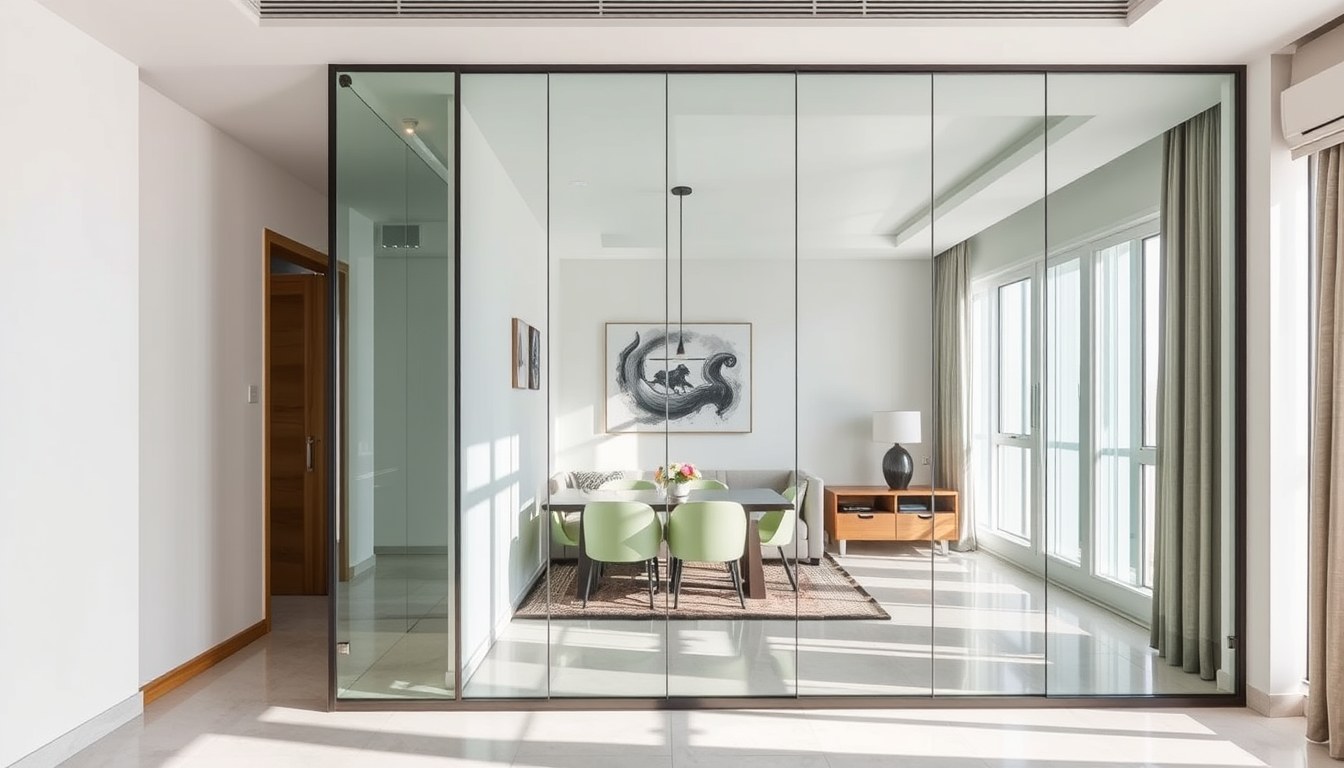
Living in a compact flat doesn't mean sacrificing style or functionality. Mirrored glass partitions are a game-changing solution that instantly amplifies light, creates visual depth, and transforms cramped 1BHK and studio apartments into spaces that feel significantly larger. Whether you're in Delhi's bustling apartment complexes or Bangalore's modern condominiums, strategic use of mirror-backed glass can redefine how you experience your home.
Why Mirrored Glass Partitions Work for Small Spaces
The psychology behind mirrored surfaces is straightforward: mirrors reflect light and create visual continuity, making rooms appear deeper and brighter than they actually are. In compact flats, where natural light is often limited and square footage is precious, this optical illusion becomes a practical design asset. A mirrored glass partition between your living area and bedroom, or behind a workspace, can double the perceived depth of the room without requiring structural changes.
Unlike solid walls or heavy curtains, glass partitions maintain visual openness while creating functional zones. When backed with mirror, they serve dual purposes—privacy where needed and spatial expansion everywhere. This is particularly valuable in Indian cities where real estate is expensive and every square foot matters. The reflective properties also bounce artificial light around, reducing your dependence on multiple light fixtures and lowering electricity costs.
The Light-Amplification Factor
Natural light is the most affordable way to make a space feel larger and more welcoming. Mirrored glass partitions positioned near windows or opposite light sources will reflect daylight throughout your flat, reducing dark corners and creating an airy atmosphere. In Delhi's intense summers, this reflective quality also helps distribute heat more evenly, potentially reducing air conditioning load.
Design Strategies for Maximum Impact
Simply installing a mirrored glass partition isn't enough—placement and design matter significantly. The most effective layouts depend on your flat's layout, natural light sources, and how you use each space.
Strategic Placement Tips
- Opposite windows: Position mirrored partitions across from windows to reflect daylight deep into the interior. This works exceptionally well in studio apartments where a single window serves the entire unit.
- Between living and sleeping zones: In 1BHK flats, a mirrored glass partition can separate the bedroom from the living area while maintaining visual continuity and light flow.
- Behind work-from-home setups: A mirrored partition behind your desk creates a professional backdrop for video calls while making the space feel less confined.
- Corner installations: Placing mirrored glass in corners amplifies light reflection and creates the illusion of additional wall space.
- Partial-height partitions: Instead of floor-to-ceiling mirrors, use 6-7 feet high partitions to maintain sight lines and air circulation while still creating functional separation.
Color and Frame Considerations
The frame material significantly impacts the overall aesthetic. Sleek aluminum frames in silver or black complement modern Delhi and Bangalore apartments, while brass or rose-gold frames add warmth to traditional interiors. Frosted or tinted glass options reduce glare and provide partial privacy—useful if you want the space-expanding benefits of glass without full mirror reflection everywhere.
Combination designs work well too: pair clear mirrored glass with frosted panels to balance privacy and openness. This approach is popular in Bangalore's tech-hub apartments where residents often need quiet focus areas within open-plan living spaces.
Installation Safety and Building Compliance
Mirrored glass partitions are heavier than standard glass, requiring proper structural assessment and professional installation. In most Indian apartment complexes, you'll need society approval before installing any partition, whether temporary or permanent.
Key Safety Considerations
- Load-bearing assessment: Mirrored glass partitions (typically 8-12mm thick) weigh 15-20 kg per square meter. Your floor must support this additional weight. Structural engineers in Delhi and Bangalore can assess your flat's capacity for ₹2,000-₹5,000.
- Seismic compliance: Both Delhi and Bangalore fall in seismic zones. Partitions must be installed with proper bracing and flexible anchoring systems to withstand minor tremors. Reputable installers will use earthquake-resistant mounting hardware.
- Fire safety: Ensure your mirrored glass meets Indian Standards (IS 2250 for safety glass). Tempered glass is mandatory for partitions in residential spaces—it's safer and less prone to shattering.
- Society NOC: Most residential societies require written permission before installing permanent partitions. Temporary, freestanding mirrored glass panels may require less formal approval.
- Electrical clearance: If the partition runs near electrical outlets or switches, maintain at least 30 cm clearance and use non-conductive frames.
Professional installation typically costs ₹150-₹300 per square foot in Delhi and Bangalore, including structural assessment, frame fabrication, and mounting. While this seems like an additional expense, it ensures safety compliance and longevity—poorly installed partitions can fail within months.
Cost-Effective Options for Budget-Conscious Buyers
Mirrored glass partitions don't require premium pricing. Multiple options exist for different budgets, and even modest installations deliver impressive space-expansion results.
Budget Breakdown
- Basic mirrored glass panels (3-4mm mirror with aluminum frame): ₹1,200-₹1,800 per square foot. Suitable for smaller partitions (up to 50 sq. ft.) in studio apartments.
- Mid-range tempered mirrored glass (8mm tempered mirror, quality aluminum frame): ₹2,000-₹3,000 per square foot. Best value for 1BHK flats, offering durability and safety.
- Premium options (custom designs, frosted sections, designer frames): ₹3,500-₹5,000+ per square foot. Ideal for high-end apartments in central Delhi or Bangalore.
- Freestanding mirrored glass screens: ₹8,000-₹25,000 for pre-made units (3x6 feet to 4x8 feet). No installation costs, easily portable if you move.
For a typical 50 sq. ft. partition in a 1BHK (separating living and bedroom), expect a total cost of ₹1,00,000-₹2,00,000 including installation. Freestanding options cost significantly less (₹15,000-₹30,000) but offer less structural stability.
Money-Saving Tips
Combine mirrored glass with frosted or clear sections to reduce mirror area—mirrors are pricier than plain glass. A partition that's 60% mirror and 40% frosted glass costs less while still delivering the space-expansion benefit. Additionally, buying from local glass suppliers in Delhi and Bangalore often costs 15-20% less than branded retailers, though ensure they provide proper certifications for tempered glass and safety compliance.
Maintenance and Long-Term Care
Mirrored glass partitions require minimal maintenance but benefit from regular cleaning to maintain their reflective properties. Dust and fingerprints reduce the optical illusion effect, so weekly cleaning with a microfiber cloth and glass cleaner is recommended.
In humid climates like Bangalore, moisture can affect mirror backing over time. Ensure your partition has proper ventilation gaps and avoid placing it in bathrooms or directly exposed to water splashes. In Delhi's dry climate, static electricity can attract dust—use anti-static glass cleaner to minimize dust buildup.
Inspect mounting hardware every 6-12 months, especially after the monsoon season or significant temperature changes. Loose bolts or corroded brackets should be tightened or replaced immediately. Quality installations include a 5-10 year warranty on the partition structure, though the mirror backing may need replacement after 15-20 years in humid conditions.
Real-World Examples: Delhi and Bangalore Apartments
In Delhi's compact Dwarka and Noida apartments, many residents use mirrored glass partitions to separate 1BHK units into functional work-from-home zones without feeling cramped. A 40 sq. ft. mirrored partition between the main room and bedroom costs approximately ₹80,000-₹1,20,000 and typically increases the perceived spaciousness by 30-40%.
Bangalore's tech professionals frequently install mirrored glass partitions in studio apartments to create dedicated office areas. The city's abundant natural light means these partitions work exceptionally well—they reflect sunlight throughout the day, creating bright, energizing workspaces. Several residents report that mirrored partitions reduced their need for additional lighting fixtures, saving ₹200-₹400 monthly on electricity.
Frequently Asked Questions
Are mirrored glass partitions safe for residential apartments?
Yes, when properly installed with tempered glass and appropriate structural support. Tempered glass is four times stronger than regular glass and shatters into small, harmless pellets if broken—a safety feature mandated by Indian Standards. Always hire certified installers and obtain your society's NOC before installation. Structural engineers can assess your floor's load-bearing capacity to ensure safety.
How much does a mirrored glass partition cost for a 1BHK flat?
A typical 50 sq. ft. mirrored glass partition for a 1BHK costs ₹1,00,000-₹2,00,000 including installation. Mid-range tempered mirrored glass (₹2,000-₹3,000 per sq. ft.) offers the best value. Freestanding options are cheaper (₹15,000-₹30,000) but less stable. Prices vary based on frame material, mirror thickness, and your city—Delhi and Bangalore have similar rates, though local suppliers may offer discounts.
Can I install a mirrored glass partition myself?
Not recommended. Mirrored glass is heavy and requires precise structural assessment, proper leveling, and secure anchoring. Poor installation can lead to misalignment, water damage, or safety hazards. Professional installers handle structural evaluation, seismic compliance, and building code adherence—typically costing ₹150-₹300 per sq. ft. but ensuring long-term durability and safety.
Do mirrored glass partitions really make spaces feel larger?
Yes, significantly. Mirrors reflect light and create visual depth, making rooms appear 30-40% larger. This effect is strongest when partitions are placed opposite windows or light sources. Combined with the functional separation they provide, mirrored glass partitions are one of the most cost-effective space-expansion solutions for compact flats in Indian cities.
What maintenance do mirrored glass partitions require?
Minimal—weekly cleaning with a microfiber cloth and glass cleaner keeps mirrors reflective. In humid climates like Bangalore, ensure proper ventilation to prevent moisture damage to the mirror backing. Check mounting hardware every 6-12 months for loose bolts or corrosion. With proper care, mirrored glass partitions last 15-20 years, though the mirror backing may need replacement after extended periods in very humid conditions.
Transform Your Compact Flat Today
Mirrored glass partitions offer an elegant, practical solution for expanding the perceived space in your Delhi or Bangalore apartment. Whether you're working with a studio or 1BHK, strategic placement of mirror-backed glass can amplify light, create functional zones, and dramatically improve how your home feels. Ready to explore options? Browse verified glass suppliers and installation experts on glassy.in's directory to find trusted providers in your city, compare quotes, and read customer reviews. Your spacious-feeling flat is just one partition away.