
Glass Partitions
Glass Partition Acoustic Performance: Soundproofing for Open Offices
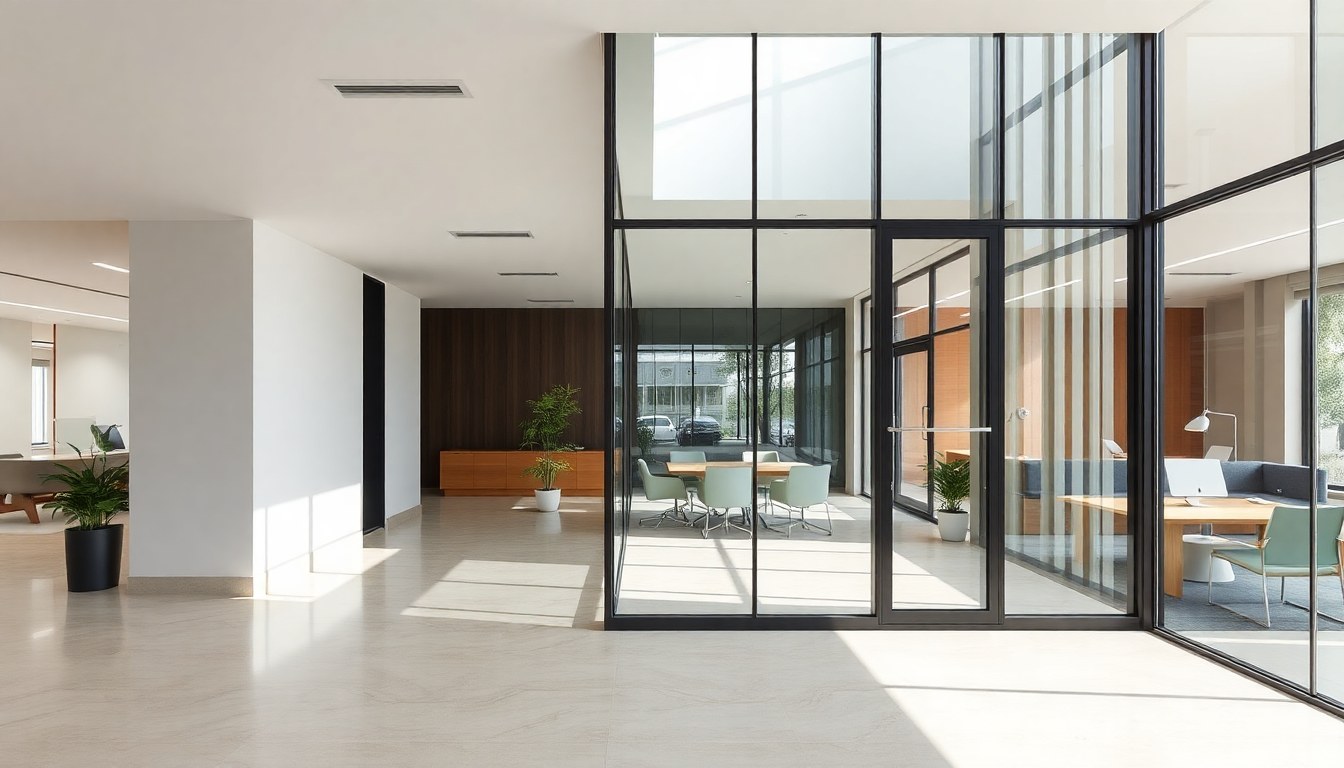
Open office layouts have become standard in Indian tech parks and corporate spaces, but they come with a persistent challenge: noise pollution that disrupts focus and productivity. Acoustic glass partitions solve this problem by combining transparent design with proven sound-dampening technology, using laminated glass, air gaps, and precision frame sealing to reduce noise transmission by 30–50 decibels depending on configuration. Understanding how these systems work, what performance metrics matter, and how to balance cost with acoustic benefit will help you choose the right partition solution for your workspace.
How Acoustic Glass Partitions Reduce Noise
Sound travels through air and solid materials, but glass partitions interrupt both pathways using three core mechanisms: mass, damping, and isolation. When sound waves hit a single pane of glass, some energy reflects back into the source room, some passes through, and some is absorbed by the material itself. The thicker and denser the glass, the more sound energy it blocks—a principle called mass law.
Laminated glass, the foundation of acoustic partitions, bonds two or more glass panes with a viscoelastic interlayer (typically polyvinyl butyral or PVB). This interlayer absorbs vibration energy and converts it to heat, preventing the glass from vibrating in sympathy with sound waves. Unlike tempered or annealed glass, which rings when struck and transmits sound efficiently, laminated glass dampens these vibrations, reducing noise transmission by 3–6 decibels per pane compared to standard glass of the same thickness.
The Role of Air Gaps and Cavity Design
A single laminated pane performs well, but a double-glazed system with an air gap delivers superior acoustic performance. When sound passes through the first pane, it loses energy. The air gap then acts as a decoupled space—if the two panes are not rigidly connected, sound vibrations in one pane do not directly excite the other. This decoupling principle is why double-glazed acoustic partitions outperform single-pane systems by 5–15 decibels, depending on gap width and pane thickness.
The optimal air gap for acoustic performance is typically 100–150 mm. Gaps narrower than 50 mm offer minimal benefit because sound waves couple across the cavity. Gaps wider than 200 mm introduce practical and cost challenges without proportional acoustic gains. Many manufacturers in India now offer modular partition systems with standardized 100 mm cavities, making installation faster and performance more predictable across Bangalore tech parks and Mumbai corporate campuses.
Decibel Ratings and Acoustic Standards
Acoustic performance is measured using the Sound Reduction Index (SRI), expressed in decibels (dB). An SRI of 30 dB means the partition reduces sound pressure by 30 decibels—for example, if an open office generates 70 dB of noise, the adjacent space behind a 30 dB partition will experience approximately 40 dB, a significant drop that allows conversation and concentration.
Indian workspaces typically aim for SRI values between 30–50 dB depending on use case. A standard single-pane glass partition offers SRI 25–30 dB. A double-glazed laminated system (6 mm laminated glass + 100 mm air gap + 6 mm laminated glass) achieves SRI 35–40 dB. Premium systems using thicker panes (8 mm or 10 mm laminated glass) or specialized interlayers reach SRI 45–50 dB. The Indian Standard IS 3822 and international ISO 140-3 define measurement protocols, ensuring ratings are comparable across manufacturers.
Real-World Performance in Indian Offices
Bangalore tech parks with open-plan layouts report that SRI 35–40 dB partitions reduce speech intelligibility from adjacent cubicles to acceptable levels, where conversations are audible but not distracting. Bangalore's IT corridor, with its concentration of call centers and development teams, has driven demand for mid-range acoustic partitions (SRI 35–40 dB) that balance cost and performance. Higher-spec systems (SRI 45+ dB) are reserved for executive areas, meeting rooms, and noise-sensitive zones like audio studios or research labs.
Frame Sealing and Installation Quality
Even the best acoustic glass performs poorly if air leaks around the partition frame. Sound travels through gaps, cracks, and poorly sealed joints, bypassing the glass entirely. This is why frame design and installation quality are as critical as the glass specification itself.
High-performance acoustic partitions use rubber or silicone gaskets around the perimeter, between glass panes, and at the frame-to-wall junction. These gaskets absorb vibration and block air leakage. The frame itself should be rigid (typically aluminum with internal reinforcement) to prevent flexing, which would degrade acoustic performance. Gaps at the base of the partition, around door frames, and where the partition meets the ceiling are common weak points; these must be sealed with acoustic sealant or resilient closers.
Installation Best Practices
- Pre-installation site survey: Measure wall flatness and check for existing cracks or openings that could compromise sealing.
- Gasket selection: Use manufacturer-specified gaskets; generic rubber strips degrade over time and lose acoustic properties.
- Sealant application: Apply acoustic caulk (not standard silicone) to all perimeter joints and gaps larger than 3 mm.
- Door and frame sealing: Install automatic door closers and threshold seals on acoustic partition doors to maintain the acoustic envelope.
- Post-installation verification: Conduct on-site acoustic testing (sound level meter) to confirm that installed performance matches specification.
Many partition installers in India skip or cut corners on sealing, which can reduce acoustic performance by 5–10 dB. Reputable suppliers in Bangalore, Mumbai, and Hyderabad now offer installation guarantees that include post-installation acoustic testing, ensuring accountability.
Cost-Performance Trade-Offs for Indian Businesses
Acoustic glass partitions are more expensive than standard transparent glass partitions. A basic single-pane glass partition costs ₹800–1,200 per square meter in India. A double-glazed acoustic partition (SRI 35–40 dB) ranges from ₹2,500–4,000 per square meter, depending on glass thickness, frame quality, and location. Premium systems (SRI 45+ dB) cost ₹4,500–6,500 per square meter.
For a 10 m × 3 m partition (30 sq m) in a Bangalore tech park, the cost difference is substantial: ₹24,000–36,000 for standard glass versus ₹75,000–195,000 for acoustic systems. However, this cost must be weighed against productivity gains, employee satisfaction, and reduced absenteeism due to noise-related stress.
ROI and Decision Framework
Businesses should evaluate acoustic partitions based on:
- Noise source and severity: If ambient noise exceeds 75 dB (typical for open offices), acoustic partitions are justified. If baseline noise is 60–65 dB, standard partitions may suffice.
- Work type: Knowledge workers, developers, and customer-facing teams benefit most from acoustic partitions. Collaborative spaces may not require high SRI ratings.
- Space size and configuration: Larger open offices with many partition runs benefit from economies of scale; per-unit costs decrease with volume.
- Occupancy duration: Long-term leases or owned spaces justify higher upfront investment; short-term rentals favor lower-cost options.
- Local noise regulations: Some Indian cities (Delhi, Mumbai, Bangalore) have noise ordinances; compliance may mandate acoustic partitions in certain zones.
A mid-range acoustic partition (SRI 35–40 dB, ₹3,000–3,500 per sq m) offers the best value for most Indian tech parks, delivering noticeable noise reduction without premium pricing.
Maintenance and Long-Term Performance
Acoustic glass partitions require minimal maintenance compared to other soundproofing methods. The glass itself needs only regular cleaning with standard glass cleaner. However, gaskets and sealants degrade over 5–10 years due to temperature cycling, UV exposure, and mechanical stress.
Inspect gaskets annually for cracking or hardening. Replace gaskets every 7–10 years to maintain acoustic performance. Sealant should be reapplied if visible cracks appear or if acoustic performance noticeably degrades. Many manufacturers offer maintenance packages that include gasket replacement and re-sealing, typically costing ₹200–500 per linear meter every 5 years.
Laminated glass itself is extremely durable and does not degrade acoustically over time. The interlayer may yellow slightly in direct sunlight but remains functionally intact for 20+ years, making acoustic glass partitions a sound long-term investment.
Frequently Asked Questions
What is the difference between acoustic glass and regular tempered glass for partitions?
Regular tempered or annealed glass offers no acoustic benefit; it transmits sound nearly as efficiently as air. Acoustic glass uses laminated construction with a viscoelastic interlayer that absorbs vibration energy, reducing sound transmission by 3–6 dB per pane. Tempered glass is stronger and safer (it crumbles rather than shatters), but acoustic glass is specifically engineered to dampen sound. For open offices, laminated acoustic glass is the standard choice.
How much noise reduction can I expect from a double-glazed acoustic partition?
A double-glazed laminated partition (6 mm + 100 mm air gap + 6 mm laminated glass) typically achieves SRI 35–40 dB, reducing sound pressure by 35–40 decibels. In practical terms, if an open office generates 70 dB of noise, the adjacent space will experience approximately 30–35 dB—quiet enough for focused work. Thicker panes or specialized interlayers can achieve SRI 45–50 dB, but returns diminish beyond SRI 45 dB for most office applications.
Are acoustic glass partitions worth the cost for small offices?
For small offices (under 100 sq m) with 1–2 partitions, the upfront cost is lower in absolute terms but represents a higher percentage of fitout budget. If noise is a significant problem (baseline 75+ dB), acoustic partitions are justified. For quieter environments or short-term spaces, standard glass with strategic placement of absorptive materials (panels, carpets) may suffice at lower cost. Evaluate your specific noise conditions before deciding.
Can I retrofit acoustic partitions into an existing office?
Yes, acoustic partitions can be retrofitted into existing offices. However, installation is more complex if walls are not perfectly flat or if existing infrastructure (electrical, HVAC, cabling) must be relocated. Retrofit costs are typically 15–25% higher than new installations due to site preparation and contingency work. Consult with a local installer in your city (Bangalore, Mumbai, Delhi, etc.) for a site survey and accurate retrofit estimate.
What maintenance do acoustic glass partitions require?
Acoustic glass partitions require minimal maintenance. Clean the glass with standard glass cleaner and inspect gaskets annually for cracking or hardening. Replace gaskets every 7–10 years and re-seal perimeter joints if cracks appear. The laminated glass itself does not degrade acoustically and will last 20+ years. Annual maintenance costs are typically ₹100–300 per linear meter for gasket and sealant inspection.
Choose the Right Acoustic Partition for Your Space
Acoustic glass partitions are a proven solution for noise reduction in open offices across India's major tech hubs. By combining laminated glass, air gaps, and precision frame sealing, these systems deliver 30–50 dB of noise reduction, enabling productive work in shared spaces. Evaluate your noise conditions, define your performance target, and balance cost with long-term benefits. For a curated list of acoustic partition suppliers, manufacturers, and installation specialists in your city, explore the glassy.in directory—India's largest glass-business hub connecting you with verified vendors and detailed product specifications.