
Glass Guides
Low-E Glass Coating: Does It Really Cut AC Costs in Indian Summers?
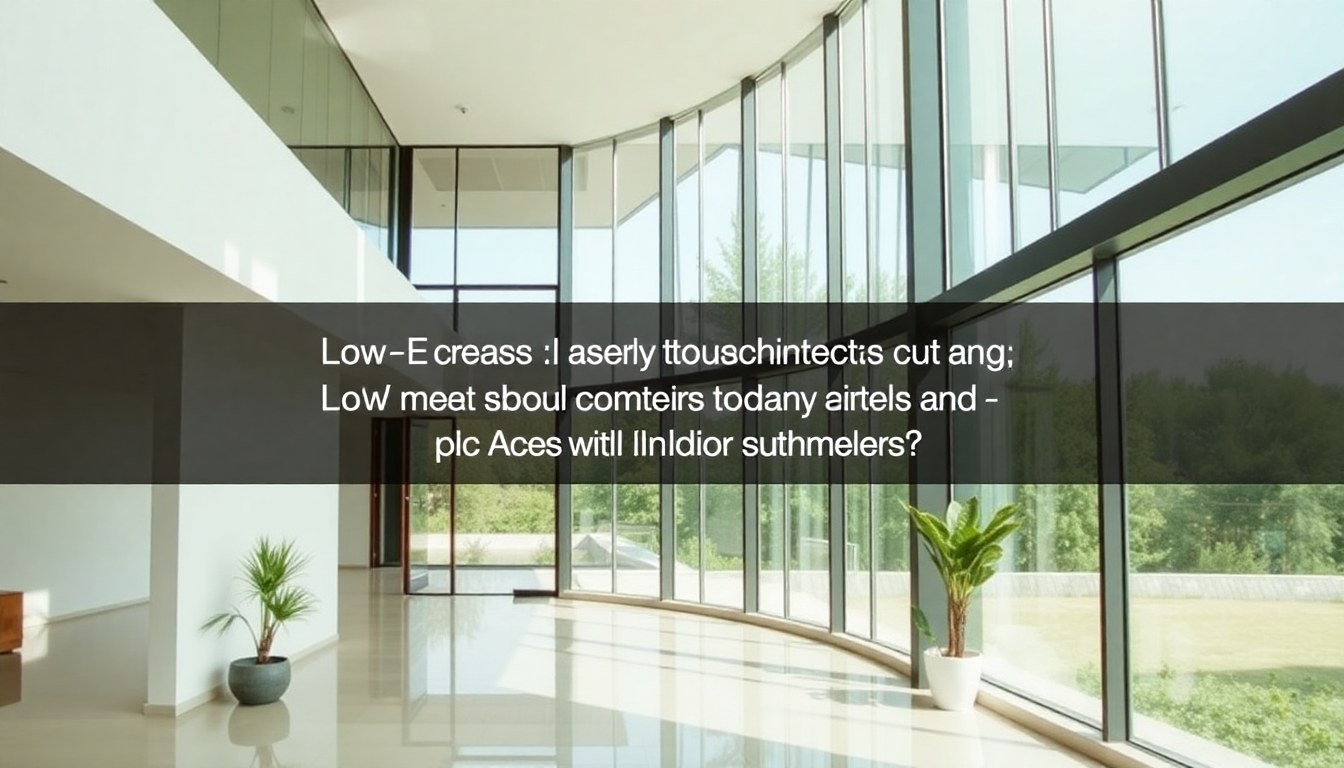
India's summer cooling bills can drain household budgets faster than a monsoon drains a tank. Low-E (low-emissivity) glass coatings have become a popular retrofit solution, promising to block heat while maintaining natural light—but do they actually deliver measurable savings in Indian climates? We'll break down the science, real-world performance data, and financial returns so you can decide if this investment makes sense for your home or commercial space.
What Is Low-E Glass Coating and How Does It Work?
Low-E coatings are microscopically thin metallic or metal-oxide layers applied to glass surfaces. They work by reflecting infrared radiation (heat) back outside while allowing visible light to pass through. Think of it as a selective filter: it keeps the warmth out but lets you see clearly.
The coating is typically made of silver, tin oxide, or titanium oxide, applied in multiple layers just nanometers thick. When solar radiation hits the glass, the coating reflects long-wave infrared energy (the heat you feel) while transmitting short-wave visible light. This is why Low-E glass feels cooler to touch on a hot day compared to ordinary annealed glass.
Types of Low-E Coatings
- Hard-coat (pyrolytic): Applied during the glass manufacturing process; more durable but slightly lower performance in hot climates.
- Soft-coat (sputtered): Applied after manufacturing; superior heat rejection and light transmission; requires protective spacers in insulated glass units.
Thermal Performance Metrics: What the Numbers Tell You
Understanding how Low-E glass is measured helps you compare products and predict savings. The key metrics are Solar Heat Gain Coefficient (SHGC), U-value, and Visible Light Transmittance (VLT).
Solar Heat Gain Coefficient (SHGC)
SHGC measures how much solar heat passes through the glass on a scale of 0 to 1. Lower values mean more heat is rejected. Standard clear glass has an SHGC of about 0.86. Quality Low-E coatings can reduce this to 0.25–0.40, blocking 60–70% of solar heat. For Indian summers with intense direct sun, coatings targeting SHGC of 0.30 or lower are most effective.
U-Value (Thermal Transmittance)
U-value measures heat transfer through the glass itself. Lower is better. Clear glass has a U-value around 6.0 W/m²K. Low-E coatings reduce this to 1.5–3.0 W/m²K depending on the coating type and whether the glass is part of a double-glazed unit. In India's context, SHGC matters more than U-value because summer heat gain is the primary cooling load, not winter heat loss.
Visible Light Transmittance (VLT)
VLT indicates what percentage of visible light passes through; higher is better for daylighting. Good Low-E coatings maintain VLT of 60–75%, so you don't sacrifice natural light while blocking heat.
Real-World AC Savings: What Indian Buildings Actually See
Lab numbers are useful, but what matters is your monthly electricity bill. Savings depend on several factors: building orientation, window-to-wall ratio, existing glass type, local climate, and AC usage patterns.
Documented Savings in Indian Climates
Research from the Central Building Research Institute (CBRI) and field studies in cities like Delhi, Mumbai, and Bangalore show that Low-E retrofits can reduce cooling energy consumption by 15–25% when applied to south and west-facing windows—the primary heat sources in Indian buildings. A 2019 study on commercial buildings in Hyderabad found that Low-E glazing reduced peak cooling loads by up to 30% on exposed facades.
For a typical residential apartment in Mumbai with 40 m² of window area facing west, replacing standard clear glass with Low-E coating can save approximately ₹1,500–₹3,000 per month during peak summer months (April–June). For a commercial office building, savings scale proportionally with floor area and AC runtime.
Variables That Affect Your Actual Savings
- Window orientation: South and west-facing windows see 3–5 times more solar heat than north-facing ones; prioritize these for retrofits.
- Shading: External shading (awnings, louvers) combined with Low-E glass multiplies the cooling effect and savings.
- AC efficiency: Older, inefficient AC units may show higher percentage savings because they're working harder; newer inverter ACs show lower absolute savings but still benefit.
- Occupancy and usage: Homes with full-time occupancy and continuous AC use see higher absolute rupee savings.
- Local electricity rates: In states with higher tariffs (like Maharashtra), the same energy reduction translates to larger cost savings.
ROI and Payback Period: Is It Worth the Investment?
Low-E coating retrofits cost ₹800–₹1,500 per square meter of window area, depending on glass quality, coating type, and installation labor. A 40 m² retrofit costs roughly ₹32,000–₹60,000. With estimated monthly savings of ₹1,500–₹3,000 during summer and ₹300–₹500 during off-season, your payback period is typically 18–36 months.
Calculating Your Payback
Use this simple formula: Total Investment ÷ Annual Savings = Payback Period in Years. If you spend ₹50,000 and save ₹25,000 annually (₹2,000/month average), payback is 2 years. After payback, every rupee saved goes straight to your pocket for the next 15–20 years (the typical lifespan of Low-E coatings).
When planning a retrofit, consult with architects like Matz Design or DK Architecture Design who can assess your building's thermal profile and recommend the most cost-effective window strategy.
Comparing Low-E Glass to Other Cooling Strategies
Low-E coatings aren't the only way to cut AC costs. Here's how they stack up:
- External shading (awnings, trees): Blocks heat before it reaches glass; 30–50% savings potential but requires maintenance and reduces views.
- Reflective films: Cheaper (₹200–₹400/m²) but degrade faster and can trap heat between film and glass, damaging seals.
- Double-glazing with Low-E: Best performance (SHGC 0.20–0.30) but expensive (₹2,500–₹4,000/m²); ideal for new construction.
- Smart glass (electrochromic): Dynamically adjusts tint; excellent control but very costly (₹5,000–₹10,000/m²) and still niche in India.
For most Indian homeowners, Low-E coating retrofits on existing single-pane glass offer the best balance of cost, performance, and ease of installation. Interior designers like SIRA INTERIORS can also integrate Low-E solutions into broader energy-efficient design schemes.
Installation, Durability, and Maintenance
Low-E coatings are applied by specialized glass processors, not on-site. You either replace your existing windows with pre-coated Low-E glass or send your windows to a facility for coating application. Installation takes 2–5 days depending on building size.
Durability and Care
Hard-coat Low-E lasts 15–20 years with minimal maintenance. Soft-coat versions are more sensitive to moisture and require careful handling in insulated units. Both types need regular cleaning with soft cloths and mild soap—avoid abrasive cleaners that scratch the coating.
Quality suppliers like Silicate Glass work can advise on coating maintenance and warranty terms, which typically cover 10–15 years against delamination or performance loss.
Frequently Asked Questions
Does Low-E glass reduce natural light and make rooms darker?
No. Quality Low-E coatings maintain 60–75% visible light transmittance, so rooms stay bright. You might notice a very slight amber or blue tint, but it's barely noticeable and doesn't affect readability or comfort. The trade-off is minimal compared to reflective films, which noticeably darken interiors.
Can Low-E coating be applied to existing windows, or do I need to replace them?
Yes, existing windows can be recoated at a glass processor's facility. You remove the panes, send them for coating, and reinstall. This is cheaper than full window replacement. However, if your frames are damaged or seals are broken, replacement is better. Architects can assess whether retrofitting or replacement makes sense for your building.
Will Low-E glass help in winter or monsoon?
In India's climate, Low-E glass provides minimal winter heating benefit because solar gain is low and desired. During monsoon, the coating doesn't affect humidity control—proper ventilation and dehumidifiers handle that. Low-E is optimized for summer cooling, which is where your biggest energy cost lies.
How much can I really save on my AC bill?
Savings range from 15–25% of cooling energy costs, depending on window area, orientation, and existing AC efficiency. For a home spending ₹5,000/month on AC during summer, expect ₹750–₹1,250 monthly savings on west and south-facing windows. Commercial buildings with larger glass areas see proportionally higher absolute savings.
Is Low-E glass worth it if I already use curtains and blinds?
Partially. External shading blocks more heat, but Low-E still provides baseline protection when blinds are open and during cloudy periods. Combining Low-E with good external shading (like roller blinds or louvers) gives the best results. Interior blinds are less effective because heat is already inside the room.
Final Verdict: Should You Invest in Low-E Glass?
Low-E coatings deliver genuine, measurable cooling savings in Indian summers—typically 15–25% of your AC energy costs with a payback period of 18–36 months. They're most cost-effective for buildings with large south or west-facing windows, high AC usage, and existing single-pane glass. Combined with external shading and modern, efficient AC systems, Low-E glass is one of the most practical energy-saving upgrades available today.
If you're planning a retrofit or new construction, browse verified glass suppliers and architects on glassy.in. Our directory connects you with local experts who can assess your building's thermal needs, recommend the right coating type, and handle installation professionally. Start your search today and join thousands of Indian homeowners cutting their summer cooling bills.