
Glass Railings
Laminated Glass vs Toughened Glass for Balcony Railings: Safety Deep-Dive
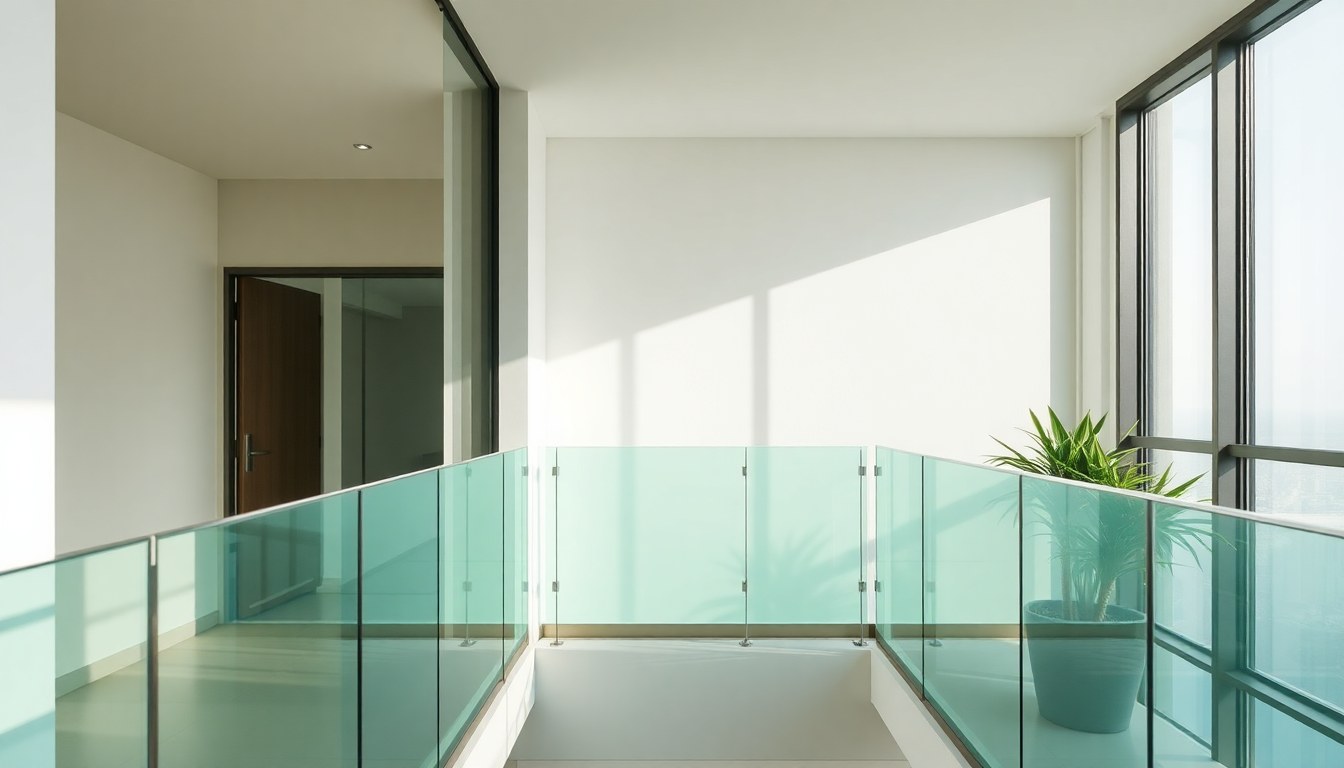
When selecting glass for balcony railings, safety is non-negotiable. Both laminated and toughened glass offer distinct protective qualities, but they work in fundamentally different ways—and the choice between them can significantly impact your home's safety profile. Understanding how each type performs under impact, their breakage behavior, and compliance with Indian building codes will help you make an informed decision that suits your specific needs.
Understanding Toughened Glass: Strength Through Heat Treatment
Toughened glass (also called tempered glass) undergoes a specialized thermal treatment process that heats the glass to around 650°C and then rapidly cools it. This creates internal compressive stress on the surface and tensile stress in the core, making it approximately four to five times stronger than regular annealed glass of the same thickness.
When toughened glass breaks, it shatters into small, relatively harmless granules rather than sharp shards. This characteristic is crucial for safety railings because it minimizes injury risk if the glass does fracture. However, toughened glass cannot be cut, drilled, or modified after the heat treatment process—any alteration will cause the entire pane to shatter spontaneously due to the release of internal stress.
Toughened Glass Advantages for Railings
- Impact Resistance: Withstands accidental bumps, collisions, and moderate force without breaking
- Safe Fragmentation: Breaks into small, blunt pieces rather than dangerous shards
- Cost-Effective: Generally less expensive than laminated alternatives of similar thickness
- Clear Visibility: Maintains optical clarity without the interlayer visible in laminated glass
- Thermal Resistance: Better handles temperature fluctuations on exposed balconies
Toughened Glass Limitations
The primary limitation is that toughened glass offers no protection against penetration. If struck with sufficient force, it will break completely—offering no barrier to falling objects or preventing someone from passing through the opening. Additionally, spontaneous breakage can occur in rare cases due to nickel sulfide inclusions, though modern manufacturing has minimized this risk significantly.
Understanding Laminated Glass: Strength Through Adhesion
Laminated glass consists of two or more glass panes bonded together with a polyvinyl butyral (PVB) interlayer. Unlike toughened glass, laminated glass is not thermally treated. Instead, its strength and safety come from the adhesive interlayer that holds the glass together even when broken.
When laminated glass breaks, the interlayer keeps the fragments adhered together, maintaining the structural integrity of the panel. This means the glass remains in place even after impact, preventing penetration and significantly reducing the risk of injury from flying shards. This property makes laminated glass particularly valuable for high-traffic areas and locations where fall prevention is critical.
Laminated Glass Advantages for Railings
- Penetration Resistance: Maintains barrier function even after breakage—fragments stay bonded to the interlayer
- Fall Prevention: Prevents people or objects from passing through the railing opening
- Sound Insulation: The interlayer provides acoustic dampening, reducing noise from traffic or weather
- UV Protection: PVB interlayer blocks harmful ultraviolet radiation
- Post-Breakage Visibility: Maintains partial visibility even when cracked, unlike toughened glass which becomes opaque when shattered
- Customization: Can be cut and drilled after manufacture for design flexibility
Laminated Glass Limitations
Laminated glass is heavier than toughened glass and more expensive, particularly when using thicker interlayers for enhanced safety. The interlayer can become discolored over time with UV exposure, and the glass may delaminate in extreme heat or after repeated impacts. Installation requires careful handling to prevent interlayer damage during fitting.
Impact Resistance and Breakage Behavior: A Safety Comparison
The fundamental difference in how these glasses perform under impact determines their suitability for different railing scenarios. Toughened glass excels at absorbing impact energy and distributing force across the pane, making it ideal for areas where occasional accidental contact is likely. Its ability to break into small, harmless pieces means that even if breakage occurs, injury risk is minimal.
Laminated glass, conversely, prioritizes barrier integrity. When struck, it may crack or break, but the interlayer prevents penetration. This is particularly important for balcony railings where a child might lean against the glass or where wind-blown debris could impact the surface. In these scenarios, laminated glass's ability to maintain its position as a physical barrier is invaluable.
Real-World Scenarios
- Child Safety: A child falling against a railing—laminated glass keeps them from passing through; toughened glass breaks into safe pieces but offers no barrier
- Debris Impact: High winds carrying objects—laminated glass absorbs impact while maintaining the barrier; toughened glass shatters completely
- Accidental Collision: An adult bumping the railing—toughened glass absorbs the force without breaking; laminated glass may crack but remains functional
- Intentional Force: Deliberate impact or attempted break-in—laminated glass provides superior resistance and maintains the barrier
Indian Building Codes and Safety Standards
In India, balcony railing glass must comply with the National Building Code of India (NBC) and relevant Indian Standards (IS) codes. The most relevant standards are:
- IS 13005:2016 – Code of practice for design, fabrication, and erection of structural use of glass
- IS 875 (Part 3) – Code of practice for design loads for buildings (wind loads)
- IS 1608:1995 – Code of practice for safety glazing in buildings
- NBC Section 5 – Safety provisions requiring railings to prevent accidental falls
The NBC mandates that balcony railings must be at least 1.1 meters high and capable of withstanding a horizontal load of 1.5 kN/m² without deflecting more than 75mm. Both toughened and laminated glass can meet these requirements, but the choice affects how the railing system is designed. Many architects and designers in India now prefer laminated glass for balconies specifically because it offers superior protection against penetration—a critical safety factor in high-rise residential buildings.
For projects involving professional design consultation, firms like Yogesh Kalawat and Sanvaya Studio can guide you through code compliance and appropriate glass selection for your specific building type and location.
Thickness and Safety Performance
Glass thickness plays a crucial role in safety performance for both types. For balcony railings in India, typical specifications are:
- Toughened Glass: 10mm to 12mm thickness provides adequate strength for most residential balconies
- Laminated Glass: 6mm + 6mm (with 0.76mm PVB interlayer) or 8mm + 8mm for higher security requirements
Thicker glass increases both impact resistance and the force required to break through. Laminated glass with thicker interlayers (1.52mm or more) provides enhanced protection against intentional damage and extreme weather. The cost difference between 10mm toughened and equivalent laminated specifications is typically 20-30% more for laminated options, but this premium reflects the superior barrier integrity.
Cost Considerations and Long-Term Value
Initial purchase price favors toughened glass, which typically costs ₹250-400 per square foot depending on thickness and supplier. Laminated glass ranges from ₹350-600 per square foot for standard specifications. However, the long-term value equation shifts when you consider replacement costs and safety outcomes.
If toughened glass breaks, the entire panel must be replaced—there is no repair option. Laminated glass can sometimes be repaired if damage is minor, and even when replacement is necessary, the interlayer provides temporary barrier function. Over a 20-30 year lifespan, laminated glass often proves more economical for high-exposure balconies in urban areas where wind loads and debris impact are common.
Interior designers and architects like WHITE HORSE SPACES and OG Creations can help you evaluate both upfront costs and lifecycle expenses when planning your balcony railing project.
Frequently Asked Questions
Can laminated glass be used for all types of balcony railings?
Yes, laminated glass is suitable for virtually all balcony railing applications. It works well with aluminum, steel, and wooden frames and complies with all Indian building codes. The only consideration is that it's heavier than toughened glass, so your support structure must be adequately designed. Professional installation is recommended to ensure the interlayer remains intact and properly sealed.
Is toughened glass safer than laminated glass for railings?
Neither is universally "safer"—they offer different types of safety. Toughened glass is safer if you're primarily concerned about injury from sharp fragments during breakage. Laminated glass is safer if your priority is preventing penetration and fall-through. For balcony railings specifically, most safety experts recommend laminated glass because preventing falls is the primary concern. However, toughened glass is perfectly acceptable and widely used in Indian residential buildings.
What happens if laminated glass delaminates?
Delamination—where the interlayer separates from the glass—is rare with modern manufacturing and proper installation. It typically occurs only after years of extreme heat exposure or repeated impacts. If delamination begins, the glass should be replaced. This is why using certified manufacturers and professional installers is important. Reputable suppliers provide warranties against delamination defects.
Which glass type is better for coastal areas with salt spray?
Laminated glass is generally better for coastal environments because the PVB interlayer provides additional protection against corrosion and environmental degradation. Toughened glass can also be used but requires high-quality sealants and frames to prevent salt spray from reaching the edges. Both types should use stainless steel or marine-grade aluminum frames in coastal locations.
How do I know which glass type is specified in Indian building codes for my building?
Check the building's structural design documents or consult with the original architect. The NBC doesn't mandate one type over the other—it specifies performance requirements that both can meet. However, many municipal corporations and individual building bylaws in major Indian cities (Mumbai, Delhi, Bangalore) now recommend or require laminated glass for residential balconies above certain heights. Your local building authority can clarify specific requirements for your location.
Make Your Choice with Confidence
Both laminated and toughened glass offer valid safety solutions for balcony railings, but laminated glass provides superior protection against penetration and fall-through—the primary hazards in balcony scenarios. Toughened glass excels at impact resistance and is more cost-effective for lower-risk applications. Whichever you choose, ensure it complies with Indian building codes and is installed by certified professionals. Browse verified glass suppliers and design professionals on glassy.in to find trusted partners for your balcony railing project.