
Glass Railings
Laminated Glass vs Toughened Glass for Balcony Railings: Durability Test
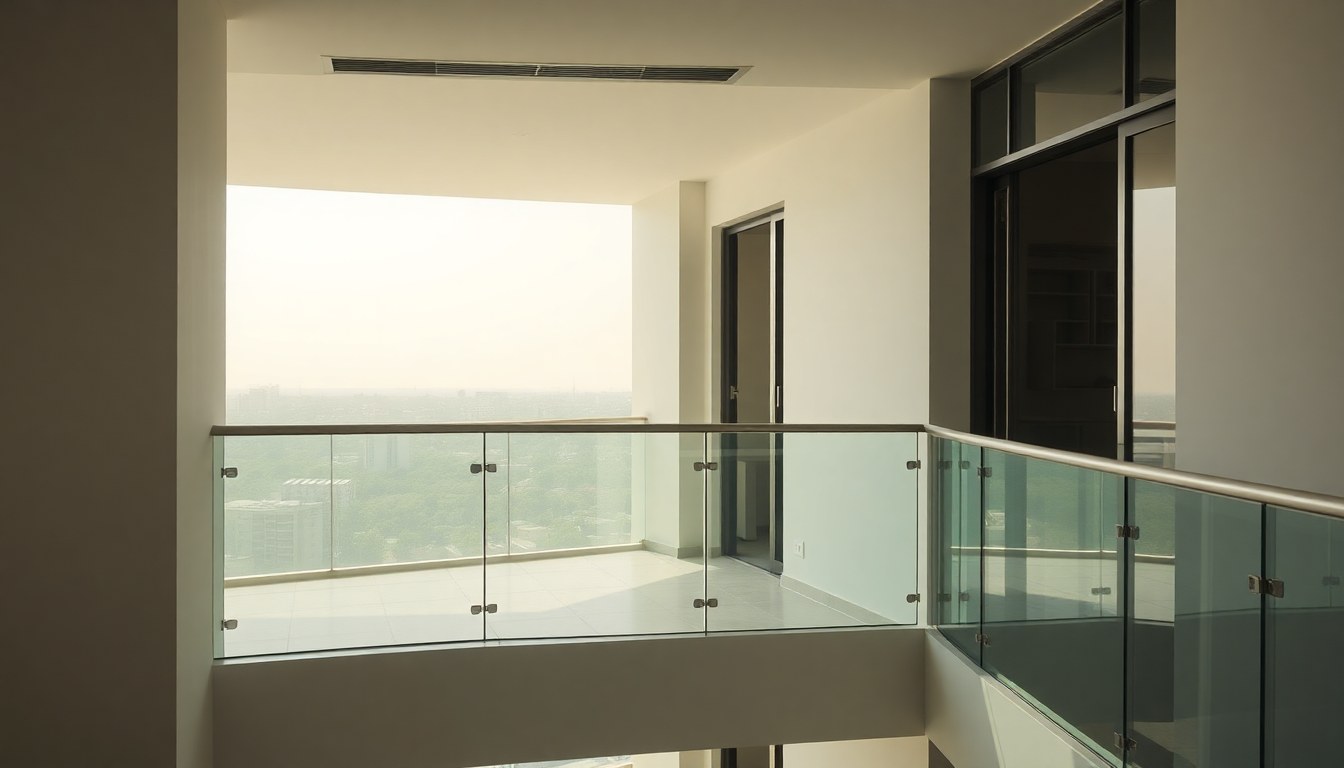
When selecting glass for balcony railings, the choice between laminated and toughened glass can make or break your safety and investment. Both materials offer distinct advantages, but understanding their durability, impact resistance, and performance in Indian climates is essential for making an informed decision. This comprehensive comparison helps you choose the right glass type for your balcony railing system.
Understanding Laminated and Toughened Glass
Laminated glass consists of two or more glass panes bonded together with an interlayer, typically polyvinyl butyral (PVB). When impact occurs, the glass may crack, but the interlayer holds the pieces together, preventing sharp fragments from scattering. This makes laminated glass exceptionally safe for applications where human contact is likely.
Toughened glass, also called tempered glass, undergoes a thermal treatment process that creates compressive stress on the surface and tensile stress in the core. This treatment increases its strength by four to five times compared to annealed glass. When toughened glass breaks, it shatters into small, relatively harmless granules rather than sharp shards, making it another excellent safety choice for railings.
Manufacturing Process Differences
The manufacturing methods create fundamental differences in how these glasses behave. Laminated glass is created by layering glass sheets with adhesive interlayers and then curing them under heat and pressure. Toughened glass is heated to approximately 650°C and then rapidly cooled, a process called quenching, which creates the internal stress pattern that gives it superior strength.
Impact Resistance: Which Glass Wins?
Impact resistance is critical for balcony railings, especially in homes with children or in high-traffic areas. Toughened glass excels in pure strength and can withstand significantly higher impact forces before breaking. A single blow from a heavy object is less likely to fracture toughened glass compared to laminated glass of the same thickness.
However, laminated glass offers superior protection in a different way. Even when cracked, laminated glass remains intact and in place, preventing the railing from becoming compromised. This is particularly valuable for balconies where a complete failure could be catastrophic. The interlayer acts as a safety net, keeping fragments bonded together.
- Toughened glass: Resists initial impact better; breaks into small, safe granules
- Laminated glass: May crack more easily but remains structurally intact; fragments stay bonded
- For railings: Laminated glass often preferred because structural integrity matters more than preventing the initial crack
Wind Load Performance and Structural Safety
Balcony railings must withstand significant wind loads, particularly in Indian cities like Mumbai, Chennai, and Bangalore where monsoons and tropical storms are common. The Indian Standard IS 1786:2008 specifies minimum wind load requirements for balcony railings, typically ranging from 1.5 kPa to 2.5 kPa depending on location and height.
Toughened glass performs excellently under sustained wind pressure due to its superior strength. It can handle continuous stress without deformation or micro-cracking. Laminated glass also performs well but relies on the frame and support structure to maintain rigidity. The interlayer provides some flexibility, which can actually be beneficial in absorbing wind-induced vibrations.
Long-Term Stress Performance
Over years of exposure to wind, temperature changes, and structural movement, laminated glass maintains its integrity better than toughened glass in some respects. The interlayer can accommodate minor frame movements without transferring all stress directly to the glass. Toughened glass, being more brittle, can develop stress concentrations that lead to spontaneous breakage in rare cases, a phenomenon known as nickel sulfide inclusion failure.
UV Stability and Weather Resistance in Indian Climates
India's intense solar radiation poses unique challenges for balcony railing materials. UV exposure can degrade certain components of glass systems, particularly the interlayers and sealants. Both laminated and toughened glass are inherently UV-stable, but the supporting materials matter significantly.
Laminated glass with high-quality PVB interlayers (typically 0.76mm or thicker per layer) resists UV degradation effectively. Premium interlayers offer UV protection that prevents yellowing and maintains optical clarity for 20+ years in Indian sunlight. Toughened glass itself doesn't degrade under UV exposure, but any adhesive or sealant used in the railing frame can deteriorate, potentially compromising the installation.
Monsoon and Humidity Challenges
In regions with high humidity and frequent rainfall, the choice of sealants and frame materials becomes crucial. Laminated glass systems must use moisture-resistant interlayers and proper edge sealing to prevent delamination. Toughened glass, having no interlayer, is less vulnerable to moisture-related failures but requires robust frame sealing to prevent water ingress at connection points.
- Both glass types resist UV damage directly
- Laminated glass interlayer quality determines long-term UV performance
- Monsoon regions require superior sealant systems for both types
- Annual maintenance becomes essential in high-humidity areas
Maintenance and Long-Term Care Requirements
Maintenance needs differ significantly between these two glass types, affecting total cost of ownership over 10-15 years. Toughened glass requires only regular cleaning with mild soap and water. No special treatments or protective measures are necessary, making it the low-maintenance option for balcony railings.
Laminated glass also requires simple cleaning, but you must be cautious about impact damage to the edges and interlayer exposure. If the interlayer becomes visible due to chipping, moisture can enter and cause delamination. Professional inspection every 2-3 years is recommended for laminated glass systems, particularly in coastal areas or regions with extreme temperature fluctuations.
Repair and Replacement Costs
When damage occurs, toughened glass typically requires complete replacement because it cannot be repaired—any attempt to cut or modify it causes immediate shattering. A single pane of 12mm toughened glass for a balcony railing typically costs ₹2,500 to ₹4,500 per square meter in Indian markets.
Laminated glass offers more flexibility for repairs in some cases. Minor chips can be sealed to prevent interlayer exposure, extending the lifespan. However, structural damage requires replacement. Laminated glass costs slightly more upfront, ranging from ₹3,500 to ₹5,500 per square meter, but the durability advantage often justifies the investment.
Durability Comparison: Head-to-Head Analysis
In terms of raw durability, toughened glass wins for impact resistance and straightforward strength. It can withstand more abuse before failing and requires minimal maintenance. For typical balcony use without unusual stress, toughened glass provides excellent long-term performance.
Laminated glass excels in safety-critical applications where maintaining structural integrity after impact is paramount. It performs better in areas with temperature extremes, as the interlayer accommodates thermal expansion differences. For high-rise buildings, homes in earthquake-prone regions, or balconies frequently exposed to extreme weather, laminated glass offers superior overall durability.
| Factor | Toughened Glass | Laminated Glass |
| Initial Impact Resistance | Superior | Good |
| Structural Integrity After Impact | Fails completely | Maintains integrity |
| Wind Load Performance | Excellent | Excellent |
| UV Stability | Excellent | Very Good (with quality interlayer) |
| Maintenance Needs | Minimal | Moderate |
| Cost per sq.m | ₹2,500–₹4,500 | ₹3,500–₹5,500 |
Which Should You Choose for Your Balcony?
Your choice depends on your specific situation and priorities. Choose toughened glass if you want maximum strength, minimal maintenance, and lower initial cost. It's ideal for residential balconies in low-wind areas, apartments in cities like Delhi or Pune, and situations where budget is a primary concern.
Choose laminated glass if safety is your top priority, you live in a high-rise building, your area experiences extreme weather, or you want a railing that remains functional even after impact. It's particularly recommended for homes with young children, coastal properties, or buildings in earthquake-prone zones.
Many professional glass installers recommend laminated glass for balcony railings in India because the safety advantage—keeping the railing intact even after damage—outweighs the slightly higher cost and maintenance requirements.
Frequently Asked Questions
Can laminated glass break like regular glass?
Yes, laminated glass can crack or break under sufficient impact, but unlike regular glass, the interlayer holds the pieces together. The railing remains structurally sound and safe, preventing fragments from falling or the railing from collapsing. This is the key safety advantage of laminated glass for railings.
Is toughened glass completely shatterproof?
No, toughened glass is not shatterproof. It can break under extreme impact, but when it does, it shatters into small, relatively harmless granules rather than sharp shards. However, once broken, the railing loses its structural integrity immediately, which is a critical disadvantage for safety-critical applications.
How long do laminated glass railings last in India?
With proper installation and maintenance, laminated glass railings last 15-25 years in Indian climates. The lifespan depends on the quality of the interlayer, frame materials, and sealants used. High-quality PVB interlayers and aluminum frames with proper UV-resistant coatings extend durability significantly. Regular inspection every 2-3 years helps identify and address issues early.
Which glass is better for high-rise apartments?
Laminated glass is generally better for high-rise apartments because maintaining railing integrity after any impact is crucial at height. A compromised toughened glass railing could fail catastrophically, whereas laminated glass remains functional. Building codes in many Indian cities actually specify laminated glass for balconies above certain heights.
Does toughened glass turn yellow over time?
Toughened glass itself doesn't yellow, but the frame materials, sealants, and any protective coatings around it can degrade under UV exposure in Indian sunlight. Quality aluminum frames with anodized or powder-coated finishes resist yellowing better. Regular cleaning maintains the appearance of both glass and frame.
Make Your Balcony Railing Decision with Confidence
Both laminated and toughened glass offer excellent performance for balcony railings, but laminated glass edges ahead for safety-critical applications in India's diverse climates. The ability to maintain structural integrity after impact makes it the preferred choice for high-rise buildings, monsoon-prone regions, and anywhere safety is paramount. To explore quality glass railing options and connect with experienced installers in your area, visit glassy.in, India's largest glass-business directory, where you can compare products, read reviews, and find trusted glass suppliers near you.