
Glass Railings
Laminated Glass for Staircase Balustrades: Safety & Aesthetics in Modern Homes
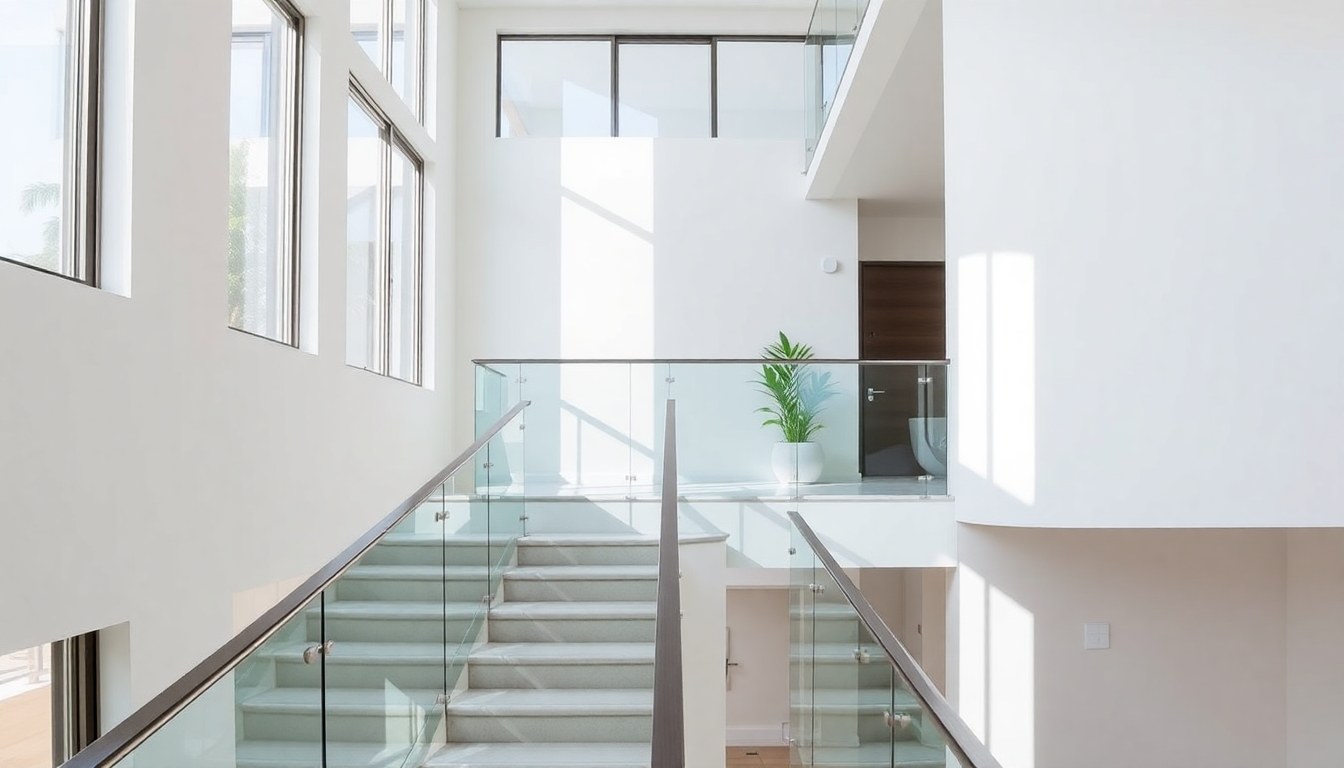
When designing modern staircases, architects and homeowners increasingly specify laminated glass over toughened glass for balustrades—not just for the unobstructed views, but because it fundamentally changes how a staircase performs in a safety emergency. Laminated glass holds together when broken, prevents sharp shards from scattering, and integrates seamlessly with contemporary interior design. This guide explores why laminated glass is the preferred choice for staircase railings, the role of interlayer technology, and the design possibilities it unlocks for spiral and floating staircases across Indian homes.
Why Architects Specify Laminated Glass Over Toughened Glass for Interior Stairs
The choice between laminated and toughened glass often surprises homeowners, but the reasons are rooted in safety physics and real-world performance. Toughened glass is hardened through thermal treatment, making it extremely strong—but when it fails, it shatters into hundreds of small, granular pieces. In a staircase balustrade, this creates a hazard: a person leaning or falling against the railing could face a shower of glass fragments, even if the impact doesn't cause serious injury initially.
Laminated glass, by contrast, bonds two or more glass panes with a plastic interlayer (typically polyvinyl butyral or PVB). When laminated glass breaks, the interlayer holds the pieces together like a car windshield, preventing fragmentation and maintaining the structural integrity of the balustrade. For interior stairs—especially in homes with children, elderly residents, or high foot traffic—this controlled failure mode is a game-changer. Additionally, laminated glass offers better sound dampening, improved thermal insulation, and UV protection, making it a more versatile choice for modern living spaces.
Safety Standards and Compliance in India
In India, staircase balustrades must comply with Indian Standard IS 6262:2015 (Code of Practice for Safety of Glass in Buildings), which mandates that any glass railing must be either toughened or laminated. The standard specifically requires that glass in balustrades be impact-resistant and, in the event of breakage, not create a hazard. Laminated glass exceeds these requirements by ensuring that broken glass remains bonded and does not fall. For residential projects in metros like Bangalore, Mumbai, Delhi, and Pune, building bylaws increasingly recommend or require laminated glass for interior balustrades, particularly where fall heights exceed 1.1 meters.
Understanding PVB Interlayers: Options and Performance
The interlayer is the heart of laminated glass performance. PVB (polyvinyl butyral) is the most common interlayer material, chosen for its clarity, flexibility, and adhesive properties. The thickness and type of PVB interlayer directly influence the safety level, sound insulation, and cost of your balustrade.
Standard PVB Interlayer Thickness
PVB interlayers typically range from 0.38 mm to 1.52 mm in thickness. For residential staircase balustrades, a 0.76 mm PVB interlayer (standard 6 mm + 6 mm glass with 0.76 mm PVB) is most common, offering a balance of safety, clarity, and cost—usually priced between ₹1,200 to ₹1,800 per square meter. A 1.52 mm interlayer provides enhanced safety and sound reduction, suitable for high-traffic staircases or homes near busy roads, but costs ₹2,000 to ₹2,500 per square meter.
Colored and Acoustic PVB Options
Beyond standard clear PVB, manufacturers now offer colored interlayers—soft grays, bronzes, and tinted options—that add aesthetic depth without compromising safety. Acoustic-grade PVB interlayers, thicker and specifically engineered for sound dampening, are ideal for spiral staircases in open-plan homes where noise from footsteps might otherwise echo through multiple levels. These premium options cost 15–30% more but justify the investment in high-end residential projects.
Design Trends for Spiral and Floating Staircases
Laminated glass has become the material of choice for contemporary staircase designs because it enables architects to create visually lighter, more transparent structures without sacrificing safety. Spiral and floating staircases, in particular, benefit from the aesthetic and functional properties of laminated glass.
Spiral Staircases with Laminated Glass Balustrades
Spiral staircases demand balustrades that don't interrupt the visual flow or create a sense of confinement. Laminated glass railings allow the eye to travel continuously around the spiral, maintaining the architectural drama of the design. The interlayer also absorbs vibration from footsteps, reducing the hollow, resonant feeling that metal railings sometimes create. In Bangalore and Pune's modern apartment complexes, spiral staircases with frameless laminated glass balustrades have become a status symbol—they signal open-plan living and contemporary taste. Frameless systems, where glass is held by minimal stainless steel fittings or point-fixed hardware, cost ₹2,500 to ₹4,500 per square meter but create an almost invisible barrier.
Floating Staircase Design
Floating staircases—where steps appear to cantilever without visible support—pair beautifully with laminated glass balustrades. The transparency of the glass reinforces the visual lightness of the design, while the interlayer ensures that any accidental impact is safely contained. These staircases are particularly popular in duplex penthouses and villa designs across Delhi and Mumbai. The combination of engineered timber or steel treads with laminated glass creates a minimalist aesthetic that photographs well and feels contemporary without being cold.
Installation and Maintenance Considerations
Installing laminated glass balustrades requires precision and professional expertise. Unlike toughened glass, laminated glass cannot be cut, drilled, or tempered after manufacture—all modifications must be made to the raw glass before lamination. This means detailed measurements and careful coordination with structural engineers are essential.
Professional Installation Best Practices
Laminated glass balustrades should be installed by certified glaziers familiar with Indian building codes. The glass must be supported by a structural frame—typically aluminum or stainless steel—that distributes loads evenly and accommodates thermal expansion. Mounting hardware should be stainless steel (304 or 316 grade) to resist corrosion in India's humid climates. Installation costs typically range from ₹500 to ₹1,200 per square meter, depending on complexity and location.
Long-Term Maintenance
Laminated glass requires minimal maintenance compared to other balustrade materials. Regular cleaning with mild soap and water keeps the glass clear and the interlayer unaffected. Unlike wood railings, laminated glass does not require sealing, staining, or refinishing. The main concern in humid climates is ensuring that drainage holes in the frame don't get blocked, which could trap moisture and affect the frame's longevity. Annual inspection of mounting hardware and sealants is recommended, especially in coastal areas like Mumbai or Goa where salt spray accelerates corrosion.
Cost Analysis: Laminated vs. Toughened Glass Balustrades
Budget is always a consideration in home design. Laminated glass typically costs 20–40% more than toughened glass for balustrades, but the added safety, durability, and aesthetic benefits often justify the premium for homeowners prioritizing long-term value.
A typical residential staircase balustrade (approximately 20–30 square meters) in laminated glass costs ₹40,000 to ₹90,000 for materials alone, depending on interlayer thickness and glass quality. Toughened glass for the same area costs ₹30,000 to ₹60,000. When you factor in installation, framing, and hardware, a complete laminated glass balustrade system runs ₹80,000 to ₹2,00,000, while toughened alternatives cost ₹60,000 to ₹1,50,000. For premium frameless systems with point-fixed hardware, costs can exceed ₹3,00,000 for a two-story staircase in central Mumbai or Bangalore.
Insurance and resale value often tip the calculation in favor of laminated glass. Homes with modern, safety-compliant balustrades command higher resale premiums, particularly in tier-1 cities where contemporary design is valued.
Frequently Asked Questions
Is laminated glass required for residential staircases in India?
While Indian Standard IS 6262:2015 permits both toughened and laminated glass for balustrades, many municipal building bylaws in major cities now recommend or mandate laminated glass for interior stairs, particularly in high-rise residential buildings. Always check local building codes before finalizing your design. Laminated glass is the safer choice and increasingly the standard for new construction.
Can laminated glass be used for outdoor spiral staircases?
Yes, laminated glass works well for outdoor spiral staircases, but the interlayer must be protected from direct UV exposure to prevent degradation over time. Specify UV-protective PVB interlayers and ensure the frame is stainless steel to withstand weather. In coastal regions, additional protective coatings on the frame are recommended. Outdoor installations require more frequent maintenance to prevent algae and mineral deposits on the glass.
What is the typical lifespan of a laminated glass balustrade?
A well-installed laminated glass balustrade with stainless steel framing can last 25–30 years or more. The glass itself is durable indefinitely, but the interlayer may gradually yellow or lose flexibility in extreme UV exposure (though this is rare indoors). The frame and hardware typically require replacement or significant refurbishment after 15–20 years, depending on climate and maintenance.
Can laminated glass balustrades be tinted or frosted for privacy?
Absolutely. Laminated glass can be tinted (gray, bronze, or custom colors) or frosted during manufacture without affecting safety. Frosted laminated glass is popular for staircases in open-plan homes where privacy between levels is desired. Tinting also reduces solar heat gain and glare, making it a good choice for staircases with south-facing windows. Expect a 10–20% cost premium for tinted or frosted finishes.
How does laminated glass handle thermal stress in Indian climates?
Laminated glass handles thermal stress well because the PVB interlayer absorbs expansion and contraction, reducing stress on the glass panes. In India's hot summers and cooler winters, laminated glass is more forgiving than toughened glass, which can develop micro-fractures from rapid temperature changes. Proper frame design with expansion joints is essential, and your installer should account for seasonal movement when securing the glass.
Conclusion
Laminated glass has become the material of choice for modern staircase balustrades in India because it delivers uncompromised safety, aesthetic flexibility, and long-term durability. Whether you're designing a spiral staircase in a Bangalore villa, a floating staircase in a Mumbai penthouse, or a traditional staircase in a Delhi home, laminated glass offers solutions that meet building codes, enhance interior design, and protect your family. The investment in laminated glass pays dividends in safety, resale value, and the timeless elegance of transparent, minimal design.
Ready to explore laminated glass options for your staircase? Browse certified glass suppliers and installers on glassy.in, India's largest glass-business directory. Connect with professionals in your city, compare quotes, and find the perfect balustrade solution for your home.