
Glass Railings
Glass Staircase Railings: Load-Bearing Design & Safety Standards
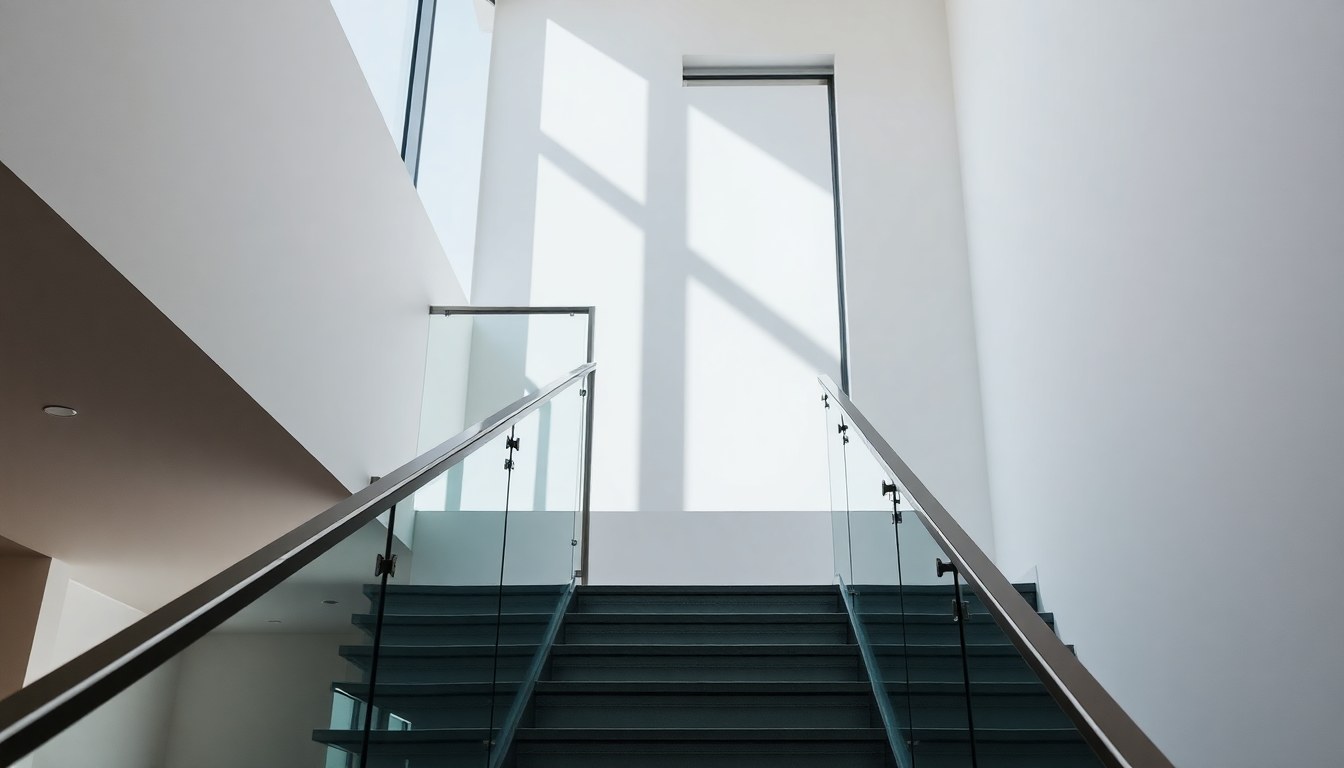
Glass staircase railings have become a hallmark of modern architecture across India, offering aesthetic appeal without compromising sightlines. However, their structural integrity depends entirely on precise load-bearing design and adherence to Indian safety standards—a detail that separates professional installations from dangerous shortcuts. This guide walks you through toughened glass balustrade specifications, IS 4099 compliance, and practical installation methods to ensure your glass railings are both beautiful and safe.
Understanding Load-Bearing Requirements for Glass Railings
Glass railings must resist horizontal loads applied at the handrail level, vertical loads from impacts, and point loads from accidental collisions. The Indian Standard IS 4099-1992 (Code of Practice for Installation and Maintenance of Lifts and Escalators) and IS 1893 (Criteria for Earthquake Resistant Design of Structures) establish minimum performance thresholds. A typical residential glass railing must withstand a horizontal load of 1.2 kN per linear metre applied at the handrail height (typically 1000–1100 mm above the stair nosing).
The load-bearing capacity of a glass railing system depends on three interconnected factors: the thickness and grade of the glass itself, the design of the support frame or clamping system, and the quality of installation. A 10 mm toughened glass panel, for instance, performs differently when mounted in a frameless U-channel clamp versus a traditional aluminium frame. Engineers must calculate deflection limits (typically less than 6–8 mm under maximum load) to prevent the railing from feeling unstable or developing micro-fractures over time.
Glass Thickness Calculations and Material Specifications
Toughened Glass Grades and Thickness
Toughened (tempered) glass is mandatory for staircase railings in India due to its superior strength and safety characteristics. When broken, toughened glass fractures into small, relatively harmless granules rather than sharp shards. The thickness you select must balance load-bearing capacity, deflection control, and cost. Common specifications for residential and commercial stairs are:
- 10 mm toughened glass: Suitable for low-traffic residential stairs with frame support every 1.2–1.5 m. Deflection under 1.2 kN load typically ranges from 4–6 mm.
- 12 mm toughened glass: The industry standard for medium-traffic commercial stairs and residential applications with longer spans (up to 2 m between supports). Offers better rigidity and reduced deflection.
- 15 mm and above: Reserved for high-traffic public buildings, atria, and frameless systems where unsupported spans exceed 2 m or loads are exceptionally high.
Glass must be sourced from manufacturers certified to IS 16754-1:2018 (Safety of Glass in Buildings—Part 1: Safety Glazing) to ensure consistent temper quality, impact strength, and thermal stability. Budget approximately ₹1,200–₹2,500 per square metre for toughened glass in 10–12 mm thickness, depending on regional availability and supplier reputation.
Laminated Glass Considerations
While laminated glass (two or more panes bonded with polyvinyl butyral interlayer) is not always required by code, it offers post-breakage safety: if one pane fractures, the interlayer holds the fragments together, preventing complete failure. Laminated 10 mm + 10 mm (20 mm total) is increasingly specified for high-rise residential and commercial projects in Bangalore, Mumbai, and Delhi, where impact resistance and acoustic benefits justify the additional cost of ₹3,000–₹5,000 per square metre.
IS 4099 and Indian Safety Standards Explained
The Indian Standard IS 4099-1992 is the primary reference for lift and escalator installations, but its principles extend to all fixed glass balustrades. The standard requires that railings resist a concentrated horizontal load of 1.1 kN applied at any point on the handrail without permanent deformation or failure. Additionally, a distributed load of 0.5 kN/m applied over the full height must be withstood.
Beyond IS 4099, engineers must reference IS 1893 (Earthquake Resistant Design) for seismic zones, particularly in regions like the Northeast, Uttarakhand, and parts of Gujarat. Seismic design may require additional bracing, thicker glass, or reinforced frame connections. The National Building Code of India (NBC 2016) mandates that all railings in public buildings achieve a safety factor of at least 2.5 against ultimate failure under design loads.
Compliance verification involves third-party testing of prototype systems at accredited laboratories. A full-scale load test costs ₹50,000–₹150,000 but is essential for large projects, custom designs, or frameless systems. Many manufacturers maintain test certificates from NABL-accredited labs for standard configurations, which can be referenced instead of conducting new tests for identical installations.
Frameless vs. Framed Glass Railing Systems
Frameless U-Channel and Clamping Systems
Frameless railings use precision-engineered aluminium U-channels or stainless steel clamping brackets to grip the glass edges without visible framing. This approach maximizes transparency and visual lightness, making it popular in high-end residential projects across metropolitan areas. The glass is typically 12 mm or thicker and must be accurately edge-polished to prevent stress concentrations at the clamping points.
Load transfer in frameless systems is direct: the horizontal load applied to the handrail is transmitted through the clamping hardware into the glass edges, then into the mounting structure (usually the stair stringers or floor). Critical design details include:
- Clamping pressure must be sufficient to prevent slipping (typically 5–10 MPa contact stress) but not so high as to induce edge stress that causes spontaneous fracture.
- Edge preparation is critical; any micro-fractures or chips can propagate under load, leading to sudden failure. Edges must be polished to at least 400-grit smoothness.
- Spacing between clamps should not exceed 1.5 m to control deflection and distribute loads evenly.
- Thermal expansion must be accommodated; a 2 m glass panel can expand 1–2 mm between winter and summer in Indian climates.
Framed Systems with Aluminium or Stainless Steel Profiles
Framed railings enclose the glass edges in aluminium or stainless steel channels, providing redundancy and easier installation. If the glass fails, the frame can still support the handrail. This approach is more forgiving of edge preparation quality and is preferred for high-traffic public buildings where safety margins must be maximized.
Framed systems typically cost 20–30% less than frameless equivalents because labour is simpler and material waste is lower. However, they reduce transparency and are visually heavier. Standard aluminium frame sections (40×40 mm to 60×60 mm) are rated for loads well above the IS 4099 minimum, so the glass itself usually becomes the limiting factor. Stainless steel frames add ₹500–₹1,000 per metre but provide superior corrosion resistance in humid climates or near coastal areas.
Common Installation Failures and How to Avoid Them
Glass railing failures in India often stem from preventable mistakes during design, fabrication, or installation rather than material defects. Understanding these pitfalls helps you specify and oversee work correctly.
Edge Damage and Stress Concentration
Chipped or scratched glass edges are the leading cause of premature failure in frameless systems. Even a 0.5 mm chip can reduce load capacity by 30–50% because stress concentrates at the damage site. Edges must be protected during transport, storage, and installation. Use cardboard edge guards and foam padding. Inspect glass on-site before installation, and reject any panel with visible edge damage.
Inadequate Clamping and Fastening
Under-torqued clamping bolts allow micro-movement of the glass within the clamp, causing fretting wear and eventual slippage. Over-torqued bolts induce excessive edge stress and can cause spontaneous fracture, particularly in cold weather when thermal stresses are highest. Use calibrated torque wrenches and follow the manufacturer's specifications precisely. Typical torque values for M8 stainless steel bolts in aluminium clamps range from 25–35 Nm; verify this with your supplier.
Inadequate Support Spacing
Spacing clamps or frame supports more than 1.5 m apart increases deflection and shifts the load distribution, stressing the glass unevenly. Deflection exceeding 8 mm can cause occupants to feel the railing move, reducing confidence in its safety. Always calculate support spacing based on glass thickness, load case, and the specific clamping system being used. A structural engineer should verify spacing for any non-standard configuration.
Thermal Expansion and Seasonal Movement
Glass expands roughly 9 micrometres per metre per degree Celsius. In a 2 m panel spanning from a winter low of 10°C to a summer high of 50°C, total expansion is approximately 0.7 mm. If clamps are too rigid or gaps are insufficient, thermal stress builds up and can crack the glass or strip fasteners. Specify expansion gaps of at least 3–5 mm and use resilient shims or rubber gaskets to accommodate movement.
Poor Handrail Integration
The handrail must be mechanically independent of the glass or supported through compliant connections. If the handrail is rigidly bolted to the glass, thermal and structural loads transmit directly into the glass, increasing failure risk. Handrails should rest on or bolt to the frame or mounting structure, not the glass itself. Verify this detail in shop drawings before fabrication begins.
Installation Best Practices and Quality Control
Professional installation requires trained technicians, proper tools, and site inspection protocols. The installation contractor should provide a method statement detailing sequence, temporary supports, safety measures, and quality checkpoints.
Before installation, verify that the substrate (stair stringers, floor, or wall) is structurally sound and can withstand the design loads. A railing is only as strong as its mounting surface. Check for cracks, settlement, or movement in the substrate, and repair or reinforce as needed. The substrate must be level and plumb within 5 mm over a 2 m span to ensure even load distribution and proper glass seating in clamps.
During installation, use temporary bracing to hold glass panels vertical and prevent deflection. Apply loads gradually and check for any visible cracking, movement, or noise. Final torque-tightening should be done in a specific sequence (typically alternating bolts in a cross pattern) to distribute clamping pressure evenly. After installation, perform a visual inspection and a manual load test (pushing horizontally on the handrail with firm pressure) to confirm stability before occupancy.
Cost and Timeline Considerations for Indian Projects
Glass staircase railing costs vary widely based on design complexity, glass thickness, frame material, and location. A simple 10 mm framed system in a Tier 2 city might cost ₹2,500–₹3,500 per linear metre, while a premium 12 mm frameless system in Mumbai or Bangalore could reach ₹6,000–₹10,000 per linear metre. Laminated glass and stainless steel components add 30–50% to the base cost.
Lead time is typically 4–6 weeks for standard configurations, longer if custom testing or seismic design is required. Budget additional time for site preparation, substrate inspection, and installation (usually 2–3 weeks for a typical residential staircase). Communicate timelines clearly with your glass supplier and contractor to avoid project delays.
Frequently Asked Questions
What thickness of glass do I need for a residential staircase railing?
For most residential stairs with frame support every 1.2–1.5 m, 10 mm toughened glass is sufficient to meet IS 4099 requirements. If your staircase has longer unsupported spans (over 1.8 m) or you prefer a frameless design, upgrade to 12 mm. Laminated glass is optional for residential use but recommended if you want post-breakage safety or acoustic benefits.
Is frameless or framed glass railing safer?
Both frameless and framed systems can be equally safe when properly designed and installed. Framed systems offer redundancy (the frame supports the handrail if glass fails) and are more forgiving of installation errors. Frameless systems are safer only if the glass is thicker, edge quality is excellent, and clamping is precise. Choose based on your aesthetic preference and budget; safety depends on proper engineering and installation regardless of style.
What does IS 4099 require for glass railings?
IS 4099 requires glass railings to resist a horizontal load of 1.1 kN applied at the handrail level without permanent deformation or failure. A distributed load of 0.5 kN/m over the full height must also be withstood. The standard applies primarily to lifts and escalators but is widely referenced for all fixed glass balustrades in India. Always verify compliance with your local building code and a structural engineer.
How do I prevent thermal cracking in glass railings?
Provide expansion gaps of 3–5 mm at the top and bottom of each glass panel to accommodate seasonal movement. Use resilient shims or rubber gaskets in clamps to allow slight movement without inducing stress. Avoid over-torquing clamping bolts, and ensure the handrail is not rigidly attached to the glass. In extreme climates or long panels (over 3 m), consult a structural engineer about thermal stress management.
What should I look for when inspecting a glass railing installation?
Inspect for edge damage or chips on the glass, which indicate handling problems and reduce load capacity. Check that all clamping bolts are tight and show no signs of loosening or corrosion. Verify that the glass sits evenly in clamps and that there are no visible gaps or misalignment. Push firmly on the handrail to confirm it doesn't move or flex excessively. Request a copy of load-test certificates or compliance documentation from the installer.
Conclusion: Ensuring Safe and Compliant Glass Railings
Glass staircase railings combine aesthetic appeal with structural responsibility. Meeting Indian safety standards—IS 4099, IS 1893, and the National Building Code—requires careful attention to glass thickness, edge preparation, clamping design, and installation quality. Whether you choose a frameless or framed system, the foundation of safety is proper engineering, quality materials, and skilled installation.
To find certified glass suppliers, fabricators, and installers in your region who understand these standards, explore the detailed directory of glass businesses on glassy.in. Whether you're planning a residential renovation in Pune or a commercial project in Hyderabad, connecting with experienced professionals ensures your glass railings are both stunning and safe.