
Glass Partitions
Glass Partition Soundproofing: How Thickness & Gas Filling Reduce Noise
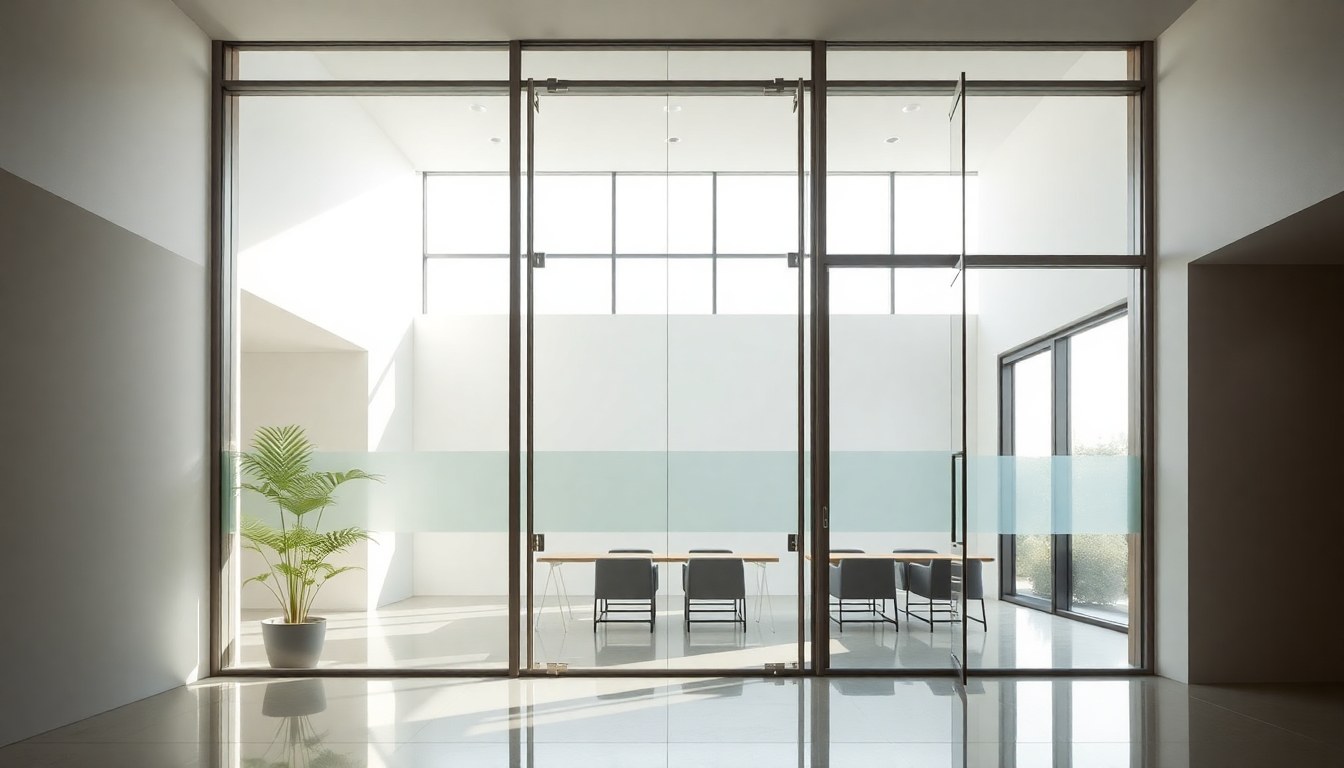
Open-office layouts and modern residential designs increasingly rely on glass partitions for aesthetic appeal and spatial flexibility, but sound transmission remains a critical challenge. The acoustic performance of glass partitions is governed by two primary factors: glass thickness and the type of gas sealed between panes in insulated glass units (IGUs). Understanding how these elements work together can help you select partitions that deliver meaningful noise reduction while maintaining visual transparency.
The Science Behind Glass Acoustic Performance
Sound travels as vibrations through air and solid materials. When sound waves strike a glass surface, some energy is reflected, some is absorbed by the frame or surrounding materials, and some is transmitted through the glass itself. The ability of glass to resist sound transmission is measured in terms of Sound Reduction Index (SRI) or Noise Reduction Coefficient (NRC), expressed in decibels (dB).
The fundamental principle is that heavier, stiffer materials resist vibration more effectively. Thicker glass has greater mass, which naturally dampens vibrations and reduces the transmission of sound energy to the other side. However, thickness alone is not the complete solution—the composition of the sealed gas between panes plays an equally important role in determining overall acoustic performance.
How Decibels Measure Sound Reduction
A 10 dB reduction is perceived by the human ear as roughly half as loud. For reference, normal office conversation measures around 60 dB, while a busy traffic environment registers 70–80 dB. A glass partition with an SRI of 30 dB might reduce office chatter to barely perceptible levels, while one with SRI 40 dB can effectively isolate even louder ambient noise. The higher the SRI rating, the better the soundproofing performance.
Glass Thickness and Noise Reduction
Glass thickness directly influences acoustic performance because mass increases resistance to vibration. Single-pane glass offers minimal sound insulation; a standard 6 mm pane provides only about 28–30 dB of noise reduction. As thickness increases, acoustic performance improves, but not in a linear fashion—doubling thickness does not double noise reduction.
- 6 mm glass: 28–30 dB SRI (minimal soundproofing)
- 10 mm glass: 31–33 dB SRI (modest improvement)
- 12 mm glass: 32–35 dB SRI (better for moderate noise)
- 15 mm glass: 34–37 dB SRI (good for office environments)
- 19 mm glass: 36–39 dB SRI (strong performance for noisy areas)
For most commercial office partitions in India, 10–12 mm toughened glass is a practical choice, balancing cost, weight, and acoustic performance. Residential applications often benefit from thicker panes when privacy is essential, such as in home offices or bedrooms adjacent to busy streets.
Insulated Glass Units (IGUs) and Gas Filling Impact
An insulated glass unit consists of two or more glass panes separated by a sealed air gap, typically 6–12 mm wide. The critical innovation is that the gas filling this cavity significantly affects acoustic performance. The two most common options are standard air and argon gas, each with distinct acoustic properties.
Air-Filled IGUs: Standard Performance
Traditional air-filled glass units provide a baseline for acoustic performance. Air has a low density compared to heavier inert gases, which limits its ability to dampen sound vibrations. A typical air-filled IGU with 6 mm + 6 mm glass panes separated by a 6 mm air gap delivers approximately 28–32 dB of noise reduction—a modest improvement over single pane glass, but insufficient for demanding acoustic requirements.
Argon-Filled IGUs: Superior Acoustic Performance
Argon is a noble gas that is denser than air, making it more effective at dampening sound vibrations within the sealed cavity. When argon fills the space between glass panes, it provides measurably better acoustic insulation. An argon-filled IGU with identical glass thickness can deliver 2–4 dB additional noise reduction compared to an air-filled unit. While this may sound modest, remember that a 3 dB increase represents approximately 25% more effective sound attenuation.
For example, an argon-filled unit with 8 mm + 8 mm glass and a 12 mm cavity can achieve 34–36 dB SRI, whereas the same configuration with air might only reach 31–33 dB SRI. This difference becomes significant in open-office environments where background noise is persistent.
Krypton and Other Premium Gases
Krypton gas, though less commonly used in partition applications due to cost, offers even superior acoustic performance than argon. However, for most glass partition installations in India, argon represents the optimal balance between performance enhancement and cost-effectiveness.
Optimal Glass Partition Configurations for Different Settings
Open-Office Environments
Open offices typically experience ambient noise levels of 60–70 dB from multiple conversations, keyboards, and equipment. To maintain focus and reduce speech intelligibility between adjacent workstations, an SRI of 35–40 dB is recommended. This is best achieved with:
- Argon-filled IGU with 10 mm + 10 mm toughened glass and 12 mm cavity
- Alternatively, 8 mm + 12 mm asymmetrical glass with argon filling (asymmetrical panes further reduce resonance)
- Acoustic sealing at frame joints to eliminate air leakage paths
Leading architects like SRI VENKATESHWARA ARCHITECT in Bangalore have successfully integrated such configurations into modern office designs, achieving measurable improvements in employee satisfaction and productivity.
Residential Settings
Residential glass partitions typically need to isolate bedrooms from living areas or exterior street noise. An SRI of 30–35 dB is often sufficient for internal partitions, while exterior-facing partitions in noisy neighborhoods may require 38–42 dB. Recommended configurations include:
- Argon-filled IGU with 6 mm + 10 mm glass for internal partitions
- Argon-filled IGU with 10 mm + 12 mm glass for street-facing applications
- Laminated glass options for additional dampening (particularly effective for low-frequency noise)
Interior designers such as UNIQUE INTERIORS frequently specify argon-filled units to enhance acoustic comfort in residential renovations across metropolitan areas.
Specialized Applications
Conference rooms, recording studios, and medical facilities require SRI ratings of 40+ dB. These applications often benefit from:
- Triple-glazed units (three panes with two sealed cavities)
- Laminated glass in at least one pane to absorb vibration
- Wider air gaps (up to 200 mm in some cases) to exploit the mass-air-mass principle
- Argon or krypton filling in both cavities
Installation and Sealing: Critical for Acoustic Performance
Even the most acoustically advanced glass unit will underperform if installation is poor. Sound finds the path of least resistance, and any air leakage around frames, seals, or joints will compromise the entire partition's effectiveness. Proper installation includes:
- High-quality acoustic sealants (silicone or polyurethane) at all frame-to-wall junctions
- Weatherstripping and gaskets to eliminate gaps
- Proper frame material selection—aluminum frames conduct sound more readily than thermally broken or wooden frames
- Attention to electrical outlets, HVAC penetrations, and other openings that can allow sound transmission
Architects and designers working on complex projects, such as Blue Door Architects in Sargasan, emphasize that acoustic design must be integrated from the planning stage, not retrofitted after construction.
Cost-Benefit Analysis: When to Invest in Premium Acoustic Partitions
Argon-filled IGUs typically cost 15–25% more than air-filled units, depending on glass thickness and local market conditions. The additional investment is justified when:
- The acoustic environment is genuinely demanding (high ambient noise, sensitive work requiring concentration)
- The partition is permanent or long-term, amortizing the cost over years of improved comfort
- Privacy requirements are critical (medical offices, legal firms, executive spaces)
- Energy efficiency is also a priority (argon reduces thermal conductivity as well as sound transmission)
In many Indian metropolitan areas, where real estate is premium and open-office trends dominate, the return on investment for acoustic glass partitions is substantial in terms of employee well-being and retention.
Frequently Asked Questions
What is the difference between SRI and NRC ratings for glass partitions?
SRI (Sound Reduction Index) measures how much sound a material blocks from passing through it—higher is better for partitions. NRC (Noise Reduction Coefficient) measures how much sound a material absorbs rather than reflects. For glass partitions, SRI is the more relevant metric because glass is reflective and transmits sound; NRC is more applicable to acoustic panels or foam. Glass partitions typically have low NRC values but high SRI values.
Is argon gas really worth the extra cost for residential glass partitions?
For residential partitions separating bedrooms or home offices from living areas, argon filling provides noticeable benefits if noise is a concern. The 2–4 dB improvement translates to meaningful comfort gains. However, if your home is already relatively quiet, the investment may not justify the cost. Consult with local architects or glass suppliers to assess your specific noise environment before deciding.
Can laminated glass improve soundproofing in partitions?
Yes. Laminated glass, which bonds two or more panes with a plastic interlayer, adds damping properties that reduce sound transmission, particularly for low-frequency noise (traffic, machinery). Combining laminated glass with argon-filled IGUs creates a highly effective acoustic solution, though at increased cost and weight. This combination is often reserved for specialized applications like conference rooms or ground-floor residential units.
How much noise reduction can I expect from a typical office partition?
A standard 10 mm air-filled IGU reduces noise by approximately 30–32 dB, which is adequate for many office settings but may not fully isolate loud conversations. An argon-filled IGU with thicker glass (10 mm + 12 mm) can achieve 35–37 dB, making speech nearly unintelligible across the partition. For open offices with persistent background noise, 35+ dB is recommended for optimal focus.
Do I need acoustic sealing if I install high-performance glass?
Absolutely. Acoustic performance is only as good as the weakest link in the system. Even premium glass with argon filling will be compromised by poor sealing, gaps, or air leakage around frames. Always specify high-quality acoustic sealants and ensure professional installation. Sound travels at the speed of light through any opening, so meticulous attention to details is essential.
Conclusion and Next Steps
Glass partition soundproofing is a science rooted in material density, gas properties, and installation precision. Argon-filled insulated glass units with optimized thickness deliver measurable acoustic improvements over standard air-filled partitions, reducing noise by 2–4 dB—a meaningful difference in noisy environments. Whether you're designing an open office in Bangalore, a residential renovation in Mumbai, or a specialized facility elsewhere in India, selecting the right glass thickness and gas filling configuration is essential for comfort and productivity.
Ready to specify acoustic glass partitions for your project? Browse verified glass suppliers, architects, and interior designers on glassy.in, India's largest glass-business directory. Connect with professionals like Gaurang Patel Architects and A.Y. Enterprises who understand acoustic design and can guide you toward the optimal solution for your space.