
Glass Partitions
Glass Partition Acoustic Performance: Sound Insulation Ratings Explained
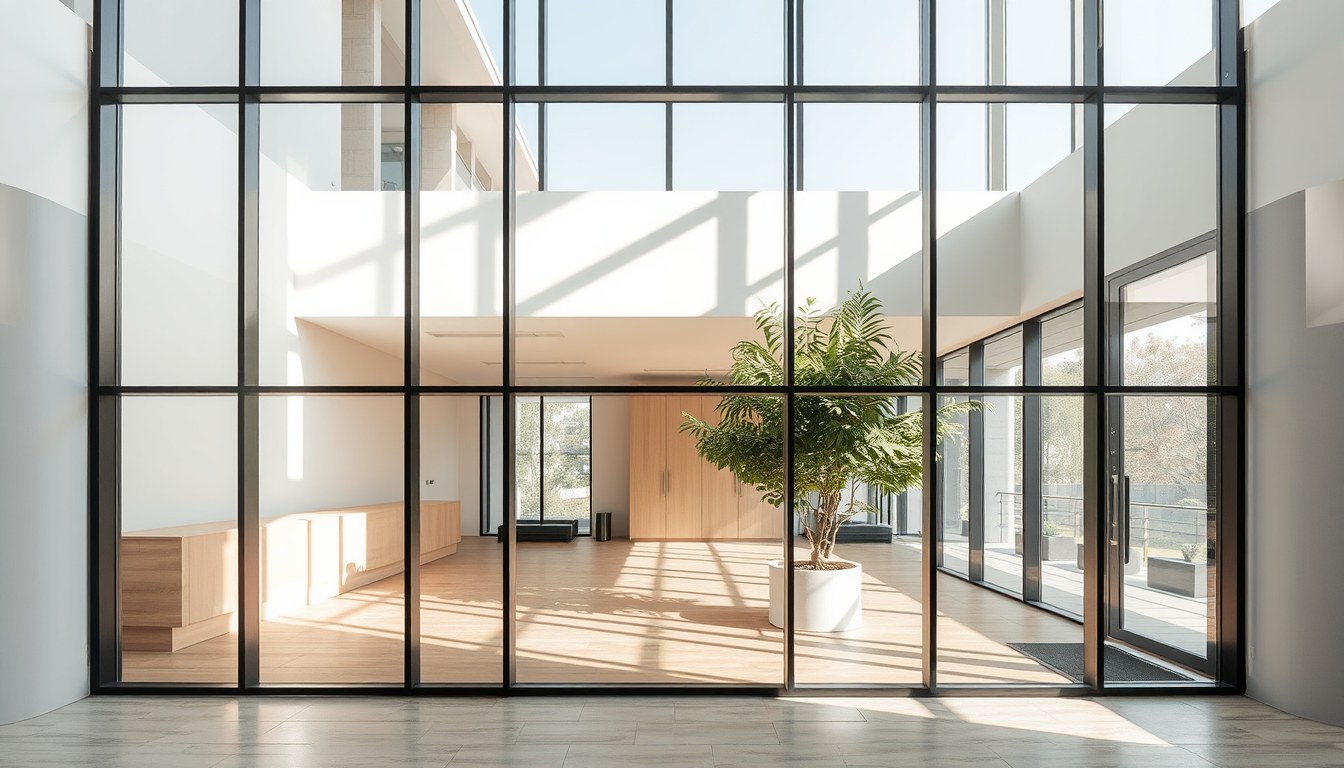
Open office layouts have become standard in India's corporate sector, but they bring a persistent challenge: noise. Glass partitions offer transparency and aesthetic appeal, yet many businesses assume they sacrifice sound control. The truth is more nuanced. When specified correctly, glass partition systems can deliver impressive acoustic performance comparable to solid walls, thanks to laminated interlayers, double-glazing, and proper installation techniques. Understanding sound insulation ratings and acoustic specifications helps you choose partitions that balance visibility with workplace tranquility.
Understanding Acoustic Performance Ratings
Sound insulation performance is measured in decibels (dB), a logarithmic scale that quantifies sound pressure levels. When we talk about glass partitions "reducing" noise, we're referring to the Sound Reduction Index (SRI) or Weighted Sound Reduction Index (Rw), which indicates how many decibels a partition attenuates sound across different frequencies.
In India, acoustic standards for office partitions typically follow guidelines from the Indian Standards Institution (ISI) and international benchmarks like ISO 717-1. A partition with an SRI of 30 dB reduces sound by 30 decibels, meaning a conversation at 70 dB on one side becomes approximately 40 dB on the other—roughly equivalent to background office noise. For context, most office environments aim for SRI ratings between 30 and 50 dB depending on the adjacent spaces and work requirements.
The relationship between dB reduction and perceived sound change is important to grasp: a 10 dB reduction is perceived as roughly half as loud to the human ear. Therefore, upgrading from a 30 dB partition to a 40 dB partition creates a noticeable difference in quiet, not a doubling of insulation.
Laminated Interlayers: The Foundation of Glass Acoustic Performance
Standard annealed or tempered glass is a poor acoustic insulator because it transmits sound vibrations readily. The breakthrough in glass partition acoustics came with laminated glass—two or more glass panes bonded with an interlayer material, typically polyvinyl butyral (PVB) or ethylene vinyl acetate (EVA). This interlayer is the acoustic hero.
When sound waves strike laminated glass, the interlayer absorbs and dampens vibrations, preventing them from transmitting through to the other side. Thicker interlayers and softer polymer formulations provide better acoustic performance. A standard laminated glass with a 0.76 mm PVB interlayer offers modest improvement over single glass, but acoustic-grade laminates with 1.52 mm or thicker interlayers can achieve SRI ratings of 35–40 dB.
Different interlayer materials perform differently across frequency ranges. PVB excels at mid-to-high frequencies (typical office noise like speech), while specialized acoustic interlayers are engineered to address low-frequency noise like traffic or machinery. When sourcing glass partitions from suppliers like Sri Lakshmi Glass Plywood And Hardware, ask specifically about interlayer composition and thickness to ensure acoustic specifications match your needs.
Acoustic Interlayer Specifications
- Standard PVB (0.76 mm): Minimal acoustic benefit; mainly for safety and UV protection
- Acoustic PVB (1.52–2.28 mm): SRI 30–35 dB; suitable for moderate noise control
- Specialist acoustic polymers: SRI 35–40 dB; engineered for broader frequency absorption
- Multiple interlayer combinations: SRI 40+ dB; achieved through laminating three or more glass panes
Double-Glazed and Multi-Pane Partition Systems
While a single laminated pane improves acoustics, the most effective glass partition systems use a cavity approach: two or more laminated glass panes separated by an air gap or acoustic foam. This configuration disrupts sound transmission at multiple stages, making it substantially more effective than a single thick pane.
The air gap between panes is critical. A gap of 100–150 mm provides the best acoustic performance for office frequencies. Within this cavity, you can introduce acoustic foam or specialized materials that further absorb sound energy. The combination of mass (the glass), damping (the interlayers), and air-gap resonance creates a multi-layered defense against noise.
A typical high-performance office partition might consist of 6 mm laminated glass (with acoustic interlayer) + 100 mm air cavity + 6 mm laminated glass, achieving SRI ratings of 45–50 dB. This rivals solid drywall partitions while maintaining the visual openness glass provides. For architectural guidance on partition design, SAN Design Square offers expertise in specifying acoustic glass solutions for commercial spaces.
Cavity Fill Options
- Empty air cavity: Good acoustic performance; cost-effective
- Mineral wool or fiberglass: Enhanced absorption of mid-to-high frequencies
- Acoustic foam: Superior absorption; more expensive but highest performance
- Sealed cavity: Prevents air leakage; maintains performance over time
Installation Quality and Acoustic Sealing
Even the best acoustic glass partition system performs poorly if installation is careless. Sound finds the path of least resistance, and gaps, poorly sealed edges, or inadequate gaskets allow sound to bypass the glass entirely. Professional installation is not optional for acoustic performance—it's fundamental.
Proper acoustic sealing involves continuous gaskets or weatherstripping around the perimeter of the partition, sealed joints where partitions meet walls and ceilings, and careful attention to cable trays, electrical outlets, and HVAC penetrations. Many acoustic failures in offices trace back to these overlooked details rather than the glass itself.
Acoustic sealants should be flexible and remain pliable over time, as rigid sealants can crack and lose effectiveness. Installation should follow ISO 717 testing methodologies if acoustic certification is required. Budget 15–20% additional cost for professional acoustic installation compared to standard glass partition installation.
Frequency Response and Real-World Noise Control
Sound insulation ratings (SRI) are weighted toward frequencies where human hearing is most sensitive, typically 500–4000 Hz. This range covers most office noise: speech, keyboard typing, phone conversations, and light machinery. However, low-frequency noise like traffic rumble, elevator operation, or HVAC systems requires different acoustic strategies.
Glass partitions handle mid-to-high frequency noise well but are less effective against deep bass frequencies. If your office faces a busy street or is near an industrial area, consider additional measures: thicker laminated glass, larger air cavities, or acoustic treatment of adjacent walls. Conversely, if noise sources are primarily conversational or electronic, standard acoustic glass partitions perform admirably.
Testing acoustic performance in your specific environment is valuable. Many acoustic consultants in major Indian cities (Bangalore, Mumbai, Delhi, Pune) offer on-site sound testing to validate partition specifications before installation.
Cost-Benefit Analysis of Acoustic Glass Partitions
Acoustic glass partitions cost more than standard clear glass partitions—typically 40–80% premium depending on lamination and cavity specifications. A basic clear glass partition might cost ₹800–1200 per square meter, while acoustic-grade laminated systems range from ₹1400–2500 per square meter, with high-performance double-glazed systems reaching ₹3000–4500 per square meter.
The investment yields returns through improved employee productivity, reduced stress, and fewer health complaints related to noise exposure. Studies in Western markets show that noise-controlled offices see 10–15% improvements in task performance and concentration. For knowledge workers in India's IT and professional services sectors, this translates directly to better output quality and employee retention.
Additionally, acoustic glass partitions often qualify for green building certifications (LEED, GRIHA) and contribute to workplace wellness credentials, which increasingly matter to multinational companies and startups alike.
Frequently Asked Questions
What SRI rating do I need for my office partition?
For typical open office environments where adjacent spaces have similar noise levels, an SRI of 30–35 dB suffices. If partitioning a conference room from an open floor, aim for 40+ dB. Meeting rooms or executive offices adjacent to noisy areas should target 45–50 dB. Consult an acoustic consultant if your office has unusual noise sources or requirements.
Can I add acoustic performance to existing clear glass partitions?
Retrofitting acoustic performance is difficult and costly. You would need to replace the glass with laminated acoustic glass or apply acoustic film, both of which compromise aesthetics and transparency. It's more practical to specify acoustic glass during initial installation or renovation.
Do acoustic glass partitions reduce light transmission?
No. Acoustic interlayers are transparent, and laminated glass maintains the same light transmission as standard glass (typically 70–90% depending on tinting). You get full visibility and natural light alongside acoustic benefits.
How long do acoustic glass partitions last?
High-quality laminated acoustic glass is durable for 20+ years with minimal degradation. The interlayers remain stable and do not yellow or degrade under normal office conditions. Performance is essentially permanent unless the glass is damaged or seals are compromised.
What's the difference between SRI and dB reduction in marketing claims?
Some suppliers advertise "50 dB reduction" when they mean SRI 50, which is accurate. However, be cautious of claims like "soundproof" or "100% noise reduction"—no partition is truly soundproof. Acoustic performance is always measured in dB reduction across specific frequency ranges, and transparent marketing should specify the SRI rating and test standard used.
Conclusion: Making the Right Acoustic Glass Choice
Glass partitions deliver excellent acoustic performance when specified with laminated interlayers, appropriate air cavities, and professional installation. Understanding SRI ratings, interlayer options, and frequency response helps you match partition specifications to your office's actual noise environment. Whether you're designing a new office, renovating an existing space, or upgrading a conference room, acoustic glass partitions offer a modern, flexible solution that doesn't sacrifice aesthetics for sound control.
Ready to specify acoustic glass partitions for your office? Explore verified glass suppliers and acoustic specialists on glassy.in, India's largest glass-business directory. Search by location, product type, and acoustic certification to find trusted partners who understand the technical details and can deliver both performance and quality.