
Glass Partitions
Fluted Glass vs Reeded Glass Partitions: Aesthetic & Privacy Comparison
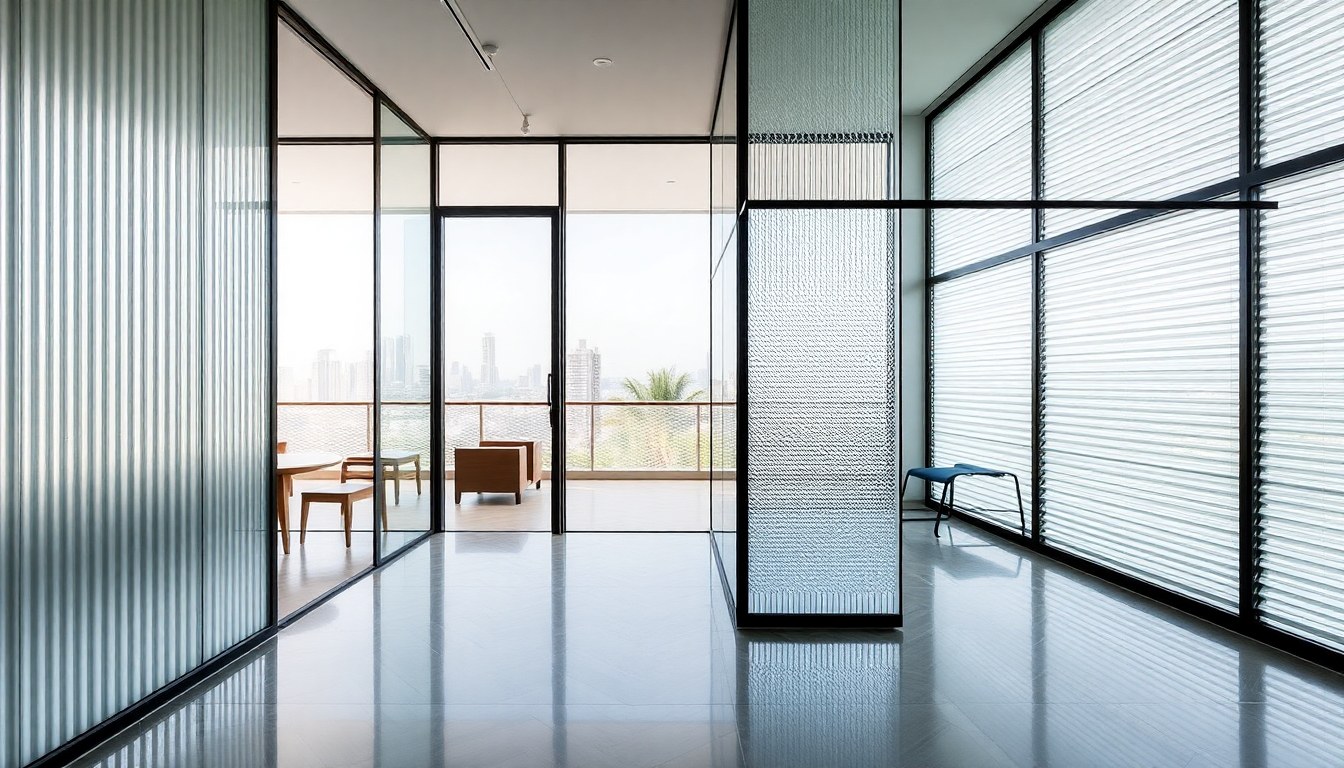
When designing modern office spaces or residential interiors, textured glass partitions have become a go-to solution for balancing privacy with natural light. Fluted and reeded glass are two popular choices, each offering distinct visual and functional benefits. Understanding their differences in privacy levels, light diffusion, cost, and design impact will help you make an informed decision for your project.
Understanding Fluted and Reeded Glass: Key Differences
Fluted and reeded glass are both textured architectural glass options, but they differ in their surface patterns and how those patterns affect light and visibility. Fluted glass features vertical grooves that run parallel to one another, creating a linear, ribbed appearance. Reeded glass, on the other hand, has a similar vertical pattern but typically features more pronounced, deeper ridges that create a more dramatic texture.
The primary distinction lies in the depth and width of the grooves. Fluted glass generally has shallower, more frequent grooves, while reeded glass presents bolder, more widely-spaced ridges. This difference affects not just the visual character of the glass but also its functional properties, including how much light passes through and how effectively it obscures visibility.
Manufacturing Process
Both fluted and reeded glass are produced through a rolling process where molten glass is passed between textured rollers that imprint the pattern onto the surface. This process is efficient and allows for consistent, high-quality results. The choice of roller determines the groove depth and spacing, which manufacturers can customize to meet specific design requirements.
Privacy Levels: How Each Performs
Privacy is often the primary reason businesses and homeowners choose textured glass over clear glass. Both fluted and reeded glass provide privacy by diffusing light and breaking up the view from one side to the other, but they perform differently depending on your specific needs.
Fluted Glass Privacy
Fluted glass offers moderate to good privacy. The shallow, closely-spaced grooves scatter light and break up direct sightlines, making it difficult to see clear silhouettes or fine details from the other side. However, because the grooves are less pronounced, some light and general shapes may still be visible, especially under bright lighting conditions. This makes fluted glass ideal for spaces where you want privacy without complete opacity, such as office partition walls or bathroom screens where you still want to maintain a sense of openness.
Reeded Glass Privacy
Reeded glass provides superior privacy compared to fluted glass due to its deeper, more pronounced ridges. The bolder texture creates greater light diffusion and more effectively obscures visibility. Silhouettes and movement are still visible, but fine details and facial features are nearly impossible to discern. Reeded glass is an excellent choice for conference rooms, medical offices, or any space where maximum privacy is essential while still allowing light transmission.
Light Diffusion and Brightness Impact
One of the key advantages of textured glass partitions is their ability to transmit natural light while maintaining privacy. However, the amount of light that passes through varies between fluted and reeded options.
Fluted glass allows more light to pass through compared to reeded glass. The shallower grooves create less obstruction, resulting in brighter interiors and better visibility of light sources. This makes fluted glass particularly suitable for spaces that rely heavily on natural light, such as open office layouts in Indian cities like Bangalore, Mumbai, and Delhi where maximizing daylight is often a design priority.
Reeded glass, with its deeper ridges, diffuses more light and can reduce brightness on the other side of the partition. While this provides better privacy, it may require supplementary artificial lighting in some situations. The trade-off between privacy and brightness is an important consideration when selecting between these two options for your specific space.
Aesthetic and Design Considerations
Beyond functionality, the visual appearance of your glass partition significantly impacts the overall design of your space. Both fluted and reeded glass offer distinct aesthetic qualities.
Fluted Glass Aesthetics
Fluted glass presents a more subtle, refined appearance. The delicate vertical lines create a contemporary look that works well in minimalist and modern design schemes. The texture is visible but not overpowering, making it versatile enough to complement various interior styles. Fluted glass is often preferred in upscale office environments, boutique retail spaces, and residential settings where a sophisticated, understated design is desired.
Reeded Glass Aesthetics
Reeded glass makes a bolder design statement. The pronounced ridges create visual depth and texture that can serve as a focal point in a room. This makes reeded glass ideal for contemporary, industrial, or eclectic interior designs where you want the partition to be a design feature rather than merely functional. The dramatic texture can add character to otherwise plain spaces and works particularly well in creative offices, galleries, and modern homes.
Cost Comparison and Availability in India
Pricing for fluted and reeded glass partitions varies based on glass thickness, size, framing materials, and the supplier. Generally, both options are similarly priced, though availability and specific pricing can differ across regions.
In major Indian cities, fluted glass partitions typically range from ₹1,200 to ₹2,500 per square foot, depending on quality and customization. Reeded glass partitions often fall in a similar range, from ₹1,300 to ₹2,700 per square foot. Factors affecting price include:
- Glass thickness (typically 6mm to 12mm for partitions)
- Frame material (aluminum, steel, or wooden frames)
- Custom sizing and cutting requirements
- Installation complexity
- Additional features like soundproofing or tinting
Both options are readily available from glass manufacturers and suppliers across India, with established suppliers in Delhi, Mumbai, Bangalore, and Hyderabad offering a range of customization options to suit your budget and design requirements.
Maintenance and Durability
Both fluted and reeded glass are durable and long-lasting when properly maintained. However, the textured surface of both options requires slightly more attention than clear glass.
The grooves in both fluted and reeded glass can accumulate dust and require regular cleaning. For fluted glass with shallower grooves, cleaning is relatively straightforward using standard glass cleaners and soft cloths. Reeded glass, with its deeper ridges, may require more thorough cleaning and occasional use of soft brushes to ensure grooves remain dust-free. Both types are resistant to scratching and discoloration when maintained properly, and they maintain their aesthetic appeal for decades with minimal upkeep.
Which Should You Choose for Your Space?
Your choice between fluted and reeded glass should depend on your specific priorities:
Choose fluted glass if:
- You prioritize brightness and light transmission
- You prefer a subtle, refined aesthetic
- You need moderate privacy but want to maintain an open, airy feel
- Your space has limited natural light and you want to maximize it
- You're designing a modern, minimalist interior
Choose reeded glass if:
- You need maximum privacy while still allowing light through
- You want a bold, dramatic design element
- Your space has abundant natural light and you can afford some diffusion
- You're designing a contemporary or industrial space
- You need to obscure detailed visibility in sensitive areas like offices or medical facilities
Frequently Asked Questions
What is the main difference between fluted and reeded glass?
The main difference is the depth and spacing of the grooves. Fluted glass has shallow, closely-spaced vertical grooves that create a subtle texture, while reeded glass features deeper, more widely-spaced ridges that create a bolder, more pronounced pattern. This affects both the visual appearance and functional properties like privacy and light diffusion.
Which glass provides better privacy: fluted or reeded?
Reeded glass provides superior privacy due to its deeper ridges, which create greater light diffusion and more effectively obscure visibility. While both options offer privacy, reeded glass is the better choice if maximum privacy is your priority, especially in conference rooms or sensitive work areas.
Does fluted or reeded glass allow more light through?
Fluted glass allows more light to pass through because its shallower grooves create less obstruction. If maximizing natural light is important for your space, fluted glass is the better option. Reeded glass diffuses more light and may require supplementary artificial lighting in some situations.
Are fluted and reeded glass partitions expensive?
Both options are similarly priced in India, typically ranging from ₹1,200 to ₹2,700 per square foot depending on thickness, frame material, and customization. They're more affordable than some specialty glass options while still offering excellent aesthetic and functional benefits.
Which textured glass is easier to maintain?
Fluted glass is slightly easier to maintain due to its shallower grooves, which accumulate less dust. Reeded glass requires more thorough cleaning due to its deeper ridges, but both options are durable and maintain their appearance well with regular cleaning using standard glass cleaners and soft cloths.
Finding the right glass partition supplier is crucial to ensuring quality installation and long-term satisfaction. Explore the extensive directory of trusted glass manufacturers and suppliers on glassy.in, where you can compare options, view portfolios, and connect with professionals who specialize in fluted and reeded glass partitions across India.