
Glass Facades
Glass Facade vs Traditional Exterior: Complete Comparison for Commercial Buildings
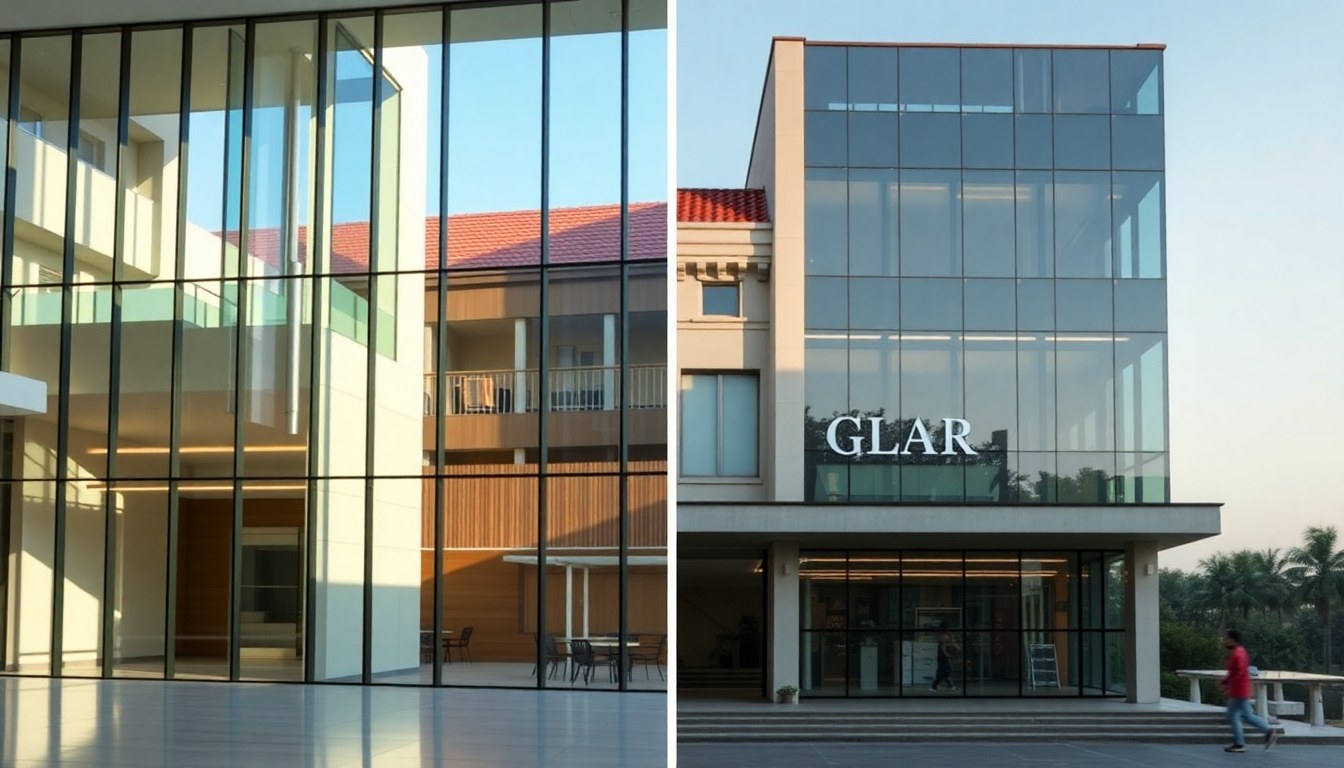
The exterior of a commercial building defines its identity, influences operational costs, and impacts occupant comfort for decades. Glass facades have transformed skylines across Mumbai, Bengaluru, and Gurugram, while traditional exteriors using brick, stone, or concrete continue to serve countless businesses reliably. Understanding the fundamental differences between these approaches—from initial investment to long-term performance—is essential for developers, architects, and business owners planning their next project.
Initial Cost and Installation Investment
Glass curtain wall systems typically require a higher upfront investment compared to traditional exterior finishes. In Indian metro cities, a quality glass facade system costs between ₹2,500 to ₹6,000 per square foot, depending on glass specifications, framing material, and installation complexity. This includes structural glazing, aluminum or steel framing, high-performance glass units, and specialized installation labor.
Traditional exterior systems present more varied pricing. A standard brick veneer with plaster finish costs approximately ₹800 to ₹1,500 per square foot, while premium options like natural stone cladding or architectural concrete panels range from ₹1,800 to ₹4,000 per square foot. These conventional systems generally require less specialized labor and can be constructed by readily available local contractors, reducing installation complexity.
However, the cost equation extends beyond materials and labor. Glass facades often reduce structural load requirements since curtain walls are non-load-bearing and significantly lighter than masonry. This can translate to savings in foundation and structural framework costs, particularly in high-rise construction. Traditional exteriors add substantial weight, requiring more robust structural support that increases overall project costs.
Energy Efficiency and Thermal Performance
Energy performance represents one of the most critical long-term considerations. Modern glass facades equipped with low-emissivity (Low-E) coatings, double or triple glazing, and thermal breaks in framing systems can achieve impressive insulation values. High-performance glazing units reduce heat gain by up to 70% compared to standard glass, significantly lowering air conditioning loads in India's hot climate.
Traditional exterior walls, particularly those with proper insulation, concrete mass, and air gaps, provide excellent thermal performance through different mechanisms. A well-designed traditional wall with 100-150mm insulation achieves thermal resistance through mass and layering. In climates with significant day-night temperature variations, the thermal mass of brick or concrete walls absorbs heat during the day and releases it at night, naturally moderating indoor temperatures.
Climate-Specific Considerations
India's diverse climate zones demand different approaches. In hot-humid regions like Chennai or Kochi, glass facades require exceptional solar control and often incorporate external shading devices, reflective coatings, or fritted glass patterns to manage heat gain. Traditional exteriors in these regions benefit from lighter colors, ventilated cavities, and materials that don't retain excessive heat.
In composite climates like Delhi or Ahmedabad with extreme summers and cold winters, both systems face challenges. Glass facades must balance solar heat gain in winter (desirable) with summer cooling loads (problematic), while traditional walls need adequate insulation to handle both seasonal extremes. The choice often depends on which season presents the greater energy challenge for the specific building use.
Maintenance Requirements and Durability
Glass facades demand consistent, specialized maintenance to preserve their appearance and performance. External glass surfaces require professional cleaning every 3-6 months in urban environments, where pollution and dust accumulation is significant. In cities like Delhi or Mumbai, airborne particulates create visible grime that diminishes aesthetic appeal and can reduce light transmission by 15-20% annually without proper cleaning.
The maintenance obligations include:
- Regular inspection and replacement of weatherproofing seals and gaskets every 8-12 years
- Checking and maintaining drainage systems to prevent water infiltration
- Monitoring structural silicone joints for degradation in systems using structural glazing
- Replacing damaged glass panels, which requires specialized equipment and expertise
- Cleaning and maintaining aluminum or steel framing to prevent corrosion
Traditional exteriors generally require less frequent maintenance but face their own challenges. Painted surfaces need repainting every 5-8 years, brick pointing may require attention after 15-20 years, and stone cladding needs periodic cleaning and sealing. However, these maintenance tasks typically don't require the specialized access equipment and technical expertise that glass facade maintenance demands. A cracked brick or damaged stone panel can usually be repaired by general contractors, while glass panel replacement requires curtain wall specialists.
Aesthetic Flexibility and Design Impact
Glass facades deliver unmatched transparency, creating visual connections between interior spaces and the surrounding environment. This transparency enhances natural daylight penetration, reducing artificial lighting needs and creating more pleasant work environments. The sleek, modern aesthetic of glass buildings signals innovation and contemporary business practices, making them particularly attractive for technology companies, corporate headquarters, and premium commercial developments.
Design flexibility with glass includes options for various tints, fritting patterns, printed graphics, and even integrated photovoltaic cells. Architects can create dynamic facades with varying transparency levels, incorporate company branding directly into the building skin, or design responsive systems with operable panels for natural ventilation.
Traditional exteriors offer different aesthetic advantages. They provide texture, depth, and material variety that many find more contextually appropriate, especially in historic districts or areas with established architectural character. Brick, stone, and concrete allow for rich color palettes, varied patterns, and three-dimensional facade articulation that glass cannot easily replicate. For buildings where permanence, solidity, and cultural continuity matter, traditional materials often communicate these values more effectively.
Structural and Construction Considerations
Glass curtain wall installation requires precise engineering and specialized contractors. The system must accommodate building movement, thermal expansion, and wind loads while maintaining weathertight integrity. Installation typically happens after the primary structure is complete, with panels installed from inside the building or via external scaffolding or suspended platforms. This process demands careful coordination, quality control, and weather-dependent scheduling.
Traditional exterior construction integrates more directly with structural work and can proceed simultaneously with other building activities. Masons, plasterers, and cladding installers are widely available across India, reducing dependency on specialized contractors. However, traditional systems require more time for completion, as brick laying, plastering, and finishing are inherently slower than curtain wall panel installation.
Renovation and Adaptability
Glass facade systems offer advantages when buildings require future modifications. Non-load-bearing curtain walls can be removed, reconfigured, or replaced without affecting structural integrity. This flexibility supports adaptive reuse and modernization projects. Traditional load-bearing or integrated exterior walls present more challenges for modification, though they also offer greater permanence and resistance to damage.
Environmental Impact and Sustainability
The sustainability equation involves embodied energy, operational energy, and end-of-life considerations. Glass and aluminum production is energy-intensive, giving glass facades higher embodied carbon than many traditional materials. However, superior thermal performance can offset this through reduced operational energy over the building's lifetime, particularly in well-designed systems with high-performance glazing.
Traditional materials vary significantly in environmental impact. Locally sourced brick or stone reduces transportation emissions and supports regional economies. Concrete has high embodied carbon, though innovations like supplementary cementitious materials are reducing this impact. The longevity of traditional materials—often exceeding 50-75 years with minimal intervention—contributes positively to sustainability by avoiding replacement cycles.
Recyclability also differs. Aluminum framing and glass are both highly recyclable, with aluminum retaining value in secondary markets. Brick and concrete can be crushed for aggregate but have limited reuse potential in their original form. Stone cladding can sometimes be salvaged and reused, particularly premium materials.
Frequently Asked Questions
Which is more cost-effective over 25 years: glass facade or traditional exterior?
The long-term cost-effectiveness depends on building use, climate, and energy costs. Glass facades have higher initial costs but can deliver energy savings of 20-40% in well-designed systems, potentially offsetting the premium over 15-20 years. However, glass requires more expensive maintenance, including specialized cleaning and seal replacement. Traditional exteriors cost less initially and have lower maintenance expenses, but may incur higher energy costs without proper insulation. In most Indian commercial applications, total cost of ownership becomes comparable after 20-25 years, with specific outcomes depending on design quality and operational practices.
Can glass facades withstand Indian monsoons and extreme weather?
Yes, properly engineered glass curtain wall systems are designed to withstand heavy rainfall, high winds, and temperature extremes common in Indian climates. The key is quality installation with appropriate weatherproofing, drainage systems, and structural calculations for local wind loads. Systems must comply with relevant Indian Standards for wind resistance and water penetration. However, poor installation or substandard materials can lead to leakage problems, making contractor selection and quality control critical. Traditional exteriors also perform well in monsoons when properly constructed with adequate waterproofing and drainage provisions.
Do glass facades always increase cooling costs in hot climates?
Not necessarily. While basic glass facades do increase cooling loads substantially, modern high-performance systems with Low-E coatings, reflective films, or ceramic fritting can reject 60-75% of solar heat while maintaining transparency. Combined with external shading devices, proper orientation, and efficient HVAC systems, glass buildings can achieve energy performance comparable to traditional exteriors. The key is investing in appropriate glass specifications rather than using standard clear glass, which indeed creates excessive heat gain in Indian conditions.
Which option is better for earthquake-prone areas?
Glass curtain wall systems generally perform well in seismic zones because they're designed as flexible, non-structural elements that can accommodate building movement without failure. The panels are attached to the structural frame with connections that allow differential movement during earthquakes. Traditional exterior walls, particularly unreinforced masonry, can be vulnerable to seismic forces unless properly designed with reinforcement and structural integration. In high-seismic zones like parts of Himachal Pradesh, Uttarakhand, or Gujarat, both systems require careful engineering, but glass facades offer inherent advantages through their flexibility and lighter weight.
How does each option affect indoor air quality and occupant comfort?
Glass facades maximize natural daylight, which positively impacts occupant wellbeing, productivity, and circadian rhythms. However, excessive glazing without proper solar control can create glare, uncomfortable temperature gradients, and overheating near windows. Traditional exteriors with smaller, well-placed windows provide better glare control and more uniform interior temperatures but reduce daylight availability. For optimal occupant comfort, glass facades require careful attention to shading, glazing specifications, and HVAC design, while traditional exteriors benefit from strategic window placement and daylighting design. Both can achieve excellent indoor environmental quality when properly designed.
Choosing between glass facades and traditional exteriors requires careful evaluation of your project's specific needs, budget, and long-term goals. Whether you're planning a new commercial development or renovating an existing property, connecting with experienced glass and facade specialists is essential. Explore the comprehensive directory at glassy.in to find qualified curtain wall contractors, glass suppliers, and facade consultants across India who can help bring your vision to life with the right exterior solution.