
Glass Facades
Glass Curtain Walls in Monsoon Climates: Sealant Technology & Water Management
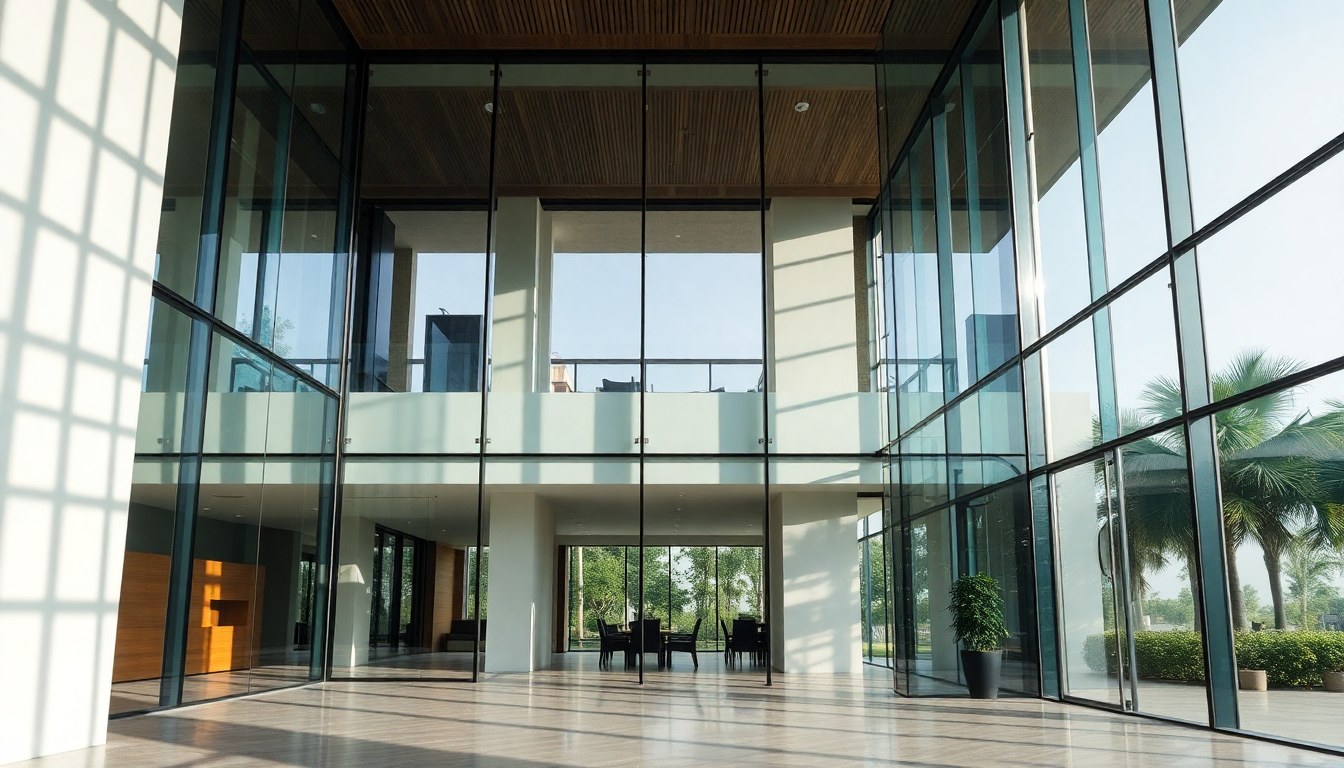
India's monsoon season brings intense rainfall, high humidity, and wind-driven water that test the integrity of glass curtain wall systems. Without proper sealant selection and water management design, even premium façades fail—leading to water ingress, structural damage, and costly repairs. This guide explores advanced sealant technologies, intelligent drainage strategies, and maintenance protocols that keep curtain walls watertight in Chennai, Kochi, Bangalore, and across monsoon-prone regions.
Understanding Monsoon Challenges for Glass Curtain Walls
Monsoon climates present unique stressors that standard curtain wall systems weren't designed to handle. Wind-driven rain, barometric pressure changes, thermal cycling, and prolonged moisture exposure accelerate sealant degradation and create pathways for water penetration. In cities like Chennai and Kochi, where annual rainfall exceeds 1,400 mm and wind speeds can reach 100+ km/h during peak monsoon, the consequences of poor water management are severe.
Water ingress into curtain wall cavities leads to aluminum corrosion, insulation damage, interior mold growth, and structural weakening. The cost of remediation—often requiring partial or complete façade removal—far exceeds the investment in robust sealant selection and drainage design upfront. Understanding these climate-specific challenges is the first step toward building resilient, long-lasting glass façades.
Silicone vs. Polyurethane Sealants: Performance in Monsoon Conditions
Silicone Sealants: Flexibility and Weather Resistance
Silicone sealants are the industry standard for exterior glass and metal joints in monsoon climates. They offer superior UV resistance, maintain flexibility across wide temperature ranges (−40°C to +120°C), and resist moisture penetration for 20+ years with proper application. In India's humid, tropical environment, silicone's inherent hydrophobic properties prevent water absorption and algae growth—critical advantages over organic competitors.
Structural silicones (Grade A) used in curtain wall glazing joints provide elastic movement of ±25% without tearing, accommodating thermal expansion, wind sway, and building settlement. Premium silicone formulations from brands like Dow Corning, Sika, and Tremco offer enhanced adhesion to aluminum, glass, and anodized finishes common in Indian construction. Expect to pay ₹500–₹1,200 per liter for high-performance structural silicone, with labor costs adding ₹80–₹150 per running meter for proper application.
Polyurethane Sealants: Adhesion and Durability
Polyurethane (PU) sealants excel where maximum adhesion and tear resistance are needed—particularly in expansion joints, metal-to-glass interfaces, and areas subject to high movement. They cure through moisture absorption, forming cross-linked polymers that resist fuel, oils, and chemical exposure better than silicone. However, polyurethane's moisture-dependent curing makes application challenging during monsoon season or high-humidity conditions.
In monsoon climates, one-component polyurethane sealants require careful timing and humidity control during application. Two-component systems (requiring on-site mixing) offer faster, more predictable cure regardless of ambient moisture, but demand skilled labor and strict pot-life management. Polyurethane typically lasts 15–20 years in tropical conditions, with costs ranging from ₹400–₹1,000 per liter, plus ₹100–₹180 per running meter for installation.
Hybrid Sealants: A Middle Ground
Hybrid polyurethane-silicone sealants combine benefits of both technologies: silicone's weather resistance and flexibility with polyurethane's adhesion and tear strength. These premium products perform exceptionally well in monsoon environments, offering 25+ year durability and ±25% movement capability. Cost is higher (₹800–₹1,500 per liter), but the extended service life and reduced maintenance justify the investment for high-rise buildings in Chennai, Kochi, and Bangalore.
Drainage System Design for Water Management
Open Drainage Cavities and Weep Holes
The most effective water management strategy is to accept that some moisture will penetrate the outer seal and design systems to drain it away before it reaches interior spaces. Modern curtain walls incorporate open drainage cavities—typically 25–50 mm wide—that allow wind-driven rain to flow downward and exit through weep holes positioned every 300–600 mm along the façade.
Weep holes must be sized and positioned correctly to function during monsoon conditions. Holes that are too small (under 6 mm diameter) clog with dust, algae, and debris; holes that are too large (over 12 mm) allow insect entry and compromise thermal performance. Best practice specifies 8–10 mm diameter weep holes with slight downward slope, positioned at the base of each floor's curtain wall section. In India's dusty urban environment, incorporating removable weep hole covers for maintenance is essential.
Sill Pan and Flashing Details
Horizontal sill pans at window and curtain wall bases are critical water management components. These should slope outward at 3–5° to direct water away from the building, with a 50 mm minimum lip to prevent wind-driven rain from splashing back onto the façade. Sill pans must be sealed to the structural frame with high-quality sealant (silicone or hybrid) and drain to the exterior, never to the interior.
Flashing at curtain wall-to-spandrel transitions, roof penetrations, and balcony interfaces requires careful detailing. All horizontal surfaces must slope outward; all vertical transitions must incorporate drip edges to break water adhesion. In monsoon regions, specifying stainless steel or anodized aluminum flashing (rather than galvanized steel) prevents corrosion and extends service life to 30+ years.
Pressure Equalization Chambers
Pressure equalization (PE) chambers—sealed air spaces between outer and inner sealant lines—are highly effective for monsoon climates. When wind-driven rain hits the façade, pressure builds against the outer seal. PE chambers equalize this pressure, reducing the pressure differential that forces water inward. This design principle, developed in Canada and refined for tropical climates, can reduce water ingress by up to 90% compared to conventional single-seal systems.
PE chambers require careful design: the outer seal must be sacrificial (allowing controlled water penetration), while the inner seal remains protected. Drainage holes sized at 4–6 mm connect the PE chamber to the outside, allowing pressure equalization while preventing bulk water entry. This design adds cost (₹200–₹400 per square meter) but dramatically improves performance in high-wind, high-rainfall environments like coastal Tamil Nadu and Kerala.
Installation Best Practices for Monsoon Regions
Sealant application quality directly determines water-tightness, yet monsoon conditions make proper installation challenging. Temperature, humidity, and rainfall must be within specified ranges—typically 10–35°C and 40–85% relative humidity—yet monsoon months often exceed these limits. Scheduling curtain wall installation during dry seasons (October–May in most of India) is essential; if monsoon-season work is unavoidable, temporary weather protection (tarps, scaffolding covers) is mandatory.
Surface preparation is non-negotiable: all aluminum, glass, and metal surfaces must be cleaned with isopropyl alcohol or specialized cleaners to remove dust, oil, and oxidation. Inadequate cleaning is the leading cause of sealant failure in Indian projects. Primer application (for polyurethane and some silicones) improves adhesion, especially on anodized aluminum common in curtain walls. Backer rod installation—closed-cell foam inserted into joints before sealant—prevents three-sided adhesion and allows proper sealant curing.
Skilled labor is critical. Sealant application requires consistent bead width (typically 10–12 mm), proper tooling (concave profile, not convex), and adequate cure time before exposure to moisture. Rushing installation or using untrained workers often results in voids, thin sections, and poor adhesion that fail within 2–3 years. Specify experienced contractors with monsoon-climate credentials and require third-party inspection of sealant joints before façade handover.
Preventive Maintenance and Long-Term Performance
Annual Monsoon-Season Inspections
Establish a preventive maintenance program that includes detailed inspections before, during, and after monsoon season. Look for sealant cracking, peeling, or separation from substrates; water staining on interior surfaces; algae or mold growth on the façade; and debris accumulation in drainage paths. Document findings with photographs and GPS coordinates for systematic tracking.
Weep holes and drainage cavities should be cleared of debris annually, using compressed air or soft brushes—never high-pressure jets that can damage sealants. Inspect sill pans and flashing for rust, corrosion, or separation. Check interior surfaces for moisture, condensation, or mold, which indicate sealant failure or drainage blockage requiring urgent attention.
Sealant Reapplication and Lifecycle Planning
Even premium sealants degrade over time. Silicone typically remains serviceable for 20–25 years in monsoon climates; polyurethane for 15–20 years. Plan for full sealant replacement at these intervals, not spot repairs. Attempting to patch failed sealants is false economy—water finds new pathways around repairs, and mixed old/new sealant materials often fail at interfaces.
Budget ₹1,500–₹3,000 per square meter for complete sealant replacement, including labor, surface prep, and materials. For a typical 10-story office building with 5,000 m² of curtain wall, expect ₹75–₹150 lakhs for full resealing. Spreading this cost over 20-year lifecycles (₹3.75–₹7.5 lakhs annually) makes preventive maintenance financially sustainable and avoids emergency repairs costing 3–5x more.
Documentation and Warranty Management
Maintain detailed records of all sealant applications, including product batches, application dates, environmental conditions, and inspection findings. This documentation supports warranty claims and helps identify systemic issues. Reputable sealant manufacturers (Dow Corning, Sika, Tremco, Pidilite) offer 10–15 year warranties when products are applied by certified contractors and maintained per specifications.
Establish a digital asset management system tracking curtain wall sections, sealant types, last resealing date, and maintenance history. This enables predictive maintenance scheduling and ensures no section is overlooked. In monsoon regions, treating curtain wall maintenance as a critical building system—like HVAC or electrical—rather than a cosmetic afterthought, prevents costly failures.
Regional Considerations: Chennai, Kochi, and Coastal India
Coastal cities face compounded challenges: salt spray corrosion, higher wind speeds, and extended monsoon periods. In Chennai and Kochi, where annual rainfall reaches 1,400–1,800 mm and salt spray penetrates 500+ meters inland, specify stainless steel fasteners, anodized aluminum frames, and premium silicone or hybrid sealants. Aluminum frames should be clear-anodized (not dyed), which provides superior corrosion resistance in salt environments.
Inland monsoon regions like Bangalore and Hyderabad experience intense rainfall but lower salt exposure. Standard silicone sealants with good UV resistance perform adequately, reducing costs compared to coastal specifications. However, barometric pressure swings during monsoon fronts create rapid weather changes that stress sealants; pressure equalization chambers remain highly recommended even inland.
Consult local building codes and climate data for your specific region. The Indian Standards Institution (ISI) publishes rainfall, wind speed, and humidity norms by city; use these to specify appropriate sealant grades, drainage capacity, and maintenance intervals. Engaging structural engineers and façade specialists familiar with local monsoon patterns ensures designs are optimized for your climate zone.
Frequently Asked Questions
How often should sealants in monsoon-exposed curtain walls be replaced?
Premium silicone sealants typically last 20–25 years in monsoon climates; polyurethane lasts 15–20 years. Rather than waiting for failure, plan sealant replacement at these intervals as preventive maintenance. Annual inspections during monsoon season help identify degradation early, allowing planned replacement before water ingress occurs. Spot repairs between full replacements extend service life but should not be relied upon as a long-term strategy.
What is the difference between pressure equalization and traditional single-seal curtain walls?
Traditional single-seal systems rely entirely on one sealant line to prevent water entry. Pressure equalization (PE) systems use two sealant lines with a chamber between them; the outer seal may allow controlled water penetration, but the PE chamber equalizes pressure, preventing water from reaching the inner seal. PE systems reduce water ingress by up to 90% in high-wind, high-rainfall conditions, making them ideal for monsoon climates. The tradeoff is higher initial cost (₹200–₹400/m²) but dramatically improved durability.
Can polyurethane sealants be applied during monsoon season?
Single-component polyurethane sealants cure via moisture absorption, making application during high-humidity monsoon months unpredictable—they may cure too slowly or unevenly. Two-component polyurethane systems (mixed on-site) cure regardless of humidity and are safer for monsoon-season work, but require skilled labor and strict pot-life management. Best practice is to schedule all sealant work during dry seasons (October–May in most of India). If monsoon-season work is unavoidable, use silicone or hybrid sealants, which are less moisture-dependent, or two-component polyurethane with temporary weather protection.
What causes weep holes to fail, and how can I prevent blockage?
Weep holes clog with dust, algae, insect debris, and paint overspray when maintenance is neglected. Holes that are too small (under 6 mm) are especially prone to blockage. Prevention requires annual cleaning with compressed air or soft brushes before monsoon season, removal of any exterior paint that may seal holes, and specification of removable weep hole covers (installed when the building is unoccupied) to prevent debris accumulation. In dusty urban environments, consider slightly larger holes (10–12 mm) with fine mesh screens that allow drainage while blocking insects.
How much does a complete sealant replacement cost for a typical office building?
A 10-story office building with approximately 5,000 m² of curtain wall typically costs ₹75–₹150 lakhs for complete sealant replacement, including materials (₹500–₹1,200/liter), labor (₹80–₹180 per running meter), and surface preparation. Costs vary by sealant type (silicone vs. polyurethane vs. hybrid), local labor rates, and building complexity. Spread over a 20-year lifecycle, this equates to ₹3.75–₹7.5 lakhs annually—a reasonable preventive maintenance budget that avoids emergency repairs costing 3–5x more.
Conclusion and Next Steps
Glass curtain walls in monsoon climates demand more than aesthetic appeal—they require engineered water management systems, premium sealant materials, and disciplined maintenance. By combining advanced silicone or hybrid sealants, intelligent drainage design with pressure equalization, and preventive maintenance protocols, building owners can ensure 25+ year service life even in India's most challenging climates.
If you're designing or maintaining a curtain wall system in Chennai, Kochi, Bangalore, or any monsoon-prone region, connect with specialized glass and façade contractors through the glassy.in directory. Our platform lists vetted suppliers of premium sealants, drainage components, and installation services across India. Find the right partner to protect your investment and ensure your building's façade performs flawlessly through every monsoon season.