
Glass Facades
Shopfront Glass Display: Tempered vs Laminated for High-Traffic Retail
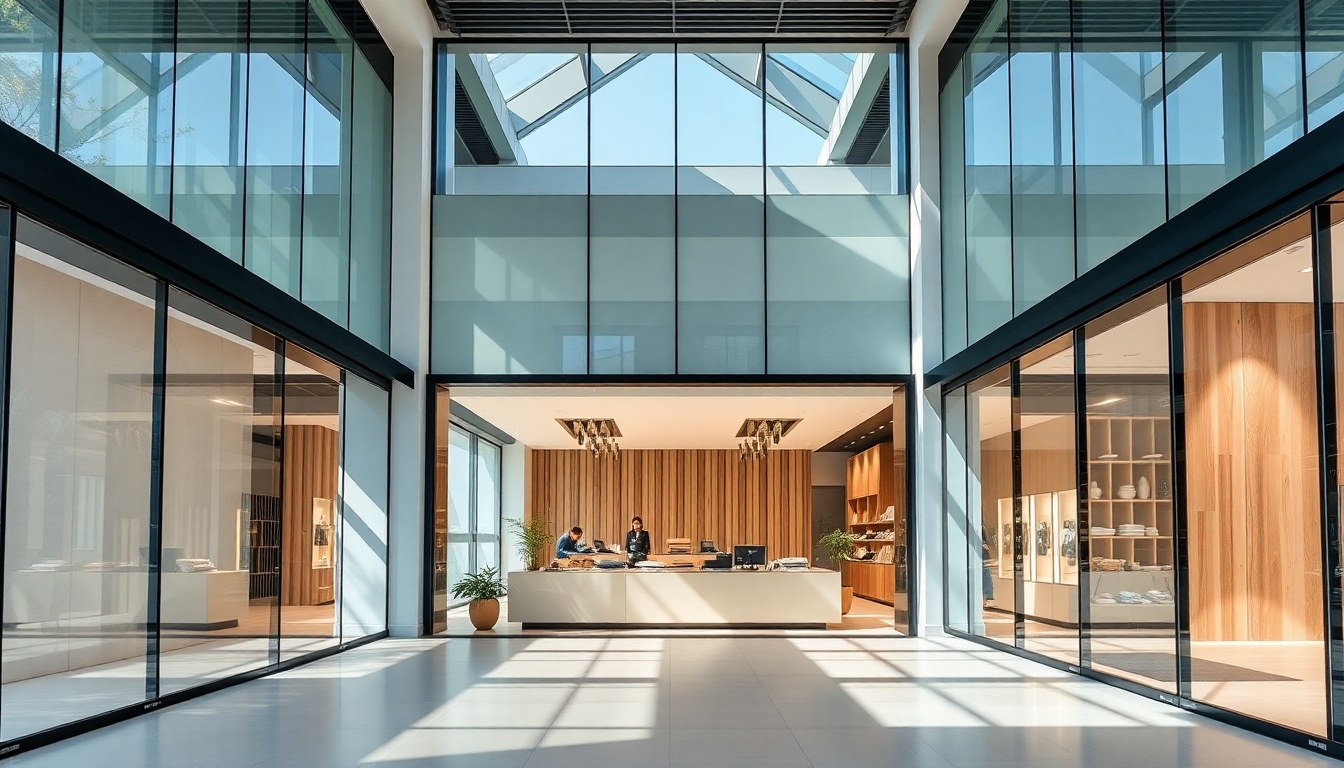
Your shopfront glass is the first impression customers get—and in high-traffic retail environments, it faces constant stress from footfall, weather, and accidental impacts. Choosing between tempered and laminated glass isn't just about aesthetics; it's a critical decision that affects safety, durability, maintenance costs, and long-term business performance. This guide breaks down both options so you can make an informed choice for your retail space.
Understanding Tempered Glass for Retail Storefronts
Tempered glass is regular glass heated to around 700°C and then rapidly cooled, creating internal stress that makes it significantly stronger than annealed glass. When tempered glass breaks, it shatters into small, relatively harmless granules rather than sharp shards—a major safety advantage in busy retail environments where customers and staff move constantly.
For shopfront displays, tempered glass offers excellent clarity and light transmission, making your products shine without optical distortion. It's also more resistant to thermal stress, meaning it handles temperature fluctuations better—crucial in India's varied climate zones, from coastal humidity to desert heat. However, tempered glass cannot be cut, drilled, or reshaped after tempering, so all modifications must happen before the tempering process.
Advantages of Tempered Glass
- Safety: Breaks into small, blunt pieces rather than dangerous shards
- Strength: 4–5 times stronger than annealed glass of the same thickness
- Thermal resistance: Handles rapid temperature changes without cracking
- Clarity: Excellent light transmission for product visibility
- Cost-effective: Generally less expensive than laminated alternatives
Limitations of Tempered Glass
- Cannot be cut or modified after tempering
- More susceptible to scratching and wear over time
- Spontaneous breakage possible (though rare) due to internal stress
- Offers no security benefit—breaks easily under deliberate impact
Understanding Laminated Glass for Retail Storefronts
Laminated glass consists of two or more glass panes bonded together with a polyvinyl butyral (PVB) interlayer. When laminated glass breaks, the interlayer holds the fragments together, preventing them from scattering and maintaining structural integrity. This makes it the preferred choice for security-conscious retailers and high-risk locations.
The interlayer also blocks up to 99% of UV rays, protecting merchandise from fading—a critical advantage for clothing stores, jewelry displays, and art galleries. Laminated glass is heavier and more complex to install than tempered glass, and it typically costs 30–50% more. However, for retailers dealing with valuable inventory or located in areas with higher crime rates, the investment often pays dividends in reduced breakage claims and merchandise protection.
Advantages of Laminated Glass
- Security: Holds together when broken, resisting forced entry
- UV protection: Blocks 99% of UV rays, preventing merchandise fading
- Noise reduction: The interlayer dampens external noise
- Customization: Can be cut and shaped after lamination
- Impact resistance: Stays in frame even under significant impact
Limitations of Laminated Glass
- Higher initial cost (30–50% more than tempered)
- Heavier, requiring stronger framing and installation expertise
- Slight haze or color cast from the interlayer (though modern versions minimize this)
- Longer lead times for custom orders
- Requires specialized maintenance to preserve the interlayer
Impact Resistance and Safety: Which Wins?
Both glasses excel at impact resistance, but in different ways. Tempered glass handles accidental impacts from shopping carts, dropped items, or minor collisions by absorbing energy and shattering safely. Laminated glass resists the same impacts but maintains its structural integrity, staying in the frame even when cracked or shattered. This distinction matters significantly in retail environments.
For high-footfall areas with children, elderly customers, or crowded conditions, tempered glass's safety profile (small, blunt fragments) is ideal. For jewelry stores, electronics retailers, or locations in high-crime neighborhoods, laminated glass's security advantage is worth the premium. Many retailers in India's major metros—Delhi, Mumbai, Bangalore—opt for laminated glass on ground-floor storefronts and tempered glass on upper floors or secondary displays.
According to Indian building codes (IS 2553:2012 for safety glass), both tempered and laminated glass meet safety standards for glazing in buildings. However, your choice depends on your specific risk profile and local regulations.
UV Protection and Merchandise Preservation
Retail storefronts face constant UV exposure, especially in sunny Indian cities. Unprotected merchandise fades quickly—a particular concern for fashion retailers, bookstores, and galleries. Laminated glass blocks up to 99% of UV rays, while tempered glass offers no UV protection unless coated with a separate UV-blocking film.
If you're displaying high-value or light-sensitive items, laminated glass is the better choice. However, UV-protective coatings can be applied to tempered glass at a fraction of the laminated glass cost, making it a viable compromise for budget-conscious retailers. These coatings typically last 5–10 years before requiring reapplication.
In tropical regions like Kerala or Goa, where UV intensity is particularly high, laminated glass becomes increasingly cost-effective because it eliminates the need for periodic coating reapplication and reduces merchandise loss from fading.
Maintenance and Long-Term Durability
Tempered glass requires standard glass maintenance: regular cleaning with mild soap and water, occasional polishing to remove fingerprints, and inspection for scratches. Over time, tempered glass may develop fine scratches that accumulate and dull its appearance—a cosmetic issue that doesn't affect function but can impact your storefront's visual appeal.
Laminated glass requires more careful maintenance. The interlayer can trap dust or moisture if not sealed properly, and aggressive cleaning can damage the PVB layer. Use soft, lint-free cloths and avoid abrasive cleaners. The interlayer itself degrades slowly over 20–30 years, especially in high-UV environments, but this is rarely a concern for typical retail applications.
For long-term durability in India's climate, both materials perform well when installed by professionals. Consider working with experienced installers like Ideal Decor Payyanur or Kiran Extrusions Pvt. Ltd. who understand regional climate challenges and can ensure proper sealing and maintenance protocols.
Cost Comparison and ROI
Tempered glass typically costs ₹1,500–₹3,500 per square meter, depending on thickness and quality. Laminated glass costs ₹3,500–₹7,000+ per square meter for similar specifications. For a standard 10 sq. meter shopfront, you're looking at ₹15,000–₹35,000 for tempered versus ₹35,000–₹70,000+ for laminated.
However, ROI depends on your retail category and location. Jewelry stores, electronics shops, and high-value merchandise retailers often recover the laminated glass premium through reduced theft, lower insurance premiums, and preserved inventory value. Fast-moving consumer goods (FMCG) retailers, book stores, and casual apparel shops often find tempered glass sufficient, especially when combined with UV coatings and good insurance coverage.
Factor in installation costs (₹500–₹1,500 per sq. meter for either type), replacement costs if breakage occurs (tempered glass replacement is faster and cheaper), and ongoing maintenance. Over a 10-year lifespan, the total cost of ownership often narrows between the two options when all factors are considered.
Making Your Choice: A Decision Framework
Choose tempered glass if you operate a casual retail space, FMCG store, bookshop, or apparel boutique in a low-crime area. It's ideal for storefronts with moderate footfall, where safety and clarity matter more than security. Combine it with UV-protective film if you display light-sensitive items.
Choose laminated glass if you sell high-value items (jewelry, electronics, luxury goods), operate in a high-crime location, or want maximum UV protection for premium merchandise. It's the standard choice for ground-floor storefronts in major metropolitan areas and for retailers who prioritize insurance and security compliance.
Consider a hybrid approach: laminated glass for your primary display window and tempered glass for secondary or internal displays. This balances security, cost, and functionality. Architectural professionals like Green Archspace Architectural Studio or Saj Designs and Construction can help you design a shopfront that combines both materials strategically.
Frequently Asked Questions
Can tempered glass be repaired if it cracks?
No. Tempered glass cannot be repaired—once it cracks, the entire pane must be replaced because the internal stress is compromised. This is one reason why replacement costs can add up over time in high-traffic retail environments prone to accidental impacts.
Does laminated glass provide complete security against break-ins?
Laminated glass significantly delays forced entry and prevents easy smash-and-grab theft, but it is not completely burglarproof. Determined thieves with tools can eventually break through, but the time and noise required make retail storefronts with laminated glass less attractive targets. Combining laminated glass with security bars, alarms, or CCTV provides comprehensive protection.
How long do UV-protective coatings on tempered glass last?
Quality UV-protective coatings typically last 5–10 years depending on sun exposure, climate, and maintenance. In high-UV regions (coastal areas, deserts), expect the lower end of that range. Reapplication costs ₹300–₹800 per square meter, making it significantly cheaper than replacing with laminated glass if you only need periodic recoating.
Which glass is better for areas with extreme temperature fluctuations?
Tempered glass handles rapid temperature changes better than laminated glass because it's a single, uniform material. The PVB interlayer in laminated glass can expand and contract at different rates than the glass, potentially causing delamination in extreme conditions. In India, tempered glass is generally the safer choice for regions with significant seasonal temperature swings.
Can I retrofit my existing storefront from tempered to laminated glass?
Yes, but it requires complete replacement and re-framing. Laminated glass is heavier and may require stronger frames. Consult with experienced installers to assess your current framing structure. The cost of retrofitting is typically comparable to installing laminated glass in a new storefront, so plan accordingly.
Ready to upgrade or install your shopfront glass display? Explore verified glass suppliers, interior designers, and architects in the glassy.in directory to find trusted professionals in your area. Whether you choose tempered or laminated glass, partnering with experienced installers ensures your retail space is both beautiful and durable.