
Glass Partitions
Frosted Glass vs Fluted Glass for Office Partitions: Design & Light Diffusion
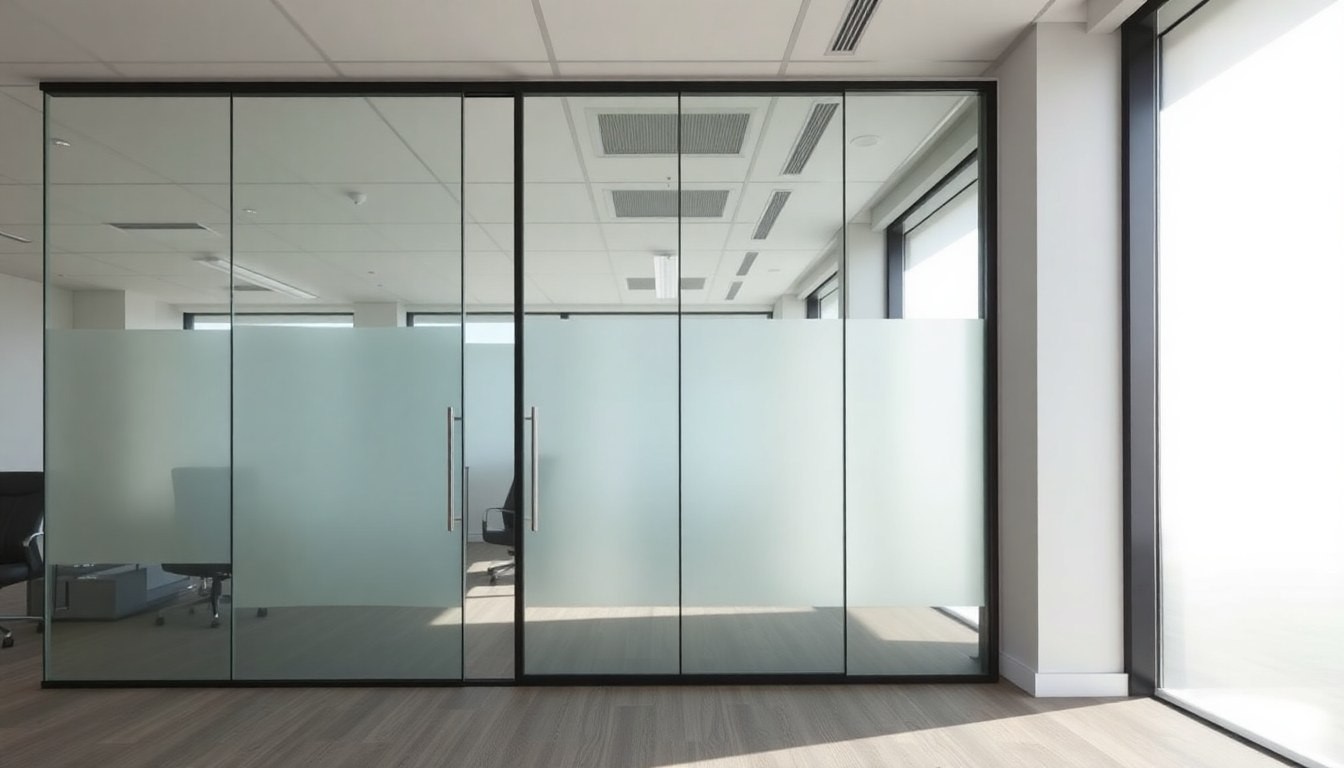
Choosing the right glass finish for office partitions shapes both the look and functionality of your workspace. Frosted and fluted glass are two popular choices that deliver privacy without sacrificing the open, modern feel that contemporary offices demand. Understanding how each performs in terms of light diffusion, aesthetic impact, and maintenance will help you make an informed decision that aligns with your office design and operational needs.
What is Frosted Glass?
Frosted glass is created by sandblasting or acid-etching the surface of clear glass, producing a uniform, milky white appearance. This treatment diffuses light evenly across the surface, creating a soft, diffused glow that reduces glare and harsh shadows. The finish is smooth to the touch, despite its textured appearance.
Frosted glass has become a staple in modern office design because it strikes a balance between privacy and openness. You cannot see through it clearly, yet it allows light to pass through without creating a completely opaque barrier. This quality makes frosted glass ideal for conference rooms, executive offices, and collaborative spaces where you want to maintain visual separation while preserving the sense of connection that open offices aim for.
Aesthetic Characteristics of Frosted Glass
- Clean, minimalist appearance that suits contemporary and Scandinavian design styles
- Uniform finish that creates a cohesive look across multiple partitions
- Works well with both warm and cool colour palettes in office interiors
- Can be combined with clear glass sections for visual interest
- Professional appearance that conveys transparency and openness
What is Fluted Glass?
Fluted glass features parallel vertical or horizontal grooves or ridges running across its surface. These grooves are typically 4–8 mm wide and create a distinctive linear pattern. The glass is cast with these ridges during manufacturing, making them an integral part of the material rather than a surface treatment.
The fluted pattern provides excellent privacy by breaking up the light and obscuring the view through the glass. Unlike frosted glass, which diffuses light uniformly, fluted glass creates a more directional light effect. The grooves bend light rays in different directions, producing subtle shadows and visual depth. This makes fluted glass particularly effective in spaces where you need strong privacy while maintaining some visual lightness.
Aesthetic Characteristics of Fluted Glass
- Distinctive linear pattern that adds visual texture and depth
- Available in various groove widths and directions (vertical, horizontal, or mixed)
- Creates a more dynamic, layered appearance compared to frosted glass
- Works particularly well in industrial and contemporary design schemes
- Adds architectural interest without being overly bold
Light Diffusion and Transmission Comparison
Light transmission differs notably between these two finishes. Frosted glass typically allows 70–80% of light to pass through while diffusing it evenly, creating a soft, shadowless illumination. This makes it ideal for spaces where you want consistent, glare-free lighting throughout the day. Conference rooms and open office areas benefit from this even light distribution because it reduces eye strain and creates a calm working environment.
Fluted glass transmits approximately 60–75% of light, depending on the groove depth and width. The grooves create directional light patterns that cast subtle shadows, adding visual interest to the partition. This characteristic makes fluted glass excellent for spaces where you want both privacy and a sense of visual movement. The shadowing effect can make large office areas feel less monotonous and more architecturally sophisticated.
If your office relies heavily on natural light and you want to maximize illumination, frosted glass is the better choice. However, if you prefer a more textured light environment that adds visual depth and can help define different zones within an open office, fluted glass delivers superior aesthetic impact.
Design Flexibility and Integration
Both finishes integrate seamlessly into modern office design, but they serve different aesthetic purposes. Frosted glass works exceptionally well in minimalist spaces, corporate environments, and offices that emphasise clean lines and simplicity. It pairs beautifully with steel frames, aluminium profiles, and contemporary furniture. Many architects and interior designers prefer frosted glass when they want the partitions to recede visually and allow other design elements—such as artwork, furniture, or colour schemes—to take centre stage.
Fluted glass makes a stronger design statement. Its linear pattern draws the eye and can become a focal point in your office design. It pairs well with industrial elements, warm wood tones, and eclectic furnishings. If you're working with an interior designer like Viswam Interiors, they can help you layer fluted glass partitions with complementary design elements to create a cohesive, intentional aesthetic.
You can also combine both finishes in a single office layout. For instance, use frosted glass in collaborative areas where you want even light distribution and a calm atmosphere, and fluted glass in private offices or meeting rooms where you want stronger privacy and visual interest. This mixed approach allows you to optimise each space for its specific function while maintaining overall design coherence.
Durability and Maintenance Requirements
Frosted glass requires regular cleaning to maintain its appearance. Fingerprints, dust, and smudges show up more readily on frosted surfaces than on clear glass. You'll need to clean it weekly with a soft microfibre cloth and a glass-safe cleaning solution. The sandblasted or acid-etched surface can accumulate grime in its microscopic texture, so gentle, consistent cleaning prevents buildup and keeps the glass looking fresh.
Fluted glass is slightly more forgiving in terms of visible dirt because the grooves and shadows naturally camouflage minor dust and fingerprints. However, the grooves themselves can trap dust and require occasional deeper cleaning. A soft brush or cloth can be used to gently clean along the grooves. Both finishes are equally durable in terms of structural integrity—they resist scratches and damage as well as standard glass, provided they're installed in sturdy frames.
If your office has high foot traffic or is in a dusty environment, fluted glass may require less frequent intensive cleaning. However, if aesthetics are paramount and you want the glass to look pristine at all times, frosted glass is manageable with a regular cleaning schedule. Consider the resources your facilities team can dedicate to maintenance when making your final decision.
Cost Considerations
Frosted glass is generally more affordable than fluted glass because the frosting process (sandblasting or acid-etching) is simpler and faster than manufacturing fluted glass. Standard frosted glass partitions typically cost 15–25% less than comparable fluted glass installations. If budget is a primary concern, frosted glass offers excellent value without compromising on quality or aesthetics.
Fluted glass carries a premium because the grooves are cast into the glass during manufacturing, requiring specialised moulds and production processes. However, the added cost often justifies itself through the superior visual impact and reduced need for intensive cleaning. When sourcing glass for your office, work with established suppliers like Adithya Glass or SABRI Glass House to ensure you're getting competitive pricing and quality materials.
Which Should You Choose for Your Office?
Your choice between frosted and fluted glass depends on your priorities:
- Choose frosted glass if: You prioritise even light distribution, prefer a minimalist aesthetic, have budget constraints, or want a finish that works with any design style.
- Choose fluted glass if: You want strong privacy, desire visual texture and architectural interest, can accommodate a higher budget, or are designing a space with an industrial or contemporary theme.
Consider consulting with an architect or interior designer who specialises in office spaces. Professionals like tada design collective can assess your specific office layout, lighting conditions, and design goals to recommend the best solution. They can also help you integrate either finish with your existing office infrastructure and future expansion plans.
Frequently Asked Questions
Can frosted and fluted glass be combined in the same office?
Yes, absolutely. Many modern offices use both finishes strategically—frosted glass in open collaborative areas for even light and calm aesthetics, and fluted glass in private offices or meeting rooms for stronger privacy and visual interest. This mixed approach allows you to optimise each space for its function while maintaining design coherence.
Which finish provides better privacy?
Fluted glass offers slightly superior privacy because the grooves completely obscure the view through the glass. Frosted glass provides adequate privacy for most office purposes, but someone standing very close to the partition might discern blurred shapes. If privacy is critical, fluted glass is the stronger choice.
How often should frosted and fluted glass partitions be cleaned?
Frosted glass should be cleaned weekly to prevent fingerprints and dust from accumulating in its textured surface. Fluted glass can be cleaned less frequently because the grooves and shadows naturally camouflage minor dirt. Both should receive a thorough cleaning at least once monthly, depending on office traffic and environmental conditions.
Is fluted glass significantly more expensive than frosted glass?
Fluted glass typically costs 15–30% more than frosted glass due to the specialised manufacturing process required to cast the grooves. However, the additional cost often justifies itself through improved aesthetics, privacy, and reduced cleaning frequency. Prices vary based on groove width, glass thickness, and supplier location in India.
Can frosted and fluted glass be used with different frame materials?
Yes, both finishes work with aluminium frames, steel profiles, wooden frames, and glass-to-glass frameless systems. The choice of frame material should complement your overall office design. Consult with your glass supplier or interior designer to ensure the frame system you select properly supports and showcases your chosen glass finish.
Ready to upgrade your office partitions? Explore the glassy.in directory to connect with glass dealers, interior designers, and architects across India who specialise in frosted and fluted glass solutions for modern offices. Find the right partner to bring your office vision to life.