
Glass Partitions
Fluted & Reeded Glass for Interior Partitions: Privacy Without Darkness
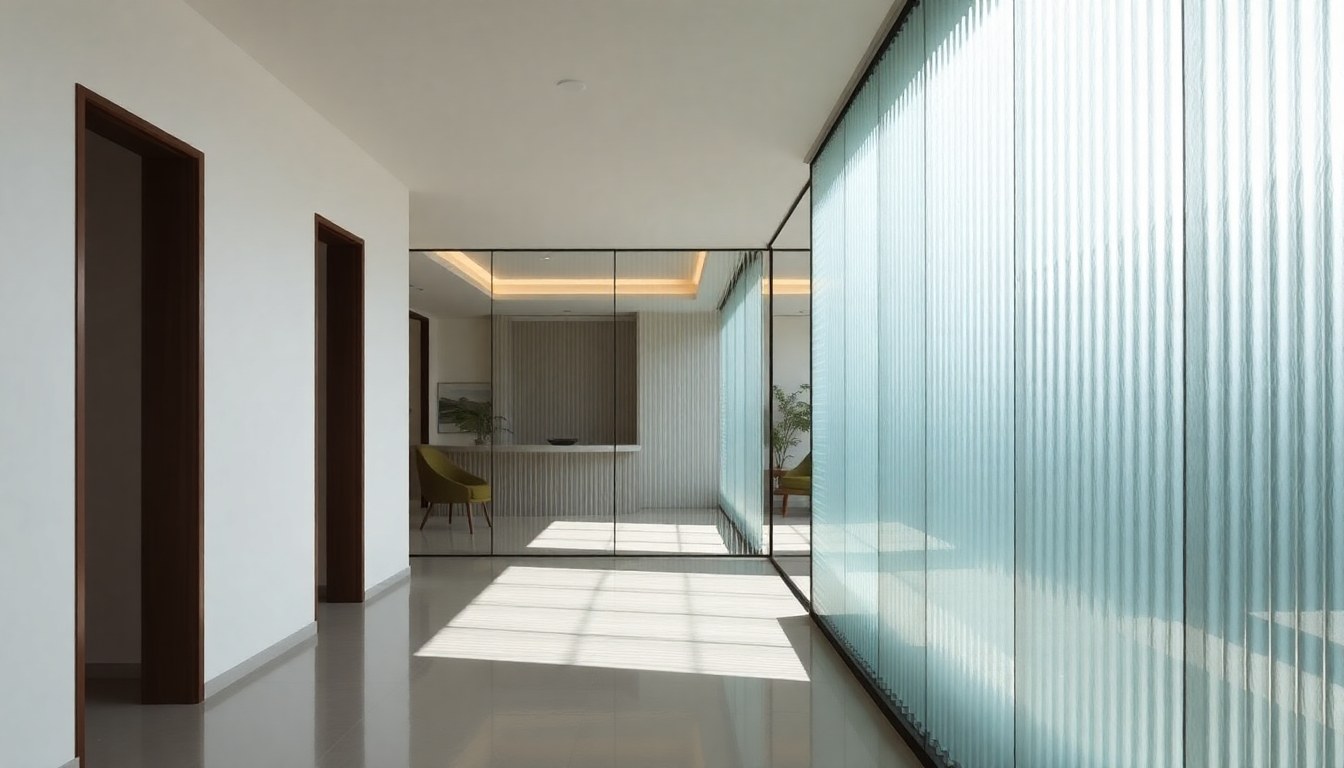
Interior partitions don't have to choose between privacy and natural light—textured glass solutions like fluted and reeded designs deliver both. These elegant alternatives to solid walls and opaque screens are transforming Indian offices, homes, and commercial spaces by diffusing light while maintaining visual separation. Whether you're designing an open-plan office in Bangalore, a modern home in Mumbai, or a retail space in Delhi, fluted and reeded glass offers sophisticated functionality that solid partitions simply cannot match.
What Are Fluted and Reeded Glass Panels?
Fluted and reeded glass are textured glass products featuring parallel grooves or ridges that run vertically or horizontally across the surface. These patterns are either molded into the glass during manufacturing or created through specialized finishing techniques. The grooves diffuse light and soften views without eliminating them entirely, creating a semi-private effect that feels more open than traditional frosted glass.
The terminology differs slightly: fluted glass typically features deeper, more pronounced grooves, while reeded glass has finer, more closely spaced ridges. Both achieve similar privacy effects but offer distinct aesthetic qualities. Fluted glass creates bolder visual patterns and stronger light diffusion, while reeded glass provides a more subtle, refined appearance.
How Light Diffusion Works
The grooved surface scatters light rays as they pass through, reducing glare and creating soft, ambient illumination on the other side. Unlike clear glass, which offers no privacy, or frosted glass, which blocks light significantly, textured glass strikes a balance. The depth and spacing of the grooves determine how much light passes through and how much privacy you achieve—deeper grooves provide more privacy but reduce light transmission slightly.
Privacy Benefits for Modern Indian Interiors
Privacy concerns drive many partition decisions in India's growing urban office culture and compact home environments. Fluted and reeded glass solves this challenge without creating the cave-like darkness that solid walls or heavy curtains impose. Employees in open-plan offices gain visual separation while remaining connected to the broader workspace. Home offices, bedrooms, and bathrooms benefit from privacy without sacrificing the sense of space that glass partitions provide.
- Visual privacy: Obscures detailed views while allowing light and silhouettes to pass through
- Sound diffusion: The textured surface marginally reduces noise transmission compared to smooth glass
- Psychological comfort: Users feel separated without experiencing claustrophobia
- Maintains openness: Preserves the spatial flow and brightness of open-plan designs
In Indian homes where space is at a premium, fluted glass partitions between bedrooms, kitchens, and living areas create distinct zones without the visual heaviness of walls. In corporate offices across metros like Hyderabad and Pune, these partitions define meeting rooms and focus areas while keeping teams visually connected and maintaining collaborative energy.
Design Trends and Aesthetic Appeal
Textured glass has become a hallmark of contemporary Indian interior design. Architects and designers increasingly specify fluted and reeded glass for their ability to add visual interest and texture to minimalist spaces. The grooved patterns create subtle shadow play that changes throughout the day as natural light shifts, adding dynamic visual appeal without ornamentation.
Matching Modern and Traditional Aesthetics
Fluted glass works beautifully in modern minimalist spaces with clean lines and neutral palettes. The texture provides visual richness without clashing with contemporary design principles. Interestingly, reeded glass also complements traditional and transitional interiors when paired with wood frames or brass fixtures, as seen in heritage-conscious homes in Jaipur and Kolkata.
The grooved patterns can be oriented vertically to emphasize height or horizontally to create a more grounded feel. Some manufacturers offer directional options—diagonal fluting, for instance—allowing designers to customize the visual direction and aesthetic impact.
Color and Finish Options
While clear fluted glass remains most popular, Indian suppliers now offer textured glass in tinted options including bronze, gray, and green. These tints add another layer of privacy while maintaining light transmission. Laminated fluted glass options provide safety and sound insulation, making them ideal for high-traffic areas and commercial installations.
Practical Applications in Indian Spaces
Fluted and reeded glass partitions solve specific design challenges across residential, commercial, and hospitality sectors in India.
Office and Commercial Spaces
Open-plan offices in Bangalore tech parks, Mumbai financial districts, and Delhi business centers increasingly use fluted glass to create meeting rooms, focus pods, and executive areas. The partitions maintain the collaborative energy of open layouts while providing the privacy necessary for confidential discussions. Employees appreciate the psychological privacy without the isolation of solid walls.
Residential Applications
Indian homeowners use textured glass partitions to separate bedrooms from living areas, create privacy screens in bathrooms, and define home office spaces. In apartments where wall construction is impractical or restricted by building regulations, glass partitions offer a flexible alternative. The light-diffusing properties ensure that private areas don't become dark or unwelcoming.
Hospitality and Retail
Hotels and restaurants employ fluted glass for elegant room dividers, spa partition screens, and visual separation between dining areas. Retail stores use textured glass to create display windows and fitting room enclosures that balance visibility with customer privacy. The aesthetic sophistication appeals to upscale establishments across major Indian cities.
Technical Specifications and Installation Considerations
Understanding the technical aspects ensures you select the right textured glass for your specific application.
Thickness and Strength
Fluted and reeded glass typically comes in thicknesses ranging from 6mm to 12mm. Thicker glass provides greater structural integrity and better sound insulation. For partition applications, 8mm to 10mm is standard, offering a balance between durability and light transmission. Laminated options (combining two or more glass layers with an interlayer) add safety and acoustic performance.
Light Transmission Rates
Fluted glass typically transmits 80-90% of light, depending on groove depth and spacing. This is significantly higher than frosted glass (which transmits 50-70%) and comparable to lightly tinted clear glass. Reeded glass, with finer grooves, often achieves higher light transmission than deeper fluted patterns.
Installation Requirements
Textured glass partitions require proper framing systems, typically aluminum or steel channels, to support the glass and allow for expansion and contraction. Professional installation is essential to ensure structural integrity, proper sealing, and alignment. Most Indian glass suppliers and installers in metro cities have experience with partition systems and can advise on load requirements, door integration, and compliance with building codes.
Cost Considerations in the Indian Market
Fluted and reeded glass partitions represent a mid-range investment compared to solid walls and premium custom glass solutions. Pricing varies significantly based on glass quality, thickness, tint options, framing materials, and installation complexity.
Basic fluted glass partition systems in Indian metros typically range from ₹800 to ₹1,500 per square foot, including standard aluminum framing and installation. Premium options with lamination, custom finishes, or integrated doors can reach ₹2,000-₹3,000 per square foot. Solid walls, by comparison, cost ₹600-₹1,200 per square foot but offer no light transmission. Clear glass partitions start around ₹700 per square foot but sacrifice privacy.
For a typical 10x8 foot office partition, expect to budget ₹64,000-₹1,20,000 for a complete fluted glass solution with framing and professional installation. Requesting quotes from multiple suppliers across your city ensures competitive pricing and quality options.
Maintenance and Durability
Textured glass partitions require minimal maintenance compared to other partition materials. The grooved surface may collect dust more readily than smooth glass, but regular cleaning with standard glass cleaner and a soft cloth keeps them looking pristine. The grooves don't trap dirt permanently—a gentle brush or microfiber cloth removes surface dust effectively.
Quality fluted and reeded glass is highly durable when properly installed. The glass itself doesn't degrade, and the grooves are permanent features of the material rather than surface treatments that wear away. Framing systems should be checked periodically for proper alignment and seal integrity, but well-installed partitions typically last 20+ years without significant maintenance.
Frequently Asked Questions
Does fluted glass provide complete privacy?
Fluted glass provides visual privacy—you cannot see detailed features or recognize individuals on the other side—but it's not absolute darkness. Light and general silhouettes pass through. If you need complete opacity, frosted glass or solid partitions are better choices. Fluted glass is ideal when you want privacy with light, not total concealment.
Can fluted glass be used in bathrooms and wet areas?
Yes, fluted glass works well in bathrooms when properly sealed and installed. Laminated fluted glass is recommended for safety in wet environments. Ensure the framing system includes proper drainage and that all seals are waterproof. Tempered fluted glass is also available, offering additional safety for high-moisture areas.
How does fluted glass compare to frosted glass for privacy?
Both provide privacy but differently. Frosted glass blocks more light (50-70% transmission vs. 80-90% for fluted glass) and creates a more opaque appearance. Fluted glass maintains better light flow while still obscuring details. Frosted glass looks more uniform, while fluted glass has visible texture and pattern. Your choice depends on whether light transmission or complete opacity is more important.
Is fluted glass soundproof?
Fluted glass alone provides minimal sound insulation—similar to clear glass. However, laminated fluted glass with acoustic interlayers can significantly reduce noise transmission. For serious sound control, double-glazed systems or thicker laminated options are more effective. Standard fluted glass is better for visual privacy than acoustic privacy.
What's the difference between fluted and reeded glass?
Fluted glass has deeper, more pronounced grooves creating bolder visual patterns and stronger light diffusion. Reeded glass features finer, more closely spaced ridges with a more subtle appearance. Both achieve privacy and light diffusion but offer different aesthetic effects. Fluted glass is more dramatic; reeded glass is more refined and understated.
Transform Your Space with Textured Glass Partitions
Fluted and reeded glass partitions represent an intelligent choice for Indian homes and businesses seeking privacy without sacrificing light, space, and contemporary aesthetics. Whether you're designing an open-plan office, creating privacy in a compact apartment, or adding sophistication to a commercial space, textured glass offers practical benefits and visual appeal that solid walls cannot match.
Ready to explore fluted and reeded glass options for your next project? Browse certified glass suppliers, manufacturers, and installation specialists across India on glassy.in, India's largest glass-business directory. Connect with experts in your city who can advise on specifications, provide samples, and deliver professional installation for your interior partition needs.