
Shower Enclosures
Curved Glass Shower Enclosures: Custom Fabrication & Installation Challenges
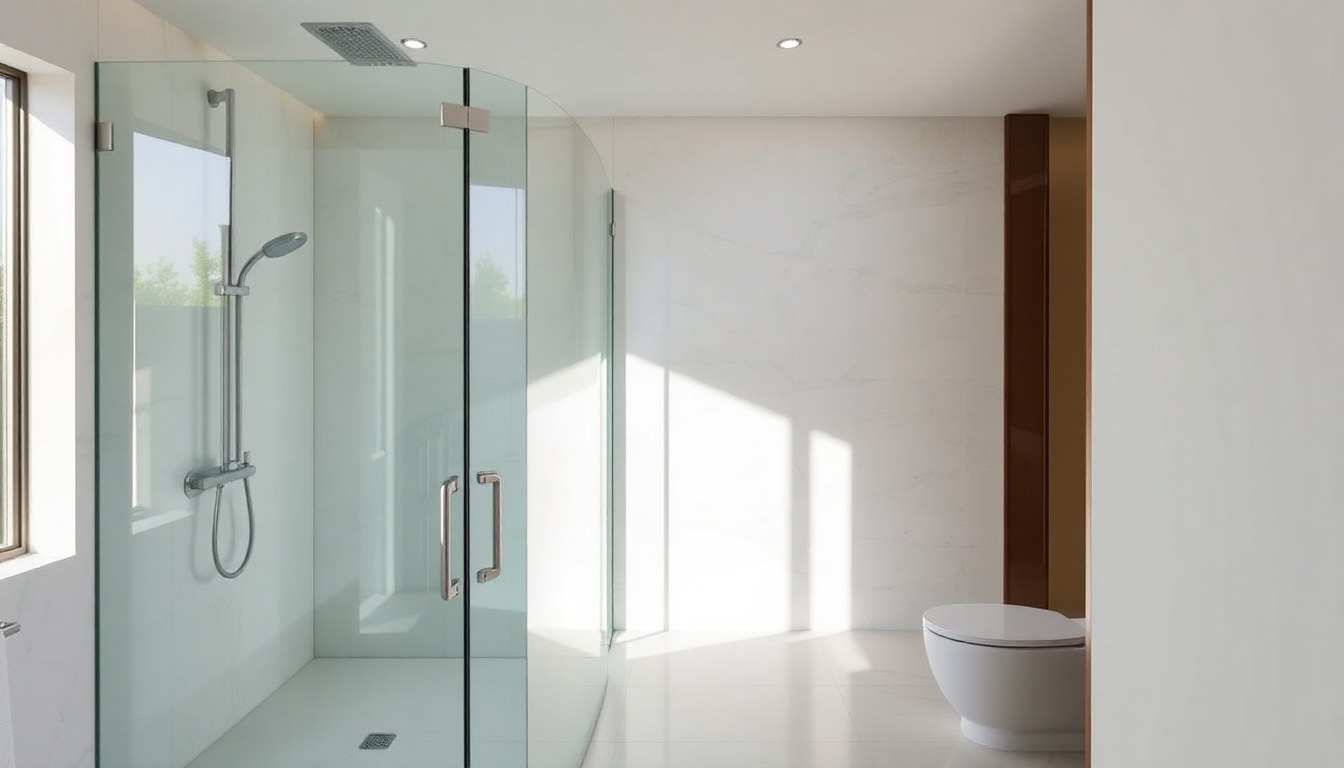
Curved glass shower enclosures represent the pinnacle of luxury bathroom design, transforming functional spaces into architectural statements. However, behind their elegant appearance lies a complex web of engineering challenges—from tempering curved glass panels to managing structural loads and ensuring watertight seals. This guide explores the technical realities of custom curved glass fabrication and installation, helping you understand what goes into creating these premium fixtures for your home.
Understanding Curved Glass Fabrication Processes
Creating curved glass for shower enclosures is fundamentally different from manufacturing flat panels. The curvature must be engineered during the glass production stage, not after. Most curved shower glass begins as float glass that undergoes specialized bending in industrial kilns at temperatures between 600–700°C. The glass is placed over molds and slowly heated until it becomes pliable, then cooled gradually to prevent thermal shock and internal stress.
The radius of curvature—measured in millimeters—directly impacts both aesthetics and structural integrity. Tighter curves (smaller radii) create dramatic visual impact but demand higher precision during fabrication. A typical residential curved shower enclosure might feature a radius between 500–1500mm. The fabrication process requires custom molds for each unique radius, which adds significant lead time and cost compared to standard flat panels.
Tempering Curved Glass: The Critical Step
Tempering is non-negotiable for shower enclosures. The tempering process involves reheating curved glass to approximately 620°C, then rapidly cooling the outer surfaces while the core remains hot. This creates compressive stress on the surface and tensile stress in the interior, resulting in glass that is 4–5 times stronger than annealed glass and far safer if breakage occurs.
For curved panels, tempering presents unique challenges. The uneven cooling of curved surfaces can create stress concentrations at the apex of the curve. Manufacturers must carefully control cooling rates and airflow patterns to distribute stress evenly. Any defects or micro-fractures introduced during fabrication can cause spontaneous breakage weeks after installation—a phenomenon called "spontaneous breakage" that occurs in roughly 1 in 10,000 tempered panels, though proper quality control minimizes this risk.
Structural Support Systems for Curved Enclosures
Unlike flat shower screens that rely on simple frameless or minimal-frame designs, curved enclosures require sophisticated support engineering. The curved surface distributes loads differently than flat glass, creating both vertical and lateral forces that must be managed through the support structure.
The primary support elements include:
- Bottom support rails: Typically 40–50mm stainless steel channels that anchor the curved glass to the shower base and distribute weight evenly
- Top header frames: Heavy-duty aluminum or stainless steel tracks that guide the curved glass and transfer loads to the bathroom structure
- Vertical stabilizers: Corner posts or mid-panel supports that prevent lateral movement and maintain curvature under pressure
- Hinges and pivots: Heavy-duty hardware engineered to handle the weight and stress of curved panels, typically rated for 10,000+ opening cycles
Load Calculations and Safety Factors
Professional installation requires structural calculations based on the panel thickness, curvature radius, span, and water pressure. A typical 8mm tempered curved glass panel spanning 1200mm might weigh 35–45kg, but the structural support must account for dynamic loads—water impact, thermal expansion, and user contact forces.
Engineers typically apply a safety factor of 2.5–3.0, meaning the support system must safely handle 2.5–3 times the anticipated maximum load. For a curved enclosure in a high-use commercial setting, this becomes especially critical. The support frame must also accommodate thermal expansion, as glass expands and contracts with temperature changes at a rate of approximately 0.009mm per meter per °C.
Installation Challenges and Site-Specific Considerations
Installing curved glass shower enclosures requires precision that flat installations simply don't demand. The bathroom's existing walls, floor, and ceiling must be measured and assessed for plumb and level—even minor deviations of 5–10mm can compromise the fit and create stress concentrations in the glass.
Common installation challenges include:
- Non-plumb walls: Older homes frequently have walls that deviate from vertical by 15–20mm over a 2-meter height, requiring custom shims or modified support frames
- Uneven shower bases: Tile or acrylic bases that aren't perfectly level create gaps and stress points where the curved glass meets the support rail
- Water pressure management: Curved enclosures can trap water in unexpected ways; drainage design must account for the panel's curvature to prevent pooling
- Sealing and waterproofing: The junction between curved glass and walls requires flexible, high-performance sealants that accommodate movement without failing
- Access limitations: Curved panels are often too large and awkward to maneuver through standard doorways, sometimes requiring on-site assembly or temporary wall removal
Professional Installation Requirements
Curved glass enclosures should only be installed by specialists with documented experience in curved glass systems. The installer must verify structural adequacy, ensure proper waterproofing, and test the enclosure for leaks before handover. Many manufacturers recommend hiring installers certified by the glass manufacturer, as warranty coverage often depends on professional installation.
Installation typically takes 2–4 days for a standard residential curved enclosure, compared to 4–8 hours for a flat frameless screen. The extended timeline accounts for structural verification, custom shimming, sealing, and testing.
Material Selection and Durability
The glass thickness for curved enclosures typically ranges from 8mm to 12mm, with 10mm being the most common choice for residential applications. Thicker glass is more rigid and less prone to flexing under water pressure, but it also increases weight and cost. An 8mm panel might cost ₹8,000–12,000 per square meter, while 12mm tempered curved glass reaches ₹15,000–22,000 per square meter depending on the radius and customization.
For the support hardware, stainless steel (304 or 316 grade) is essential in humid bathroom environments. Aluminum frames must be anodized to at least 15 microns to prevent corrosion. Some premium installations use powder-coated aluminum or brushed stainless steel for aesthetic appeal while maintaining durability.
Sealants deserve special attention. Standard silicone caulk fails in curved enclosures due to the constant flexing and water exposure. High-performance polyurethane or hybrid silicone-polyurethane sealants, rated for bathroom use and specifically tested for curved glass applications, are necessary. These typically cost 3–5 times more than standard caulk but provide 10–15 year durability versus 3–5 years for standard products.
Design Considerations and Customization Options
Curved enclosures offer remarkable design flexibility. The curve can be concave (curving inward toward the bathroom) or convex (curving outward), dramatically affecting the visual impact and space utilization. A concave curve makes the bathroom feel larger and more open, while a convex curve creates a dramatic focal point but reduces usable shower space.
Custom fabricators like Ensileta and other premium bathroom specialists often collaborate with architects and interior designers to integrate curved glass enclosures into comprehensive bathroom designs. The curve's radius, the glass thickness, hardware finishes, and even decorative elements like frosted bands or integrated shelving can be customized.
Frameless curved enclosures (where the glass itself carries all structural loads) represent the ultimate in minimalist design but demand the thickest glass and most sophisticated support engineering. Semi-framed designs, with visible aluminum or stainless steel frames, offer better structural efficiency and often superior durability at lower cost.
Cost Factors and Budget Planning
A custom curved glass shower enclosure typically costs ₹1,50,000–4,00,000+ for a residential installation, depending on size, glass thickness, hardware quality, and customization. This breaks down approximately as:
- Glass panels: 40–50% of total cost
- Hardware and frames: 25–35%
- Installation labor: 15–25%
- Sealing, waterproofing, and finishing: 10–15%
Budget constraints often push clients toward smaller radius curves (which cost less to fabricate) or hybrid designs that combine curved glass with flat panels. A skilled designer can create visual impact with a curved entry panel while using standard flat glass for the remaining enclosure walls, reducing costs by 30–40% while maintaining the luxury aesthetic.
Frequently Asked Questions
How long does a curved glass shower enclosure last?
With proper installation and maintenance, a curved glass enclosure should last 15–25 years. The glass itself is extremely durable, but sealants and hardware require periodic maintenance. Inspect sealant annually for gaps or deterioration, and reseal every 8–12 years. Stainless steel hardware resists corrosion indefinitely if kept clean, while anodized aluminum frames may show wear after 15+ years in high-humidity environments.
Can curved glass shower enclosures be repaired if damaged?
Tempered glass cannot be repaired—if cracked or broken, the entire panel must be replaced. This is actually a safety feature; tempered glass fractures into small, relatively harmless chunks rather than sharp shards. Replacement costs typically range from ₹25,000–60,000 depending on the panel size and radius. Repair of hardware, hinges, or seals is usually possible and costs ₹5,000–15,000.
What maintenance do curved enclosures require?
Clean the glass weekly with a squeegee after each use to prevent water spotting and soap buildup. Use pH-neutral glass cleaner monthly. Inspect sealant quarterly for gaps or discoloration. Wipe hardware dry weekly, especially stainless steel, to prevent water spots. Avoid abrasive cleaners or scrubbing pads that can scratch the glass or damage hardware finishes. Proper ventilation (exhaust fans running 20–30 minutes after showers) significantly extends enclosure lifespan by reducing humidity and mold growth.
Are curved frameless enclosures stronger than framed curved enclosures?
Not necessarily. Frameless curved enclosures require thicker glass (typically 12mm minimum) to achieve structural safety, while framed designs can use 8–10mm glass because the frame carries additional load. Both approaches are equally safe when properly engineered; the choice depends on aesthetic preference and budget. Frameless designs create a cleaner look but cost 15–25% more due to thicker glass requirements.
How do I ensure a curved enclosure won't leak?
Leaks result from poor sealing or structural misalignment. Hire an installer experienced with curved glass—verify they've completed at least 10 similar projects. Ensure the bathroom floor is properly sloped toward drains (minimum 1:100 slope). Specify high-performance sealants rated for curved glass applications. Request a water test before final handover; the installer should spray water at the seals and joints while observing the underside for leaks. Proper installation virtually eliminates leaks; ongoing maintenance (annual sealant inspection) prevents future issues.
Conclusion and Next Steps
Curved glass shower enclosures represent a significant investment in bathroom luxury, but they demand respect for engineering principles and installation precision. Understanding the fabrication process, structural requirements, and installation challenges helps you make informed decisions and work effectively with specialists.
When planning a curved enclosure project, consult with experienced fabricators and installers early in the design phase. Bathroom specialists like SHINE INTERIORS can help integrate curved glass into cohesive bathroom designs that balance aesthetics with functionality and durability.
Ready to explore curved glass options for your bathroom? Browse our glassy.in directory to connect with certified glass fabricators, installers, and bathroom designers in your region. Get quotes, review portfolios, and find the expertise you need to bring your curved glass vision to life.