
Glass Partitions
Curved Glass Partitions: Fabrication Process & Applications in Premium Interiors
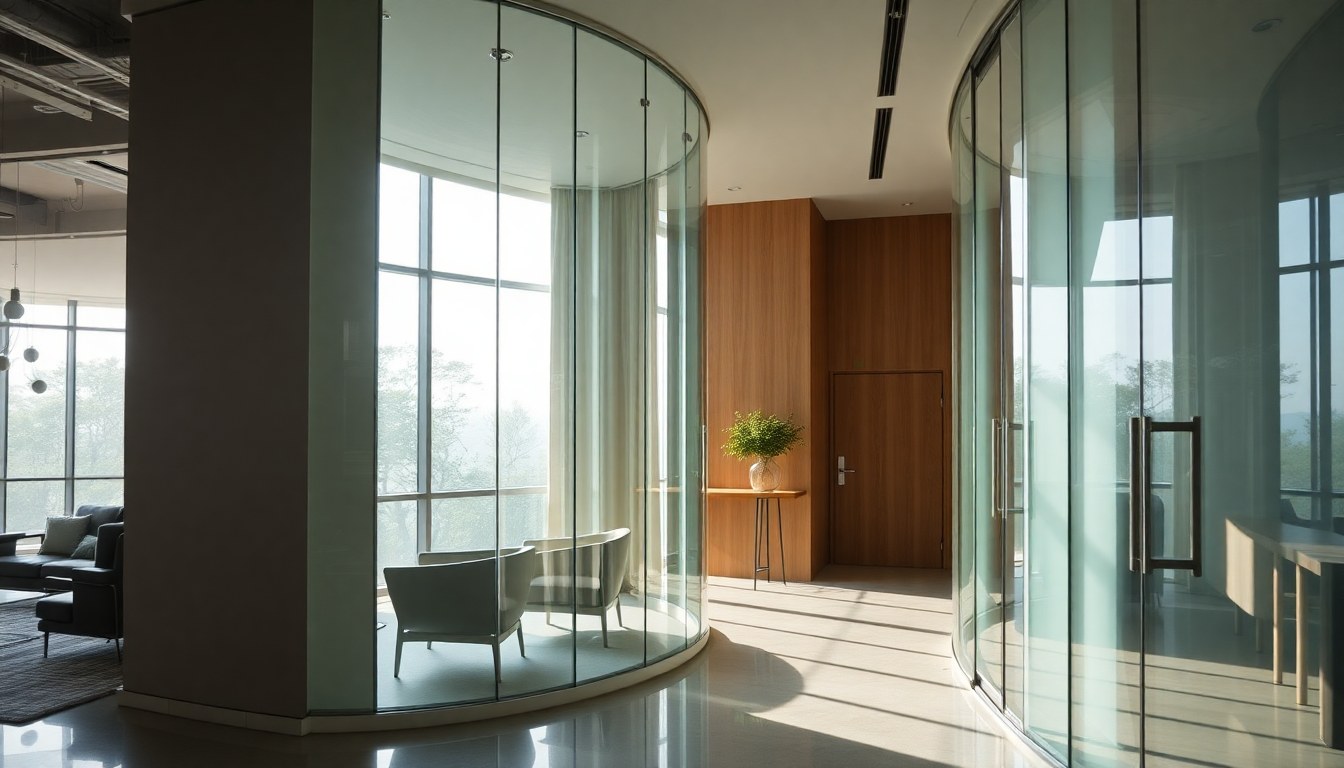
Curved glass partitions represent the pinnacle of modern interior design, combining aesthetic sophistication with functional space division. Unlike standard flat glass panels, curved designs require specialized fabrication techniques and structural engineering, making them a premium choice for luxury residences, high-end corporate lobbies, and exclusive hospitality venues. Understanding the fabrication process and cost implications helps architects, designers, and property owners make informed decisions about integrating curved glass into their premium interiors.
Understanding Curved Glass Partitions
Curved glass partitions are custom-fabricated architectural elements that create flowing, organic divisions within interior spaces. They differ fundamentally from standard glass partitions in their geometry, manufacturing complexity, and structural requirements. These partitions can feature single-radius curves, multi-radius designs, or even freeform shapes, depending on the architectural vision and spatial constraints.
The appeal of curved glass lies in its ability to soften rigid architectural lines, create visual flow between spaces, and maintain transparency while establishing distinct zones. In luxury apartments in Mumbai, Delhi, and Bangalore, curved glass partitions are increasingly used to separate home offices from living areas, create spa-like bathrooms, or define wine cellars and entertainment lounges. Corporate clients favor them for creating welcoming lobbies, executive conference rooms, and premium meeting spaces that project innovation and refinement.
Glass Bending Techniques: The Fabrication Process
Hot-Bending Method
The hot-bending or heat-bending technique remains the most common method for fabricating curved glass partitions. In this process, flat glass sheets are heated to approximately 600-700°C in specialized kilns until they reach a plastic state where they can be shaped without cracking. The softened glass is then carefully bent over custom molds or forms that define the desired curve radius.
Once the glass achieves the target curve, it must cool gradually in a controlled manner—a process called annealing. Rapid cooling creates internal stress and compromises structural integrity, so professional fabricators use annealing ovens that reduce temperature slowly over several hours. This meticulous process ensures the finished curved glass partition is stress-free and durable enough for permanent installation.
Lamination and Tempering
After bending, curved glass partitions typically undergo tempering or lamination to enhance safety and performance. Tempered curved glass is re-heated and rapidly cooled, creating a compressive outer layer that makes it four to five times stronger than annealed glass and causes it to shatter into small, relatively harmless pieces if broken. This is critical for partitions in high-traffic areas or spaces where impact risk exists.
Lamination involves bonding two or more glass layers with polyvinyl butyral (PVB) interlayers. This technique is preferred when soundproofing is essential or when additional safety is required. Laminated curved glass partitions hold together if broken, preventing sharp shards from scattering—an important consideration in residential and corporate environments.
Edge Processing and Finishing
The edges of curved glass partitions demand specialized finishing to ensure safety and aesthetics. Professional fabricators polish edges to remove sharp points and micro-fractures that could initiate breakage. Beveled edges add a refined, luxury aesthetic, while polished edges provide a clean, contemporary look. Some high-end installations feature silk-screened designs or frosted finishes applied to curved surfaces, adding visual interest and privacy where needed.
Structural and Technical Considerations
Curved glass partitions present unique structural challenges that differ significantly from flat glass installations. The curvature distributes loads differently, and the structural framework must account for lateral forces, vibration transmission, and thermal expansion. Professional structural engineers must assess the building's capacity to support the additional weight and stress concentration points created by curved glass installations.
The radius of curvature directly impacts structural requirements. Tighter curves (smaller radii) create higher stress concentrations and require stronger supporting frames and thicker glass. A gentle curve with a 2-meter radius demands less structural intervention than a tight curve with a 500mm radius. Fabricators work closely with structural engineers to determine optimal glass thickness, frame material, and anchoring systems that ensure safety and longevity.
Thermal performance is another critical consideration. Curved glass partitions can be specified with low-emissivity (Low-E) coatings to reduce heat transfer, or with tinted glass to manage solar gain. In Indian climates, where cooling loads are significant, these specifications help maintain energy efficiency in air-conditioned spaces. Additionally, curved partitions may incorporate acoustic dampening features through lamination or specialized interlayer materials, particularly valuable in open-plan corporate offices.
Cost Analysis: Premium Pricing Explained
Material and Fabrication Costs
Curved glass partitions command a significant cost premium compared to flat glass alternatives. Base material costs for curved glass typically range from ₹800 to ₹1,500 per square meter for standard annealed curved glass, compared to ₹300-₹600 per square meter for flat glass. This markup reflects the specialized raw materials, custom mold creation, and extended manufacturing time required for the bending and annealing process.
Fabrication complexity drives costs higher. Custom mold creation alone can cost ₹15,000 to ₹50,000 depending on curve complexity, and this cost is amortized across the project. For unique, non-standard curves, fabricators may charge additional fees for engineering and mold development. Tempered or laminated curved glass adds another ₹300-₹800 per square meter to the final cost.
Installation and Structural Framework
Installation costs for curved glass partitions typically exceed flat glass by 40-60% due to specialized mounting hardware, structural support requirements, and the precision needed during installation. Custom-engineered support frames in stainless steel or aluminum can cost ₹50,000 to ₹2,00,000 depending on the partition's size, curve complexity, and load-bearing demands. Professional installation by experienced teams adds ₹200-₹500 per square meter to the final bill.
A typical curved glass partition installation in a luxury Mumbai apartment—say 3 meters wide by 2.5 meters high with a gentle radius—might cost ₹1,50,000 to ₹3,00,000 all-inclusive. Corporate installations with multiple curved partitions, complex structural requirements, and premium finishes can exceed ₹10 lakhs per installation. Budget-conscious clients can reduce costs by opting for single-radius curves over multi-radius designs, or by using standard radii that eliminate custom mold charges.
Premium Interior Applications
Luxury Residential Spaces
In high-end residential projects, curved glass partitions define distinct zones while maintaining visual openness. Luxury apartments in Bangalore's premium neighborhoods feature curved glass separating master suites from dressing areas, or creating spa-like bathrooms with curved glass shower enclosures. Penthouses in Delhi use curved partitions to define home theaters, wine cellars, or private gyms while preserving the sense of spaciousness that buyers expect in premium properties.
Curved glass partitions in residences often incorporate smart glass technology, allowing homeowners to switch between transparent and frosted states at the touch of a button. This combination of architectural elegance and modern functionality justifies the premium investment for discerning buyers.
Corporate and Hospitality Environments
Five-star hotels and luxury resorts across India employ curved glass partitions to create memorable lobby experiences. The flowing lines of curved glass complement contemporary hospitality design while allowing visual connectivity between spaces. Premium corporate offices use curved glass in executive suites, private meeting rooms, and reception areas to project innovation and sophistication to clients and employees.
High-end restaurants and lounges in metropolitan areas leverage curved glass to create intimate dining zones within open-plan spaces. The curves soften the visual impact of partitions while maintaining the sense of openness that modern hospitality design demands. Acoustic lamination ensures privacy during confidential business meetings or intimate dining experiences.
Specialty Applications
Museums and galleries in India's major cities use curved glass partitions to create dynamic exhibition spaces that guide visitor flow while protecting valuable artworks. Luxury retail environments employ curved glass to create premium brand experiences, with the curves drawing customers' eyes and creating visual focal points. Medical spas and wellness centers use curved glass partitions to separate treatment areas while maintaining the serene, flowing aesthetic that defines luxury wellness environments.
Maintenance and Long-Term Considerations
Curved glass partitions require regular maintenance to preserve their aesthetic appeal and structural integrity. Professional cleaning with appropriate glass cleaners prevents mineral deposits and fingerprints from obscuring the elegant curved lines. Most high-quality curved glass installations require professional cleaning every 3-6 months, particularly in Indian urban environments where air pollution can accumulate on surfaces.
The structural integrity of curved glass partitions should be inspected annually by qualified professionals. This inspection identifies any stress fractures, seal degradation, or mounting hardware issues before they become safety concerns. Properly maintained curved glass partitions typically retain their functionality and appearance for 20-30 years, making them a sound long-term investment despite higher initial costs.
Frequently Asked Questions
What is the minimum curve radius for glass partitions?
The minimum curve radius depends on glass thickness and type, but typically ranges from 300mm to 500mm for standard architectural applications. Tighter curves require thicker glass and stronger structural support. Fabricators can achieve even tighter curves with specialized techniques, but costs increase significantly. Always consult with your fabricator about achievable radii for your specific project requirements.
How long does the curved glass fabrication process take?
Standard curved glass fabrication typically takes 4-8 weeks from order to delivery, accounting for design finalization, mold creation (if custom), glass bending, annealing, tempering or lamination, and quality inspection. Rush orders can reduce timelines to 2-3 weeks but incur additional charges. Complex multi-radius designs or specialty finishes may extend timelines further.
Can curved glass partitions be customized with frosted or tinted finishes?
Yes, curved glass partitions accept frosted, tinted, and even silk-screened finishes after bending. Frosting can be applied through acid-etching or sandblasting, while tinting is achieved through colored glass selection or applied films. Silk-screening allows custom logos or patterns. These customizations add ₹150-₹400 per square meter to base costs but significantly enhance aesthetic impact and privacy.
Are curved glass partitions suitable for Indian climates?
Absolutely. Curved glass partitions perform well in India's diverse climates when properly specified. In hot, humid climates, specify Low-E coatings to reduce heat gain and cooling costs. In cooler regions, standard glass performs adequately. Laminated curved glass provides excellent acoustic control in noisy urban environments. Professional fabricators understand Indian climate requirements and can recommend appropriate specifications.
What is the cost difference between curved and flat glass partitions?
Curved glass partitions typically cost 2.5 to 4 times more than equivalent flat glass partitions when accounting for material, fabrication, structural support, and installation. A flat glass partition might cost ₹50,000-₹1,00,000, while a comparable curved partition costs ₹1,50,000-₹3,00,000. The premium reflects specialized manufacturing, custom engineering, and the architectural sophistication that curved glass provides.
Conclusion and Next Steps
Curved glass partitions represent a sophisticated investment in premium interior design, offering unparalleled aesthetic appeal and functional space division. Understanding the fabrication process—from hot-bending and annealing through tempering and finishing—helps you appreciate the craftsmanship and engineering required to deliver these architectural elements safely and beautifully. While costs exceed standard flat glass alternatives, the transformative impact on luxury residences and corporate spaces justifies the premium for discerning clients seeking architectural distinction.
Ready to explore curved glass partition options for your next premium interior project? Browse the comprehensive directory of specialized glass fabricators and partition specialists on glassy.in, where you can connect with experienced manufacturers across India who understand the technical and aesthetic demands of luxury curved glass installations. From design consultation through final installation, find trusted partners who deliver excellence in every curve.