
Glass Partitions
Curved Glass Partitions: Design Ideas and Installation Challenges
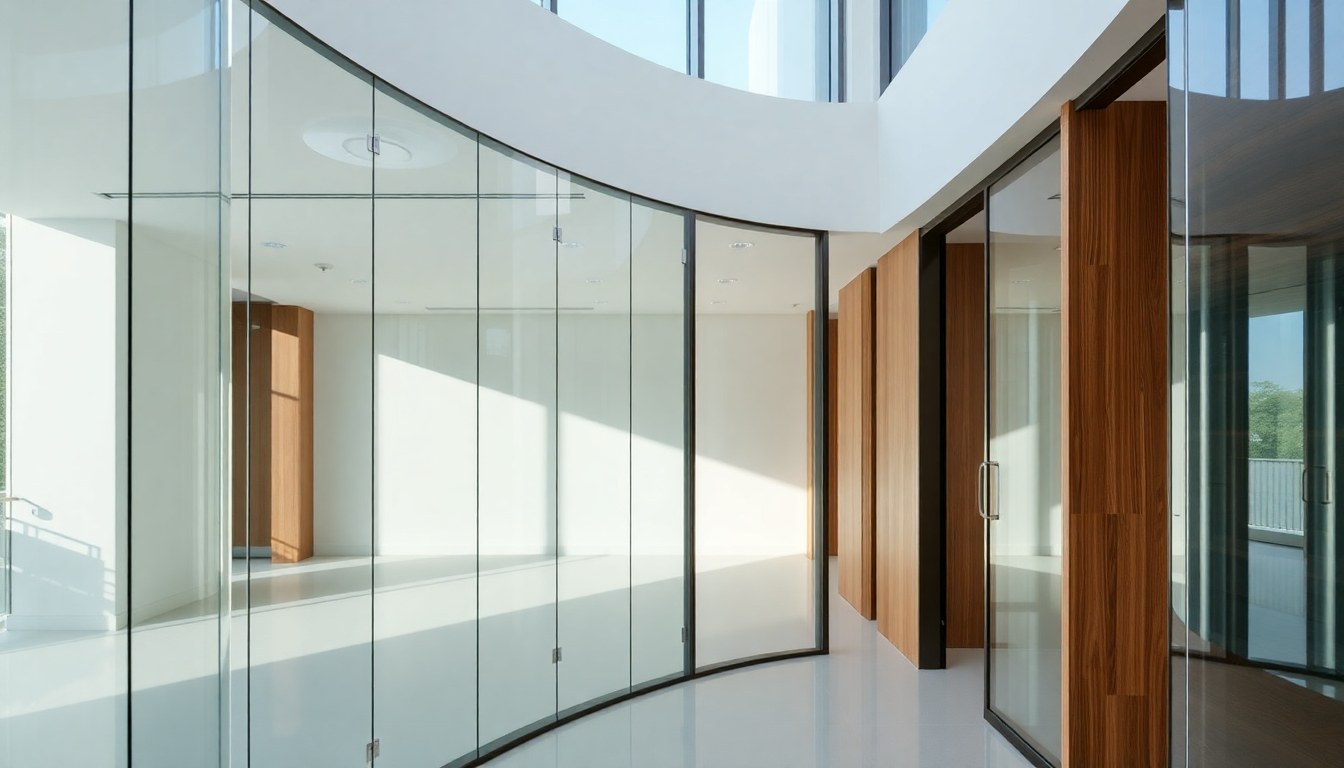
Curved glass partitions have become a hallmark of contemporary office design, blending visual elegance with practical space management. Unlike traditional straight partitions, curved designs create dynamic visual flow, soften hard architectural lines, and make compact spaces feel more open. If you're considering curved glass partitions for your office or home in India, understanding both their design potential and installation complexities is essential to making an informed decision.
Why Curved Glass Partitions Are Transforming Modern Offices
The shift toward curved glass partitions reflects a broader change in how Indian businesses approach workspace design. Modern offices prioritize both collaboration and privacy—curved partitions deliver both. Their flowing lines create visual interest while maintaining transparency, allowing natural light to travel throughout the space and fostering a sense of openness even in divided areas.
Curved partitions also serve a practical purpose in irregular floor plans. Many older office buildings in cities like Mumbai, Bangalore, and Delhi have non-standard room dimensions. Curved glass adapts to these spaces more gracefully than rigid rectangular panels, maximizing usable floor area and improving traffic flow. The aesthetic appeal is undeniable: curved partitions photograph well, enhance your office's professional image, and align with contemporary design trends that clients and employees increasingly expect.
Design Flexibility and Branding
Curved glass partitions offer exceptional flexibility for branding and customization. You can incorporate frosted sections, etched logos, or colored interlayers to reinforce company identity without sacrificing the transparency that makes these partitions valuable. This hybrid approach—combining open sightlines with subtle branding—has become popular among startups and established firms alike across Indian metros.
Popular Curved Glass Partition Design Ideas
Curved glass partitions work across multiple design contexts. Here are some proven approaches that work well in Indian office environments:
- Serpentine Curves: Gentle S-shaped or wave-like curves create natural visual rhythm and can guide foot traffic through open-plan spaces without obvious barriers.
- Radius Curves: A single arc connecting two points creates a softer boundary than straight lines, ideal for separating executive areas from general workspaces.
- Partial-Height Curved Partitions: Stopping the glass at 1.5–1.8 meters rather than full ceiling height reduces cost, maintains visual connection across the office, and improves acoustic performance when paired with sound-absorbing elements above.
- Curved Corner Solutions: Instead of sharp 90-degree angles, curved glass at corner junctions creates safer, more elegant transitions between spaces.
- Curved Glass Pods: Fully enclosed curved partitions form meeting rooms or focus areas, providing privacy while maintaining visual transparency from adjacent spaces.
- Layered Transparency: Combining clear curved sections with frosted or tinted panels in the same partition adds visual complexity and functional privacy where needed.
Technical Installation Challenges
Installing curved glass partitions is significantly more complex than hanging straight panels. Understanding these challenges helps you budget realistically and work effectively with installers.
Fabrication Complexity
Curved glass must be custom-fabricated for your specific space. Unlike straight partitions that use standard components, each curved panel requires precise measurement and often involves laminating multiple glass layers to achieve the desired radius. This process takes 3–4 weeks on average in India, longer if you require specialized finishes like acid etching or custom tinting. Any measurement error during the site survey can result in costly rework, so hiring experienced professionals is non-negotiable.
Structural Support and Framing
Curved glass requires robust framing systems designed to distribute weight evenly along the curve. Standard aluminum tracks used for straight partitions won't work. Instead, installers must use custom-bent aluminum profiles or specialized curved-glass framing systems. These frames must be precisely aligned—even a 2–3mm deviation becomes visible and can affect door operation or panel fit. The floor and ceiling must be perfectly level and plumb; any irregularities in the building structure will compound during installation.
Door and Hardware Integration
Curved partitions with doors present additional challenges. Curved glass doors must be custom-fabricated and require specialized hinges and closers that can handle the off-center weight distribution. Self-closing mechanisms, magnetic locks, and access control systems all need adjustment for curved door frames. In humid Indian climates, ensuring proper sealing around curved door frames is critical to prevent water ingress and condensation between laminated layers.
Acoustic Considerations
While curved glass is visually appealing, it doesn't inherently provide sound insulation. The curved surface can actually reflect and concentrate sound in certain spots, creating acoustic dead zones or hot spots. To address this, many installations combine curved glass with acoustic panels or materials behind or above the partition. This adds cost and complexity but is essential if noise control is a priority.
Cost Implications and Budget Planning
Curved glass partitions are a premium product. Understanding the cost structure helps you plan your budget accurately.
Material and Fabrication Costs
Curved glass partitions in India typically cost between ₹2,500 to ₹5,000 per square meter, depending on glass type, thickness, and customization level. Laminated safety glass (recommended for office partitions) costs more than annealed glass but provides better durability and safety. Custom frosting, tinting, or embedded logos add 15–25% to material costs. A modest curved partition separating a 200 sq. ft. meeting room might cost ₹80,000–₹1,50,000 just for materials and fabrication.
Installation and Labor
Professional installation typically adds 30–50% to material costs. Curved partitions require skilled glass installers with experience in custom work. Labor costs vary by city—Delhi, Mumbai, and Bangalore tend to be more expensive than tier-2 cities. Installation for a single curved partition usually takes 2–3 days, including site preparation, frame installation, and final adjustments. Any structural modifications (reinforcing floors, modifying ceiling systems) increase costs significantly.
Additional Expenses to Budget For
- Structural Assessment: A structural engineer may need to evaluate your building's capacity to support curved glass systems, especially in older buildings. This costs ₹5,000–₹15,000.
- Site Preparation: Floor leveling, ceiling repairs, or electrical/HVAC modifications can add ₹10,000–₹50,000 depending on your space's condition.
- Acoustic Treatment: If sound insulation is required, budget an additional ₹1,000–₹2,500 per square meter for acoustic panels or materials.
- Ongoing Maintenance: Curved glass requires regular professional cleaning to maintain appearance. Budget ₹500–₹1,500 per cleaning session quarterly or as needed.
Best Practices for Curved Glass Partition Installation
To ensure a successful curved glass partition installation, follow these best practices:
- Hire Experienced Professionals: Work with installers who have a portfolio of completed curved glass projects. Ask for references and site visits to previous installations.
- Detailed Site Survey: Ensure your installer conducts a thorough, accurate site survey using modern measurement tools. Request a 3D model or CAD drawing for approval before fabrication begins.
- Clear Specifications: Document everything in writing—glass type, thickness, curve radius, finish details, door specifications, and timeline. Ambiguity leads to costly mistakes.
- Phased Installation: If possible, install curved partitions in phases rather than all at once. This allows you to test the design, make adjustments, and spread costs over time.
- Building Permits: Verify that your installation complies with local building codes and obtain necessary permits. In some Indian cities, large glass installations require fire safety and structural approvals.
- Weather Considerations: Avoid installation during monsoon seasons in coastal areas or during extreme heat in inland regions. Temperature fluctuations can affect glass curing and frame alignment.
Frequently Asked Questions
How much does a curved glass partition cost in India?
Curved glass partitions typically range from ₹2,500 to ₹5,000 per square meter for materials and fabrication. A complete installation, including labor and structural work, usually costs ₹80,000 to ₹3,00,000+ depending on size, glass type, and site conditions. Custom finishes and acoustic treatment add to the total.
How long does it take to install curved glass partitions?
The timeline varies. Custom fabrication takes 3–4 weeks, and on-site installation typically requires 2–3 days for a single partition. Add time for site preparation, structural assessments, and any building modifications. Plan for 6–8 weeks total from design approval to completion.
Are curved glass partitions soundproof?
Standard curved glass partitions provide minimal sound insulation on their own. The curved surface can even reflect and concentrate sound in certain areas. To achieve effective noise control, combine curved glass with acoustic panels, sound-absorbing materials above the partition, or use thicker laminated glass with acoustic interlayers.
Can curved glass partitions be used in older Indian office buildings?
Yes, but with caveats. Older buildings may have structural limitations, uneven floors, or ceiling systems that can't support curved glass installations. A structural engineer's assessment is essential. Site preparation costs may be higher in older buildings, but most spaces can accommodate curved partitions with proper planning and reinforcement.
What maintenance do curved glass partitions require?
Curved glass partitions need regular professional cleaning every 3–6 months to maintain their appearance and prevent water spots or dust accumulation. Check seals and gaskets annually, especially in humid climates. Avoid using abrasive cleaners or high-pressure water jets that could damage seals or frame alignments.
Transform Your Office with Curved Glass Partitions
Curved glass partitions represent a smart investment in modern office design, combining aesthetics with functionality. While installation challenges and costs are real, the payoff in visual impact, space efficiency, and employee satisfaction justifies the investment for many Indian businesses. Whether you're designing a startup office, corporate headquarters, or creative studio, curved glass partitions offer a premium solution that sets your space apart. Explore qualified glass partition suppliers and installers in your area through the glassy.in directory to find professionals experienced in curved glass installations and get detailed quotes tailored to your project.