
Glass Partitions
Glass Partition Acoustic Performance: Decibel Ratings & Testing Standards
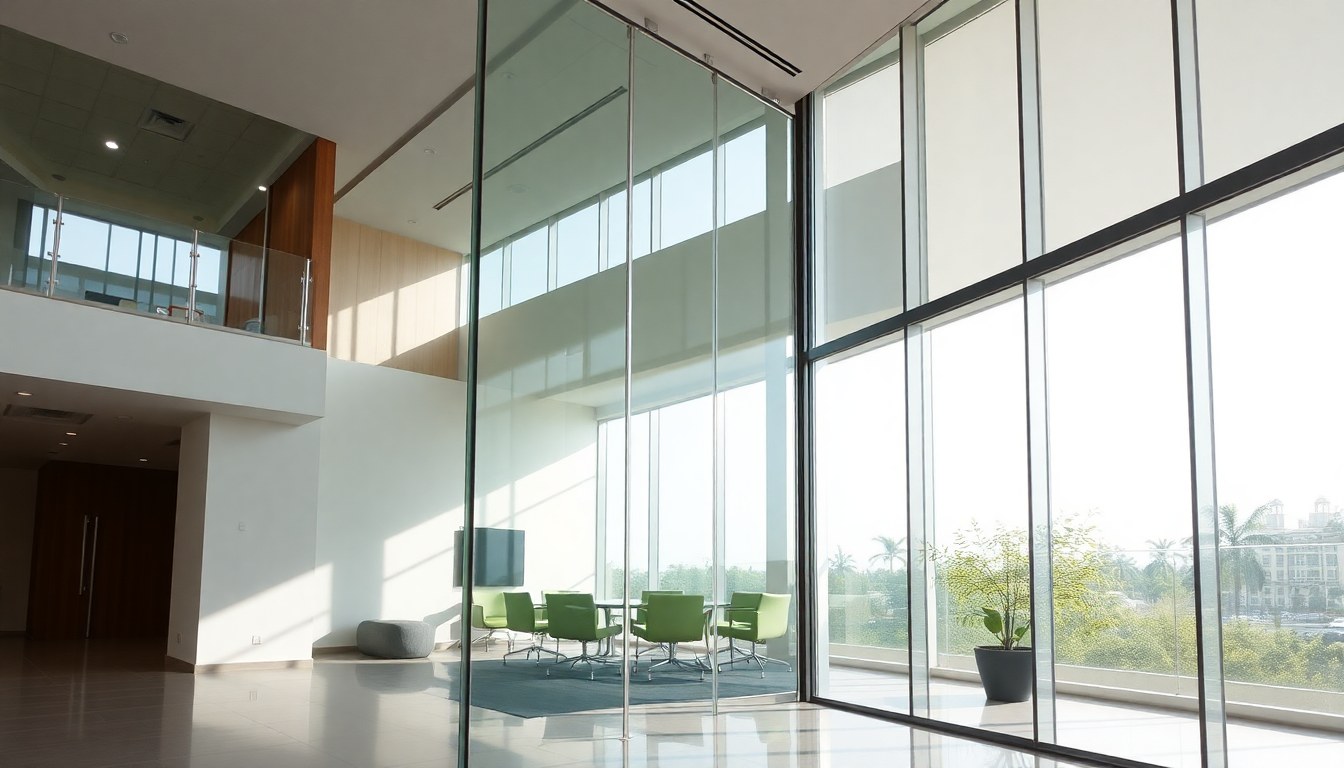
Open-plan offices are productive, but they can be noisy—and noise kills focus. Glass partitions offer transparency without sacrificing sound control, yet not all glass performs equally. Understanding Sound Transmission Loss (STL) ratings, decibel reduction, and the difference between laminated and toughened glass will help you choose partitions that actually quieten your workspace while meeting Indian building codes.
What Is Sound Transmission Loss (STL) and How Is It Measured?
Sound Transmission Loss (STL) is a laboratory measurement that quantifies how much sound energy a partition blocks. It's expressed in decibels (dB) and represents the difference between sound levels on either side of a material. A higher STL rating means better acoustic performance. For example, an STL of 30 dB means the partition reduces sound by 30 decibels—a significant reduction that makes speech on the other side barely intelligible.
STL is measured in controlled laboratory conditions following standardized test procedures. Sound is generated at specific frequencies (typically 125 Hz to 4,000 Hz) on one side of the partition, and microphones measure the sound pressure level on both sides. The difference, averaged across the frequency range, gives the STL value. This method ensures consistency and allows fair comparison between different partition systems.
Real-World vs. Laboratory Performance
Laboratory STL ratings are higher than real-world performance because test conditions are ideal—no flanking paths, perfect sealing, and controlled environments. In actual offices, sound leaks through gaps around doors, ventilation ducts, and structural connections. This is why the Noise Reduction Coefficient (NRC) and Site Transmission Loss (STLR) are also important: they account for these practical factors and give a more honest picture of on-site acoustic performance.
Decibel Ratings: What Numbers Mean for Your Office
Understanding decibel scales helps you interpret acoustic specifications. A 10 dB reduction is perceived as roughly half as loud by the human ear. A 20 dB reduction is dramatically quieter. For office partitions, typical STL ratings range from 25 dB to 55 dB, depending on glass type, thickness, and frame construction.
- STL 25–30 dB: Blocks loud speech; some sound still audible. Suitable for low-privacy areas like open desks.
- STL 30–40 dB: Blocks normal conversation; speech barely intelligible. Good for standard office partitions and meeting rooms.
- STL 40–50 dB: Blocks loud speech and music; excellent privacy. Ideal for executive offices, recording studios, and confidential spaces.
- STL 50+ dB: Blocks nearly all sound; exceptional isolation. Used in high-security facilities and specialized acoustic environments.
For most Indian office environments, an STL of 30–35 dB is a practical baseline. This level provides comfortable privacy for meetings and focused work without excessive cost or structural complexity.
Laminated Glass vs. Toughened Glass: Acoustic Comparison
The type of glass you choose significantly impacts acoustic performance. Laminated and toughened glass have very different acoustic properties, and understanding these differences is crucial for selecting the right partition system.
Laminated Glass Acoustic Performance
Laminated glass consists of two or more glass panes bonded with a plastic interlayer (usually polyvinyl butyral, or PVB). The interlayer is viscoelastic—it absorbs and dampens vibrations rather than transmitting them. This makes laminated glass excellent for sound control. A standard 6mm + 0.76mm PVB + 6mm laminated unit typically achieves STL ratings of 32–35 dB. Thicker laminates or multiple interlayers can reach 40+ dB.
The acoustic benefit of laminated glass increases with interlayer thickness and material choice. Specialized acoustic interlayers (such as PVB compounds with higher damping) can improve performance by 2–4 dB compared to standard interlayers. In India, laminated glass partitions are widely used in corporate offices, banks, and hospitals because they combine sound control with safety (the interlayer holds glass together if broken).
Toughened Glass Acoustic Performance
Toughened (or tempered) glass is single-layer glass heated and rapidly cooled to increase strength. It does not have an interlayer, so it offers minimal acoustic damping. A standard 10mm toughened glass panel typically achieves only STL 22–26 dB—noticeably poorer than laminated alternatives. Toughened glass is chosen for safety and aesthetics, not sound control. If you need both safety and acoustics, laminated toughened glass (a laminate with toughened outer panes) is the answer, offering STL ratings of 35–40 dB.
For acoustic applications, laminated glass is always the better choice. Toughened glass alone is acceptable only in low-noise areas or where sound control is not a priority.
Frame Sealing and Installation: The Hidden Factor in Acoustic Performance
Glass alone does not determine acoustic performance. The frame, seals, and installation quality are equally important—sometimes more so. Sound travels through the path of least resistance, and poor sealing creates acoustic "leaks" that can reduce effective STL by 5–10 dB or more.
Key Sealing Components
- Gaskets and Seals: Rubber or silicone gaskets around glass edges absorb vibrations and block air gaps. High-quality EPDM or silicone gaskets are superior to cheaper PVC alternatives.
- Frame Material: Aluminum frames are lightweight but conduct sound; steel or composite frames with damping materials perform better acoustically.
- Double-Skin Frames: Frames with dual sealing surfaces (inner and outer gaskets) improve STL by 3–5 dB compared to single-seal designs.
- Door Seals: Acoustic doors must have drop seals at the bottom and magnetic seals at the sides and top. Poorly sealed doors are the weakest link in partition systems.
- Penetrations: Electrical outlets, light fixtures, and ventilation ducts must be acoustically sealed with resilient materials, not rigid caulk alone.
In India, many partition installations fail to meet their rated acoustic performance because sealing details are overlooked. Insisting on proper gasket installation, sealed penetrations, and quality door hardware is as important as choosing the right glass.
Installation Best Practices
Acoustic performance is only achieved if the partition is installed correctly. The partition should be mounted to structural supports with resilient isolation—not rigidly bolted, which transmits vibrations. Gaps between the partition and floor, ceiling, or adjacent walls must be sealed with acoustic sealant (not silicone caulk, which is rigid). If the partition does not extend to the structural ceiling, sound will travel over it, negating acoustic benefits entirely.
Indian Standards and Compliance: IS and IEC Codes
India follows specific standards for acoustic testing and glass partition performance. Compliance ensures that partitions meet safety, durability, and acoustic criteria recognized by building authorities and insurers.
Relevant Indian Standards
- IS 3818 (Laminated Glass): Specifies requirements for laminated safety glass, including acoustic properties and durability.
- IS 2553 (Toughened Glass): Covers toughened glass specifications, though it does not address acoustic performance.
- IS 10152: Guidelines for sound level limits in buildings, including office spaces (typically 50–60 dB for office areas).
- IEC 60140-3: International standard for measurement of sound insulation of windows and window elements. Many Indian manufacturers reference this standard for STL ratings.
- IEC 60140-2: Specifies the laboratory method for measuring airborne sound insulation, widely adopted in India.
When purchasing glass partitions in India, request test certificates from accredited laboratories (such as NABL-certified facilities) confirming STL ratings per IEC standards. This ensures transparency and protects your investment.
Building Codes and Acoustic Requirements
The National Building Code of India (NBC) and state building bye-laws specify acoustic performance requirements for certain building types. Hospitals, educational institutions, and high-rise residential buildings often have mandatory acoustic standards. Commercial offices typically have advisory guidelines rather than strict requirements, but many companies adopt acoustic standards voluntarily to improve employee well-being and productivity.
Choosing the Right Glass Partition for Your Acoustic Needs
Selecting an acoustic partition requires balancing performance, cost, and practicality. Here's a decision framework:
- Budget-Conscious, Low-Privacy Areas: Single-layer laminated glass (6mm + 0.76mm PVB + 6mm) with standard aluminum frame. STL ~30 dB. Cost-effective and adequate for open desks or casual zones.
- Standard Office Partitions: Double-layer laminated glass (6mm + 1.52mm PVB + 6mm) with sealed aluminum or composite frame. STL ~35 dB. Industry standard for meeting rooms and private offices.
- High-Privacy or Sensitive Areas: Thick laminated glass (8mm + 1.52mm acoustic PVB + 8mm) or double-glazed units with air gap. STL 40–45 dB. Suitable for executive offices, boardrooms, and confidential spaces.
- Maximum Isolation: Triple-glazed units with acoustic interlayers and resilient mounting. STL 50+ dB. Rare in India but used in recording studios, research labs, and specialized facilities.
Always request STL test certificates and clarify whether ratings are laboratory (theoretical) or field-measured (practical). Discuss sealing details, door specifications, and installation methods with your supplier to ensure you achieve the acoustic performance you're paying for.
Frequently Asked Questions
What is a good STL rating for office partitions in India?
An STL of 30–35 dB is considered good for standard office partitions. This level blocks normal conversation and provides comfortable privacy for meetings and focused work. For higher privacy (executive offices, confidential spaces), aim for 40+ dB. The choice depends on your noise environment and privacy requirements. Request test certificates from your partition supplier to confirm ratings.
Does thicker glass always mean better sound insulation?
Thicker glass does improve acoustic performance, but the relationship is not linear. A 10mm pane is only slightly quieter than 6mm because glass is stiff and transmits vibrations easily. The interlayer in laminated glass is far more important for sound control than thickness alone. A 6mm + 1.52mm PVB + 6mm laminate outperforms a single 12mm pane. For maximum acoustic benefit, combine reasonable thickness with a quality interlayer and proper sealing.
Can I retrofit acoustic seals to an existing glass partition?
Yes, but with limitations. If the partition frame was not designed for acoustic seals, retrofitting may not achieve significant improvement. Adding gaskets to existing frames can improve STL by 2–3 dB if gaps are minimal. However, if the partition was poorly installed (gaps around edges, unsealed penetrations, or no door seals), retrofitting is messy and expensive. It's usually better to upgrade to a properly sealed partition system. Consult an acoustic specialist to assess your existing setup.
What's the difference between STL and NRC ratings?
STL (Sound Transmission Loss) measures how much sound a partition blocks—how much sound does not pass through it. NRC (Noise Reduction Coefficient) measures how much sound a material absorbs—how much sound it soaks up instead of reflecting. For partitions, STL is the primary metric. NRC is more relevant for acoustic panels, ceiling tiles, and wall treatments. A good partition needs high STL (blocks outside noise) and may also have some absorption (reduces echo inside the space).
Are glass partitions more acoustic than solid walls?
Solid walls (concrete, brick, gypsum) typically have higher STL ratings than glass partitions—often 45–60 dB compared to 30–40 dB for glass. However, glass partitions offer transparency and light, which solid walls do not. Modern laminated glass partitions (STL 35–40 dB) provide acceptable privacy for most office environments while maintaining open, collaborative aesthetics. If maximum sound isolation is the only priority, solid construction is superior. If you need both acoustics and transparency, high-quality laminated glass is the practical choice.
Conclusion and Next Steps
Glass partition acoustic performance is determined by glass type (laminated vs. toughened), thickness, interlayer quality, frame sealing, and installation precision. Laminated glass with STL ratings of 30–40 dB is the industry standard for Indian offices, offering a balance of privacy, light, and cost-effectiveness. Always request STL test certificates, clarify sealing details, and ensure proper installation to achieve the acoustic performance you expect.
Ready to upgrade your office with acoustically optimized glass partitions? Browse verified glass partition suppliers, manufacturers, and installation specialists on the glassy.in directory. Compare acoustic specifications, request quotes, and connect with experts who understand Indian building standards and your acoustic needs.