
Glass Partitions
Acoustic Glass Partitions: Soundproofing Offices Without Bulk
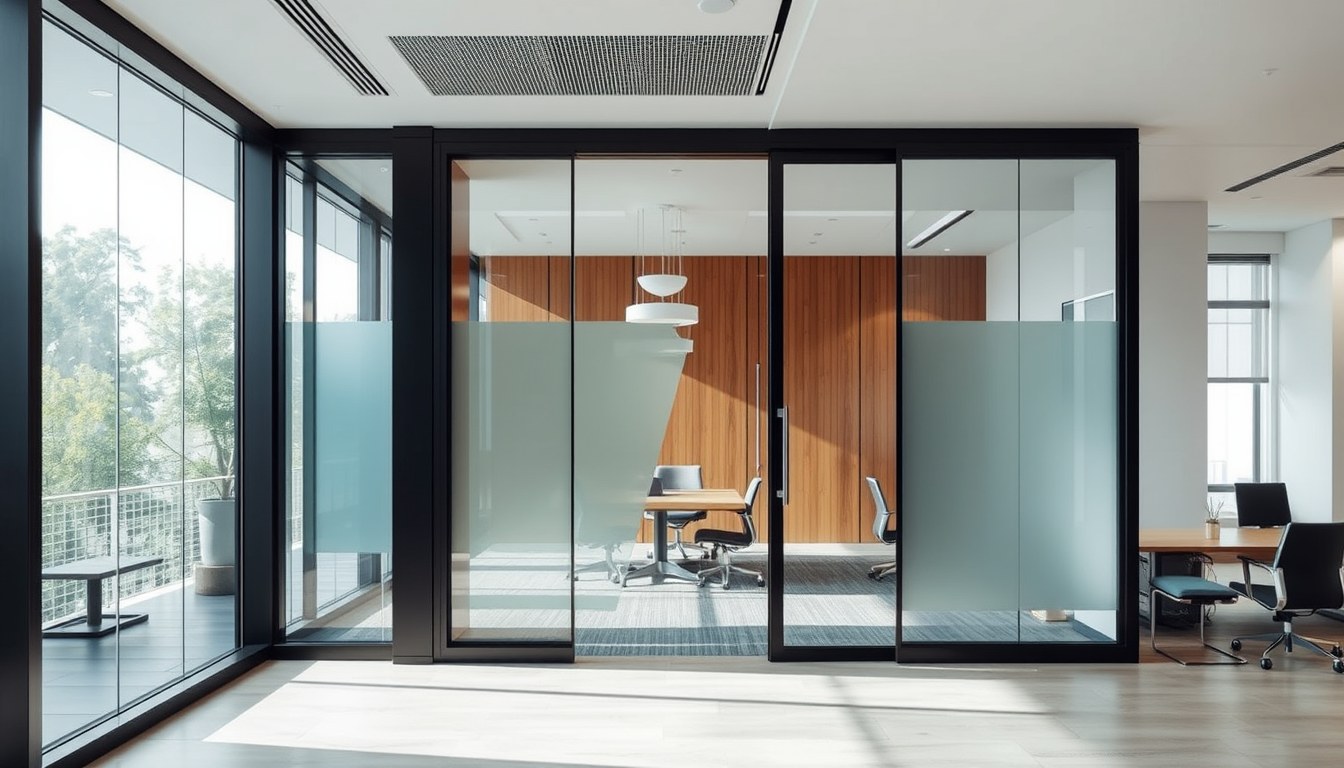
Open office layouts have become the norm across Indian corporate spaces, but they bring a persistent challenge: noise pollution. Acoustic glass partitions solve this problem elegantly by delivering soundproofing performance without the visual heaviness of traditional brick or drywall. These specialized glass systems use laminated glass and acoustic interlayers to absorb and dampen sound waves, maintaining the aesthetic appeal and light transmission of glass while creating genuinely quiet workspaces.
Understanding Acoustic Glass Technology
Acoustic glass partitions work on a simple but effective principle: sound waves are vibrations that travel through air and solid materials. When sound hits standard glass, it vibrates the entire pane and transmits the noise to the other side. Acoustic glass interrupts this transmission through a combination of mass and damping.
The core technology involves laminated glass—two or more glass panes bonded with a specialized interlayer. Unlike regular laminated glass used for safety, acoustic versions employ viscoelastic interlayers (typically polyvinyl butyral or PVB variants) that absorb sound energy and convert it into negligible heat. This damping effect is what makes acoustic glass so effective at noise reduction across a wide frequency range, from low-frequency office equipment hum to high-frequency speech and keyboard clatter.
How Interlayers Make the Difference
The interlayer is the hero of acoustic glass. Standard PVB interlayers provide basic sound dampening, but premium acoustic interlayers are engineered with specific viscoelastic properties. These materials are designed to remain flexible across temperature ranges common in Indian offices (often 20–40°C), ensuring consistent performance year-round. The thickness and composition of the interlayer directly influence how much sound is absorbed.
Sound Transmission Class (STC) Ratings Explained
If you're shopping for acoustic glass partitions, you'll encounter the term STC rating. This standardized metric measures how effectively a material blocks sound across a range of frequencies. STC ratings typically range from 25 (minimal sound reduction) to 65+ (excellent soundproofing). Understanding this rating is crucial for selecting the right partition for your office environment.
An STC of 30–35 is suitable for light office noise and casual conversations. An STC of 40–50 blocks most normal speech and is ideal for open-plan offices where focus matters. An STC of 55+ is required for highly sensitive areas like recording studios, executive boardrooms, or spaces adjacent to noisy machinery. In India, where many offices sit near traffic-heavy roads, an STC of 45–50 is often recommended as a practical middle ground.
What STC Ratings Actually Mean in Practice
An STC 40 partition reduces sound by approximately 40 decibels for certain frequencies, though the actual reduction varies across the frequency spectrum. A conversation at normal volume (60 dB) would be reduced to barely audible levels (20 dB) when passing through an STC 40 barrier. This is why STC ratings matter more than raw thickness alone.
Glass Thickness and Acoustic Performance
Thickness is one of the most straightforward ways to improve acoustic performance. A thicker glass pane has more mass, which naturally resists vibration better. However, the relationship isn't linear—doubling thickness doesn't double sound reduction. The acoustic interlayer thickness matters equally, sometimes more so.
Common acoustic glass configurations for office partitions include:
- 6mm + 0.76mm interlayer + 6mm glass: STC 28–32, suitable for low-noise areas
- 8mm + 1.52mm interlayer + 8mm glass: STC 35–40, standard for most open offices
- 10mm + 1.52mm interlayer + 10mm glass: STC 42–48, recommended for noise-sensitive spaces
- 12mm + 1.52mm interlayer + 12mm glass: STC 50–55, premium soundproofing
For maximum acoustic performance, some installers use triple-laminated systems (three glass panes with two interlayers) or asymmetrical designs where the outer and inner panes have different thicknesses. These approaches can achieve STC ratings above 60, though at increased cost and weight.
Installation and Design Considerations
Even the best acoustic glass performs poorly if installation is compromised. Sound finds the path of least resistance, so gaps, poor sealing, and inadequate framing undermine the entire system. Professional installation is non-negotiable for acoustic partitions.
Key Installation Requirements
Acoustic glass partitions must be installed with high-quality acoustic sealants (not standard silicone) around all edges and joints. The framing system—whether aluminum, steel, or timber—should be resilient and isolated from the structure to prevent sound transmission through the frame itself. In India, where humidity fluctuations are common, the sealant must remain flexible and airtight across seasons. The bottom track should include a gasket or resilient material to prevent sound flanking through the floor connection.
Design Flexibility Without Compromise
One major advantage of acoustic glass partitions is their aesthetic flexibility. Unlike solid walls, they maintain visual continuity and light flow across the office. They can incorporate frosted or tinted glass for privacy without losing acoustic benefits. Frameless systems are also available, though they require thicker glass and more careful installation to maintain acoustic integrity.
Real-World Office Applications in India
Acoustic glass partitions are increasingly popular in Indian corporate offices, particularly in metropolitan areas like Bangalore, Mumbai, Delhi, and Hyderabad. They're ideal for creating meeting rooms within open-plan layouts, isolating noisy departments (customer service, operations) from quiet zones (finance, legal), and building executive cabins that feel private without being visually closed-off.
Call centers and BPOs particularly benefit from acoustic glass partitions. These environments generate constant noise from multiple conversations, and acoustic glass reduces cross-talk and improves employee focus. Banks and financial institutions use them to create private consultation areas while maintaining the transparency and accessibility of open offices. Co-working spaces in India's tech hubs rely heavily on acoustic partitions to create distinct zones—quiet focus areas, collaborative spaces, and meeting rooms—within single large halls.
Cost and Maintenance
Acoustic glass partitions are more expensive than standard glass partitions or drywall walls. Expect to pay ₹3,500–₹8,000 per square meter for basic acoustic glass systems (STC 35–40) and ₹8,000–₹15,000+ per square meter for premium configurations (STC 50+). Installation labor adds another 30–50% to material costs. While this is a significant investment, the benefits—improved productivity, employee satisfaction, and the flexibility to reconfigure spaces—often justify the cost over the partition's 15–20 year lifespan.
Maintenance is straightforward. Clean acoustic glass with standard glass cleaners and soft cloths. Avoid abrasive cleaners that can damage the interlayer or sealants. Inspect sealants annually, especially in high-humidity areas, and reseal if cracks appear. Unlike drywall, acoustic glass doesn't degrade with age and doesn't require repainting or refinishing.
Comparing Acoustic Glass to Alternatives
How does acoustic glass stack up against other soundproofing methods? Drywall with mineral wool insulation can achieve similar STC ratings but adds bulk, reduces light transmission, and is permanent. Solid brick or concrete walls are excellent for sound blocking but are heavy, visually opaque, and impossible to reconfigure. Fabric-wrapped panels absorb sound well but don't provide speech privacy—people on the other side can still hear conversations.
Acoustic glass partitions occupy a unique middle ground: they block sound transmission (like walls), maintain transparency (like standard glass), and are reconfigurable (like modular systems). This combination makes them ideal for modern Indian offices where flexibility, aesthetics, and functionality must coexist.
Frequently Asked Questions
What's the difference between acoustic glass and regular laminated glass?
Regular laminated glass uses a standard PVB interlayer primarily for safety—it holds glass together if broken. Acoustic laminated glass uses specialized viscoelastic interlayers engineered to absorb sound vibrations. The interlayer composition, thickness, and damping properties are optimized for noise reduction rather than safety alone. This is why acoustic glass performs significantly better at soundproofing despite similar appearance.
Can acoustic glass partitions be frosted or tinted for privacy?
Yes, absolutely. Acoustic glass can be frosted, tinted, or even printed with designs without compromising soundproofing performance. The acoustic benefit comes from the interlayer and thickness, not the surface treatment. Many Indian offices use frosted acoustic glass to combine visual privacy with sound insulation in meeting rooms and executive areas.
How much noise reduction can I expect with STC 45 acoustic glass?
An STC 45 partition reduces sound by approximately 45 decibels across the frequency range tested in the STC standard. In practical terms, normal conversation (60 dB) becomes barely audible (15 dB) on the other side. However, very loud noises (machinery, traffic) will still penetrate somewhat. For complete isolation from external traffic noise, STC 50+ or combination systems (glass + additional damping) may be necessary.
Are acoustic glass partitions suitable for humid environments like those in coastal Indian cities?
Yes, but with proper installation and maintenance. Acoustic glass itself is unaffected by humidity, but the sealants and interlayers must be high-quality and suited to fluctuating moisture. In coastal areas like Mumbai or Goa, use marine-grade sealants and ensure adequate ventilation to prevent moisture buildup. Annual sealant inspections are especially important in humid climates.
Can I retrofit acoustic glass partitions into an existing office, or do they require structural modifications?
Acoustic glass partitions can be retrofitted into most existing office spaces without major structural work. They mount to existing floor, ceiling, and wall structures using standard framing systems. However, the installation must be done professionally to ensure proper sealing and acoustic integrity. In older buildings with uneven floors or ceilings, additional preparation may be needed, which could increase costs.
Find Your Ideal Acoustic Glass Partition on Glassy.in
Acoustic glass partitions are transforming how Indian offices balance openness with focus. Whether you're designing a new office, renovating an existing space, or simply looking to reduce noise in a noisy area, acoustic glass offers a transparent, flexible, and effective solution. Explore verified glass suppliers, manufacturers, and installation specialists on Glassy.in—India's largest glass business directory—to find the right acoustic partition system for your specific needs and budget.