
Glass Partitions
Acoustic Glass Partitions for Open Offices: Sound Reduction Ratings Explained
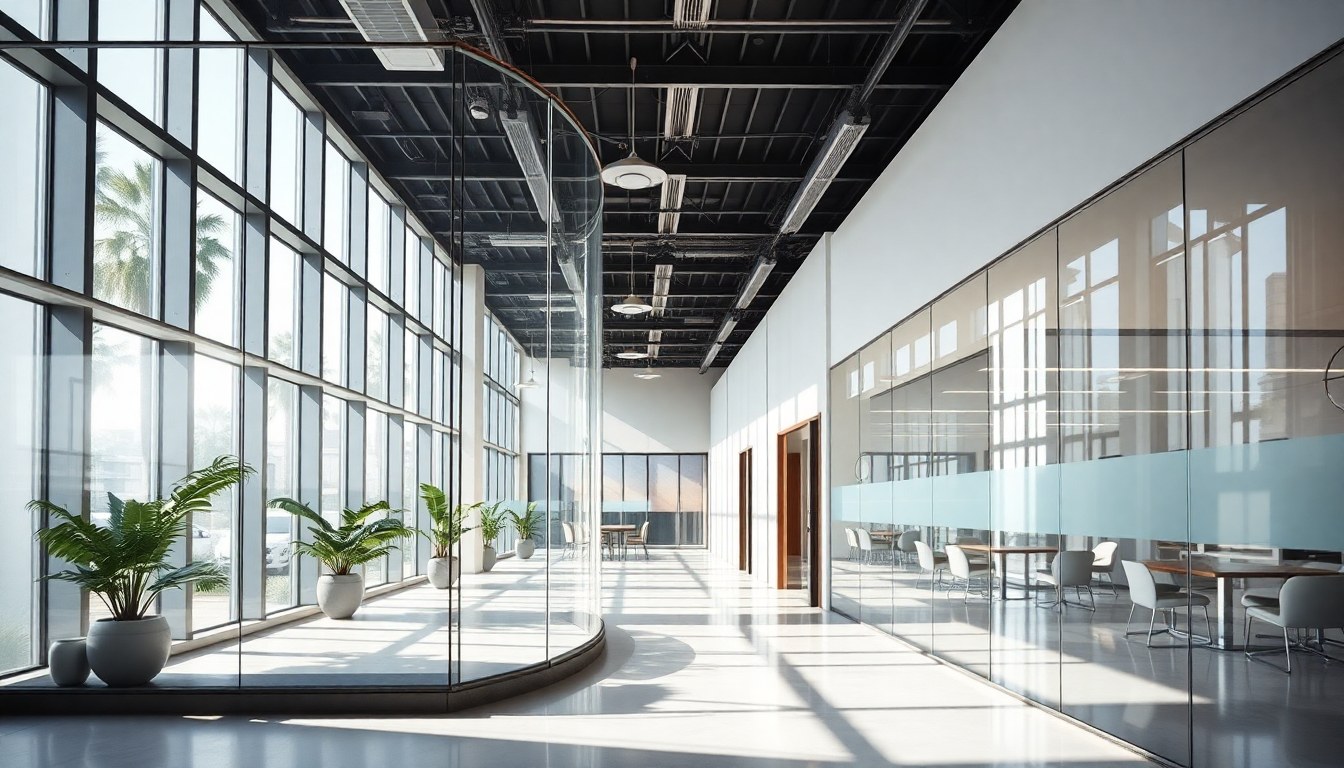
Open office layouts maximize space efficiency but often create noise challenges that harm productivity and employee wellbeing. Acoustic glass partitions solve this problem by combining transparency with sound attenuation, using laminated and double-glazed technology to reduce noise while maintaining visual openness. Understanding sound reduction ratings—particularly STC (Sound Transmission Class) and Rw (Weighted Sound Reduction Index)—is essential for selecting the right partition system for IT parks, co-working spaces, and corporate offices across India.
What Are Sound Reduction Ratings and Why They Matter
Sound reduction ratings measure how effectively a partition blocks noise across different frequencies. Two primary standards are used globally: STC (Sound Transmission Class), predominantly used in North America, and Rw (Weighted Sound Reduction Index), the metric used in Europe and increasingly adopted in India. Both ratings express noise reduction in decibels (dB), but they measure performance differently.
For open office environments, these ratings directly impact employee satisfaction and work output. Studies consistently show that excessive noise reduces concentration, increases stress, and lowers productivity. A partition rated STC 40 blocks approximately 40 decibels of sound; STC 50 blocks 50 decibels. The difference between STC 40 and STC 50 may seem modest numerically, but in human perception, a 10-point increase represents a roughly 50% reduction in perceived loudness. For corporate offices in Bangalore, Delhi, and other Indian metros, this distinction can mean the difference between a functional workspace and a frustrating one.
Understanding STC and Rw Ratings in Detail
Sound Transmission Class (STC)
STC ratings range from 25 to 90, with higher numbers indicating better sound blocking. The rating is derived from laboratory measurements across 16 frequency bands, from 125 Hz to 4,000 Hz. STC focuses primarily on mid to high-frequency sounds—typical office noise like speech, keyboard typing, and phone conversations.
For reference, typical STC ratings translate as follows:
- STC 30: Normal speech audible and intelligible through partition
- STC 40: Loud speech audible but not intelligible; suitable for basic privacy
- STC 50: Loud speech faintly audible; good for confidential conversations
- STC 60: Loud speech not audible; excellent for sensitive areas
- STC 70+: Even very loud noise significantly attenuated; rare in office partitions
Weighted Sound Reduction Index (Rw)
Rw is the European and ISO standard, measured in a similar but slightly different methodology. Rw ratings also range upward from around 20 dB, with the same interpretation: higher numbers mean better sound blocking. Rw includes measurement across a broader frequency range (100 Hz to 3,150 Hz) and uses a different weighting curve. In practical terms, an Rw 50 partition performs similarly to an STC 50 partition, though direct conversion is not exact.
Many manufacturers in India now list both STC and Rw ratings to serve diverse clients. When comparing partitions, ensure you're comparing like-for-like metrics and understand the frequency ranges most relevant to your office environment.
Glass Types and Their Acoustic Properties
Laminated Glass for Sound Reduction
Laminated glass consists of two or more glass panes bonded with a polyvinyl butyral (PVB) interlayer. The interlayer is crucial for acoustic performance—it absorbs and dampens sound vibrations that would otherwise pass through the glass. Standard 6mm laminated glass typically achieves STC 32–35. Thicker laminates or those with specialized acoustic interlayers can reach STC 40–45.
The thickness and composition of the interlayer significantly affect performance. A 0.76mm PVB layer provides basic sound reduction; 1.52mm or thicker interlayers deliver superior attenuation. Some manufacturers use viscoelastic or polyurethane interlayers specifically engineered for acoustic performance, which can improve ratings by 3–5 points compared to standard PVB.
Double-Glazed (Insulated Glass Units)
Double-glazed units consist of two glass panes separated by an air gap, typically 6mm to 12mm. The air gap acts as a sound buffer, and when combined with laminated glass on one or both panes, acoustic performance improves dramatically. A double-glazed unit with 6mm laminated glass on both sides and a 6mm air gap can achieve STC 50–55.
The performance of double-glazed units depends on:
- Glass thickness on each pane (asymmetric glazing—different thicknesses—performs better than symmetric)
- Air gap width (6mm–12mm is optimal; wider gaps don't always improve performance)
- Interlayer material and thickness in laminated panes
- Seal quality (poor sealing allows sound leakage)
For confidential meeting rooms or executive offices, double-glazed acoustic partitions are the gold standard, though they cost 40–60% more than single laminated units.
Installation Best Practices for Indian Offices
Frame and Sealing Quality
Even the best acoustic glass is compromised by poor installation. Sound travels through gaps, so the frame must be airtight. Aluminum frames with rubber gaskets and weatherstripping are standard. The gasket material—typically EPDM rubber—must be compressed evenly around the entire perimeter. Any gaps larger than 1mm significantly degrade acoustic performance.
For high-performance partitions, consider:
- Dual-seal frames with inner and outer gasket layers
- Acoustic sealant (polyurethane or silicone-based) applied at all joints
- Proper installation of door seals and automatic door bottoms if doors are part of the partition
- Caulking at the top and base where the partition meets the structure
Structural Integration
In open office environments across Bangalore and Delhi, partitions often run from floor to suspended ceiling (not the structural ceiling). This creates a sound path above the partition—a critical weak point. For acoustic integrity, partitions should extend to the structural slab above or include a suspended ceiling that extends across the entire partition height. If that's not feasible, acoustic baffles or absorptive materials above the partition can mitigate the issue.
Additionally, partitions should be mechanically isolated from the building structure where possible. Vibration transmission through the frame and structural connections can carry sound around the glass. Resilient channels or isolation mounts reduce this effect.
Doors and Openings
A single standard door can reduce the acoustic rating of an entire partition by 10–15 points. Acoustic doors must be as carefully specified as the glass. Look for doors with:
- Solid core construction (not hollow)
- Multiple seals (top, bottom, and sides)
- STC rating equal to or greater than the partition glass
- Automatic drop seals or door bottoms
Firms like Sri Lakshmi Glass Plywood And Hardware in Bangalore provide both glass and complementary hardware solutions, ensuring acoustic consistency across the entire partition system.
Real-World Performance in Indian Co-Working and IT Spaces
Co-working spaces and IT parks in metros like Bangalore, Delhi, and Pune face unique acoustic challenges: high occupancy density, diverse work types (calls, meetings, focused work), and the need for flexible layouts. Acoustic glass partitions address these needs effectively.
A typical scenario: An IT park with open seating areas uses STC 40 partitions (single laminated glass) to separate general work zones from quiet focus areas. Cost per linear meter is ₹2,500–₹3,500 for basic installations. For confidential client meeting rooms, they upgrade to STC 50–55 (double-glazed acoustic glass), costing ₹5,000–₹7,500 per linear meter. The investment pays dividends in employee retention and client perception.
Co-working operators increasingly specify acoustic partitions as a competitive differentiator. A co-working space with poor acoustics loses tenants to competitors; one with thoughtful sound management attracts premium clients willing to pay higher rates. Architects like SAN Design Square integrate acoustic glass strategically into office designs to balance openness with privacy.
Cost Considerations and ROI
Acoustic glass partitions are more expensive than standard clear glass, but the cost difference is often justified. For a 100 square meter office space:
- Standard clear glass partitions: ₹1,500–₹2,500 per sq. meter
- Acoustic laminated glass (STC 40): ₹2,500–₹4,000 per sq. meter
- High-performance double-glazed acoustic (STC 50+): ₹5,000–₹8,000 per sq. meter
The return on investment includes reduced noise complaints, improved productivity (studies suggest 5–15% gains), lower employee turnover, and the ability to command higher rental rates in co-working or leased office scenarios. For businesses handling confidential information—law firms, financial services, consulting—acoustic glass is a compliance and professionalism necessity.
Compliance and Standards in India
India does not have a mandatory national standard specifically for office partition acoustics, but the Indian Standards Institute (BIS) references ISO 10140 (sound insulation measurement methods) and ISO 717 (rating of sound insulation) as guidance. Many Indian architects and developers follow international standards—STC for North American-influenced projects, Rw for European-influenced ones.
IGBC (Indian Green Building Council) certified buildings often include acoustic specifications for open office areas, and LEED-accredited projects in India frequently require STC 40 minimum for partition systems. Always verify project-specific acoustic requirements before specifying partitions.
Frequently Asked Questions
What STC rating do I need for a typical open office?
For general open offices with moderate noise (typing, ambient conversation), STC 40 is adequate. For spaces requiring confidentiality or focus (meeting rooms, executive areas), aim for STC 50 or higher. The specific requirement depends on the noise sources around the partition and the activities within the space. Consult an acoustician for precise recommendations.
Can I use single-pane acoustic glass, or do I need double-glazing?
Single-pane laminated glass can achieve STC 40–45, which suits many office scenarios. Double-glazing is necessary for STC 50+ performance or when low-frequency noise (HVAC, traffic, machinery) is a concern. Single-pane systems are more cost-effective and easier to install, so use them unless high performance is required.
Does thicker glass always mean better sound reduction?
Not necessarily. Sound reduction depends on the overall system—glass composition, interlayer type, frame sealing, and installation quality all matter equally. A 10mm single-pane laminated glass may perform similarly to 6mm double-glazed glass, but the latter is lighter and easier to install. Always compare complete system ratings, not just glass thickness.
How do I know if my partition installation is acoustically sound?
Conduct a visual inspection: check for gaps between the frame and structure, ensure gaskets are compressed evenly, verify that doors seal properly, and confirm that the partition extends to the structural ceiling or is properly sealed above. For critical applications, hire an acoustic consultant to conduct field testing (ASTM E336 or ISO 16283 methods) to verify actual performance.
Are acoustic glass partitions transparent, or do they look cloudy?
Acoustic laminated glass is fully transparent—the interlayer is optically clear. You won't notice any visual difference compared to standard glass. Double-glazed units may have a subtle reflective quality due to the air gap and multiple surfaces, but they remain visually open and modern-looking.
Conclusion and Next Steps
Acoustic glass partitions are a proven solution for managing noise in open offices, IT parks, and co-working spaces across India. By understanding STC and Rw ratings, selecting appropriate glass types, and ensuring proper installation, you can create workspaces that balance openness with acoustic comfort. Whether you're designing a new office in Bangalore, retrofitting a Delhi co-working space, or specifying partitions for a Pune IT park, acoustic glass delivers measurable improvements in employee satisfaction and productivity.
Ready to upgrade your office acoustics? Browse verified glass suppliers, architects, and installation specialists on glassy.in—India's largest glass-business directory. Find local experts who understand your acoustic needs and can deliver solutions tailored to your space and budget.