
Toughened Glass
Wire Mesh Laminated Glass: Security Performance and Transparency Trade-offs for Delhi Banks
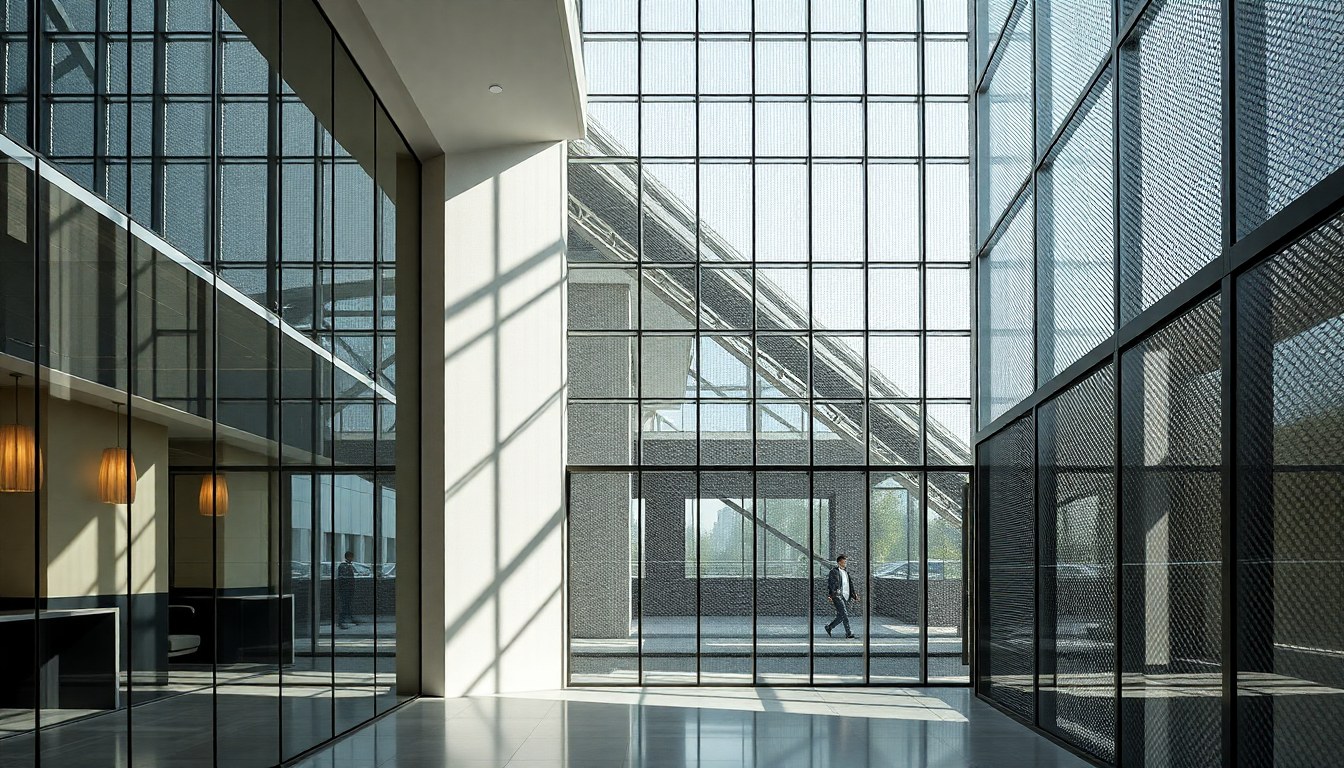
Wire mesh laminated glass has long been a staple in banking security installations across Delhi, offering a unique combination of forced-entry resistance and fire protection. However, as security threats evolve and customer experience becomes paramount, financial institutions must carefully weigh the intrusion resistance benefits against optical clarity reduction, maintenance requirements, and emerging polycarbonate alternatives that promise superior performance at competitive price points.
Understanding Wire Mesh Laminated Glass Construction
Wire mesh laminated glass consists of a steel or stainless steel mesh embedded between two or more layers of glass, bonded together using polyvinyl butyral (PVB) or ethylene-vinyl acetate (EVA) interlayers. The mesh typically features a grid pattern with wire diameters ranging from 0.5mm to 1.2mm and aperture sizes between 12mm and 25mm, depending on the required security level. This construction creates a composite material that holds together even when the glass is broken, preventing complete penetration.
The manufacturing process requires precise temperature and pressure control during lamination to ensure proper adhesion between the mesh, interlayer, and glass panes. Quality wire mesh laminated glass undergoes autoclave treatment at temperatures around 140°C and pressures of 12-14 bar, creating a permanent bond that withstands environmental stress and mechanical impact over decades of service.
For banking applications in Delhi's climate, the glass must also resist thermal stress from temperature fluctuations that can exceed 20°C between air-conditioned interiors and outdoor conditions during summer months. Properly manufactured wire mesh laminated glass accommodates these stresses without delamination or edge seal failure.
Security Performance for Banking Applications
Wire mesh laminated glass provides measurable security benefits that have made it a traditional choice for bank teller windows, cash handling areas, and secure document storage rooms. The embedded mesh creates a physical barrier that requires sustained attack with tools to penetrate, buying valuable time for security response.
Intrusion Resistance Metrics
Standard wire mesh laminated glass with 6mm glass panes and 0.8mm stainless steel mesh can withstand approximately 30-45 seconds of sustained attack with hand tools like hammers and pry bars. This resistance level meets the basic requirements outlined in Indian Standard IS 2553 for safety glass in public buildings, though it falls short of the higher-grade protection required for vault rooms or high-risk cash handling areas.
For enhanced security, banks can specify multi-layered configurations combining wire mesh with additional laminated glass plies. A construction featuring two wire mesh layers separated by 10mm glass cores can extend forced-entry resistance to 3-5 minutes against power tools, approaching the performance of bullet-resistant glazing systems at roughly 40-50% of the cost.
Fire Rating and Regulatory Compliance
One significant advantage of wire mesh laminated glass is its inherent fire resistance. The steel mesh helps maintain glass integrity at elevated temperatures, allowing properly constructed units to achieve fire ratings of 30-60 minutes depending on thickness and mesh specification. This dual-purpose functionality—security and fire protection—makes wire mesh laminated glass particularly valuable in banking environments where fire-rated partitions are mandatory under National Building Code requirements.
Delhi Fire Service regulations require fire-rated glazing in specific banking areas, including corridors, stairwells, and partitions separating cash handling zones from public areas. Wire mesh laminated glass can simultaneously satisfy both security and fire protection mandates, reducing the need for separate security grilles or shutters that compromise aesthetics and customer experience.
Transparency and Optical Clarity Trade-offs
The most significant compromise with wire mesh laminated glass is the reduction in optical clarity caused by the embedded mesh. This trade-off directly impacts customer experience, employee sightlines, and the modern banking aesthetic that emphasizes openness and transparency.
Standard wire mesh configurations reduce light transmission by 15-25% compared to clear laminated glass, creating a visible grid pattern that can appear institutional or outdated. The mesh also introduces optical distortion, particularly when viewing at angles, which can cause eye strain for employees working behind these barriers for extended periods. In customer-facing areas, the visible security barrier may create an unwelcoming atmosphere that contradicts the hospitality-focused environment many modern banks strive to create.
Some manufacturers offer fine-mesh variants with smaller apertures and thinner wires that reduce visual impact while maintaining security performance. These premium options can minimize light transmission loss to 10-12%, but they command price premiums of 30-40% over standard configurations and may require longer lead times for custom fabrication.
Impact on Branch Design and Customer Experience
Contemporary banking design prioritizes open sightlines and natural light to create welcoming environments that encourage customer engagement. Wire mesh laminated glass can conflict with these design goals, creating visual barriers that segment space and reduce the flow of natural light through the branch. Architects working on bank branch renovations increasingly specify the mesh only in back-office areas while seeking alternatives for customer-facing applications.
When working with experienced design professionals such as Swaran Architects or similar firms specializing in commercial interiors, banks can develop hybrid solutions that balance security requirements with aesthetic goals. These might include wire mesh laminated glass in transaction windows combined with clear polycarbonate or laminated glass in partition walls, creating security where needed without compromising the overall branch atmosphere.
Cost Analysis and Budget Considerations
Wire mesh laminated glass occupies a middle position in the security glazing cost spectrum, offering better protection than standard laminated glass at a fraction of the cost of bullet-resistant systems. Understanding the total cost of ownership requires examining not just material and installation expenses but also maintenance, replacement cycles, and opportunity costs related to aesthetics.
In the Delhi NCR market, standard wire mesh laminated glass (6mm+mesh+6mm configuration) typically costs ₹850-1,200 per square foot installed, depending on mesh specification, glass quality, and project volume. This represents approximately 60-70% of the cost of equivalent polycarbonate security glazing and roughly 25-30% of bullet-resistant glass systems rated for handgun threats.
Long-term Maintenance and Replacement Costs
Wire mesh laminated glass demonstrates excellent durability in controlled interior environments, with service lives exceeding 20-25 years when properly installed and maintained. However, edge seal failure can occur in high-humidity environments or installations with inadequate drainage, leading to moisture ingress and corrosion of the steel mesh. Once corrosion begins, the entire unit requires replacement, as rust staining cannot be removed and compromises both security and aesthetics.
Maintenance costs remain minimal for wire mesh laminated glass compared to mechanical security systems. Unlike motorized shutters or grilles that require regular servicing, the glass requires only routine cleaning and periodic inspection of edge seals and mounting hardware. This simplicity contributes to lower lifecycle costs despite the higher initial investment compared to standard glazing.
Polycarbonate Alternatives: Performance Comparison
Polycarbonate glazing systems have emerged as compelling alternatives to wire mesh laminated glass, offering superior impact resistance, better optical clarity, and lighter weight. Understanding when polycarbonate outperforms wire mesh glass helps banks make informed specifications for different security zones.
Multi-layer polycarbonate systems provide impact resistance 20-30 times greater than wire mesh laminated glass of equivalent thickness, making them significantly more effective against determined attacks. A 12mm polycarbonate security panel can withstand repeated impacts from sledgehammers and resist penetration from power tools for 5-10 minutes, exceeding the performance of all but the most robust wire mesh glass configurations.
Optical Clarity and Weight Advantages
Polycarbonate maintains 88-90% light transmission even in security-grade configurations, compared to 75-85% for wire mesh laminated glass. This superior clarity eliminates the visual mesh pattern and provides unobstructed sightlines that support modern banking design principles. For customer-facing applications where security requirements permit, polycarbonate delivers the transparency of standard glass with significantly enhanced protection.
The weight advantage of polycarbonate—roughly 50% lighter than glass of equivalent thickness—reduces structural loading on partition framing and simplifies installation. This can translate to cost savings in framing systems and foundations, particularly in renovation projects where existing structures may not support heavy glass installations without reinforcement.
Limitations and Application Constraints
Despite performance advantages, polycarbonate has important limitations for banking applications. It lacks fire resistance, typically softening and melting at temperatures around 150°C, making it unsuitable for fire-rated applications without additional protection. Polycarbonate also scratches more easily than glass, requiring protective coatings that add cost and require periodic replacement in high-traffic areas.
Chemical resistance presents another concern—polycarbonate degrades when exposed to common cleaning solvents, alcohols, and aromatic hydrocarbons. Banks must implement specific cleaning protocols and train staff to avoid damaging polycarbonate surfaces, adding operational complexity compared to the chemical inertness of glass.
Specification Recommendations for Delhi Banking Environments
Optimal security glazing specifications vary by application zone within the bank branch. A strategic approach combines different materials based on threat assessment, fire safety requirements, and customer experience priorities.
For high-security cash handling areas and vault approaches, wire mesh laminated glass remains cost-effective, particularly where fire ratings are mandatory. Specify configurations of 8mm+mesh+8mm or greater, using stainless steel mesh with 0.9-1.2mm wire diameter for maximum durability. These areas benefit from the fire protection and do not require the optical clarity needed in customer zones.
Customer-facing teller windows and transaction areas warrant careful evaluation of polycarbonate alternatives, especially in branches prioritizing modern aesthetics and customer experience. Where fire ratings are not required, multi-layer polycarbonate provides superior security with better transparency. Consult with specialists at firms like Art Glass to explore hybrid solutions that optimize both performance and aesthetics.
For partition walls and sidelights in public areas, standard laminated glass often provides adequate security while maximizing transparency and natural light transmission. Reserve wire mesh laminated glass and polycarbonate for specific high-risk applications rather than specifying them throughout the branch, balancing security investment with customer experience goals.
Frequently Asked Questions
How long does wire mesh laminated glass resist forced entry attempts?
Standard wire mesh laminated glass with 6mm glass panes typically resists hand tool attacks for 30-45 seconds, while enhanced multi-layer configurations can extend resistance to 3-5 minutes against power tools. The actual resistance time depends on mesh specification, glass thickness, and the tools used in the attack. This delay provides valuable time for security response but should be considered as part of a comprehensive security system including alarms and monitoring.
Can wire mesh laminated glass be used in fire-rated partitions?
Yes, wire mesh laminated glass provides inherent fire resistance and can achieve fire ratings of 30-60 minutes depending on construction. The steel mesh helps maintain glass integrity at elevated temperatures, making it suitable for fire-rated applications in corridors, stairwells, and security partitions where both fire protection and security are required. This dual functionality makes it particularly valuable in banking environments with stringent fire safety requirements.
What is the cost difference between wire mesh laminated glass and polycarbonate security glazing?
Wire mesh laminated glass typically costs ₹850-1,200 per square foot installed in Delhi NCR, while equivalent polycarbonate security glazing ranges from ₹1,200-1,800 per square foot. However, polycarbonate provides significantly better impact resistance and optical clarity. The choice depends on specific security requirements, fire rating needs, and budget constraints. Wire mesh glass offers better value where fire resistance is mandatory, while polycarbonate excels in customer-facing applications prioritizing transparency.
Does the wire mesh reduce visibility significantly in banking applications?
Standard wire mesh configurations reduce light transmission by 15-25% and create a visible grid pattern that can impact aesthetics and cause eye strain during extended viewing. Fine-mesh variants minimize this impact to 10-12% light transmission loss but cost 30-40% more. For customer-facing areas where transparency is important, many banks now specify polycarbonate alternatives or reserve wire mesh glass for back-office zones where visibility is less critical.
How does Delhi's climate affect wire mesh laminated glass performance?
Delhi's extreme temperature variations—with differences exceeding 20°C between air-conditioned interiors and outdoor conditions—can stress wire mesh laminated glass installations. Properly manufactured units with autoclave-bonded construction and quality edge seals withstand these thermal cycles without delamination. However, installations in areas with high humidity or inadequate drainage may experience edge seal failure and mesh corrosion over time, requiring complete unit replacement. Specify stainless steel mesh and ensure proper installation with adequate drainage for maximum longevity.
Selecting the right security glazing for your banking facility requires careful evaluation of security requirements, fire safety regulations, aesthetic goals, and budget constraints. Whether you choose wire mesh laminated glass, polycarbonate alternatives, or a hybrid approach, working with experienced professionals ensures optimal performance and value. Explore the glassy.in directory to connect with qualified glass suppliers, architects, and security glazing specialists serving Delhi and the broader NCR region who can help you specify and install the ideal solution for your banking security needs.