
Toughened Glass
Liquid Lamination vs Autoclave Process: Quality Comparison for Chennai Laminated Glass
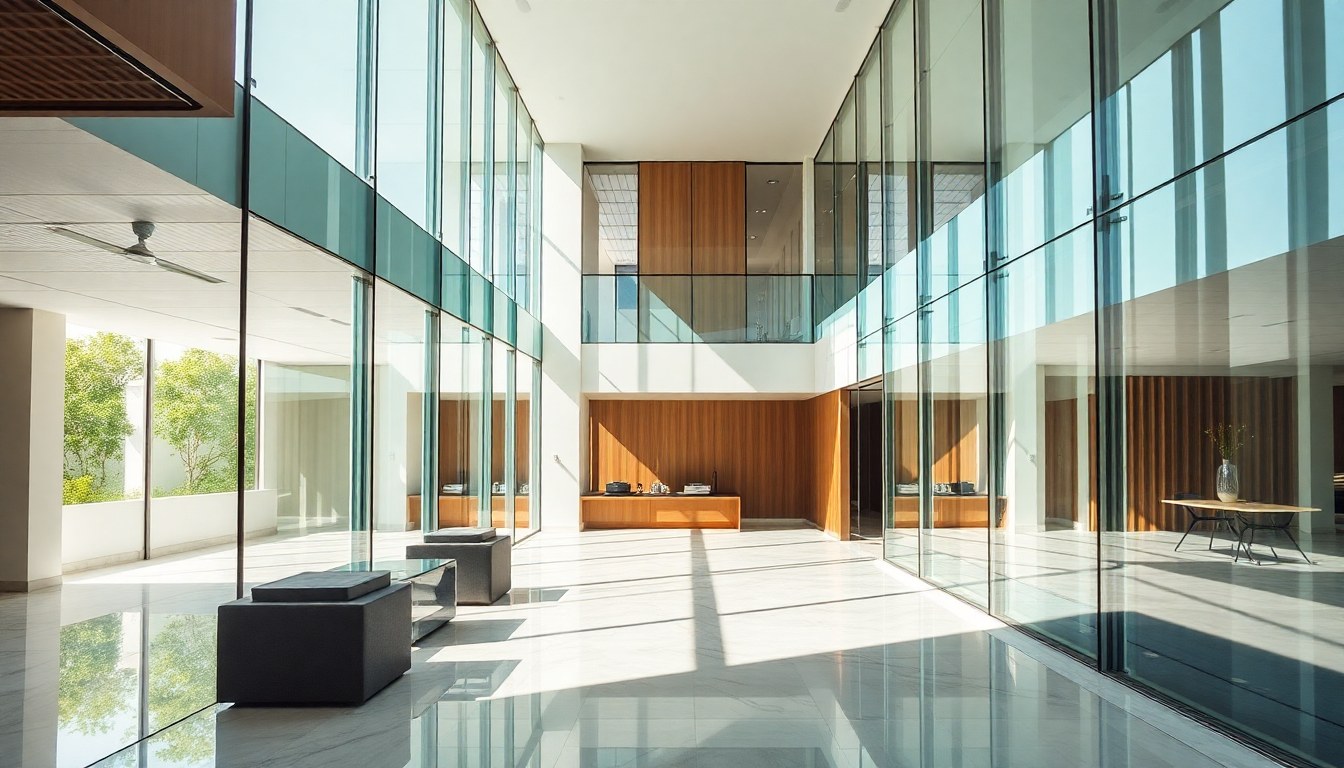
Laminated glass manufacturing in Chennai and across India relies on two primary bonding methods: the traditional autoclave process and the newer liquid lamination technique. Understanding the fundamental differences between these processes is crucial for architects, builders, and glass processors who need to balance quality requirements with budget constraints. This comprehensive comparison examines how each method affects optical clarity, structural integrity, and long-term performance in Chennai's demanding tropical climate.
Understanding the Autoclave Lamination Process
The autoclave process represents the gold standard in laminated glass manufacturing, used worldwide for over seven decades. This method involves placing pre-assembled glass sheets with PVB (polyvinyl butyral) interlayer into a large pressure vessel called an autoclave. The chamber then applies heat ranging from 135°C to 145°C combined with pressure between 12 to 14 bars for approximately 2 to 3 hours.
During this cycle, the high temperature melts the PVB interlayer while the pressure forces out any trapped air bubbles and ensures complete adhesion between the glass and interlayer. The result is a uniform, optically clear bond with exceptional strength characteristics. The autoclave method works with various interlayer materials including PVB, EVA (ethylene-vinyl acetate), and ionoplast resins like SentryGlas.
Chennai's established glass processors typically invest ₹50 lakhs to ₹2 crores in autoclave equipment depending on chamber size and automation level. The process requires skilled operators and consumes significant energy, but delivers consistently high-quality results that meet international standards like IS 2553 and EN ISO 12543.
How Liquid Lamination Technology Works
Liquid lamination, also called resin lamination or cast-in-place (CIP) lamination, takes a fundamentally different approach. Instead of using pre-manufactured interlayer films, this process injects liquid resin between two glass panes held in a frame. The resin—typically a two-part polyurethane or acrylic formulation—is poured or injected around the perimeter and allowed to flow between the glass sheets through capillary action.
The glass assembly is then placed in a curing oven or UV chamber where the liquid resin polymerizes and hardens, creating the bonding layer. Some systems use vacuum assistance to help draw the resin between the glass panes and eliminate air pockets. The entire process typically takes 24 to 48 hours including curing time, though actual working time is much shorter.
The equipment investment for liquid lamination is considerably lower—ranging from ₹5 lakhs to ₹25 lakhs—making it accessible to smaller glass fabricators in Chennai and other Indian cities. This lower barrier to entry has made liquid lamination increasingly popular, particularly for custom projects and smaller production runs.
Optical Clarity and Visual Quality Comparison
Optical clarity represents one of the most noticeable differences between these two processes. Autoclave-laminated glass typically achieves superior optical performance with minimal distortion. The uniform pressure and temperature distribution eliminates virtually all air bubbles and ensures consistent interlayer thickness across the entire panel. This results in glass that meets the highest architectural standards for applications like storefronts, curtain walls, and premium residential projects.
Liquid lamination can produce good optical quality when executed properly, but faces inherent challenges. Achieving perfectly uniform resin distribution across large panels proves difficult, sometimes resulting in slight thickness variations that create minor optical distortion. Small air bubbles or "seeds" occasionally remain trapped in the resin, particularly near edges or in corners where resin flow is restricted.
Edge Sealing and Moisture Protection
Edge quality differs significantly between methods. Autoclave-laminated glass features edges where the PVB interlayer is visible as a thin line between the glass panes. This edge requires proper sealing in frame systems to prevent moisture ingress, which can cause delamination over time. However, the PVB itself is factory-manufactured to consistent quality standards.
Liquid lamination creates a different edge profile. The resin typically extends to the very edge of the glass, creating a complete seal. When properly formulated and cured, this can provide excellent moisture resistance. However, edge quality depends heavily on application technique—poorly mixed resin or incomplete curing can leave edges vulnerable to environmental degradation, particularly concerning in Chennai's high-humidity coastal climate.
Structural Performance and Safety Standards
Both processes can produce laminated glass that meets Indian safety standards, but with different performance characteristics. Autoclave-laminated glass with PVB interlayer has decades of proven field performance data. The strong bond ensures that when glass breaks, fragments remain adhered to the interlayer, providing the safety containment that laminated glass is designed for. This performance is predictable and consistent across millions of installations worldwide.
Liquid-laminated glass can achieve comparable safety performance when manufactured correctly. Quality resins form strong bonds with glass surfaces and maintain fragment retention after breakage. However, performance variability is higher because results depend more on individual fabrication technique, resin mixing accuracy, and curing conditions. Testing each production batch becomes more critical with liquid lamination.
Delamination Risk Factors
Delamination—the separation of glass from interlayer—represents the primary failure mode for laminated glass. Autoclave processes minimize this risk through complete air removal and strong chemical bonding achieved under controlled conditions. When delamination occurs in autoclave glass, it typically results from edge seal failure allowing moisture penetration, not from manufacturing defects in the lamination itself.
Liquid lamination faces higher delamination risk from several factors. Incomplete resin curing, improper surface preparation, contamination during assembly, or resin formulation issues can all compromise bond strength. Chennai's tropical climate with temperatures exceeding 35°C and high humidity levels accelerates any weakness in the resin-glass bond. Processors must exercise strict quality control over surface cleaning, resin mixing ratios, and curing cycles to achieve durable results.
Cost Analysis and Economic Considerations
The economic comparison extends beyond initial equipment investment to include operating costs, production efficiency, and quality-related expenses. Autoclave processing involves higher capital costs but benefits from economies of scale. Large autoclaves can process multiple panels simultaneously, and the standardized PVB interlayer is readily available from multiple suppliers at competitive prices. Energy costs for heating and pressurizing the autoclave are significant but predictable.
For a typical 10mm laminated glass panel (5mm + 5mm with interlayer), autoclave processing in Chennai typically adds ₹250 to ₹400 per square meter to the base glass cost, depending on production volume and interlayer type. This includes material, energy, labor, and equipment amortization.
Liquid lamination offers lower per-unit costs for small production runs. The resin material cost is comparable to PVB, but the simpler equipment and lower energy consumption reduce overhead. Small fabricators can produce custom-sized panels economically without the setup time required for autoclave batching. However, longer curing times limit production throughput, and quality control testing adds costs that larger autoclave operations can spread across higher volumes.
Application Suitability and Best Use Cases
Autoclave lamination remains the preferred choice for applications demanding the highest quality and reliability. This includes architectural projects with large glass areas, structural glazing systems, overhead glazing where safety is critical, bullet-resistant and blast-resistant glazing, and any application requiring certification to stringent international standards. Major commercial projects in Chennai—office towers, hotels, hospitals, and airports—typically specify autoclave-laminated glass.
Liquid lamination finds its niche in specific applications where its characteristics provide advantages. Custom-shaped panels, small production runs, decorative glass with embedded materials, repair and replacement projects, and cost-sensitive applications where moderate optical quality is acceptable all benefit from the liquid lamination approach. Interior partitions, furniture applications, and residential projects with limited budgets represent good fits for this technology.
Climate Considerations for Chennai Installations
Chennai's coastal location creates challenging environmental conditions for laminated glass. High temperatures, intense UV exposure, humidity levels often exceeding 80%, and salt-laden air all stress the glass-interlayer bond. Autoclave-laminated glass with quality PVB has proven durability in these conditions when properly installed with adequate edge protection.
Liquid-laminated glass requires careful resin selection for Chennai applications. UV-resistant formulations are essential to prevent yellowing and bond degradation. Moisture-resistant resins help maintain edge seal integrity. Specifiers should request accelerated weathering test data and demand warranties of at least 5 years for exterior applications, compared to the 10-year warranties commonly offered for autoclave-laminated glass.
Frequently Asked Questions
Which lamination process produces stronger glass?
Both autoclave and liquid lamination can produce laminated glass meeting safety standards, but autoclave processing delivers more consistent and predictable strength. The uniform pressure bonding creates reliable adhesion across the entire panel, while liquid lamination strength depends more heavily on fabrication technique and quality control. For critical structural or safety applications, autoclave-laminated glass remains the industry standard.
Is liquid laminated glass suitable for exterior use in Chennai?
Liquid laminated glass can be used externally in Chennai if manufactured with UV-resistant, moisture-resistant resins and proper quality control. However, it requires more careful specification than autoclave glass. Ensure the fabricator provides test data for weathering resistance and offers adequate warranty coverage. For large exterior installations or applications with high safety requirements, autoclave-laminated glass provides greater long-term reliability in Chennai's demanding coastal climate.
How much cost difference exists between the two processes?
For small custom orders, liquid lamination may cost 15-25% less than autoclave processing due to lower overhead and setup costs. However, for standard-sized panels in production quantities, autoclave lamination often proves more economical due to efficiency and economies of scale. The price difference narrows to 5-10% for volume orders. Consider total lifecycle costs including durability and warranty rather than just initial price when making decisions for important projects.
Can you visually distinguish between autoclave and liquid laminated glass?
High-quality examples of both processes can look very similar, but trained observers can often identify differences. Autoclave glass typically shows the distinct PVB interlayer line at edges, while liquid lamination has resin-filled edges. Autoclave glass generally exhibits superior optical clarity with no distortion, while liquid laminated panels may show slight thickness variations or occasional small bubbles. Edge finish and overall optical uniformity provide the clearest indicators of manufacturing method.
Which process is better for acoustic laminated glass?
Autoclave processing with specialized acoustic PVB interlayers provides superior sound insulation performance. These interlayers are engineered specifically for acoustic damping and achieve consistent results. While liquid lamination can incorporate acoustic properties through resin formulation, the performance is generally less predictable and testing becomes essential. For projects where noise reduction is a primary requirement, autoclave-laminated acoustic glass remains the recommended choice.
Choosing the right laminated glass manufacturing process requires balancing quality requirements, application demands, and budget constraints. Whether you need autoclave-processed glass for a major architectural project or liquid lamination for custom work, finding qualified manufacturers is essential. Visit the glassy.in directory to connect with experienced laminated glass processors in Chennai and across India who can guide you to the best solution for your specific needs.