
Toughened Glass
Toughened Glass Thickness for Shopfronts: BIS Standards and Load Requirements for Retail Stores
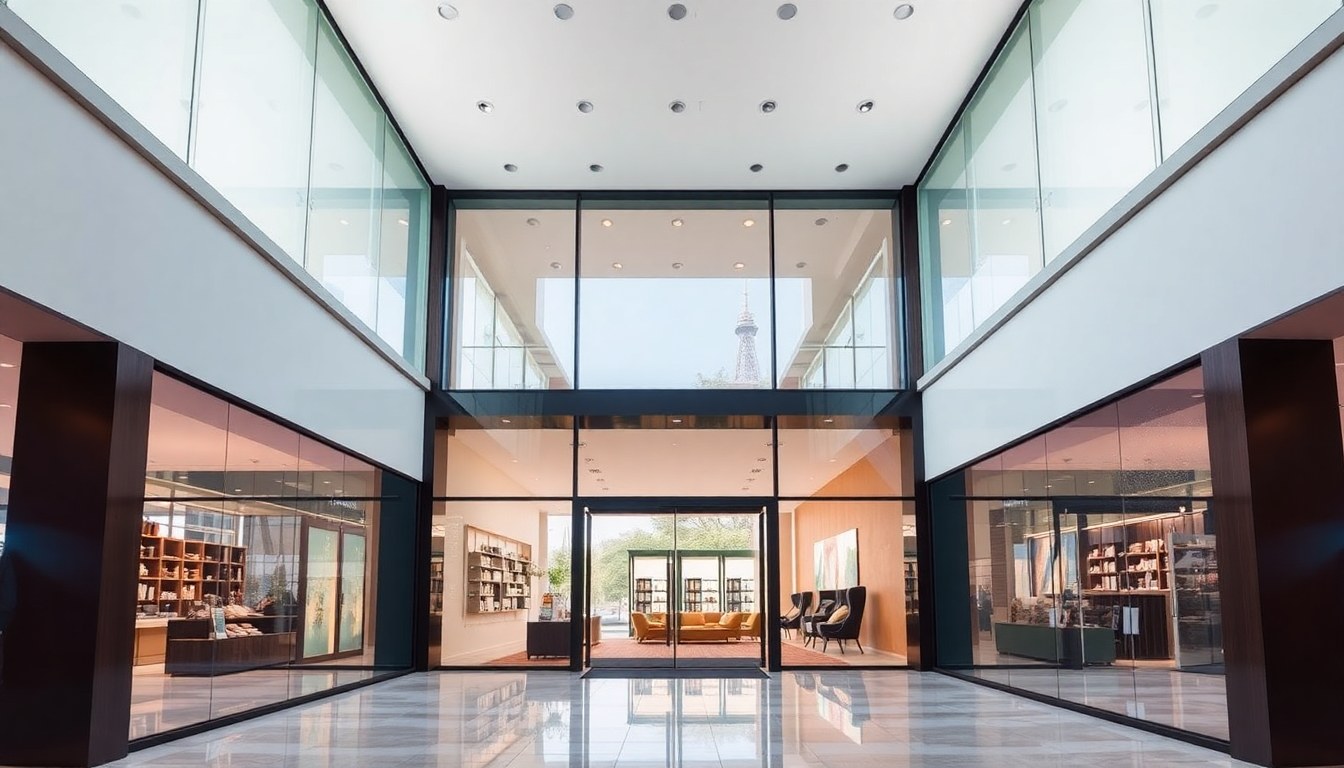
Selecting the correct toughened glass thickness for your retail shopfront is critical for safety, structural integrity, and long-term cost efficiency. The wrong specification can lead to catastrophic failures, regulatory non-compliance, and expensive replacements. This comprehensive guide walks you through BIS standards, load calculations, and practical considerations to help you make informed decisions for your commercial glass installation across India.
Understanding BIS Standards for Toughened Glass in Commercial Applications
The Bureau of Indian Standards (BIS) provides the regulatory framework for toughened glass installations in India through IS 2553. This standard specifies that toughened or tempered safety glass must be at least five times stronger than ordinary annealed glass of the same thickness. For shopfronts, compliance with IS 2553 ensures that the glass can withstand thermal stress, mechanical impact, and environmental loads without shattering into dangerous shards.
BIS standards mandate that toughened glass, when broken, must fracture into small, relatively harmless granular chunks rather than sharp, jagged pieces. For retail applications, the glass must also meet IS 14900 requirements for human impact safety, particularly important in high-traffic commercial zones. The standard specifies pendulum impact tests that simulate accidental collisions, ensuring the glass can protect both customers and merchandise.
Additionally, IS 875 (Part 3) governs wind load calculations for building facades, which directly impacts the minimum thickness requirements for shopfront glazing. These standards work together to create a comprehensive safety framework that architects, contractors, and glass suppliers must follow when specifying toughened glass for commercial installations.
Minimum Thickness Requirements for Retail Shopfronts
For standard retail shopfronts in India, the minimum recommended thickness for toughened glass is 10mm. This baseline specification suits small display windows up to 1.5 square meters in low-wind zones. However, most commercial applications require thicker glass to account for larger panel sizes, wind exposure, and safety margins.
The most commonly used thicknesses for shopfronts include:
- 10mm toughened glass: Suitable for small windows, interior partitions, and protected locations with minimal wind exposure
- 12mm toughened glass: The industry standard for most street-level shopfronts up to 3 square meters in moderate wind zones
- 15mm toughened glass: Recommended for larger panels (3-5 square meters), high-traffic areas, or locations with elevated wind loads
- 19mm toughened glass: Required for expansive glazing systems, corner installations without framing, or coastal areas with extreme wind conditions
When working with experienced professionals like S K GHOSH GLASS SHOP, you can get precise thickness recommendations based on your specific location, panel dimensions, and structural requirements. These specialists understand local building codes and can help ensure compliance while optimizing costs.
Wind Load Calculations and Regional Considerations
Wind load is the primary structural consideration when selecting toughened glass thickness for shopfronts. IS 875 (Part 3) divides India into six wind zones, with basic wind speeds ranging from 33 m/s to 55 m/s. Coastal cities like Mumbai, Chennai, and Visakhapatnam fall into higher wind zones, requiring thicker glass specifications than inland locations.
The design wind pressure depends on several factors including building height, terrain category, local topography, and the shape of the glazed area. For a typical ground-floor shopfront in a metropolitan area, wind pressures typically range from 1.0 to 2.0 kN/m². However, corner locations, recessed entrances, and buildings in open terrain can experience significantly higher pressures due to wind acceleration effects.
Calculating Required Thickness
Professional glass engineers use the following parameters to determine minimum thickness:
- Maximum unsupported span (height and width of the glass panel)
- Design wind pressure based on location and building characteristics
- Edge support conditions (two-edge, three-edge, or four-edge support)
- Allowable stress limits for toughened glass (typically 24 MPa for long-term loads)
- Deflection limits (usually L/60 to L/125, where L is the shorter span)
For example, a 2.4m × 1.8m shopfront panel in Delhi (wind zone III) with four-edge support typically requires 12mm toughened glass. The same panel in Kolkata (wind zone V) or in a corner location might require 15mm thickness to maintain adequate safety factors.
Human Impact Resistance and Safety Glazing Requirements
Beyond wind loads, shopfront glass must withstand accidental human impact, which is particularly critical in retail environments with high foot traffic, children, or shopping carts. IS 14900 specifies three classes of safety glazing based on impact energy resistance, with Class A (the highest) required for critical locations including full-height glazing and doors.
Toughened glass naturally provides excellent impact resistance due to its manufacturing process, which creates compressive surface stresses. A 12mm toughened glass panel can typically withstand impact energies of 300-400 joules without failure, far exceeding the minimum requirements for shopfront applications. This makes it suitable for locations where customers might accidentally walk into the glass or where shopping carts could collide with the storefront.
For enhanced safety in premium retail locations, many designers specify laminated toughened glass, which combines two layers of toughened glass with a PVB interlayer. This configuration provides both the strength of toughened glass and the post-breakage security of laminated glass, preventing the entire panel from falling out of the frame even if both layers fracture. Professional design firms like Concept Space often recommend this specification for high-value merchandise displays or jewelry stores.
Frame Specifications and Edge Support Systems
The thickness of toughened glass directly influences the frame system requirements. Aluminum framing channels must provide adequate edge cover (typically 12-20mm on each edge) and proper setting blocks to prevent point loading. The frame depth should be at least 15mm greater than the glass thickness to accommodate thermal expansion and structural movement.
For frameless or minimally framed shopfronts, structural glazing systems use specialized point-fixed fittings or patch fittings that transfer loads through small contact areas. These systems typically require thicker glass (minimum 15mm, often 19mm) to distribute concentrated stresses safely. The glass edges must be polished and may require additional edge treatment to prevent stress concentration at the fixing points.
Setting blocks, which support the glass weight within the frame, should be positioned at quarter points along the bottom edge for rectangular panels. These blocks must be made from compatible materials (typically EPDM or neoprene) that won't react with the glass or aluminum frame. Proper shimming and edge clearances (3-6mm depending on panel size) are essential to prevent thermal stress breakage.
Cost Analysis and Long-Term Value Considerations
The cost of toughened glass for shopfronts varies significantly based on thickness, with prices increasing approximately 15-25% for each 2mm increment in thickness. As of 2024, typical costs in major Indian cities range from ₹450-600 per square foot for 12mm toughened glass, ₹550-750 per square foot for 15mm, and ₹700-950 per square foot for 19mm thickness. These prices include toughening but exclude installation, framing, and hardware.
While thicker glass represents a higher upfront investment, it offers several long-term value benefits. Thicker panels provide better acoustic insulation, reducing street noise in busy commercial areas. They also offer superior security against break-ins and vandalism, which can reduce insurance premiums for retail establishments. The enhanced durability means fewer replacements over the building's lifecycle, offsetting the initial cost premium.
When budgeting for a shopfront installation, consider these additional cost factors:
- Transportation and handling charges increase with thickness due to greater weight
- Installation labor costs may be 20-30% higher for thicker glass requiring additional manpower
- Stronger framing systems and hardware for thicker glass specifications
- Potential savings from reduced maintenance and longer service life
Working with experienced interior design professionals like HomeLane Bistupur, Interior Design Studio can help optimize specifications to balance safety requirements with budget constraints, ensuring you neither over-specify (wasting money) nor under-specify (compromising safety).
Special Considerations for Different Retail Environments
Different retail formats have unique requirements that influence glass thickness selection. High-end boutiques and jewelry stores often specify thicker glass (15-19mm) not just for security but also for the premium aesthetic that thicker glass provides, with its characteristic green edge tint and substantial appearance. Electronics stores and mobile phone shops in high-crime areas may opt for laminated toughened glass regardless of structural requirements.
Shopping mall storefronts face different considerations than street-level shops. Mall environments typically have controlled climates and protection from direct weather exposure, potentially allowing for thinner specifications. However, the high foot traffic and potential for shopping cart impacts often justify maintaining standard thickness recommendations. Mall management may also impose minimum thickness requirements in their tenant design guidelines.
Restaurants and cafes with outdoor seating areas require special attention to wind loads, as partially enclosed spaces can create unusual pressure differentials. Corner units or end-of-row locations experience higher wind loads due to acceleration effects. Food retail environments should also consider ease of cleaning and maintenance when selecting glass specifications, as thicker glass is more resistant to scratching from repeated cleaning.
Frequently Asked Questions
What is the minimum thickness of toughened glass required for a shopfront in India?
The minimum recommended thickness for retail shopfronts is 10mm toughened glass, but 12mm is the industry standard for most street-level applications. The actual requirement depends on panel size, wind zone, and local building codes. Panels larger than 3 square meters or locations in high-wind zones typically require 15mm or thicker glass to meet safety and structural requirements.
How do I calculate the correct toughened glass thickness for my specific shopfront?
Calculating the correct thickness requires considering panel dimensions, wind load based on your location (per IS 875 Part 3), edge support conditions, and deflection limits. The formula involves the maximum span, design wind pressure, and allowable stress for toughened glass. For accurate calculations, consult a structural engineer or experienced glass supplier who can account for all site-specific factors including building height, terrain category, and local wind zone classification.
Is 12mm toughened glass strong enough for a large shopfront window?
For most standard shopfronts up to 3 square meters with four-edge support in moderate wind zones, 12mm toughened glass is adequate. However, larger panels, corner locations, high-wind coastal areas, or installations with reduced edge support may require 15mm or 19mm thickness. The glass must meet both strength requirements (withstanding wind loads without exceeding stress limits) and deflection limits (typically not exceeding 1/60th of the shorter span).
Does thicker toughened glass provide better security for retail stores?
Yes, thicker toughened glass offers improved security against forced entry and vandalism. While all toughened glass provides good impact resistance, 15mm and 19mm thicknesses are significantly more difficult to break through. For high-security applications like jewelry stores, laminated toughened glass (two layers of toughened glass with a PVB interlayer) provides superior protection by holding fragments together even after breakage, preventing quick access to merchandise.
What is the cost difference between 12mm and 15mm toughened glass for shopfronts?
The cost difference between 12mm and 15mm toughened glass is typically 20-25% higher for the thicker specification, translating to approximately ₹100-150 more per square foot in most Indian cities. While this represents a significant upfront investment for large shopfronts, the enhanced durability, better acoustic performance, and improved security often justify the additional expense, particularly in premium retail locations or high-traffic areas where long-term performance is critical.
Choosing the right toughened glass thickness for your shopfront requires balancing safety standards, structural requirements, and budget considerations. For expert guidance tailored to your specific project, explore the extensive directory of glass suppliers, fabricators, and design professionals at glassy.in, India's most comprehensive glass business directory connecting you with verified specialists across the country.