
Toughened Glass
Glass Shelving Load Capacity: How Much Weight Can Toughened Glass Shelves Hold?
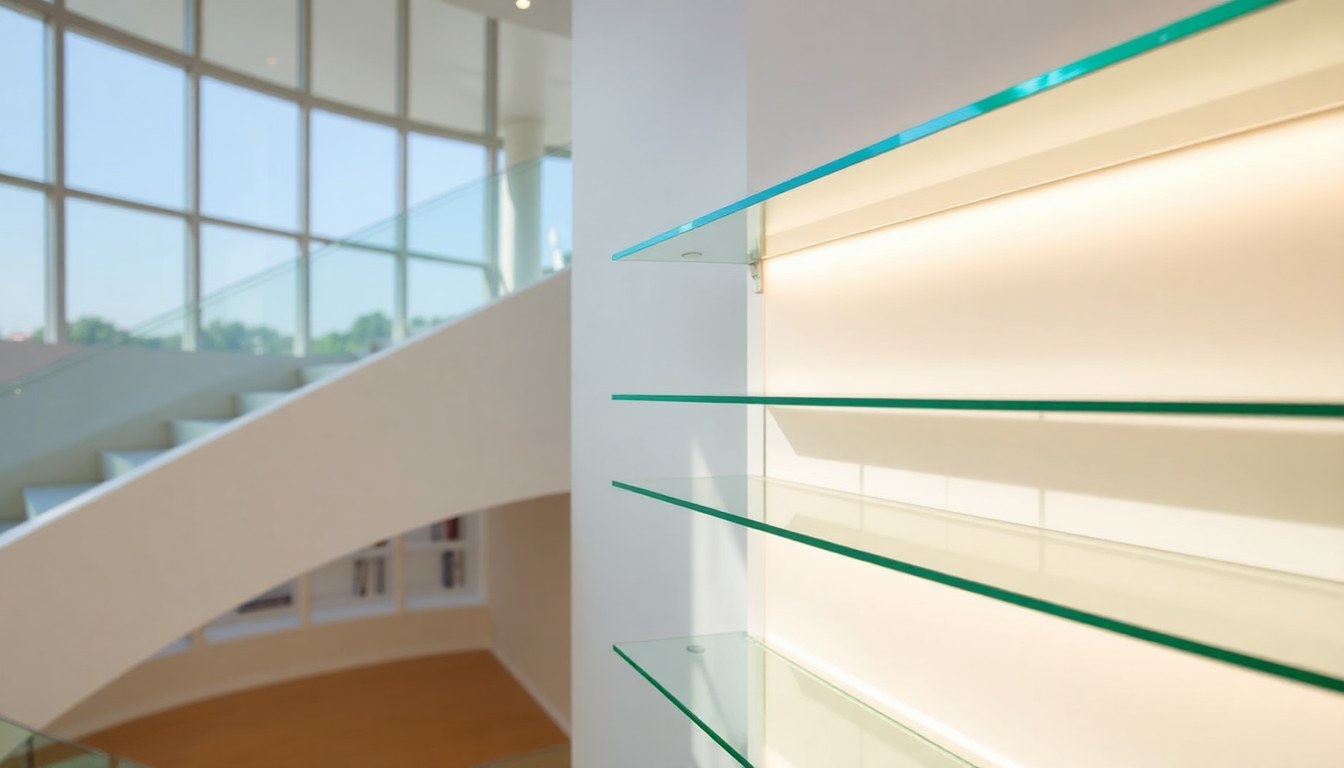
Toughened glass shelves are elegant, durable, and increasingly popular in Indian homes and commercial spaces. But how much weight can they actually hold? A 10mm toughened glass shelf with proper edge support can typically bear 25-35 kg per linear metre, while a 12mm shelf can handle 40-50 kg per linear metre. The actual load capacity depends on glass thickness, shelf span, support type, and safety factors mandated by Indian standards.
Understanding Toughened Glass Strength and Load-Bearing Principles
Toughened or tempered glass undergoes a thermal treatment process that makes it four to five times stronger than ordinary annealed glass. During manufacturing, the glass is heated to approximately 650°C and then rapidly cooled, creating compressive stress on the surface and tensile stress in the core. This process gives toughened glass its characteristic strength and safety properties—when it breaks, it shatters into small, relatively harmless granules rather than dangerous shards.
The load-bearing capacity of glass shelves is governed by bending stress. When weight is placed on a glass shelf, it creates tensile stress on the bottom surface and compressive stress on the top. Since glass is much weaker in tension than compression, the bottom surface determines the failure point. Engineers calculate safe loads by ensuring the maximum tensile stress remains well below the glass's breaking strength, with appropriate safety factors applied.
According to Bureau of Indian Standards (BIS) guidelines, toughened glass used in architectural applications should have a minimum surface compression of 69 MPa (megapascals) and edge compression of at least 67 MPa. These specifications ensure consistent quality and performance across installations in Indian buildings.
Glass Thickness and Span: The Critical Relationship
The relationship between glass thickness and shelf span is fundamental to determining load capacity. As the span increases, the bending moment increases exponentially, requiring thicker glass to maintain the same safety margin. This is why a narrow shelf can hold proportionally more weight than a wider one of the same thickness.
Standard Thickness-to-Span Ratios
Professional installers and architects follow established thickness-to-span ratios to ensure safety:
- 6mm toughened glass: Maximum recommended span of 300-400mm, suitable for light decorative items (5-10 kg total load)
- 8mm toughened glass: Spans up to 500-600mm, appropriate for bathroom storage and light kitchen use (15-20 kg total load)
- 10mm toughened glass: Spans of 600-800mm, ideal for retail displays and book shelves (25-35 kg total load)
- 12mm toughened glass: Spans up to 900-1000mm, suitable for heavy-duty applications like kitchen pantries (40-50 kg total load)
- 15mm toughened glass: Spans exceeding 1000mm, used in commercial installations with heavy loads (60-75 kg total load)
These figures assume continuous edge support on at least two sides. Point-supported or bracket-mounted shelves require more conservative calculations. Designers like those at Pixilo Design carefully evaluate these ratios when specifying glass elements in residential and commercial projects.
Impact of Shelf Depth
Shelf depth (the front-to-back dimension) also affects load distribution. Deeper shelves distribute weight over a larger area, reducing stress concentration. A 300mm deep shelf will handle loads more efficiently than a 150mm deep shelf of the same thickness and span. However, the primary span—the unsupported distance between supports—remains the critical dimension for structural calculations.
Edge Support Types and Their Effect on Load Capacity
The type and quality of edge support dramatically influence how much weight a glass shelf can safely hold. Support conditions change the stress distribution pattern and maximum bending moment in the glass.
Continuous Edge Support
Shelves supported along their entire back edge and both side edges provide the best load distribution. This three-edge support condition allows the glass to transfer loads in two directions, significantly increasing capacity. Kitchen cabinets and bathroom vanities typically use this configuration, where the shelf sits in grooves or on continuous ledges. This arrangement can increase load capacity by 40-60% compared to simple two-edge support.
Two-Edge Support
The most common configuration involves supporting the shelf at two parallel edges—typically the back edge and front edge, or left and right sides. This creates a simple beam condition where the glass bends in one direction. The calculations for this setup are straightforward, making it popular in retail displays and open shelving systems.
Point Support and Bracket Mounting
Shelves mounted on brackets or point supports experience concentrated stress at mounting locations. These installations require significantly thicker glass or reduced spans to maintain safety. A bracket-mounted shelf typically needs to be 30-40% thicker than an edge-supported shelf of the same span. Professional installation is crucial—specialists like Tricity interior designer ensure proper drilling, appropriate hardware, and adequate edge clearances to prevent stress concentration failures.
Safety Factors and BIS Standards for Indian Installations
Indian building codes and glass industry standards mandate conservative safety factors to account for manufacturing variations, installation tolerances, dynamic loads, and long-term degradation. The Bureau of Indian Standards provides guidelines through IS 2553 (Safety Glass) and IS 14900 (Code of Practice for Installation of Glass).
Engineers typically apply a safety factor of 4 to 6 for glass shelving applications. This means the working load should be only 16-25% of the theoretical breaking load. This conservative approach accounts for several real-world factors:
- Dynamic loading: People don't place items gently—they drop books, slam bottles, and lean on shelves
- Impact resistance: Shelves must withstand occasional impacts without failure
- Temperature variations: Indian climates range from sub-zero in northern winters to 45°C+ in summer, creating thermal stress
- Edge quality: Microscopic edge defects can propagate under sustained load
- Long-term creep: Glass can slowly deform under constant load over years
Professional architects and interior designers, such as those at Meraaz Atelier, incorporate these safety factors into their specifications to ensure installations remain safe throughout their service life.
Practical Load Calculations for Common Applications
Understanding theoretical capacity is useful, but practical applications require context. Here's how load capacity translates to real-world scenarios in Indian homes and businesses.
Kitchen Cabinet Shelves
Kitchen shelves must accommodate heavy loads—stacked dishes, appliances, and stored groceries. A typical 600mm span kitchen shelf in 10mm toughened glass can safely hold approximately 30 kg when properly edge-supported. This translates to roughly 15-20 dinner plates, or 8-10 heavy ceramic serving bowls, or a mid-sized microwave oven. For pantry storage with canned goods and bottles, 12mm glass is recommended, providing a safety margin for the concentrated weight of filled containers.
Bathroom Storage
Bathroom glass shelves typically hold lighter loads but face high humidity and temperature fluctuations. An 8mm toughened glass shelf spanning 450mm can comfortably hold toiletries, towels, and cosmetics totaling 15-18 kg. This accommodates multiple bottles, a stack of towels, and decorative items with adequate safety margin. The toughening process makes the glass resistant to thermal shock from hot steam and cold water splashes.
Retail Display Shelving
Retail environments demand both aesthetic appeal and robust performance. A 900mm span retail shelf in 12mm toughened glass can display approximately 40-45 kg of merchandise. This might include multiple pairs of shoes, folded garments, electronic accessories, or decorative items. Retailers often prefer thicker glass not just for capacity but for the perception of quality and the reduced deflection under load, which maintains the premium appearance.
Book Shelves and Home Libraries
Books are deceptively heavy—a linear metre of books can easily weigh 30-40 kg. For book storage, 12mm toughened glass with spans not exceeding 800mm is advisable. This provides adequate capacity for two rows of standard hardcover books while maintaining acceptable deflection. Visible sagging not only looks poor but indicates stress levels approaching unsafe limits.
Installation Best Practices for Maximum Load Capacity
Even properly specified glass can fail if installation quality is poor. Several critical factors ensure shelves perform to their rated capacity throughout their service life.
Edge quality is paramount. All edges should be polished and inspected for chips or cracks. Even minor edge defects create stress concentration points that can propagate into catastrophic failure under load. Reputable glass processors provide clean, polished edges as standard, but verification during installation is essential.
Support surfaces must be flat, level, and free from debris. Uneven support creates point loading that concentrates stress. Many installers use thin rubber or silicone pads between glass and support surfaces. These pads distribute loads evenly, accommodate minor irregularities, and prevent glass-to-hard-surface contact that could cause edge damage.
Proper clearances prevent binding and thermal stress. Glass expands and contracts with temperature changes—approximately 9 micrometres per metre per degree Celsius. Installation channels or brackets should allow 3-5mm clearance to accommodate this movement without creating stress. In Indian climates with significant temperature swings, this expansion allowance prevents stress buildup that could lead to spontaneous breakage.
Signs of Overloading and When to Replace Glass Shelves
Regular inspection helps identify problems before failure occurs. Visible deflection or sagging indicates the shelf is approaching its load limit. While some deflection is normal and expected, if you can see the sag from normal viewing distance, the load should be reduced or the glass upgraded to a thicker specification.
Edge chips or cracks, even small ones, compromise structural integrity significantly. Any visible edge damage warrants immediate shelf replacement. The tempered stress pattern means small defects can propagate rapidly under load, leading to sudden failure.
Spontaneous breakage, while rare in quality toughened glass, can occur due to nickel sulfide inclusions in the glass composition. If a shelf breaks without obvious cause, replacement glass should be heat-soaked—an additional quality control process that identifies and eliminates glass containing these inclusions before installation.
Frequently Asked Questions
Can I increase the weight capacity of an existing glass shelf?
The only safe way to increase capacity is to replace the shelf with thicker glass or reduce the span by adding intermediate supports. You cannot strengthen existing glass through coatings or treatments. If you need more capacity, consult a glass specialist or architect to specify appropriate replacement glass based on your actual load requirements and span.
How much does glass shelf thickness affect the price?
In the Indian market, glass shelf pricing increases approximately 25-30% for each 2mm increase in thickness. A 10mm toughened glass shelf might cost ₹800-1,200 per square foot, while 12mm costs ₹1,000-1,500 per square foot, depending on edge finishing, quality, and location. However, the cost of replacement after failure far exceeds the initial savings from using thinner glass, making proper specification economical in the long term.
Is laminated glass stronger than toughened glass for shelves?
Laminated glass offers different properties than toughened glass. While lamination provides excellent post-breakage safety by holding fragments together, it doesn't significantly increase load-bearing capacity. For maximum strength in shelving applications, toughened glass is preferred. Some high-security or specialized applications use toughened laminated glass, combining the strength of tempering with the safety of lamination, but this is rarely necessary for residential or standard commercial shelving.
What happens if I exceed the recommended weight limit?
Exceeding rated capacity increases stress beyond safe limits, raising the probability of failure. Toughened glass typically doesn't fail gradually—when the stress exceeds the breaking point, the entire shelf shatters suddenly into small pieces. While these pieces are less dangerous than annealed glass shards, the sudden failure can cause injury from falling objects and creates a significant cleanup and replacement burden. Always maintain loads within specified limits with adequate safety margin.
Do I need special hardware for heavy-duty glass shelves?
Yes, thicker glass and heavier loads require appropriately rated brackets, channels, or support systems. Hardware should be specifically designed for glass applications, with adequate contact area to distribute loads and prevent point stress. Stainless steel brackets are preferred in Indian conditions for their corrosion resistance, particularly in coastal areas or high-humidity environments. Professional installation ensures hardware is properly sized, correctly positioned, and securely anchored to wall structures capable of supporting the combined weight of glass and contents.
Choosing the right glass shelf specification ensures safety, longevity, and peace of mind. Whether you're planning kitchen renovations, retail displays, or bathroom upgrades, consulting with experienced glass professionals helps you select appropriate thickness, span, and support configurations for your specific needs. Visit the glassy.in directory to connect with qualified glass suppliers, fabricators, and installation specialists across India who can provide expert guidance and quality products for your glass shelving projects.