
Toughened Glass
Tinted Glass vs Reflective Glass: Heat Rejection Comparison for Surat Factories
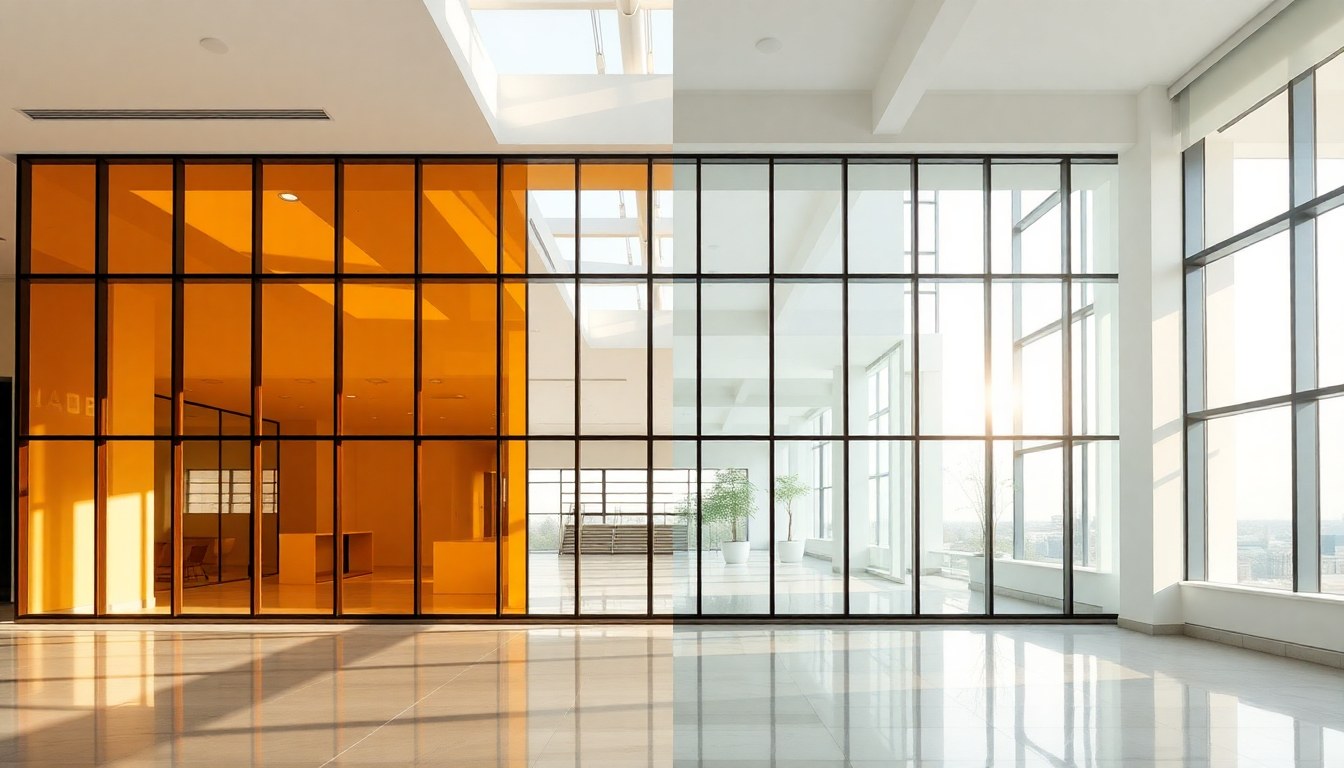
Factory owners in Surat face a critical challenge: controlling intense solar heat while maintaining productive work environments. Both tinted and reflective glass offer heat rejection properties, but they work through fundamentally different mechanisms and deliver varying levels of performance. This comprehensive comparison examines solar heat gain coefficient (SHGC), visibility, cost implications, and energy savings to help you choose the right glazing solution for your industrial facility.
Understanding Heat Rejection Technologies in Glass
Tinted glass achieves heat control by absorbing solar radiation within the glass body itself. Manufacturers add color-stable metal oxides during the float glass production process, creating bronze, grey, green, or blue-tinted panels. The glass absorbs a significant portion of solar energy, converting it to heat within the glass pane, which then dissipates through convection and radiation to both sides.
Reflective glass, on the other hand, employs a metallic coating applied to one surface of the glass that mirrors solar radiation away before it can enter the building. This coating—typically composed of thin layers of metals like silver, gold, or copper—reflects infrared and ultraviolet radiation while allowing varying amounts of visible light to pass through. The reflection mechanism prevents heat from being absorbed in the first place, making it fundamentally more efficient than absorption-based technologies.
For industrial applications in Surat's climate, where ambient temperatures regularly exceed 35°C during summer months, this distinction becomes critical. Absorbed heat in tinted glass can re-radiate inward, whereas reflected heat never enters the building envelope.
Solar Heat Gain Coefficient (SHGC) Performance Analysis
The Solar Heat Gain Coefficient measures how much solar radiation passes through glass as heat, with lower values indicating better heat rejection. Standard clear glass typically has an SHGC of 0.80-0.85, meaning 80-85% of solar heat enters the building. This baseline helps us understand the improvements offered by specialized glazing.
Tinted glass performance varies by color and thickness. A 6mm bronze or grey tinted glass typically achieves an SHGC of 0.55-0.65, blocking 35-45% of solar heat. Darker tints can push this to 0.50, but at the cost of significantly reduced visible light transmission. The absorption mechanism means the glass itself becomes hot—often reaching 60-70°C in direct sunlight—which can stress the glass and surrounding frames.
Reflective glass delivers superior performance with SHGC values ranging from 0.20 to 0.40 depending on coating specification. High-performance reflective coatings can achieve SHGC as low as 0.15, blocking 85% of solar heat gain. For a typical 1000 square meter factory facade in Surat, this difference translates to rejecting an additional 30-40 kilowatts of heat load during peak hours compared to tinted glass.
Real-World Temperature Reduction
In practical terms, reflective glass can reduce interior temperatures by 4-7°C compared to tinted glass in similar conditions. For manufacturing facilities where machinery already generates substantial heat, this additional reduction directly impacts worker comfort, equipment performance, and cooling costs. Businesses looking for professional installation should consult experienced suppliers like CITY GLASS PALACE AND ALUMINIUM FABRICATION who understand industrial glazing requirements.
Visibility and Daylight Considerations
Visible light transmission (VLT) determines how much natural daylight enters your facility, affecting both worker productivity and artificial lighting requirements. Tinted glass typically offers VLT between 30-50%, with darker tints dropping to 20%. While this reduces glare, it also necessitates more artificial lighting during daytime operations, partially offsetting energy savings from reduced cooling loads.
Reflective glass provides better flexibility in balancing heat rejection with daylight. Modern spectrally selective reflective coatings can achieve VLT of 40-60% while maintaining low SHGC values. This selectivity—blocking infrared heat while transmitting visible light—represents a significant advantage for factories where natural lighting improves quality control and reduces eye strain for precision work.
The exterior appearance also differs substantially. Tinted glass maintains a relatively transparent look from outside, while reflective glass creates a mirror-like finish that can range from subtle silver to pronounced gold or blue tones. For industrial estates with aesthetic guidelines or branding considerations, this visual difference may influence your selection.
Cost Analysis and Return on Investment
Initial material costs favor tinted glass, which typically runs ₹180-280 per square foot for 6-8mm thickness in Surat markets. Reflective glass commands a premium at ₹280-450 per square foot depending on coating quality and performance specifications. For a 500 square meter glazing project, this represents a difference of approximately ₹2.5-4.5 lakhs in material costs alone.
However, operational cost analysis reveals a different picture. A medium-sized factory with 1000 square meters of glazing can expect the following annual cooling cost differences in Surat's climate:
- Standard tinted glass: Baseline cooling requirement with moderate heat gain
- High-performance reflective glass: 25-35% reduction in solar heat gain cooling load
- Annual savings: ₹1.2-2.8 lakhs depending on facility size and HVAC efficiency
Based on these figures, the higher upfront investment in reflective glass typically pays back within 2-4 years through reduced electricity consumption. Factories operating multiple shifts or requiring precise temperature control see faster payback periods. Interior designers and architects, such as Royal Kitchens and Interiors, often recommend reflective glass for commercial projects where long-term operational efficiency matters.
Maintenance and Longevity Factors
Tinted glass requires minimal special maintenance—standard cleaning procedures suffice. The color is integral to the glass, so it won't fade or degrade over time. Expected lifespan matches standard float glass at 20-25 years with proper installation.
Reflective coatings require more careful consideration. Hard-coat (pyrolytic) reflective glass incorporates the coating during manufacturing, making it extremely durable and suitable for single-glazing applications. Soft-coat (magnetron sputtered) coatings offer superior performance but must be protected in an insulated glass unit (IGU) configuration. Quality reflective glass maintains performance for 15-20 years, though coating degradation can occur with improper installation or seal failure in IGUs.
Surat Climate Specific Recommendations
Surat's subtropical climate presents specific challenges: intense summer heat (March-June), high humidity during monsoon (July-September), and moderate winter temperatures. The city experiences approximately 3000-3200 cooling degree days annually, making heat rejection a year-round concern rather than a seasonal consideration.
For textile factories, diamond processing units, and other heat-sensitive operations, reflective glass delivers measurable advantages. The superior SHGC performance prevents heat buildup that would otherwise compound with process heat from machinery. Chemical and pharmaceutical facilities requiring controlled environments benefit even more dramatically from the precise solar control reflective coatings provide.
Warehousing and logistics facilities might find tinted glass adequate, especially if natural ventilation supplements mechanical cooling. The lower initial cost and simpler installation make tinted glass viable for budget-conscious projects where extreme heat control isn't critical. However, even in these applications, lifecycle cost analysis often favors reflective glass when financing allows the higher upfront investment.
Combination Strategies
Some factory owners optimize costs by using reflective glass on south and west-facing facades that receive maximum solar exposure, while specifying tinted glass for north and east orientations. This hybrid approach balances performance with budget constraints, delivering 60-70% of the benefit at approximately 75% of the all-reflective cost.
Installation and Structural Considerations
Both glass types require proper structural support, but reflective glass demands more attention to installation details. The coating orientation matters—reflective coatings must face outward in single-pane applications or be positioned correctly within IGU assemblies. Improper installation can reduce performance by 30-40% and void manufacturer warranties.
Tinted glass generates higher thermal stress due to absorption, requiring careful attention to edge clearances and frame design. Dark tints in large panels may require heat-strengthened or tempered glass to prevent thermal breakage, adding to project costs. Frame materials must accommodate thermal expansion—aluminum frames with thermal breaks work well for both applications.
Working with experienced glazing contractors ensures proper installation. Professional suppliers understand local building codes, structural requirements, and climate-specific installation practices that maximize glass performance and longevity.
Frequently Asked Questions
Which is better for heat reduction: tinted or reflective glass?
Reflective glass provides superior heat reduction with SHGC values of 0.20-0.40 compared to tinted glass at 0.50-0.65. In Surat's climate, reflective glass can reduce interior temperatures by an additional 4-7°C compared to tinted alternatives, making it the better choice for heat-intensive industrial applications where cooling costs are significant.
How much more expensive is reflective glass compared to tinted glass?
Reflective glass costs approximately 55-70% more than tinted glass initially, with prices ranging from ₹280-450 per square foot versus ₹180-280 for tinted glass. However, the 25-35% reduction in cooling costs typically recovers this premium within 2-4 years, making reflective glass more cost-effective over the building's lifecycle.
Does reflective glass reduce natural light more than tinted glass?
Modern spectrally selective reflective glass actually transmits more visible light (40-60% VLT) than many tinted options (30-50% VLT) while providing better heat rejection. This means reflective glass can deliver superior heat control without sacrificing natural daylight, reducing both cooling and artificial lighting costs simultaneously.
Can I use reflective glass in single-pane applications or does it require double glazing?
Hard-coat reflective glass works well in single-pane applications common in Indian industrial construction. Soft-coat reflective glass requires insulated glass unit (IGU) configuration to protect the coating. For Surat factories, single-pane hard-coat reflective glass often provides the best balance of performance, cost, and practicality.
Will reflective glass coatings degrade in Surat's humid climate?
Quality hard-coat reflective glass maintains performance for 15-20 years even in humid coastal climates like Surat's. The coating is fused to the glass during manufacturing, making it highly resistant to moisture, salt air, and environmental degradation. Proper installation with adequate drainage and ventilation ensures long-term performance without coating failure.
Choosing between tinted and reflective glass for your Surat factory requires balancing initial investment against long-term operational savings. For expert guidance on glass selection and professional installation services, explore the comprehensive directory of glass suppliers, fabricators, and consultants at glassy.in—India's largest glass business directory connecting factory owners with qualified glazing professionals across the country.