
Glass Guides
Structural Glass Floors: Load Capacity, Installation & Cost Reality Check
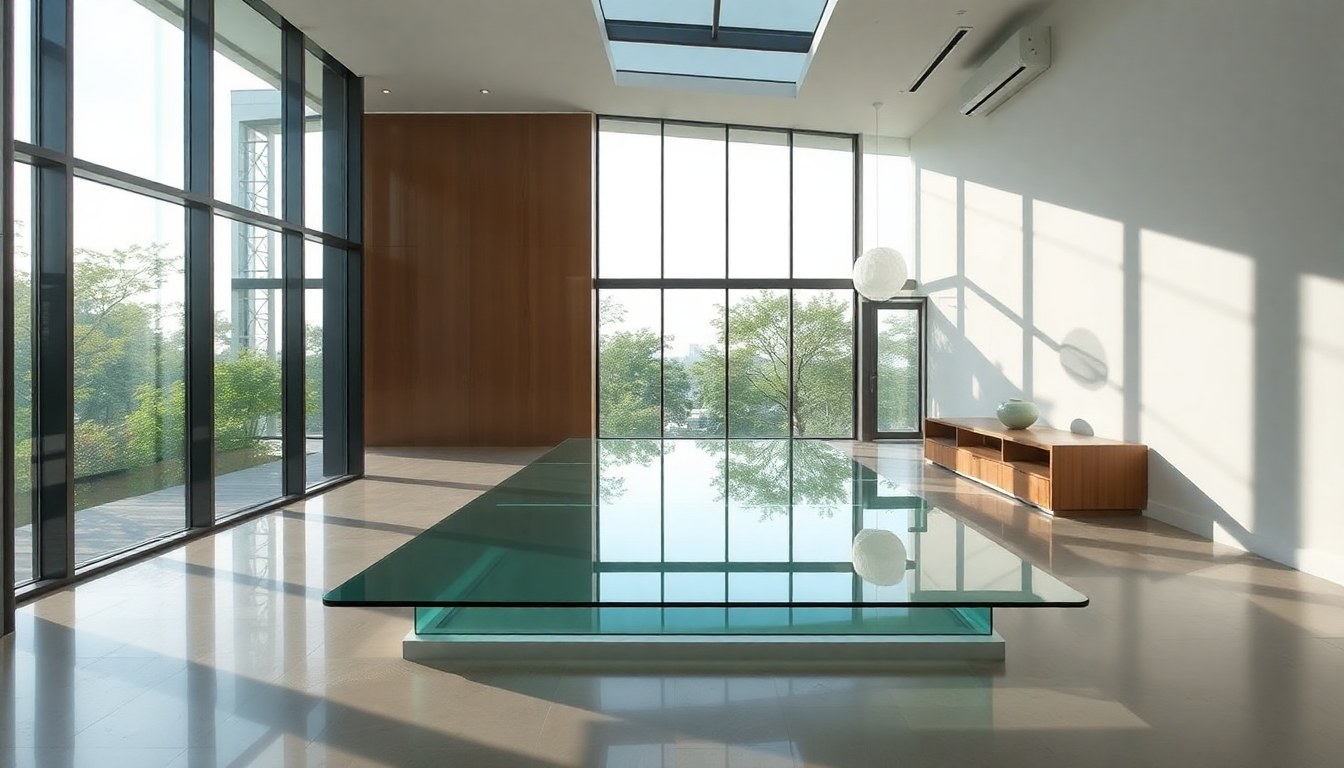
Structural glass floors have transformed modern architecture in India, creating stunning visual continuity between levels while maintaining impressive strength. If you're considering glass flooring for a luxury home or commercial space, understanding load capacity, installation complexity, and actual costs is essential before committing to this premium design choice. This guide breaks down the engineering, safety standards, and real-world pricing based on installations across Bangalore and other major Indian cities.
What Are Structural Glass Floors?
Structural glass floors are engineered flooring systems where laminated glass panels serve as the primary load-bearing surface rather than a decorative overlay. Unlike standard glass tiles or thin glass sheets, these floors use thick laminated glass—typically 25mm to 50mm—bonded with specialized interlayers to distribute weight evenly and prevent catastrophic failure if damage occurs.
The lamination process involves fusing multiple glass panes with polyvinyl butyral (PVB) or structural silicone interlayers. This creates a composite material that behaves like a unified solid, absorbing impact and distributing loads across the entire panel rather than concentrating stress at a single point. The result is a floor that feels solid underfoot while offering transparency that opens up interior spaces visually.
Understanding Load Capacity and Safety Standards
Typical Load Ratings
Structural glass floors engineered for residential use typically support 5 to 10 kN/m² (kilonewtons per square meter) distributed load, with point loads—concentrated weight from a single object or person—handled differently. A 50mm laminated glass panel can generally support a point load of 1.5 to 2.5 kN (roughly 150–250 kg concentrated on a small area) without permanent deformation. For commercial applications, load ratings increase to 10–15 kN/m² distributed load, suitable for office environments and retail spaces.
These figures assume proper installation on adequately designed support structures. The glass itself is only part of the equation; the underlying frame, joists, and foundation must be engineered to handle the combined weight of the glass plus live loads (people, furniture, equipment). A structural engineer must calculate these requirements based on span length, panel dimensions, and intended use.
Indian and International Safety Certifications
Structural glass floors installed in India should comply with IS 2250 (Indian Standard for Safety Glass and Laminated Safety Glass) and IS 13049 (Safety Requirements for Glazing). Many premium installations also reference European standards like EN 12600 (Impact Resistance) to ensure durability in tropical climates with temperature fluctuations and humidity variations.
Look for installations certified by independent testing laboratories. Tempered and laminated glass must be tested for impact resistance, thermal stress, and edge durability. Reputable suppliers provide third-party test certificates confirming the glass meets load-bearing claims. Without these certifications, you're relying on manufacturer promises rather than verified engineering data.
Installation Methods and Structural Requirements
Support System Design
Structural glass floors require a robust underlying framework. The most common support systems use steel or reinforced concrete beams spaced to limit glass panel span. Typical spacing is 1.2 to 1.5 meters between support points, though longer spans up to 2 meters are possible with thicker glass and stronger framing.
The glass panels sit on neoprene or silicone bearing pads that distribute load evenly and allow for minor thermal expansion. These pads typically measure 10–15mm thick and are critical for preventing stress concentration at corners or edges. The pads absorb vibration and accommodate the different thermal expansion rates of glass and metal or concrete supports.
Installation Process
Professional installation involves several steps. First, the support structure is inspected and leveled to within 2–3mm across the entire span. Any deviation greater than this can cause uneven load distribution and potential cracking. Next, bearing pads are positioned precisely on the supports, and the glass panels are carefully lowered into place using specialized lifting equipment and suction cups designed for laminated glass.
Edge sealing is critical. Gaps between panels are filled with structural silicone sealant rated for movement and flexibility. This sealant prevents water ingress, which is especially important in Indian climates where monsoon rains can penetrate poorly sealed joints. The sealant must be applied by trained technicians following manufacturer specifications regarding depth, width, and curing time.
A typical residential installation for a 20 m² floor (say, 4m × 5m) takes 3–5 days, including support preparation, glass installation, sealing, and curing. Commercial installations with larger areas and more complex layouts can take 2–3 weeks.
Real Installation Case Studies from India
Luxury Bangalore Residence (Indiranagar)
A high-end residential project in Bangalore's Indiranagar area installed a 16 m² structural glass floor connecting two levels of a villa. The design featured 40mm laminated glass panels with a steel support frame. The project cost ₹8,50,000 (approximately ₹53,000 per square meter) and included custom frameless design with minimal visible support structure. Installation took 4 weeks due to custom engineering and coordination with the structural engineer overseeing the villa's renovation. Two years post-installation, the floor remains flawless with no cracks, discoloration, or sealing issues.
Commercial Office Space (Whitefield, Bangalore)
A 35 m² mezzanine floor in a Whitefield IT office building used 50mm structural glass to create an open, light-filled workspace. The 50mm thickness was necessary to meet commercial load standards (10 kN/m² distributed load). Total cost was ₹18,50,000 (approximately ₹52,800 per square meter). The project required coordination with the building's structural engineer, fire safety consultant, and municipal authorities. The thicker glass increased cost but provided superior acoustic performance and safety margins for a high-traffic commercial environment.
Cost Breakdown: What You'll Actually Pay
Material Costs
Structural laminated glass in India costs between ₹1,200 and ₹2,000 per square meter for 25–30mm thickness, and ₹2,000–₹3,500 per square meter for 40–50mm thickness. These are material-only prices from established suppliers in metros. Specialty glass (tinted, frosted, or with custom interlayers) adds 20–40% to material cost. A 20 m² residential floor requires approximately ₹40,000–₹70,000 in glass material alone.
Support Structure and Engineering
Custom steel framing or reinforced concrete modifications cost ₹15,000–₹30,000 per square meter depending on complexity and existing structure. Structural engineering consultancy fees range from ₹50,000 to ₹2,00,000 for residential projects and ₹2,00,000–₹5,00,000 for commercial installations. These fees are non-negotiable if you want certified, safe design.
Installation Labor and Accessories
Professional installation labor costs ₹8,000–₹15,000 per square meter. Bearing pads, silicone sealants, edge treatments, and miscellaneous hardware add another ₹3,000–₹8,000 per square meter. For a 20 m² residential project, expect ₹1,60,000–₹4,60,000 in labor and materials combined.
Total Project Cost Range
A modest residential structural glass floor (20 m²) costs ₹6,00,000–₹12,00,000 (₹30,000–₹60,000 per square meter). Premium installations with custom design, architectural detailing, and high-performance glass reach ₹15,00,000–₹25,00,000 (₹75,000–₹1,25,000 per square meter). Commercial projects typically fall in the ₹50,000–₹80,000 per square meter range due to stricter load requirements and compliance standards.
Maintenance, Durability, and Long-Term Costs
Structural glass floors require minimal maintenance compared to traditional flooring. Regular cleaning with mild soap and water keeps the glass clear. Avoid abrasive cleaners and acidic solutions that can etch the surface. Inspect sealant joints annually for any gaps or deterioration, especially after monsoon seasons in India. Resealing specific joints costs ₹2,000–₹5,000 per linear meter and is typically needed every 10–15 years.
The laminated glass itself is highly durable. Impact resistance is excellent, and the interlayers prevent shattering. Thermal stress from India's temperature variations is minimal because glass expands and contracts uniformly. Most installations show no visible degradation after 10–20 years. The primary long-term cost is periodic resealing and occasional replacement of bearing pads (₹5,000–₹15,000 per panel).
Common Mistakes and How to Avoid Them
The most frequent error is underestimating structural requirements. Homeowners and contractors sometimes assume existing supports can handle glass flooring without engineering review. This leads to deflection, cracking, and safety risks. Always engage a structural engineer before finalizing design.
Poor sealing is another common issue. Inadequate silicone application or use of non-structural sealants allows water penetration, which degrades interlayers and creates visible staining. Specify structural silicone sealants tested for glass-to-metal bonding and require professional application.
Choosing unverified suppliers to save cost often backfires. Glass without proper lamination certification, missing test reports, or vague load ratings can fail unexpectedly. Invest in certified glass from established manufacturers with verifiable track records in India.
Frequently Asked Questions
Can structural glass floors handle heavy furniture and appliances?
Yes, if properly engineered. A 40mm laminated glass floor with adequate support structure easily handles sofas, dining tables, and refrigerators. The key is distributed weight. A grand piano (approximately 300 kg) spread across its footprint poses no problem. However, extremely concentrated loads—like a narrow steel beam resting on the glass—require localized reinforcement. Always consult your structural engineer about specific heavy items.
Are structural glass floors slippery?
Standard laminated glass is moderately slippery when wet, similar to polished stone. Anti-slip treatments (textured coatings, adhesive films, or etched patterns) can be applied to improve grip. Many installations incorporate subtle etching or micro-texturing that maintains transparency while reducing slip risk. This adds ₹2,000–₹5,000 per square meter but is worthwhile for bathrooms or kitchens.
How does temperature affect structural glass floors?
Glass expands and contracts with temperature changes, but the expansion is minimal and uniform. India's temperature swings (0–50°C in some regions) cause approximately 0.5–1mm of movement in a 5-meter glass panel. Properly designed bearing pads and sealant joints accommodate this movement. Inadequate sealant flexibility can cause cracking in extreme temperature variations, which is why structural silicone—not standard caulk—is essential.
What is the typical lifespan of a structural glass floor?
Well-maintained structural glass floors last 25–50 years or longer. The glass itself is inert and doesn't degrade. The limiting factors are sealant durability (10–15 years) and bearing pad deterioration (20–30 years). Periodic resealing and pad replacement keep the floor functional indefinitely. Most installations in India that are 15+ years old remain in excellent condition.
Can I install a structural glass floor in an older building?
Possibly, but it requires structural assessment. Older buildings may have inadequate load-bearing capacity in the intended location. A structural engineer must evaluate the existing framing, foundation, and overall building integrity. Retrofitting support structures can be expensive (₹2,00,000–₹8,00,000) but is often feasible. Never attempt installation without professional engineering evaluation.
Making Your Decision
Structural glass floors are a legitimate, safe design choice when engineered and installed properly. The ₹30,000–₹1,25,000 per square meter investment reflects genuine engineering, certified materials, and professional installation. Cutting corners on engineering, certification, or installation creates real safety and durability risks. If you're ready to explore structural glass flooring for your Bangalore home or commercial space, connect with certified glass suppliers and structural engineers through the glassy.in directory to compare quotes, verify credentials, and review past installations in your region.