
Smart Glass
Smart Glass for Office Cabins: Temperature Control & Privacy on Demand
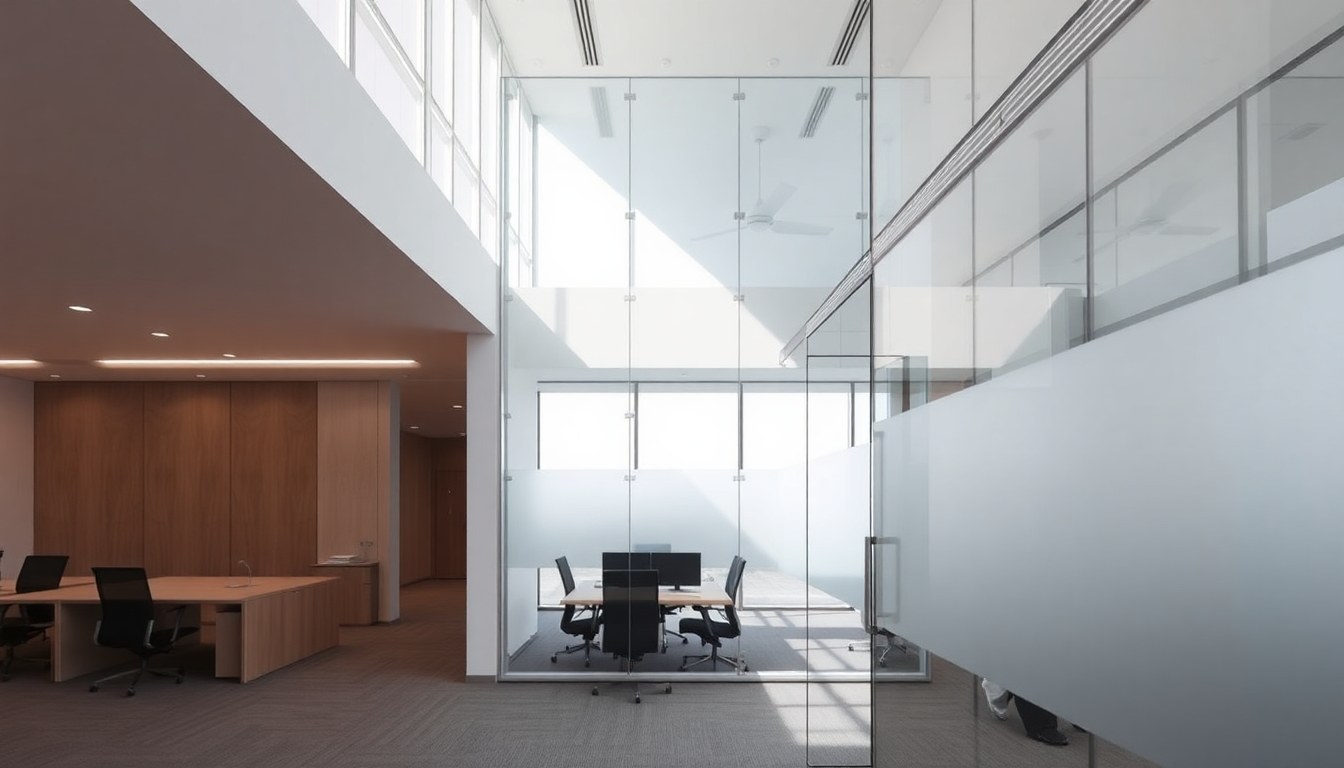
Modern office spaces demand flexibility, comfort, and efficiency—qualities that traditional glass partitions simply cannot deliver. Smart glass technology, also called switchable glass, transforms ordinary transparent barriers into dynamic surfaces that shift between transparent and opaque states at the flick of a switch, while simultaneously managing heat transmission and natural light. For office cabins across India, this innovation solves three persistent challenges: maintaining employee privacy during focus work, regulating cabin temperature without excessive air conditioning, and adapting instantly to meeting requirements.
What Is Smart Glass and How Does It Work?
Smart glass, or switchable glass, uses advanced materials and electrical systems to change its light transmission properties on demand. The most common types are electrochromic glass (which darkens when voltage is applied) and polymer-dispersed liquid crystal (PDLC) glass, which turns opaque when activated. When powered off, PDLC remains transparent; when powered on, liquid crystals scatter light, creating instant privacy without physical blinds or curtains.
The technology operates through a simple control mechanism—wall switches, remote controls, or smartphone apps—making it accessible for any office environment. Installation typically integrates into existing partition frameworks, and modern systems consume minimal electricity, often less than standard LED lighting. This combination of ease-of-use and low energy demand makes smart glass particularly attractive for Indian office developments where both operational costs and employee experience matter.
Types of Smart Glass for Office Use
- Electrochromic Glass: Gradually darkens to reduce glare and heat; ideal for cabins with direct sunlight exposure.
- PDLC (Polymer-Dispersed Liquid Crystal): Switches instantly between clear and frosted states; perfect for privacy-sensitive meeting rooms.
- Thermochromic Glass: Responds to temperature changes automatically; requires no electrical input but offers less control.
- Photochromic Glass: Darkens in response to sunlight; useful for energy management but less suitable for privacy control.
Energy Efficiency and Temperature Control Benefits
One of the most compelling advantages of smart glass in office cabins is its ability to reduce cooling loads and energy consumption. By controlling solar heat gain through intelligent tinting, smart glass minimizes the work required from air conditioning systems. Studies on commercial buildings show that smart glass can reduce cooling energy by 15–25% in sun-exposed zones, translating to significant savings across large office floors.
In Indian climates, where intense sunlight and high temperatures drive up air conditioning costs year-round, this benefit is especially valuable. An office cabin with south-facing smart glass partitions can automatically darken during peak afternoon heat, reducing the temperature rise inside the cabin and decreasing reliance on zone-based cooling. Over a year, this translates into measurable reductions in both energy bills and carbon footprint—a priority for companies pursuing sustainability certifications.
Real-World Energy Savings Scenario
Consider a typical office building in Bangalore or Mumbai with 40 cabins, each measuring 3m × 3m. If each cabin has 6 square meters of smart glass facing east or west, activating tint during 10 AM–4 PM on 250 working days per year can reduce cooling demand by approximately 18–22%. For a facility operating air conditioning at ₹15–20 per kilowatt-hour, this translates to annual savings of ₹40,000–₹60,000 across all cabins—before accounting for improved employee comfort and productivity.
Privacy on Demand Without Sacrificing Natural Light
Traditional office cabins rely on static frosted glass, heavy curtains, or blinds to maintain privacy. These solutions block natural light entirely, creating dim, uninviting spaces that can lower morale and increase eye strain. Smart glass solves this dilemma by allowing employees to control privacy instantly while retaining the psychological and health benefits of natural light.
When a confidential call or sensitive meeting occurs, a single button press transforms the cabin's transparent walls into opaque partitions. When privacy is not needed, the glass returns to transparency, maintaining the open, collaborative feel of modern offices. This flexibility is especially valuable for hot-desking arrangements, where cabins serve multiple purposes throughout the day—focused work in the morning, client meetings at midday, and collaborative sessions in the afternoon.
Privacy for Different Work Scenarios
- Confidential Calls: Activate opacity for sensitive client or HR conversations without closing physical doors.
- Concentration Work: Signal unavailability to colleagues while maintaining visual connection to the broader office.
- Client Meetings: Create a professional, private environment instantly without pre-booking dedicated conference rooms.
- Open Collaboration: Keep glass transparent for spontaneous team interactions and informal knowledge-sharing.
Installation and Integration in Modern Office Cabins
Installing smart glass in office cabins is straightforward, especially during renovation or new construction phases. The glass panels are manufactured to standard office partition dimensions and integrate into aluminum or steel framing systems. For existing cabins, replacement is non-disruptive—technicians remove old glass panels and install smart glass equivalents, then run low-voltage wiring to wall-mounted control switches or a centralized building management system.
The electrical requirements are minimal: most smart glass systems operate on standard 24V or 110V circuits, similar to office lighting. Building architects and interior designers, such as those listed on LINEAR ARCHITECTS or tada design collective, can advise on optimal placement and control strategies during the design phase. For retrofits, professional glass dealers like ARMAN GLASS EMPORIUM can assess existing partitions and recommend compatible smart glass solutions.
Control Systems and Automation
Modern smart glass control systems range from simple manual switches to sophisticated IoT-enabled platforms. Basic setups use wall-mounted buttons or remote controls, while advanced systems integrate with building automation, allowing privacy and tinting to be scheduled, triggered by occupancy sensors, or controlled via smartphone apps. Some systems even sync with calendar software—automatically opacifying a cabin 5 minutes before a scheduled meeting and returning to transparent afterward.
Cost Considerations and Return on Investment
The cost of smart glass varies depending on glass type, panel size, and control system sophistication. In India, PDLC smart glass typically ranges from ₹8,000–₹15,000 per square meter, while electrochromic variants may cost ₹12,000–₹20,000 per square meter. Installation adds ₹2,000–₹4,000 per square meter. For a 100-cabin office building with 600 square meters of smart glass partitions, total investment might range from ₹60–₹120 lakhs.
However, the return on investment becomes clear within 5–7 years through energy savings alone. Add to this the benefits of improved employee satisfaction, reduced need for dedicated meeting rooms (saving real estate costs), and enhanced corporate image, and the financial case strengthens considerably. Many organizations also qualify for green building certifications and associated tax incentives, further improving ROI.
Frequently Asked Questions
Does smart glass require constant power to remain opaque?
This depends on the technology. PDLC glass requires continuous power to stay opaque; if power is cut, it reverts to transparent. Electrochromic glass, by contrast, can hold its tinted state without power, though activation requires electricity. For critical privacy applications, electrochromic glass is often preferred because it maintains opacity even during power outages.
Can smart glass be installed in existing office partitions?
Yes. If your office uses standard aluminum or steel framing systems, smart glass panels can replace existing glass without structural changes. However, the framing must be in good condition, and electrical circuits must be run to support the switching system. Consult with experienced glass professionals to assess feasibility before committing to a project.
How durable is smart glass in high-traffic office environments?
Smart glass is as durable as conventional tempered glass when properly installed. The electronic components are sealed within the glass layers, protecting them from dust and moisture. Typical lifespan is 10–15 years, with warranties covering manufacturing defects. Regular cleaning with soft cloths and non-abrasive cleaners maintains clarity and performance.
What is the typical response time for switching between transparent and opaque?
PDLC glass switches in milliseconds to a few seconds, depending on the specific product. Electrochromic glass typically takes 1–3 minutes to reach full opacity or transparency. For office environments, even the slower electrochromic response is imperceptible to users during normal work.
Is smart glass compatible with existing office lighting and HVAC systems?
Yes. Smart glass operates independently of lighting and HVAC systems, though it integrates well with them. By reducing solar heat gain, smart glass actually reduces the burden on HVAC systems, allowing them to operate more efficiently. Smart glass also works alongside task lighting, as it does not interfere with artificial illumination.
Transform Your Office Cabins Today
Smart glass technology represents a genuine leap forward in office design, delivering measurable benefits in energy efficiency, employee comfort, and operational flexibility. Whether you're planning a new office build or upgrading existing cabins, smart glass offers a future-proof solution that adapts to your evolving workplace needs.
Ready to explore smart glass options for your office? Browse verified glass suppliers, architects, and interior designers on glassy.in, India's largest glass-business directory. Connect with local experts who understand your climate, building codes, and budget—and transform your office into a smarter, more efficient workspace.