
Smart Glass
Smart Glass Privacy Film Retrofit: Installation Cost for Existing Office Partitions in Delhi
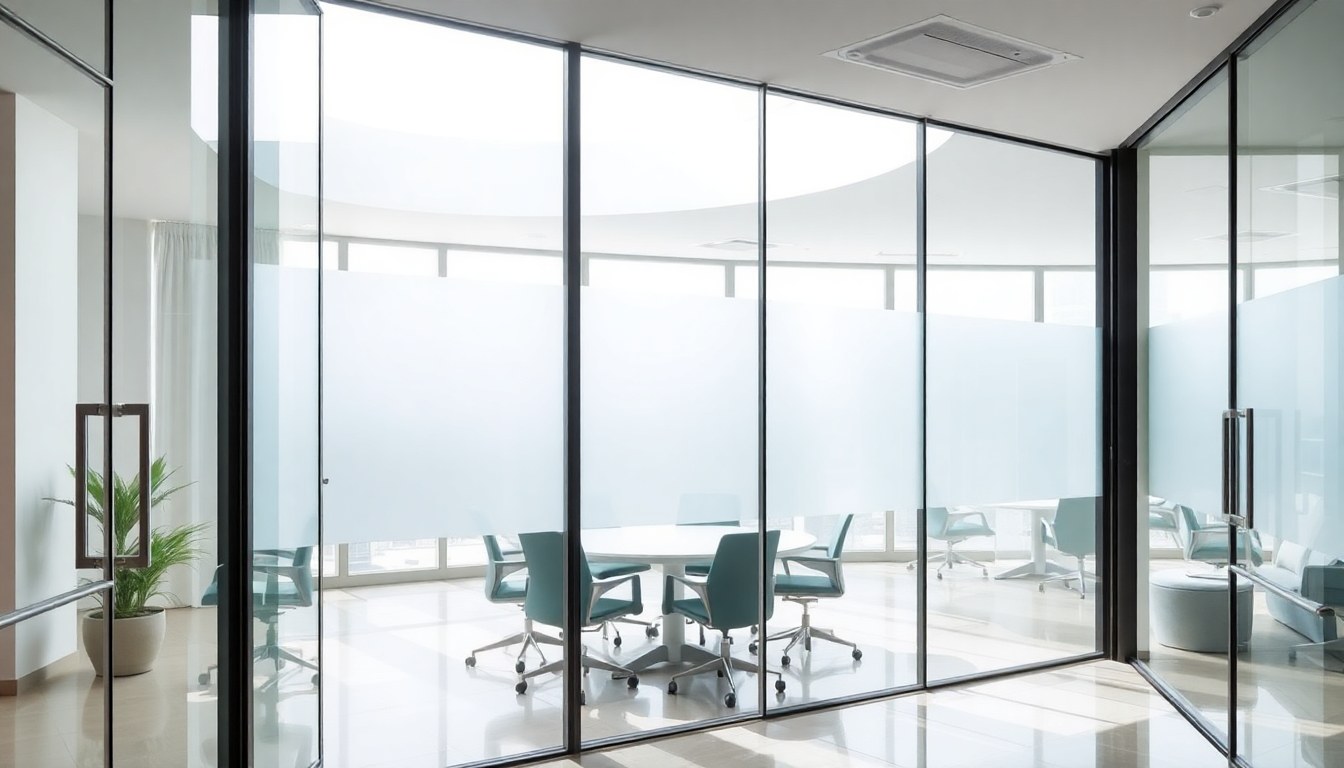
Retrofitting existing glass partitions with smart privacy film offers Delhi businesses an affordable alternative to complete glass replacement, with installation costs ranging from ₹4,500 to ₹8,500 per square meter depending on film quality and project complexity. This comprehensive guide breaks down material costs, labor charges, electrical requirements, and return on investment for PDLC (Polymer Dispersed Liquid Crystal) smart film installations in office environments.
Understanding Smart Glass Film Technology and Retrofit Applications
Smart glass film, also known as switchable privacy film or PDLC film, is a self-adhesive laminate that transforms ordinary glass into electronically controlled privacy glass. When electricity flows through the film, liquid crystal molecules align to create transparency; when powered off, the molecules scatter randomly, creating an opaque, frosted appearance. This technology allows office spaces to maintain flexibility between open collaboration and private meetings without permanent structural changes.
The retrofit approach involves applying this film to existing glass surfaces rather than replacing entire partition systems. This method preserves the structural integrity of current installations while adding smart functionality. Delhi offices particularly benefit from retrofits because most commercial spaces already feature extensive glass partitioning, making complete replacement cost-prohibitive and disruptive to daily operations.
Key advantages of retrofit installations include minimal downtime during installation, preservation of existing frames and hardware, and the ability to upgrade in phases as budgets allow. The technology works equally well on conference room partitions, executive office walls, and open-plan workspace dividers.
Material Cost Breakdown for Smart Film in Delhi Market
The primary cost driver for any smart film retrofit is the film itself, which varies significantly based on quality, origin, and technical specifications. In Delhi's current market, three distinct quality tiers dominate:
- Economy tier: ₹2,800-₹4,200 per square meter for Chinese-manufactured films with basic switching capabilities and 2-3 year warranties
- Mid-range tier: ₹4,500-₹6,500 per square meter for Korean or Taiwanese films offering faster switching speeds, better clarity, and 5-year warranties
- Premium tier: ₹7,000-₹10,000 per square meter for American or European films with superior optical quality, extended warranties up to 10 years, and enhanced durability
Beyond the film itself, supporting materials add approximately ₹800-₹1,500 per square meter to the total cost. These include specialized adhesive primers for optimal bonding, conductive bus bars that distribute electricity across the film surface, copper tape for electrical connections, and protective edge sealants. Quality installers never skip these components, as they directly impact long-term performance and reliability.
Electrical control systems represent another material consideration. Basic on-off wall switches cost ₹1,200-₹2,500 per partition, while smart controls with dimming capabilities, remote operation, or integration with building management systems range from ₹5,000 to ₹15,000 per zone. Many Delhi offices now opt for smartphone-controlled systems that allow meeting room privacy scheduling and remote management.
Import Duties and Local Availability
Most smart films sold in Delhi are imported, with customs duties and GST adding approximately 28-35% to landed costs. However, the market has seen increased local assembly operations, particularly in the NCR region, which can reduce costs by 10-15% compared to fully imported solutions. When budgeting, always confirm whether quoted prices include all taxes and duties to avoid surprise costs during procurement.
Installation Labor Costs and Timeline Considerations
Professional installation is non-negotiable for smart film retrofits, as improper application leads to bubbling, poor electrical contact, and premature failure. Delhi's skilled installation labor typically charges ₹1,500-₹3,000 per square meter depending on project complexity, access challenges, and surface preparation requirements. Specialists like Fenix Glass Film often provide comprehensive installation services that ensure warranty compliance and optimal performance.
Surface preparation significantly impacts installation costs and success rates. Existing glass must be thoroughly cleaned, free of scratches deeper than 0.5mm, and completely dry before film application. Older partitions may require polishing or minor repairs, adding ₹300-₹800 per square meter to preparation costs. Curved or textured glass surfaces increase installation difficulty and may incur 30-50% labor premiums.
Typical installation timelines for Delhi office projects include:
- Site assessment and measurement: 1-2 days
- Surface preparation and cleaning: 1 day per 50 square meters
- Film application: 8-12 square meters per technician per day
- Electrical wiring and control installation: 1-2 days depending on partition count
- Testing and commissioning: 1 day
Most medium-sized office retrofits covering 100-150 square meters require 5-7 working days from start to completion. Projects can often be scheduled during evenings or weekends to minimize business disruption, though this may increase labor costs by 15-25% for off-hours work.
Electrical Infrastructure and Wiring Requirements
Smart film operates on low-voltage AC power, typically 48-65 volts, requiring transformer installation to step down from standard 230V Indian mains supply. Each transformer costs ₹3,500-₹8,000 depending on capacity, with one unit typically supporting 10-15 square meters of film. Transformer placement requires consideration of heat dissipation, accessibility for maintenance, and proximity to controlled partitions.
Wiring costs vary dramatically based on existing electrical infrastructure. New cable runs from distribution boards to partition locations cost ₹150-₹300 per linear meter including materials and labor. Concealed wiring within false ceilings or walls adds minimal cost, but surface-mounted conduit in finished spaces may require architectural coordination. Interior design firms such as VITTOJI DESIGN STUDIO can help integrate electrical requirements aesthetically into existing office designs.
Power consumption for smart film is remarkably low—approximately 5-7 watts per square meter when transparent and nearly zero when opaque. A typical 50 square meter conference room partition consumes less electricity than a single LED tube light, making operational costs negligible. However, dedicated circuits with appropriate protection are essential for safety and warranty compliance.
Building Code and Safety Compliance
Delhi's building codes require all low-voltage electrical installations to meet IS 732 standards for electrical safety. Licensed electricians must perform all wiring work, with proper earthing, circuit protection, and isolation transformers. Most commercial buildings require electrical completion certificates before smart film warranties activate, adding ₹5,000-₹12,000 for inspection and certification processes.
Return on Investment and Cost-Benefit Analysis
While retrofit costs appear substantial, the ROI calculation for Delhi offices reveals compelling benefits. Compared to complete glass partition replacement with factory-laminated smart glass (costing ₹15,000-₹25,000 per square meter installed), retrofitting existing glass saves 60-75% of total expenditure. A typical 200 square meter office partition retrofit costs ₹12-16 lakhs versus ₹30-50 lakhs for complete replacement.
Beyond direct cost savings, smart film retrofits deliver measurable operational benefits. Privacy on demand eliminates the need for blinds or curtains, reducing cleaning and maintenance costs by approximately ₹15,000-₹25,000 annually for medium-sized offices. Energy savings from reduced HVAC loads—smart film blocks up to 99% of UV radiation and reduces heat gain by 40-60%—typically save ₹8,000-₹15,000 annually per 100 square meters in Delhi's climate.
Workplace productivity improvements, while harder to quantify, represent significant value. Surveys of Delhi offices that implemented smart glass retrofits report 25-35% increases in conference room utilization due to improved flexibility, and 15-20% reductions in noise-related productivity complaints. The technology also enhances professional image during client meetings, potentially influencing business development outcomes.
Expected lifespan for quality smart film installations ranges from 8-12 years with minimal maintenance, providing long-term value that traditional privacy solutions cannot match. When factoring in avoided replacement costs, energy savings, and productivity gains, most Delhi installations achieve payback within 3-5 years.
Selecting the Right Installation Partner in Delhi
Successful smart film retrofits depend heavily on installer expertise and product quality. Delhi's market includes numerous vendors, but qualified installers should demonstrate specific credentials: manufacturer certification for the film brands they install, portfolio of completed commercial projects, and comprehensive warranties covering both materials and workmanship for minimum 2-3 years.
Request detailed quotations that separately itemize film costs, installation labor, electrical work, and control systems. Beware of quotes significantly below market rates, as these often indicate inferior materials or inexperienced installers. Reputable providers offer site visits for accurate measurements and can identify potential challenges before quoting.
Check references from similar office environments, preferably with installations at least 18-24 months old to verify long-term performance. Ask about post-installation support, warranty claim processes, and availability of replacement parts. Established firms maintain relationships with manufacturers ensuring access to compatible components years after installation.
For comprehensive office renovation projects, coordinating smart film installation with architects and interior designers ensures optimal integration. Professionals like Arkadesign Studio can incorporate smart glass planning into broader workspace design strategies, ensuring electrical infrastructure, lighting design, and acoustic considerations align with privacy film functionality.
Frequently Asked Questions
Can smart film be applied to any existing glass partition?
Smart film works best on smooth, flat glass surfaces at least 5mm thick. Tempered or laminated glass is ideal, while textured, frosted, or heavily scratched glass may not provide adequate adhesion or optical quality. Glass must be structurally sound without cracks or chips. Curved glass can accommodate smart film but requires specialized installation techniques and may incur 40-60% cost premiums. A professional site assessment determines compatibility for your specific partitions.
How long does smart film installation take for a typical Delhi office?
Installation duration depends on total area and partition complexity. A single conference room (15-20 square meters) typically requires 2-3 days including preparation, application, and electrical work. Medium offices with 100-150 square meters of partitions need 5-7 working days. Large installations exceeding 300 square meters may take 10-15 days. Many Delhi installers work during off-hours or weekends to minimize business disruption, though this may extend calendar time while reducing impact on daily operations.
What maintenance does smart film require after installation?
Smart film requires minimal maintenance—regular cleaning with non-abrasive glass cleaners and soft cloths every 2-3 weeks maintains optical clarity. Avoid ammonia-based cleaners or rough materials that might scratch the film surface. Annual professional inspections checking electrical connections and transformer function cost ₹3,000-₹6,000 and help prevent issues. Most quality installations require no repairs or adjustments for 5-7 years under normal office use. Warranties typically cover defects but exclude damage from improper cleaning or physical impact.
Does smart film provide sound insulation for office partitions?
Smart film itself adds negligible acoustic insulation—approximately 1-2 decibels of additional sound reduction. However, it's often combined with acoustic interlayer films during installation to enhance privacy. For significant sound control, the base glass thickness and partition construction matter most. Existing single-pane partitions remain acoustically similar after retrofit. If sound privacy is critical, consider laminated glass partitions before applying smart film, or explore acoustic film combinations that address both visual and sound privacy simultaneously.
What happens to smart film during power outages?
Standard PDLC smart film defaults to opaque (frosted) state when power is disconnected, providing privacy during outages. This fail-safe mode protects confidential meetings even during electrical failures. Some premium systems offer battery backup maintaining transparency for 2-4 hours during outages, though this adds ₹8,000-₹15,000 per partition to installation costs. For Delhi offices experiencing frequent power fluctuations, quality surge protection and voltage stabilization (₹5,000-₹10,000 additional) protects film electronics and extends system lifespan.
Ready to transform your Delhi office with smart glass privacy film? Explore qualified installers, interior designers, and glass specialists on the glassy.in directory to find the perfect partner for your retrofit project. Compare providers, read reviews, and request quotes from verified professionals serving the Delhi NCR region.