
Smart Glass
Smart Glass vs Traditional Frosted Glass: Which is Better for Office Partitions?
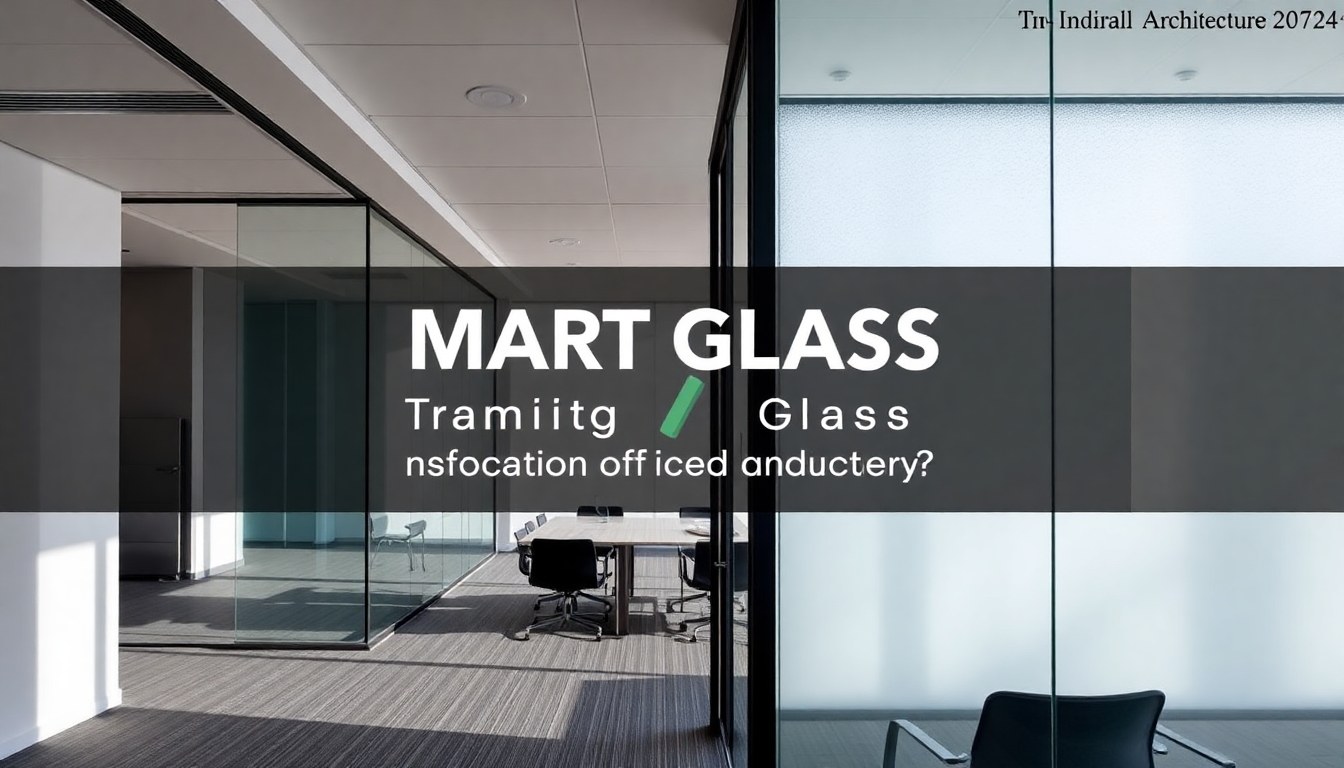
Office partitions define workspace privacy, aesthetics, and functionality. While traditional frosted glass has been the go-to solution for decades, smart glass technology is rapidly transforming Indian commercial interiors. The choice between these two options involves balancing upfront investment against long-term benefits, with smart glass costing ₹8,000-15,000 per square foot compared to frosted glass at ₹400-800 per square foot.
Understanding the Core Technologies
Traditional frosted glass achieves permanent privacy through acid etching or sandblasting, creating a translucent surface that diffuses light while blocking clear views. This time-tested solution has served offices well for generations, offering consistent privacy without requiring power or maintenance beyond regular cleaning.
Smart glass, also known as switchable glass or PDLC (Polymer Dispersed Liquid Crystal) glass, uses electrical current to control transparency. When powered off, liquid crystal molecules scatter randomly, making the glass opaque. When electricity flows through, these molecules align, rendering the glass transparent. This instant switchability represents a fundamental shift in how we think about office privacy.
The technology behind smart glass has matured significantly over the past decade, with improved durability and reduced power consumption making it increasingly viable for Indian commercial applications. Modern smart glass panels consume minimal electricity—typically 5-10 watts per square meter—making them energy-efficient despite requiring continuous power for transparency.
Privacy Control and Flexibility
Privacy requirements in modern offices are rarely static. Conference rooms need transparency when empty to create an open feel, but instant privacy when meetings begin. Traditional frosted glass offers only one solution: permanent semi-privacy that never changes regardless of room usage.
Smart glass transforms privacy into a controllable feature. With a switch, remote control, or automated sensor, spaces transition from transparent to opaque in milliseconds. This flexibility proves invaluable in several scenarios:
- Conference rooms that switch to private mode during sensitive discussions
- Executive cabins that open visually during collaborative sessions
- Interview rooms that maintain transparency until candidates arrive
- Medical consultation areas in corporate wellness centers
- Hot-desking spaces that adapt to different privacy needs throughout the day
Frosted glass, while providing consistent privacy, cannot adapt to changing needs. Once installed, the level of translucency remains fixed. Some offices attempt to address this limitation by combining frosted glass with curtains or blinds, but this adds complexity and maintenance while compromising the clean aesthetic that glass partitions provide.
Cost Analysis: Initial Investment vs Long-Term Value
Upfront Costs
The price difference between these technologies is substantial. Traditional frosted glass typically costs ₹400-800 per square foot installed, depending on glass thickness, framing system, and finishing quality. For a standard 100 square foot conference room partition, expect to invest ₹40,000-80,000.
Smart glass commands a premium at ₹8,000-15,000 per square foot, placing the same conference room partition at ₹8,00,000-15,00,000. This ten to twenty-fold cost difference makes many decision-makers hesitate, but the calculation becomes more nuanced when considering total cost of ownership.
Operating and Maintenance Costs
Frosted glass requires minimal ongoing investment—primarily cleaning supplies and occasional hardware maintenance. However, if privacy needs change, the entire installation must be replaced or supplemented with additional privacy solutions like blinds, which introduce recurring costs and maintenance.
Smart glass electricity consumption is negligible, adding approximately ₹50-150 monthly to power bills for a typical conference room. Maintenance requirements are similarly low, with quality installations requiring no special care beyond regular glass cleaning. The electronic components typically carry warranties of 5-10 years, with expected lifespans exceeding 15 years.
Return on Investment Considerations
ROI for smart glass extends beyond direct cost savings. Premium office spaces in Mumbai, Bengaluru, and Gurgaon increasingly view smart glass as a differentiator that commands higher rental rates and attracts quality tenants. The technology signals innovation and modernity, enhancing corporate brand perception.
Space utilization improvements also factor into ROI calculations. A single smart glass conference room can serve both confidential meetings and transparent collaborative spaces, potentially reducing the total number of specialized rooms required. For organizations paying ₹80-150 per square foot monthly rent in prime locations, optimizing space usage delivers measurable financial returns.
Energy Efficiency and Environmental Impact
Both glass types offer superior energy performance compared to solid partitions, allowing natural light penetration that reduces artificial lighting needs. However, smart glass provides additional thermal management benefits through its ability to control solar heat gain.
When opaque, smart glass reflects more solar radiation than transparent glass, reducing cooling loads during peak afternoon hours. Some advanced smart glass products incorporate low-E coatings that further enhance thermal performance, delivering measurable reductions in HVAC costs—particularly relevant in India's hot climate zones.
Frosted glass maintains consistent thermal properties regardless of transparency needs. While it diffuses light effectively, it cannot adapt to changing solar conditions or temperature management requirements. The static nature means missed opportunities for dynamic energy optimization throughout the day.
From a sustainability perspective, both options are recyclable and long-lasting. Smart glass does require electrical infrastructure and electronic components that eventually become e-waste, though the extended lifespan and energy savings during operation generally offset this environmental cost over the product lifecycle.
Aesthetic Considerations and Design Flexibility
Traditional frosted glass offers timeless elegance with numerous pattern options—from subtle gradients to bold geometric designs. Acid-etched patterns can incorporate corporate branding, decorative motifs, or functional elements like privacy bands at eye level. The permanence of these designs ensures consistent visual identity.
Smart glass presents a minimalist aesthetic when transparent, creating seamless visual flow through office spaces. The clean, modern appearance aligns well with contemporary design trends favoring openness and light. When opaque, the uniform white or gray appearance provides a neutral backdrop that works with diverse interior schemes.
Design flexibility differs significantly between options. Frosted glass commits to a specific look permanently, while smart glass allows the space to transform visually based on function. This adaptability proves valuable in multi-purpose spaces and offices that periodically refresh their interior design without replacing partitions.
Maintenance and Durability in Indian Conditions
India's climate presents specific challenges for office interiors. High humidity in coastal cities like Mumbai and Chennai, dust in northern regions, and temperature extremes test material durability. Traditional frosted glass proves remarkably resilient, with acid-etched or sandblasted surfaces maintaining their appearance for decades with basic cleaning.
Smart glass technology has evolved to handle Indian environmental conditions effectively. Quality products feature sealed PDLC films protected between glass layers, preventing moisture ingress and dust contamination. The electronic components are typically rated for industrial temperature ranges, handling the thermal stress of Indian summers and air-conditioned interiors.
Cleaning requirements are similar for both technologies—regular wiping with standard glass cleaners maintains appearance. Smart glass does require attention to electrical connections and control systems, though modern installations use reliable components that rarely require intervention during normal operation.
Making the Right Choice for Your Office
The decision between smart glass and frosted glass ultimately depends on specific organizational needs, budget constraints, and strategic priorities. Frosted glass remains the practical choice for organizations prioritizing cost-efficiency, permanent privacy, and traditional aesthetics. It delivers reliable performance without complexity or ongoing technology considerations.
Smart glass justifies its premium pricing in scenarios where flexibility, modern image, and space optimization drive value. Technology companies, premium corporate offices, design-forward coworking spaces, and organizations frequently hosting clients benefit most from the adaptability and impression smart glass creates.
Consider smart glass when privacy needs vary throughout the day, when corporate image significantly impacts business outcomes, or when space constraints make multi-functional rooms valuable. Traditional frosted glass serves well when budget limitations are primary, when privacy requirements are consistent, or when aesthetic preferences favor permanent decorative patterns.
Frequently Asked Questions
How long does smart glass last compared to frosted glass?
Quality smart glass installations typically last 15-20 years with proper maintenance, comparable to traditional frosted glass durability. The PDLC film itself remains functional for decades, though electronic control components may require replacement after 10-15 years. Frosted glass can last 25-30 years or longer, as it has no electronic components to fail. Both options provide excellent long-term value when properly installed and maintained.
Can smart glass be retrofitted into existing frosted glass frames?
Retrofitting smart glass into existing frames is possible but depends on the frame system and glass thickness compatibility. Smart glass typically requires electrical wiring infrastructure that frosted glass installations lack, necessitating additional work. The weight difference between technologies may also require frame reinforcement. In most cases, complete replacement proves more cost-effective than retrofitting, though consultation with experienced installers can identify viable retrofit scenarios.
Does smart glass provide the same sound insulation as frosted glass?
Sound insulation depends primarily on glass thickness and lamination rather than transparency technology. Smart glass and frosted glass of equivalent thickness provide similar acoustic performance. For enhanced sound blocking, both can be specified with acoustic laminate interlayers or double-glazed configurations. Smart glass installations often use 10-12mm laminated glass, delivering sound reduction ratings of 35-40 decibels—adequate for most office privacy needs.
What happens to smart glass during power failures?
Most smart glass defaults to opaque (frosted) state when unpowered, ensuring privacy during electrical outages. This fail-safe design protects confidential meetings and maintains privacy as the default condition. Some specialized smart glass products can be configured to fail transparent, though this is less common in office applications. Battery backup systems can maintain transparency during brief power interruptions if required.
Is smart glass suitable for all Indian climate zones?
Modern smart glass performs reliably across India's diverse climate zones, from humid coastal regions to hot desert areas and cooler hill stations. Quality products are rated for operating temperatures from -20°C to 60°C, well beyond typical Indian conditions. Proper installation with adequate sealing protects internal components from humidity and dust. However, extreme direct sun exposure in desert climates may require additional UV-protective coatings to extend lifespan.
Whether you choose cutting-edge smart glass or reliable frosted glass for your office partitions, working with experienced suppliers ensures proper installation and long-term satisfaction. Explore verified glass suppliers and partition specialists across India on glassy.in, your comprehensive directory for glass solutions tailored to Indian commercial needs.