
Glass Guides
Skylight Glass Condensation Problems: Causes and Prevention for Hyderabad Monsoon Climate
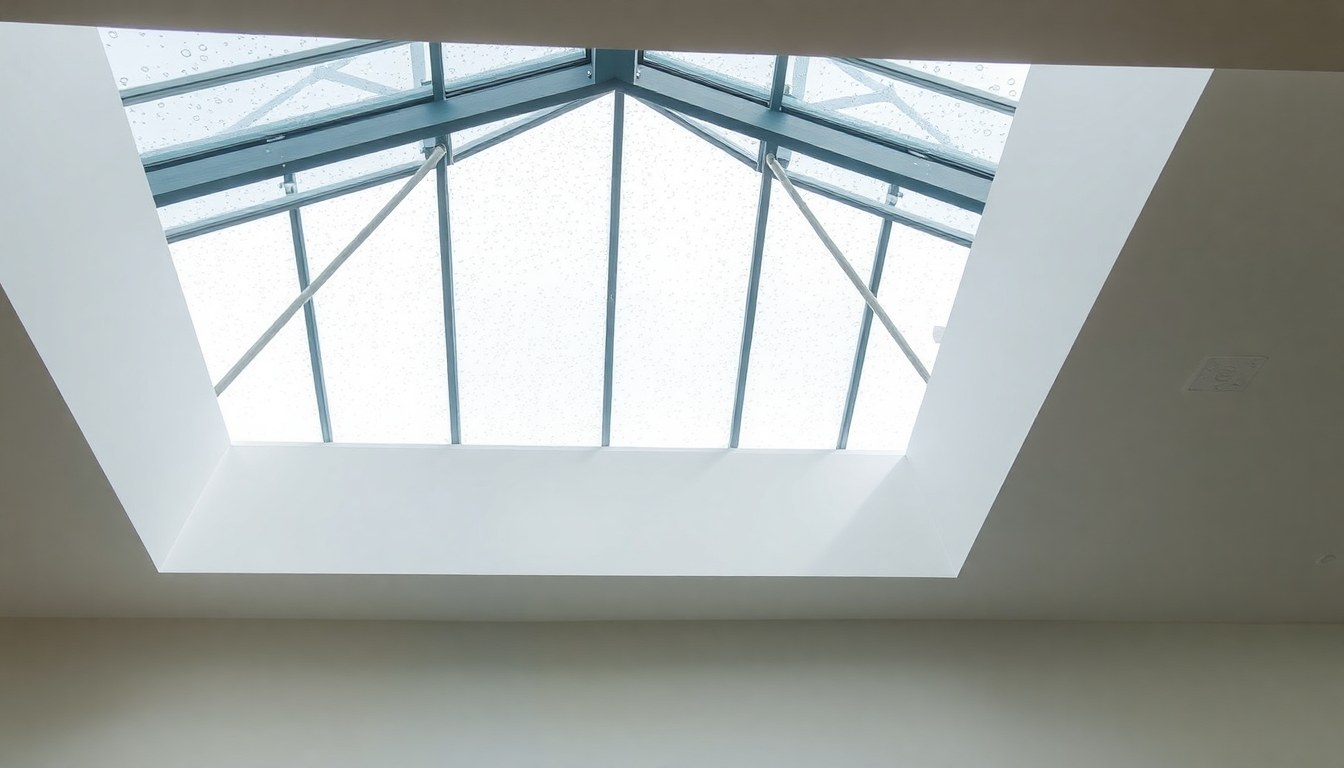
Skylight glass condensation is one of the most frustrating problems homeowners and architects face during Hyderabad's intense monsoon season, when humidity levels regularly exceed 80% and temperature differentials create perfect conditions for water droplets to form on glass surfaces. This moisture accumulation not only obscures the beautiful natural light that skylights are meant to provide but can also lead to water damage, mold growth, and structural deterioration if left unaddressed. Understanding the science behind condensation and implementing proper design strategies tailored to Hyderabad's unique climate can eliminate these issues entirely.
Understanding Skylight Condensation in Hyderabad's Climate
Condensation occurs when warm, moisture-laden air comes into contact with a cooler surface, causing the water vapor to transform into liquid droplets. In Hyderabad, the monsoon months from June through September bring relative humidity levels between 70-90%, while air-conditioned interiors maintain temperatures 8-12°C lower than outside. This creates an ideal scenario for condensation on any glass surface that acts as a thermal bridge between the two environments.
Skylight glass is particularly vulnerable because it faces upward, collecting condensation that has nowhere to go but drip down onto floors, furniture, or interior finishes. Unlike vertical windows where condensation might simply run down to a sill, horizontal or low-slope skylights trap moisture. The problem intensifies during early morning hours when outdoor temperatures drop but humidity remains high, and again during heavy rainfall when temperature differentials are most pronounced.
The specific climate characteristics of Hyderabad compound these issues. The city experiences sudden temperature drops during monsoon thunderstorms, sometimes by 10-15°C within an hour. These rapid changes don't allow building materials to equilibrate gradually, creating shock condensation events that can produce significant water accumulation in a short time.
Primary Causes of Skylight Condensation
Inadequate Glass Specifications
Single-pane skylight glass is the most common culprit behind condensation problems. With no insulating air gap, the interior surface temperature of single glazing closely matches the outdoor temperature, creating a cold surface where moisture readily condenses. Many older buildings in Hyderabad and budget construction projects still use single-pane skylights, which are simply incompatible with air-conditioned spaces during monsoon season.
Even when double-glazed units are installed, improper specifications can still cause problems. Standard insulated glass units (IGUs) with air fills and 6mm gaps provide minimal thermal performance. The U-value of such units typically ranges from 2.8-3.2 W/m²K, which is insufficient for Hyderabad's climate conditions where the temperature differential between conditioned indoor spaces and humid outdoor air can exceed 15°C.
Poor Ventilation Design
Skylights installed in spaces with inadequate air circulation create stagnant zones where humid air accumulates. Bathrooms, kitchens, and interior atriums are particularly susceptible because these spaces generate additional moisture from daily activities. Without proper ventilation to move air across the skylight surface, even high-performance glass can experience condensation on its interior surface.
Many skylight installations in Hyderabad homes lack any ventilation provision whatsoever. Fixed skylights without operable sections prevent natural air movement, while mechanical ventilation systems are often undersized or poorly positioned. The result is a microclimate of humid, still air directly beneath the skylight where condensation is inevitable.
Insufficient Slope and Drainage
Skylight installations with slopes less than 10 degrees are prone to condensation accumulation because water droplets don't run off effectively. Even when condensation forms on a properly specified skylight, adequate slope ensures that moisture drains to designated collection points rather than dripping randomly into the interior space. Many flat-roof installations in Hyderabad use nearly horizontal skylights that violate this basic principle.
Prevention Strategies: Glass Selection and Specifications
The foundation of condensation prevention lies in selecting appropriate glass specifications for Hyderabad's climate. Double-glazed IGUs with low-emissivity (Low-E) coatings should be considered the minimum standard for any air-conditioned space. These units feature a microscopically thin metallic coating that reflects infrared radiation while allowing visible light transmission, significantly improving thermal performance.
For optimal results in Hyderabad's monsoon climate, specify IGUs with the following characteristics:
- Low-E coating on surface #2 (interior surface of outer pane) to reflect heat back outdoors during summer
- Argon gas fill instead of air, reducing the U-value to approximately 1.8-2.0 W/m²K
- 12mm or 16mm cavity width for improved insulation performance
- Warm-edge spacer systems that minimize thermal bridging at the glass perimeter
- Laminated inner pane for safety and additional acoustic insulation during heavy monsoon rains
While these specifications increase initial costs by approximately ₹800-1,200 per square foot compared to basic double glazing, the investment eliminates condensation problems and reduces air-conditioning loads. Several glass suppliers in Hyderabad now stock these high-performance IGUs specifically for skylight applications.
Ventilation Requirements and Solutions
Proper ventilation works in tandem with quality glass to prevent condensation. For skylight installations, ventilation serves two purposes: it removes moisture-laden air before it can condense, and it maintains air movement across the glass surface to equalize temperatures and prevent cold spots.
Natural ventilation can be achieved through operable skylight sections that allow hot, humid air to escape upward while drawing in drier air from lower openings. For every 10 square meters of skylight area, at least 1 square meter should be operable. Position these vents at the highest point of the skylight structure to take advantage of natural convection currents. Rain sensors can automatically close vents during precipitation while keeping them open during dry periods.
Mechanical ventilation becomes necessary in spaces where natural airflow is insufficient. Install ceiling fans or dedicated air circulators positioned to move air across the skylight surface continuously. In bathrooms and kitchens, exhaust fans should be sized to provide at least 8-10 air changes per hour and should run for 20-30 minutes after moisture-generating activities. For larger atrium skylights, consider a dedicated HVAC zone with supply registers positioned to blow air upward across the glass surface.
Thermal Break Systems and Frame Design
Even with perfect glass specifications, condensation can occur on skylight frames if they lack proper thermal breaks. Aluminum frames, commonly used in Hyderabad due to their durability and cost-effectiveness, are excellent conductors of heat and cold. Without thermal separation, aluminum frames become cold surfaces where condensation readily forms, often dripping down onto the glass or into the interior.
Thermally broken aluminum frames incorporate a polyamide or polyurethane barrier between interior and exterior aluminum sections, reducing heat transfer by 60-70%. This prevents the interior frame surface from becoming cold enough to trigger condensation. When specifying skylight frames for Hyderabad installations, insist on thermal break systems with a minimum barrier width of 20mm.
Alternative frame materials include uPVC (unplasticized polyvinyl chloride) and fiberglass-reinforced polyester, both of which offer inherently low thermal conductivity. While less common in commercial applications, these materials perform exceptionally well in residential skylight installations and cost 15-25% less than thermally broken aluminum systems. Timber frames, though rare in modern construction, also provide excellent thermal performance when properly maintained against Hyderabad's humidity.
Installation Best Practices and Drainage Design
Proper installation technique is as critical as product selection. Skylights should be installed at a minimum slope of 10 degrees, with 15-20 degrees being optimal for monsoon climates. This ensures that any condensation that does form runs down to collection points rather than pooling on the glass surface. The slope also helps rainwater run off quickly, reducing the cooling effect of standing water on the exterior glass surface.
Every skylight installation must incorporate a condensation gutter system around the perimeter of the interior frame. This channel, typically 15-20mm wide and 10-15mm deep, collects any condensation that forms on the glass or frame and directs it to designated weep holes. These weep holes should drain to the building exterior or into the roofing drainage system, never into the interior space or wall cavities where moisture can cause hidden damage.
The curb or upstand that raises the skylight above the roof surface must be properly insulated to prevent it from becoming a thermal bridge. Use rigid insulation board with a minimum R-value of 2.0 around all four sides of the curb, ensuring continuity with the roof insulation system. Seal all joints with appropriate sealants rated for UV exposure and temperature cycling. In Hyderabad's climate, polyurethane and silicone sealants perform better than cheaper acrylic alternatives.
Maintenance and Monitoring
Even properly designed and installed skylights require regular maintenance to prevent condensation problems from developing over time. Inspect condensation gutters and weep holes quarterly, particularly before and after monsoon season. Debris, dust, and biological growth can block these drainage paths, causing water to back up and drip into interior spaces.
Check the condition of sealants annually, looking for cracks, shrinkage, or separation from glass or frame surfaces. Hyderabad's intense summer heat and UV exposure can degrade sealants within 5-7 years, creating air leakage paths that reduce the thermal performance of IGUs. Reseal as needed using compatible materials recommended by the skylight manufacturer.
Monitor indoor humidity levels with a hygrometer, maintaining levels between 40-50% for optimal comfort and condensation prevention. If humidity consistently exceeds 60% despite adequate ventilation, consider installing a dehumidifier in problem areas. This is particularly important in bathrooms, kitchens, and indoor pool areas where moisture generation is continuous.
Frequently Asked Questions
What causes condensation on skylight glass during Hyderabad monsoons?
Condensation forms when humid outdoor air or moisture-laden indoor air contacts the cooler interior surface of skylight glass, causing water vapor to condense into liquid droplets. In Hyderabad's monsoon climate, high humidity levels (70-90%) combined with air-conditioned interiors create temperature differentials of 10-15°C across the glass, making condensation highly likely on inadequately specified skylights. Single-pane glass and poor ventilation are the primary culprits.
Can condensation damage my home and how serious is the problem?
Yes, persistent skylight condensation can cause significant damage over time. Water dripping onto flooring can warp wood, stain carpets, and damage furniture. Moisture accumulation in wall cavities or ceiling spaces promotes mold growth, which poses health risks and degrades building materials. In severe cases, prolonged moisture exposure can compromise structural elements and electrical systems. Addressing condensation problems promptly prevents these costly secondary damages.
What is the minimum glass specification to prevent condensation in Hyderabad?
For air-conditioned spaces in Hyderabad, use double-glazed IGUs with Low-E coating and argon gas fill, achieving a U-value of 2.0 W/m²K or lower. Single-pane glass is completely inadequate. The IGU should have a 12-16mm cavity width, warm-edge spacers, and preferably a laminated inner pane. Combined with proper ventilation and thermal break frames, this specification eliminates condensation problems in typical residential and commercial applications during monsoon season.
How much slope does a skylight need to prevent water accumulation?
Skylights should be installed at a minimum slope of 10 degrees from horizontal, with 15-20 degrees being optimal for Hyderabad's monsoon climate. This slope allows condensation and rainwater to run off naturally to drainage points rather than pooling on the glass surface. Flatter installations require more sophisticated drainage systems and higher-performance glass specifications to prevent problems. Never install skylights completely flat in monsoon-prone regions.
Is it worth upgrading existing skylights or should I replace them entirely?
If your existing skylights have condensation problems, replacement with properly specified units is usually more cost-effective than attempting upgrades. Retrofitting thermal breaks, improving seals, or adding ventilation to poorly designed skylights rarely solves fundamental problems. Modern high-performance skylight systems cost ₹3,500-6,500 per square foot installed but eliminate condensation issues permanently while reducing cooling costs. The investment typically pays for itself through energy savings and avoided water damage within 5-7 years.
Solving skylight condensation problems requires the right combination of glass specifications, ventilation design, and installation expertise. If you're planning a new skylight installation or need to address existing condensation issues in Hyderabad, connect with experienced glass suppliers and skylight specialists through the glassy.in directory to ensure your project is designed and executed to perform flawlessly through every monsoon season.