
Mirrors
Mirror vs Toughened Glass: Which is Better for Gym Walls?
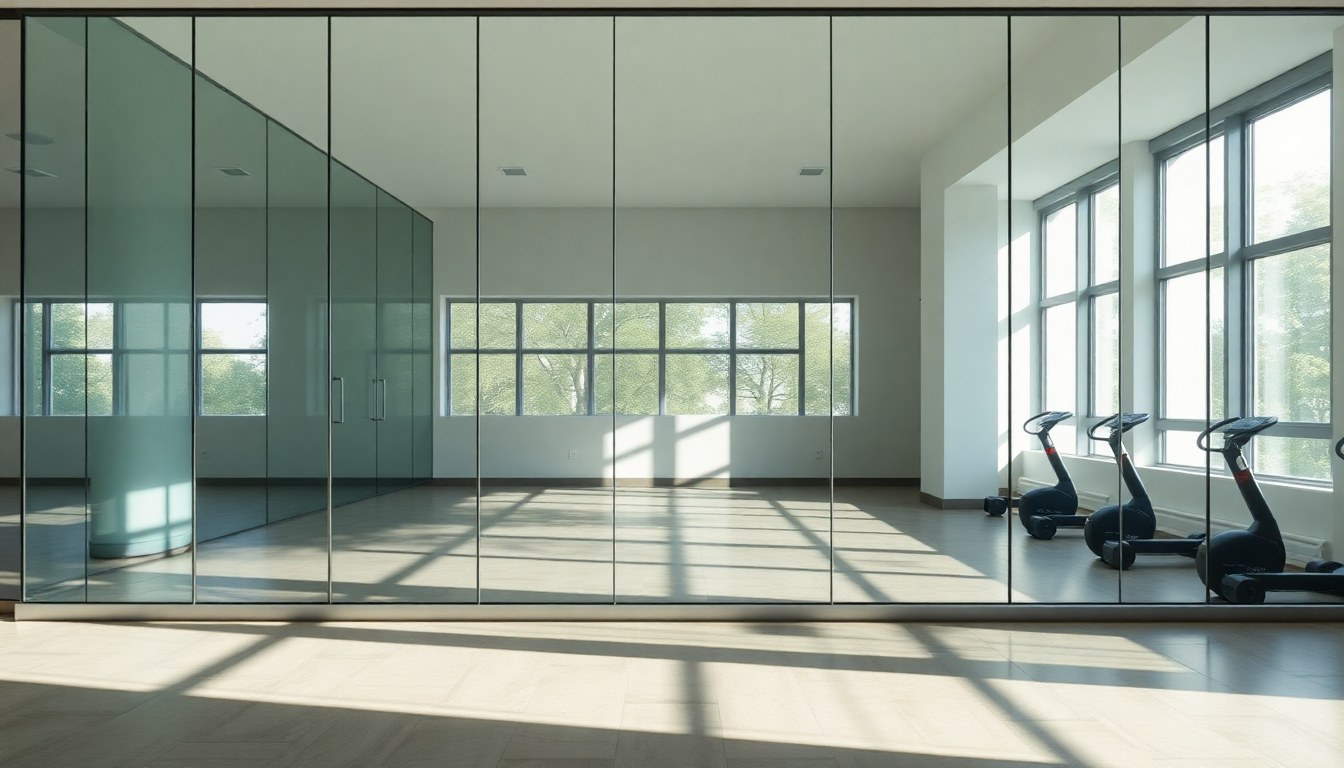
When setting up a gym or fitness studio, wall mirrors are non-negotiable—they help members perfect their form, create visual space, and enhance motivation. The critical question isn't whether you need mirrors, but which type: standard mirrors or toughened glass mirrors? This decision affects safety, longevity, maintenance costs, and even the quality of reflections your members see during their workouts.
Understanding Standard Mirrors and Toughened Glass Mirrors
Standard gym mirrors are typically made from float glass with a reflective coating applied to one side. This is the same type of mirror you'd find in homes and commercial spaces. The glass is cut to size, polished at the edges, and mounted directly to walls. While affordable and widely available, standard mirrors break into large, sharp shards when impacted, posing significant safety risks in active environments.
Toughened glass mirrors—also called tempered glass mirrors—undergo a special heat treatment process that makes them four to five times stronger than standard glass. The glass is heated to approximately 620°C and then rapidly cooled, creating surface compression that gives the material its strength. When toughened glass does break, it shatters into small, relatively harmless pebble-like pieces rather than dangerous shards.
The toughening process happens before the reflective coating is applied, which means the mirror retains its strength characteristics while providing the same reflective quality. This makes toughened glass mirrors the safer choice for high-traffic, high-impact environments like gyms, CrossFit boxes, martial arts studios, and dance academies.
Safety Considerations: The Most Important Factor
Safety should be your primary concern when choosing mirrors for gym walls. Gyms are dynamic environments where weights can slip, equipment can tip, and people exercise in close proximity to walls. A standard mirror breaking during peak hours could result in serious injuries and potential liability issues for gym owners.
Toughened glass mirrors significantly reduce this risk. Their enhanced strength means they're less likely to break from impact in the first place. If they do break, the small granular pieces are far less likely to cause lacerations compared to the jagged shards of standard glass. This safety feature alone justifies the higher initial investment for most commercial gym operators.
Real-World Impact Scenarios
Consider common gym accidents: a dropped dumbbell bouncing off a bench into the wall, someone losing balance during lunges, or a barbell rolling backward during a deadlift. With standard mirrors, any of these scenarios could result in large glass shards falling on members. Toughened glass mirrors can often withstand these impacts entirely, and when they don't, the breakage pattern minimizes injury risk.
Many Indian cities now require toughened glass in commercial fitness facilities as part of building safety codes. Mumbai, Bengaluru, and Delhi have increasingly strict regulations for commercial spaces, and using toughened glass demonstrates compliance with safety standards that protect both your members and your business.
Durability and Longevity Comparison
Toughened glass mirrors outlast standard mirrors in gym environments by a considerable margin. The strengthening process makes them more resistant to the thermal stress that comes from temperature fluctuations in air-conditioned gyms. They also handle the constant vibrations from dropped weights, treadmill impacts, and heavy foot traffic without developing the micro-cracks that eventually compromise standard glass.
Standard mirrors in gyms typically need replacement every three to five years due to edge chips, surface scratches, or complete breakage. Toughened glass mirrors, when properly installed, can last ten years or more. This extended lifespan offsets the higher upfront cost through reduced replacement frequency and lower long-term maintenance expenses.
- Toughened glass resists scratching better than standard mirrors
- Edge strength is significantly higher, reducing chip-related failures
- Better performance in humid environments common to gyms
- Less susceptible to stress from wall movement or building settling
Cost Analysis: Initial Investment vs Long-Term Value
Standard mirrors cost approximately ₹150-250 per square foot for supply and installation in most Indian cities. Toughened glass mirrors range from ₹350-550 per square foot, depending on thickness and quality. For a typical 200-square-foot mirror wall, you're looking at ₹30,000-50,000 for standard glass versus ₹70,000-1,10,000 for toughened glass.
This price difference can seem substantial, especially for new gym owners managing tight budgets. However, the total cost of ownership tells a different story. Factor in the replacement costs, potential injury liability, insurance implications, and member confidence, and toughened glass often proves more economical over a five-to-ten-year period.
Hidden Costs of Standard Mirrors
Standard mirrors carry hidden costs that aren't apparent at purchase. Insurance premiums may be higher for gyms with standard glass. If a mirror breaks during operating hours, you'll pay for emergency replacement plus potential revenue loss if that area becomes unusable. Member retention can suffer if your facility develops a reputation for safety concerns.
Toughened glass mirrors also add tangible value if you ever sell your gym business. Prospective buyers recognize the reduced liability risk and deferred replacement costs, making your facility more attractive and potentially commanding a higher sale price.
Optical Quality and Distortion Issues
One concern some gym owners have about toughened glass is potential optical distortion. The toughening process can occasionally introduce slight waviness to the glass surface, which might distort reflections. However, quality manufacturers have largely eliminated this problem through improved manufacturing processes and strict quality control.
When purchasing toughened glass mirrors, specify "low-distortion" or "fitness-grade" products. These are manufactured with tighter tolerances specifically for applications where reflection accuracy matters. The optical quality of premium toughened glass mirrors is virtually indistinguishable from standard mirrors for practical gym use.
Standard mirrors provide excellent optical clarity but can develop distortion over time as the backing deteriorates from moisture exposure or as the glass flexes from wall movement. Toughened glass maintains its optical properties more consistently throughout its lifespan because the material itself is more stable and rigid.
Installation Requirements and Considerations
Both mirror types require professional installation, but toughened glass has specific handling requirements. Because toughening happens before cutting, toughened glass cannot be modified after the tempering process—no cutting, drilling, or edge polishing. You must provide exact dimensions to manufacturers, including any cutouts for electrical outlets or fixtures.
Standard mirrors offer more installation flexibility. They can be cut on-site if measurements were slightly off, and installers can drill mounting holes as needed. This flexibility can reduce installation costs and timeline, particularly for retrofit projects in older buildings with irregular walls.
- Toughened glass requires precise measurement before ordering
- Lead times for toughened glass are typically 7-14 days versus 2-3 days for standard
- Both types need proper wall preparation and moisture barriers
- Toughened glass is heavier and may require additional mounting hardware
- Professional installation is strongly recommended for both types
Making the Right Choice for Your Gym
For most commercial gyms and fitness studios, toughened glass mirrors are the better investment. The safety benefits alone justify the additional cost, and the extended lifespan provides better long-term value. If you're operating a high-intensity training facility, CrossFit box, martial arts studio, or any space where impact risk is elevated, toughened glass isn't just better—it's essential.
Standard mirrors might be acceptable for low-impact environments like yoga studios, Pilates centers, or dance studios where the risk of impact is minimal. Even in these settings, however, toughened glass provides peace of mind and demonstrates a commitment to member safety that can be a valuable marketing point.
Consider your specific circumstances: What's your member volume? What types of training happen near the mirrors? What are local building codes? What's your budget horizon? For most gym owners, the answer points clearly toward toughened glass as the smarter, safer, and ultimately more cost-effective choice.
Frequently Asked Questions
Can toughened glass mirrors be cut to size after manufacturing?
No, toughened glass cannot be cut, drilled, or modified after the tempering process. Any cutting or shaping must happen before toughening. This means you need to provide exact measurements, including all cutouts for switches, outlets, or mounting hardware, before ordering. This limitation requires more careful planning but ensures the glass retains its safety properties.
How much weight can gym mirrors support if equipment leans against them?
Mirrors should never be used as load-bearing surfaces regardless of type. Both standard and toughened glass mirrors are designed for vertical installation and reflection purposes only. Even toughened glass can break under sustained pressure or point loads. Always maintain a gap between equipment and mirrors, and use proper storage racks to prevent items from leaning against mirror surfaces.
Do toughened glass mirrors require special cleaning products?
No, toughened glass mirrors can be cleaned with the same products used for standard mirrors. Use a standard glass cleaner or a mixture of water and vinegar with a microfiber cloth. Avoid abrasive cleaners or rough materials that could scratch the surface. The toughening process affects the glass structure, not the reflective coating, so maintenance requirements remain the same.
What thickness of mirror glass is recommended for gym walls?
For gym applications, 5mm or 6mm thickness is standard for both mirror types. Toughened glass mirrors should be at least 5mm thick to ensure proper strength after tempering. Thicker glass (8mm or 10mm) provides additional durability but increases cost and weight. For most commercial gyms, 6mm toughened glass offers the best balance of safety, durability, and cost-effectiveness.
Are there insurance benefits to using toughened glass in commercial gyms?
Many commercial insurance providers offer lower premiums or better coverage terms for gyms using toughened glass in high-risk areas. The reduced injury risk translates to fewer potential claims. When obtaining insurance quotes, specifically mention your use of toughened glass mirrors and request documentation of any premium reductions. Some insurers require toughened glass as a condition of coverage for fitness facilities.
Ready to source quality mirrors for your gym? Visit glassy.in, India's largest glass business directory, to connect with verified manufacturers and suppliers of both standard and toughened glass mirrors. Compare quotes, check certifications, and find experienced installers in your city—all in one place.