
Glass Railings
Laminated Glass vs Toughened Glass for Balcony Railings: Safety & Cost Comparison
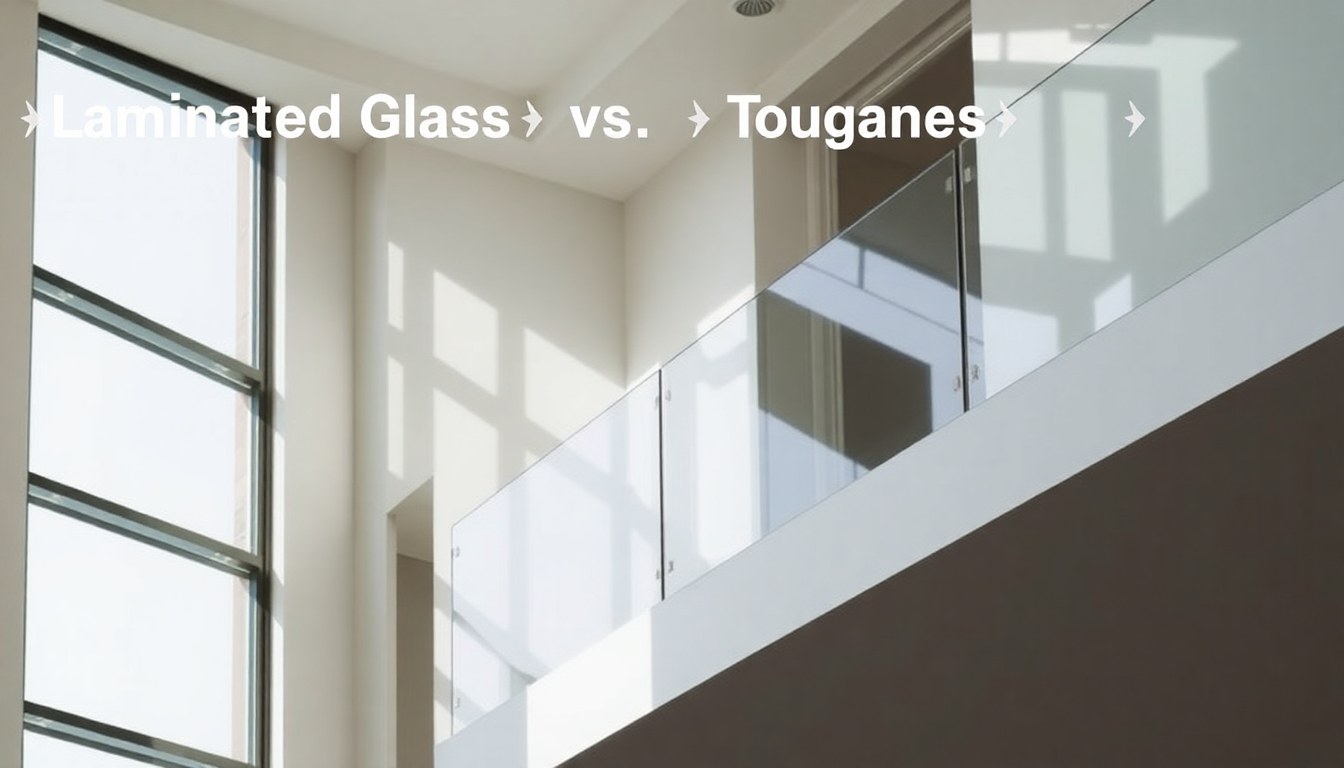
When installing balcony railings, the choice between laminated and toughened glass significantly impacts safety, durability, and long-term costs. Both are engineered glass solutions that meet Indian building codes, yet they perform differently under stress and offer distinct advantages depending on your building type, location, and budget. Understanding these differences helps you make an informed decision that protects your residents or family while delivering value.
What Are Laminated and Toughened Glass?
Laminated glass consists of two or more panes of glass bonded together with an interlayer, typically polyvinyl butyral (PVB) or ionoplast resin. When laminated glass breaks, the interlayer holds the fragments together, preventing sharp pieces from scattering. This construction makes it ideal for safety-critical applications where controlled failure is essential.
Toughened glass (also called tempered glass) is a single pane of glass heated to extreme temperatures and then rapidly cooled. This process creates internal stress that makes the glass four to five times stronger than standard annealed glass. When toughened glass breaks, it shatters into small, relatively harmless granules rather than sharp shards. Both materials are approved under Indian Standard IS 2553 for safety glazing applications.
Safety Performance and Building Code Compliance
Impact Resistance
Laminated glass excels in impact resistance because the interlayer absorbs energy and prevents complete penetration. A heavy object may crack the outer pane, but the interlayer keeps the glass intact and in place. This characteristic is particularly valuable in high-traffic residential buildings, schools, and commercial spaces where accidental impacts are common.
Toughened glass is harder and more resistant to surface damage, but once the stress threshold is exceeded, it fails completely and rapidly. The bright side: the failure is predictable and produces small, blunt fragments rather than dangerous shards, making injuries less severe if breakage occurs.
Indian Standards and Certification
Both glass types must comply with IS 2553 (Safety Requirements for Glass in Buildings) and IS 12600 (Toughened Safety Glass). Laminated glass also falls under IS 2553 Part 1 for safety glazing. Most Indian builders and architects specify either material, depending on the application. However, some high-rise residential projects in metros like Mumbai, Bangalore, and Delhi prefer laminated glass for balcony railings due to its superior energy absorption and noise reduction properties.
Durability and Maintenance Requirements
Long-Term Durability
Toughened glass is more resistant to scratches, thermal stress, and environmental wear. Once installed correctly, it requires minimal maintenance beyond regular cleaning. The glass maintains its clarity and structural integrity for 20+ years in most climates. However, any edge damage or deep scratch can initiate failure since the internal stress is always present.
Laminated glass durability depends heavily on the interlayer quality. High-quality PVB interlayers resist UV degradation and moisture ingress, lasting 25+ years. Budget interlayers may yellow or delaminate after 15-20 years, particularly in tropical regions with high humidity. Regular inspection of the edges and interlayer condition is important in humid areas like coastal cities (Goa, Kerala, Mumbai).
Maintenance Differences
Both types are cleaned identically using mild soap and water or standard glass cleaners. The key difference emerges in repair scenarios. Toughened glass cannot be cut, drilled, or modified after tempering—any such attempt causes complete failure. Laminated glass can be carefully worked on if needed, though repairs are complex and often require professional intervention.
- Toughened glass: Clean regularly, inspect for edge damage, replace entire pane if compromised
- Laminated glass: Clean regularly, monitor interlayer for yellowing or delamination, reseal edges if water infiltration occurs
Cost Analysis: Initial and Long-Term Expenses
Material and Installation Costs
Toughened glass is generally less expensive upfront. A 12mm toughened glass sheet costs approximately ₹800–₹1,200 per square meter in India, with installation adding ₹200–₹400 per square meter. For a typical 10-meter balcony railing (2.5 meters high), material and labor might total ₹30,000–₹45,000.
Laminated glass is pricier due to the interlayer bonding process. A 12mm laminated glass (6+6 configuration with PVB) costs ₹1,500–₹2,500 per square meter, with installation at ₹300–₹500 per square meter. The same 10-meter balcony could cost ₹50,000–₹75,000. The premium ranges from 40% to 70% depending on interlayer grade and supplier location (prices are higher in Tier-1 cities like Delhi, Mumbai, and Bangalore).
Total Cost of Ownership
While laminated glass carries a higher initial cost, the total cost of ownership (TCO) over 25 years tells a different story. Toughened glass requires full pane replacement if broken, which costs the same as installation. In high-impact areas or buildings with children and pets, breakage rates can reach 5-10% over 20 years, adding ₹15,000–₹30,000 in replacement costs. Laminated glass, though costlier initially, rarely requires full replacement. Minor cracks are contained and do not compromise safety, reducing replacement frequency to near zero.
For residential buildings, laminated glass offers better TCO in high-traffic zones (around staircases, play areas) and in areas prone to extreme weather. Toughened glass is more cost-effective for low-traffic balconies in stable climates.
Noise Reduction and Comfort Benefits
Laminated glass provides superior acoustic insulation due to the interlayer's damping properties. The PVB layer absorbs sound waves, reducing external noise by 3–5 decibels compared to toughened glass. For balconies facing busy roads, highways, or airports, this difference is noticeable and improves living comfort. Residents in Bangalore, Hyderabad, and Mumbai often prioritize this feature.
Toughened glass offers minimal sound reduction beyond what the glass thickness alone provides. If noise control is a priority, you would need thicker toughened glass (16mm instead of 12mm) to match laminated performance, which increases cost and negates the price advantage.
Climate and Environmental Considerations
India's diverse climate zones demand different material choices. In coastal areas with high salinity and humidity (Kerala, Goa, coastal Maharashtra), laminated glass with marine-grade interlayers resists salt corrosion better and prevents interlayer degradation. The sealed interlayer acts as a moisture barrier.
In dry, stable climates (Delhi, Rajasthan, parts of Gujarat), toughened glass performs equally well with minimal maintenance. Thermal stress from extreme temperature swings (common in northern India) can affect both materials, but laminated glass's interlayer provides slight cushioning against thermal shock.
For areas prone to extreme weather events (cyclones in coastal regions, hail in hill stations), laminated glass's impact resistance makes it the safer choice. Toughened glass, while strong, can fail suddenly under extreme pressure, whereas laminated glass degrades gradually and maintains structural integrity longer.
Which Should You Choose for Your Balcony Railing?
Choose laminated glass if:
- Your building is in a coastal or high-humidity zone
- The balcony faces a busy road or noisy area
- You prioritize long-term safety and minimal maintenance
- Your building houses families with young children or pets
- Budget allows for higher upfront investment with lower TCO
Choose toughened glass if:
- Your budget is constrained and upfront cost is the primary concern
- The balcony is in a low-traffic, protected location
- Your climate is stable with minimal temperature extremes
- You accept the possibility of occasional replacements
- You prefer a single-pane solution with no interlayer concerns
For most urban residential projects in India, especially in Tier-1 cities, laminated glass is increasingly preferred for balcony railings due to safety regulations, noise concerns, and the growing awareness of long-term value. Commercial buildings and high-rise apartments often mandate laminated glass in their specifications.
Frequently Asked Questions
Can laminated glass be used for all balcony railing heights?
Yes, laminated glass meets IS 2553 requirements for safety glazing at any height. For railings above 1.1 meters, both laminated and toughened glass are acceptable. Below 1.1 meters, the choice depends on local building bylaws and architect specifications. Most Indian cities allow both materials for railings, but some prefer laminated for its superior impact containment.
How long does laminated glass last before the interlayer fails?
High-quality PVB interlayers last 25-30 years in normal conditions. In coastal or extremely humid regions, degradation may begin after 15-20 years, manifesting as yellowing, bubbling, or delamination at edges. Regular inspection and edge sealing can extend life. Budget interlayers may fail sooner, so specify ISI-certified glass from reputable manufacturers.
Is toughened glass safer than laminated glass for balconies?
Both are safe, but in different ways. Toughened glass is harder and less likely to crack from everyday impacts. Laminated glass is safer during breakage because fragments stay bonded to the interlayer, preventing sharp shards from falling or scattering. For balcony railings specifically, laminated glass's containment property is considered superior by most safety engineers.
Can I repair or replace a single pane if my balcony railing breaks?
Toughened glass requires full pane replacement—the entire tempered unit must be removed and replaced. Laminated glass can sometimes be partially repaired if only the outer pane is cracked, though the interlayer and inner pane remain intact. However, professional assessment is needed before any repair attempt.
What is the price difference between laminated and toughened glass for a typical balcony?
For a 10-meter balcony railing (2.5 meters high, approximately 25 square meters), toughened glass costs ₹30,000–₹45,000 installed, while laminated glass costs ₹50,000–₹75,000. The premium is 40-70%, depending on location, supplier, and interlayer grade. Over 25 years, laminated glass often proves more economical due to lower replacement rates.
Both laminated and toughened glass are excellent choices for balcony railings, each with distinct advantages. Your decision should balance safety priorities, climate conditions, noise concerns, and long-term budget. Explore verified glass suppliers and manufacturers on glassy.in, India's largest glass-business directory, to compare quotes, certifications, and customer reviews from trusted providers in your city. Make an informed choice and ensure your balcony railings deliver safety and durability for decades to come.