
Glass Railings
Laminated Glass vs. Toughened Glass for Balcony Railings: Safety Comparison
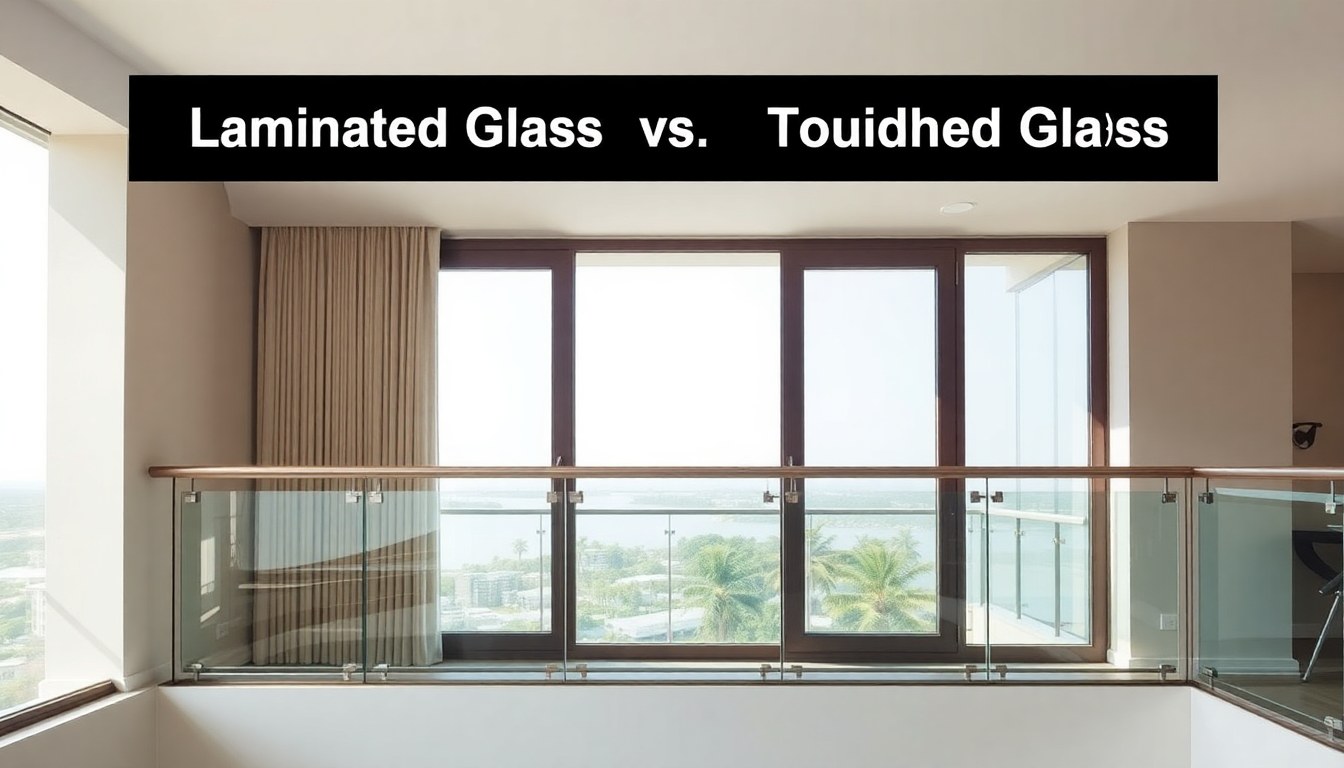
When designing balcony railings for residential or commercial buildings in India, the choice between laminated and toughened glass significantly impacts occupant safety. Both materials offer distinct advantages and failure characteristics that directly influence how they protect against accidental impact, wind pressure, and intentional force. Understanding the differences between these two glass types is essential for architects, builders, and homeowners making informed decisions about their property's safety infrastructure.
Understanding Laminated Glass: Construction and Properties
Laminated glass consists of two or more glass panes bonded together with a polyvinyl butyral (PVB) or ethylene-vinyl acetate (EVA) interlayer. This sandwich structure creates a composite material where the interlayer acts as an adhesive, holding the glass pieces together even when the glass breaks. The manufacturing process involves heating the glass and interlayer under controlled pressure to create a permanent bond.
The key characteristic of laminated glass is its post-breakage integrity. When impacted, the glass cracks but remains largely adhered to the interlayer, preventing sharp shards from falling or creating large openings. This behavior makes it particularly valuable for safety applications where preventing glass fragments from becoming projectiles is critical. In India's high-rise residential complexes, especially in cities like Mumbai, Delhi, and Bangalore, laminated glass has become increasingly popular for balcony railings precisely because of this feature.
Advantages of Laminated Glass
- Holds together after breaking, reducing injury risk from sharp fragments
- Provides sound insulation due to the interlayer's damping properties
- Offers UV protection, helping preserve interior furnishings
- Available in various thicknesses and interlayer types for customized safety levels
- Better performance in seismic zones common to India's earthquake-prone regions
Disadvantages of Laminated Glass
- Higher initial cost compared to toughened glass
- Requires specialized equipment for installation and cutting
- Interlayer can yellow over time with prolonged UV exposure
- Longer manufacturing and delivery timelines
Understanding Toughened Glass: Manufacturing and Characteristics
Toughened glass, also called tempered glass, undergoes a thermal treatment process that dramatically increases its strength. The glass is heated to approximately 620°C and then rapidly cooled using jets of air. This creates compressive stress on the glass surface while the interior remains in tension, resulting in a material that is 4-5 times stronger than ordinary annealed glass.
The critical distinction in toughened glass's behavior is its failure mode. When toughened glass breaks, it shatters into small, relatively harmless granular pieces rather than sharp shards. This characteristic is why it's commonly used in car windows and phone screens. However, this same property presents a unique safety challenge for balcony railings: once compromised, toughened glass loses its structural integrity suddenly and completely.
Advantages of Toughened Glass
- Significantly higher impact resistance than ordinary glass
- Lower cost than laminated glass alternatives
- Faster manufacturing and installation timeline
- Better thermal shock resistance, useful in India's varied climate conditions
- Cleaner aesthetic appearance without visible interlayers
Disadvantages of Toughened Glass
- Complete structural failure once the critical stress threshold is exceeded
- Cannot be cut, drilled, or modified after tempering
- Susceptible to spontaneous breakage from nickel sulfide inclusions (rare but possible)
- Offers no sound insulation benefits
- Poor performance in seismic events where repeated stress cycles occur
Impact Resistance: Head-to-Head Comparison
Impact resistance testing reveals significant differences between these materials. Toughened glass typically withstands higher initial impact forces before any breakage occurs. In controlled laboratory tests, toughened glass can absorb impact energy that would cause visible cracking in laminated glass of the same thickness. This superior initial impact resistance is why toughened glass performs well in applications like automotive glazing and sports facilities.
However, the critical difference emerges after the initial impact. Laminated glass, once cracked, maintains its structural framework due to the interlayer bond. A balcony railing made from laminated glass can sustain multiple impacts or continued pressure after initial cracking. In contrast, toughened glass provides no secondary protection—once the critical stress point is exceeded, the entire panel fails catastrophically, leaving an unobstructed opening. For balcony railings where preventing falls is paramount, this distinction is crucial.
Indian building codes, particularly the National Building Code (NBC) and various state-specific regulations, increasingly favor laminated glass for high-rise balcony applications because of this post-failure performance characteristic. The codes recognize that maintaining physical barriers after impact is more important than delaying the initial crack.
Safety Performance in Indian Climate and Seismic Conditions
India's diverse climate presents unique challenges for balcony railing materials. Coastal cities experience salt spray corrosion, while inland regions face extreme temperature fluctuations. The interlayer in laminated glass provides better performance under these conditions, as it prevents the glass from shattering due to thermal stress or environmental degradation. The PVB or EVA interlayer also provides a buffer against repeated thermal expansion and contraction cycles.
Seismic safety is another critical consideration, particularly for buildings in zones III, IV, and V as classified by the Indian Standards Bureau. Laminated glass performs better in seismic events because the interlayer maintains structural integrity during building sway and ground movement. Toughened glass, while strong, can fail suddenly when subjected to the complex stress patterns generated by earthquakes. Buildings in cities like Dehradun, Srinagar, and parts of Maharashtra have increasingly adopted laminated glass railings specifically for seismic resilience.
Wind pressure also plays a role in railing safety. High-rise buildings in coastal areas and major metropolitan centers experience significant wind loads. Laminated glass's ability to deform slightly while maintaining structural integrity gives it an advantage in withstanding sustained wind pressure without complete failure.
Cost Considerations and Long-Term Value
The initial purchase price difference between laminated and toughened glass is substantial. Toughened glass typically costs 30-40% less than comparable laminated glass panels in the Indian market. For a standard residential balcony railing spanning 3-4 meters, the cost difference can range from ₹8,000 to ₹15,000 depending on thickness and quality specifications.
However, long-term value analysis often favors laminated glass. Maintenance costs are lower because laminated glass is less prone to spontaneous breakage and environmental degradation. Replacement costs are higher when toughened glass fails because the entire panel typically requires replacement—there's no partial repair option. Insurance implications also differ, with some insurers offering better terms for laminated glass installations in high-rise buildings due to superior safety performance.
For developers and builders, the decision often hinges on project type and target market. Budget residential projects frequently specify toughened glass, while premium developments and high-rise complexes increasingly mandate laminated glass to differentiate their safety features and justify higher property values.
Building Code Compliance in India
The National Building Code of India (NBC 2016) provides guidelines for glazing in buildings, though specific requirements for balcony railings vary by state. The code emphasizes that balcony railings must withstand specified horizontal loads and prevent accidental glass breakage from becoming a safety hazard. While the code doesn't explicitly mandate laminated glass, its emphasis on post-breakage safety aligns more closely with laminated glass characteristics.
State-specific building codes in Maharashtra, Karnataka, and Tamil Nadu have increasingly incorporated laminated glass requirements for balcony railings in residential buildings above five stories. Municipal corporations in major cities like Mumbai and Bangalore now recommend or require laminated glass for new residential projects, particularly in high-rise developments. Consulting local building authorities and reviewing your state's specific regulations is essential before finalizing railing specifications.
Additionally, some insurance companies and housing society regulations now require laminated glass for balcony railings, making it a de facto standard in certain markets regardless of building code minimums.
Frequently Asked Questions
Which glass type is safer for balcony railings in high-rise buildings?
Laminated glass is generally considered safer for high-rise balcony railings because it maintains structural integrity after breaking, preventing complete failure and potential falls. While toughened glass resists initial impact better, its catastrophic failure mode—where the entire panel shatters into granules—creates an unobstructed opening. For balcony applications where preventing falls is the primary safety concern, laminated glass's post-breakage performance is superior.
Can toughened glass be used for balcony railings in India?
Yes, toughened glass can be used for balcony railings and is commonly specified in residential and commercial projects across India. It meets minimum building code requirements in most states and offers excellent impact resistance. However, it's less ideal for very high-rise buildings or seismic zones where the risk of catastrophic failure is a greater concern. Always verify your local building code requirements before specification.
How much more expensive is laminated glass compared to toughened glass?
Laminated glass typically costs 30-40% more than toughened glass in the Indian market. For a standard balcony railing, this translates to an additional cost of ₹8,000 to ₹15,000 depending on panel size and thickness. While the upfront investment is higher, many developers find the long-term benefits in durability, maintenance, and safety justify the additional expense.
Does laminated glass yellow or degrade over time in India's climate?
Laminated glass can experience slight yellowing of the interlayer over extended periods of UV exposure, particularly in coastal areas or regions with intense sunlight. However, modern interlayer materials are UV-stabilized and resist significant degradation. The visual impact is minimal in most applications, and the safety benefits far outweigh any aesthetic concerns. High-quality laminated glass from reputable manufacturers shows minimal color change even after 10+ years in Indian climates.
What happens if laminated glass breaks in a balcony railing?
When laminated glass breaks, the cracks radiate through the glass panes, but the interlayer holds the pieces together, maintaining the structural barrier. The cracked glass remains in place, preventing sharp shards from falling and maintaining the railing's function as a safety barrier. The broken panel should be replaced, but the failure is gradual and controlled rather than sudden and catastrophic, providing time for remedial action.
Making Your Choice: Recommendations for Indian Properties
For most residential and commercial balcony railing applications in India, laminated glass represents the superior choice when safety is the primary concern. The post-breakage integrity, superior seismic performance, and better long-term durability justify the additional investment, particularly in high-rise buildings and seismic zones.
Toughened glass remains a viable option for lower-rise buildings, budget-conscious projects, or applications where initial impact resistance is prioritized over post-failure safety. Ensure your choice complies with local building codes and consult with structural engineers familiar with your specific building's requirements and location.
Ready to source quality laminated or toughened glass for your balcony railing project? Browse verified glass suppliers and manufacturers on glassy.in, India's largest glass-business directory, where you can compare products, specifications, and pricing from trusted vendors across your region.